In the late Fall of 2014 I decided to do 23andMe, just to find a bit more out about myself.
I was adopted when less than 2 weeks old. Information about my history was quite limited and very, very anonymous. I was not really looking for family. (Or was I?) I did know I was getting to the age where I was becoming wary of all those questions one gets about medical history. I wanted to have some answers, for me and my kids.
Getting genetic information was still relatively uncommon then. I don’t think I knew anyone else that had actually done it, just people who had considered it. The few people I spoke with about the idea were very supportive.
Once decided, the kit arrived in days. Spit test done, I packaged it up in the box provided and off it went. I did not think much about it after that. I had no specific beliefs or questions about my ancestry to ponder, so perhaps that made the waiting easier.
About 6 weeks later the email appeared in my inbox telling me that my results were available and all I needed to do was log into the website.
The first thing I looked at was my ancestry. The 2 largest components, of approximately equal amounts; Irish/British and Ashkenazi Jewish. There were a smattering of other bits in there, Scandinavian, French, German… but that was all background noise in comparison to the bright spotlight on “Ashkenazi Jewish”.
I want to say, I have always felt loved by my adoptive family. I am clear who my parents were, the people who looked after me when I was sick, got me to school on time with breakfast in my belly, gave me shit when I deserved it, and celebrated my successes. But it was only “me”. There was no one that looked like me, or frankly thought like me. Suddenly I was part of a tribe. THE tribe. Wow. I needed a minute.
I was raised Anglican, and had attended a fairly progressive Anglican church for most of my growing up years. But something… intangible… about this new information resonated for me.
Once I had some time to absorb it, I shared with my husband and a few friends. None of them seemed particularly surprised… which was a bit weird. My one and only amazing Jewish friend, Heidi, gleefully welcomed me to the tribe. That felt good.
Then I started to poke about on 23andme, just to see who was out there. Most of my 2nd, 3rd, 4th cousins on my birth mother’s side had unmistakably Jewish surnames. So what did that make me? If I wasn’t raised Jewish, spoke not a word of Hebrew (beyond a phrase or two from Fiddler on the Roof), and had never stepped foot in a synagogue – could I even be “Jewish”? Perhaps this is a question for a wise rabbi one day.
Gradually, our travel adventures began to include a few experiences that brought me closer to those hidden Jewish roots. Auschwitz, a story for another day, memorials (and may I say there are far too many of those), and more and more synagogues.
My first was The Great Synagogue of Budapest. What a beautiful place to begin. It is the largest synagogue in Europe, and is still in use today. The Viennese architect was a fellow named Ludwig Forster. There should be an umlaut over the ‘o’ which would get you to “Foerster” when anglicized. Kind of a cool coincidence? I never would have imagined a pink synagogue, but it was stunning and unexpectedly grand.
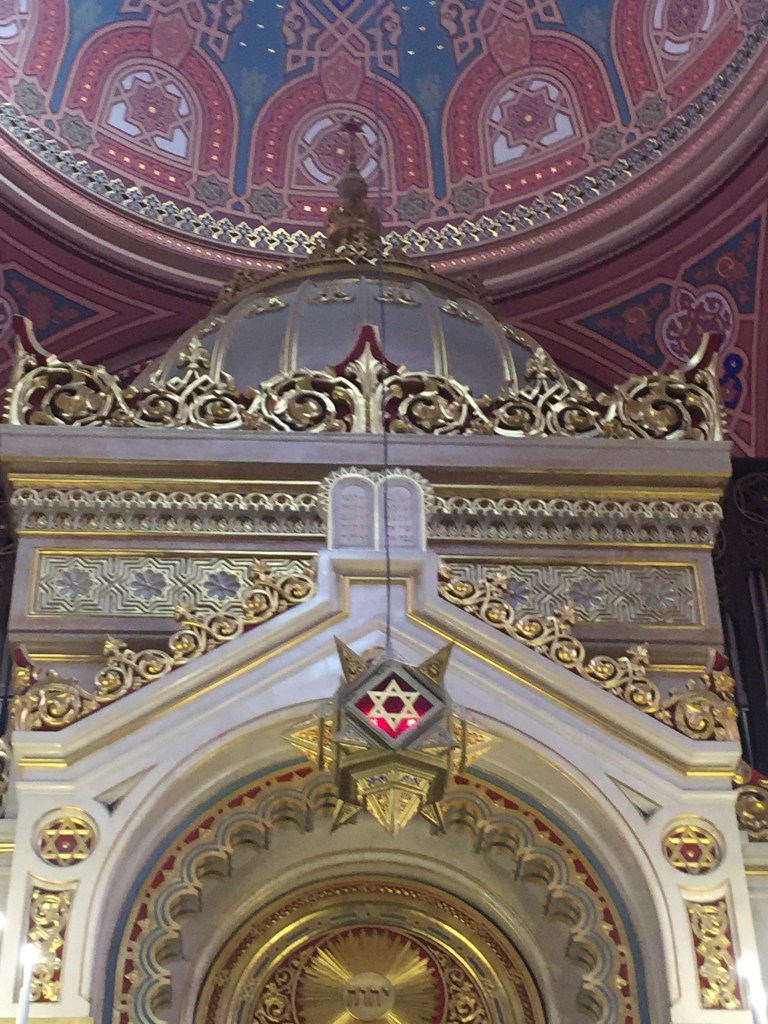
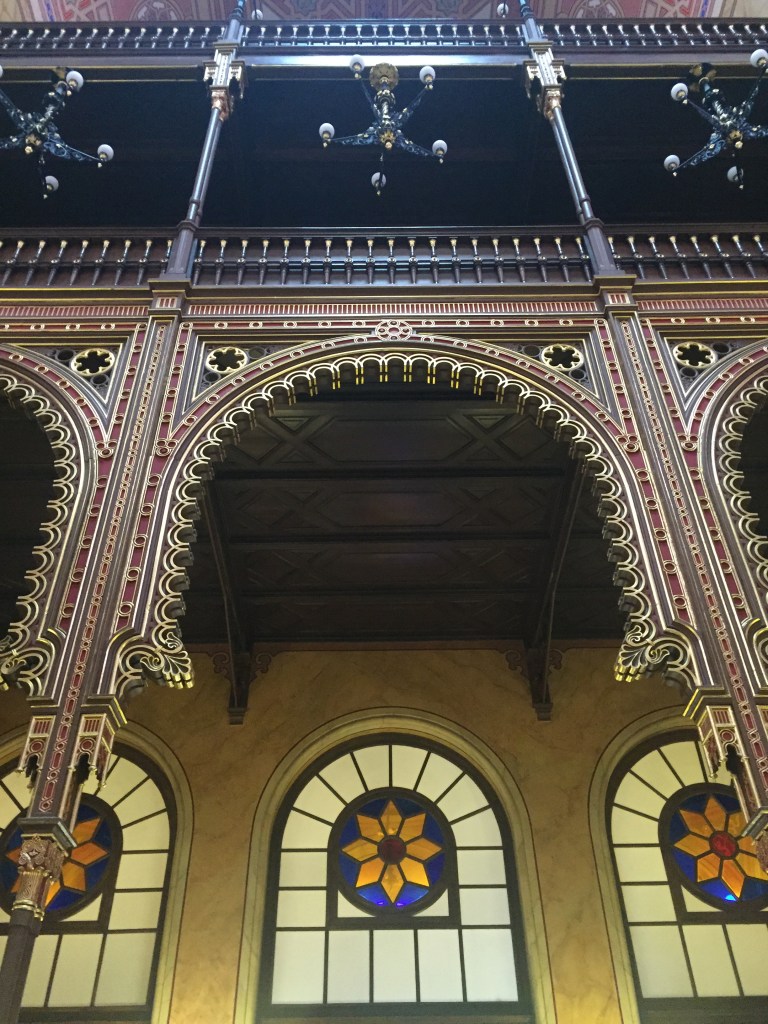

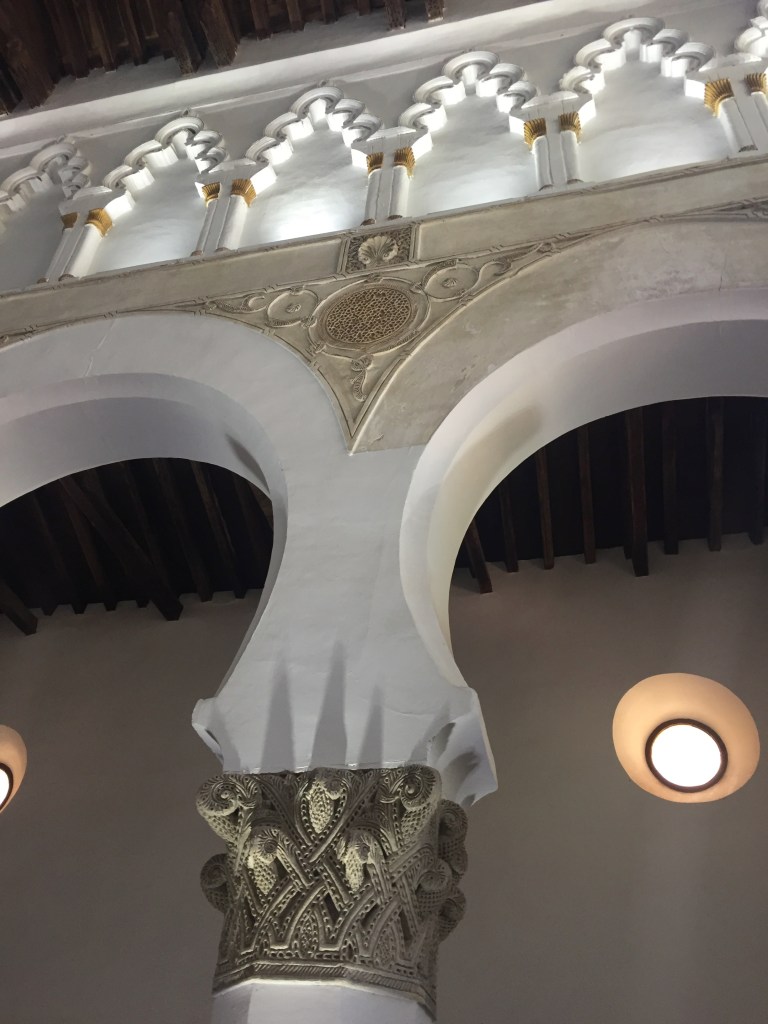
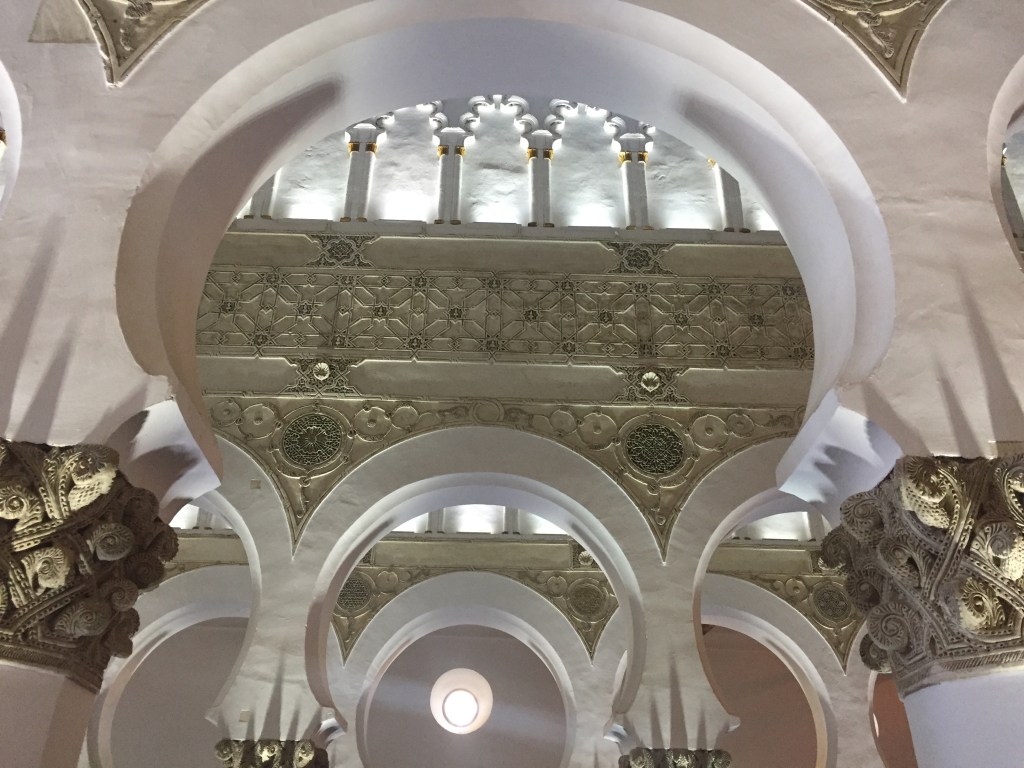
Santa Maria la Blanca in Toledo Spain is likely my favourite so far. It is the oldest synagogue in Europe – still standing – built in the Moorish style in the late 12th or early 13th century. There is a theory that the original footprint was from a pre-existing mosque. It was consecrated as a Catholic church in the 15th century. In spite of playing a role in 3 of the world’s major faiths, it is no longer in use by any, though it lives on as a place of beauty and peace.

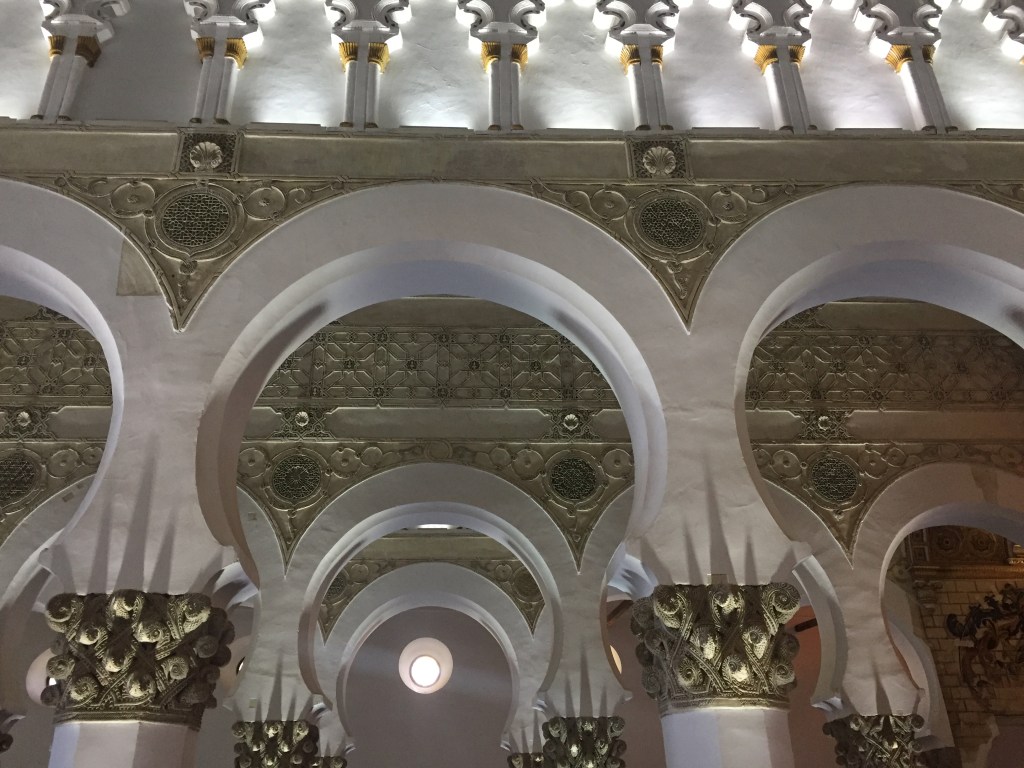
The synagogue in Cordoba, a very small building in the Jewish Quarter, is also beautiful, though it did not touch me in the same way. After the Jews were expelled from Spain in 1492, it was converted into a hospital for patients with rabies of all things. Later, it was acquired by the shoemaker’s guild as a community centre and chapel. Shoemakers… a connection that also resonates with me ;0)

In 2019, my husband suggested we go to Israel. That took me some time to digest. It was long way and promised to be a very foreign adventure. Travel always takes one outside their comfort zone, this would be further than I had gone before. Israel is the crucible for so much of the conflict between the Christian faith I was raised in, the Jewish faith I had no real knowledge of, and the Muslim beliefs to which I have had no exposure.
Off we went, with our two mothers in tow at 92 and 86 respectively. Also a story for another day.
Jerusalem is a marvel. A holy city to all three faiths. This incredible view is from the Mount of Olives Jewish cemetery, which sits adjacent to the Christian Garden of Gethsemane, with an impressive view of the Muslim Dome of the Rock which sits on top of the Wailing Wall.

The Wailing Wall is also known as the Western Wall, or Kotel. After 3 separate visits, I finally overcame the strong sense that I did not belong there and found the courage to step up and touch the wall. I cannot express the feeling I had when I tucked my little slip of paper into one of the cracks of in the wall near so many other tiny slips of paper, then touched it with both my hands. Rick also felt that inexpressible emotional connection.

Below the wall, lies an amazing subterranean Sha’arei Teshuvah Synagogue. It took 12 years to build and was dedicated in 2017. This is certainly one of the most unique places of worship I have ever seen.

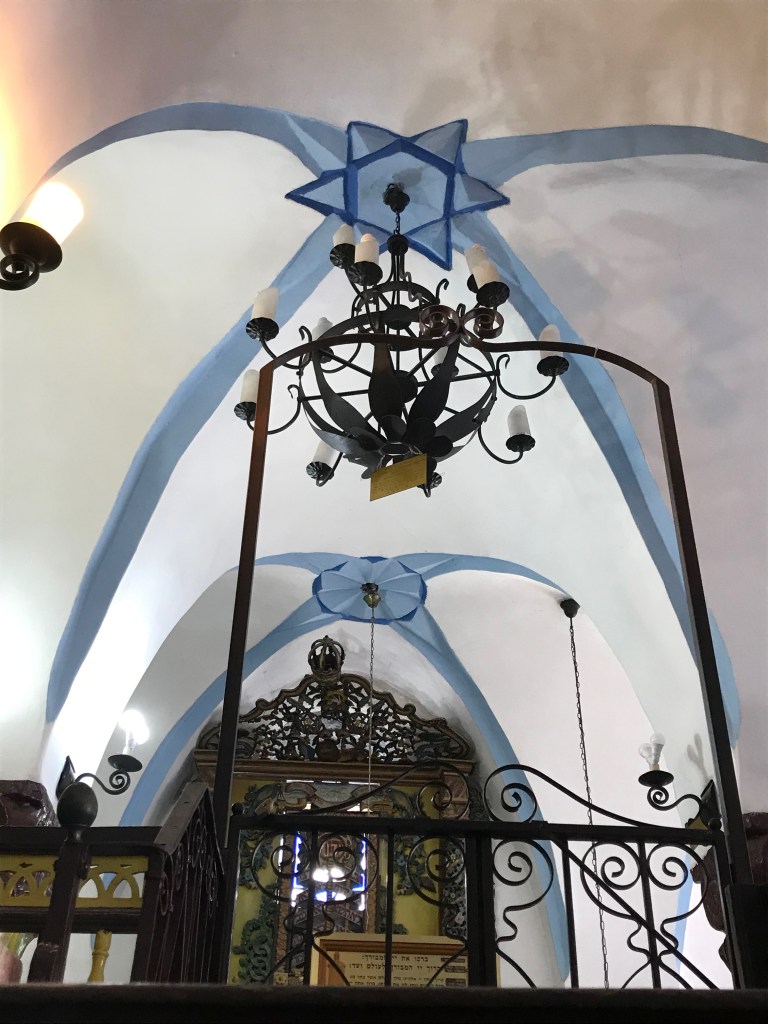
We received a bit of an education about the components of a Jewish service in this charming little synagogue in Safed, one of the four holy cities of Judaism. We were on a tour and most of the predominantly Jewish participants could not understand why the guide was giving us all of this information.

Although we have visited a number of synagogues now, we have not been present for a service of any kind. I did attend a friend’s Orthodox Jewish wedding, which was eye-opening, but may not have offered the best insight. I remain a neophyte. Until a week ago. That was when I finally attended my very first Saturday Shabbat service with Heidi as my guide.
I had so many impressions. We arrived right at the start – which seemed to be unusual. The service included a Bat Mitzvah which was a pretty cool thing to witness on my first outing.
I quickly came to appreciate the theatre style seats, a big step up from the hard wooden pews typical of a Christian church. They were so comfortable for a reason; the service typically lasts about 3 hours. During that time the rabbi and his assistant strolled about shaking hands and chatting with the congregation who also engaged in similar social behaviour.
The cantor was female. I had not expected that based on my past experience of exactly one service. I had expected all the key roles would be assigned to men. The chanting had a distinctive ebb and flow, though the brief periods of quiet mumbling confused me a little.
A female visiting rabbi offered a reading. (Is that even the right term for the chanting of bible verses?). The young woman being Bat Mitvah’ed (can I say that?) carried a huge amount of the service, along with her mother who had a particularly beautiful voice.
The prayer book and bible were read back to front, which seemed obvious by the way they were placed in the racks. The text was in Hebrew, with English transliteration (it’s a word), as well as some actual English. The margins were filled with rich commentary on the text. I loved reading it all.
I was surprised to see men and women in kippehs and prayer shawls. Women are not required to wear them unless they are at the front near the Aron Ha-kodesh, the Holy Ark, and the most important place in the synagogue. It is where the Torah scrolls are kept.
There is a part of the service where the scroll is removed from the Ark and carried around the Prayer Hall. It is completely covered by a mantle which is touched and kissed by all of those in attendance. After the readings, the scroll is dressed and the walkabout happens again to return the scroll to the Ark.
Kippehs and prayer shawls (the tallit) clearly lend themselves to all forms of personalization; colours, embroidery, fabrics. There was a great deal of blue and white, but also rainbows and flowers and stars. Lovely. The prayers shawls do seem like a lot of work requiring lots of fiddling and flipping and waving of fabric to keep them in place. Little white wings everywhere.
I loved that the rabbi walked around with pockets filled with candy packets that he would hand out to all the young people. I guess it helps to keep them from becoming too restless during such a long service. Even when he took of his jacket and left it on a chair, little ones would creep up and reach into the pockets for sweets.
Outside the Prayer Hall was a room for small children and another for teens, both with ‘childcare’ available. The children’s room had large windows that allowed parents to observe the service.
After 3 full hours, it was time for lunch! Lunch for everyone. This is a much bigger production than the usual coffee time after the service at my Mother’s church. Since there had been a Bat Mitzvah, it may have been a bit more grand than usual, though a sample size of one is insufficient to be sure. There were white table cloths. The buffet style lunch was delicious; brioche buns, tuna, egg salad, pickles! The lemon poppy seed cookies on the dessert table were particularly yummy.
Heidi – thank you for sharing the morning with me, for being my guide and my companion through such a new experience. For explaining and helping me to keep track on the pages. Thank you for all the ways you continue to invite me to be part of the Tribe.
And to Emilia, who will undoubtedly never read this blog, thank you for sharing your Bat Mitzvah with me. Mazel tov!


 Adventures of a curious mind
Leave a comment