Yesterday we travelled from Stykkisholmsbaer To Akureyri. (Kind of just rolls of the tongue right?)
I spend a fair amount of time going backwards and forwards between maps and books and signs just trying to ascertain the actual name of the place I am in at any given moment. I have started to keep track on a map – which is a painful process. It will be nice to have when we get home and any memory of how to say these names is gone forever.
We doubled back on ourselves to leave the Snaefellsnes pensinsula and headed north on Hwy 1 – the main route circling the island. It was a very long day in the bus, but the scenery did not disappoint. A few things I loved, such as more and more stunning scenery. There was also a lot of snow as we went through the highlands. (Snow is in the forecast for tomorrow.)
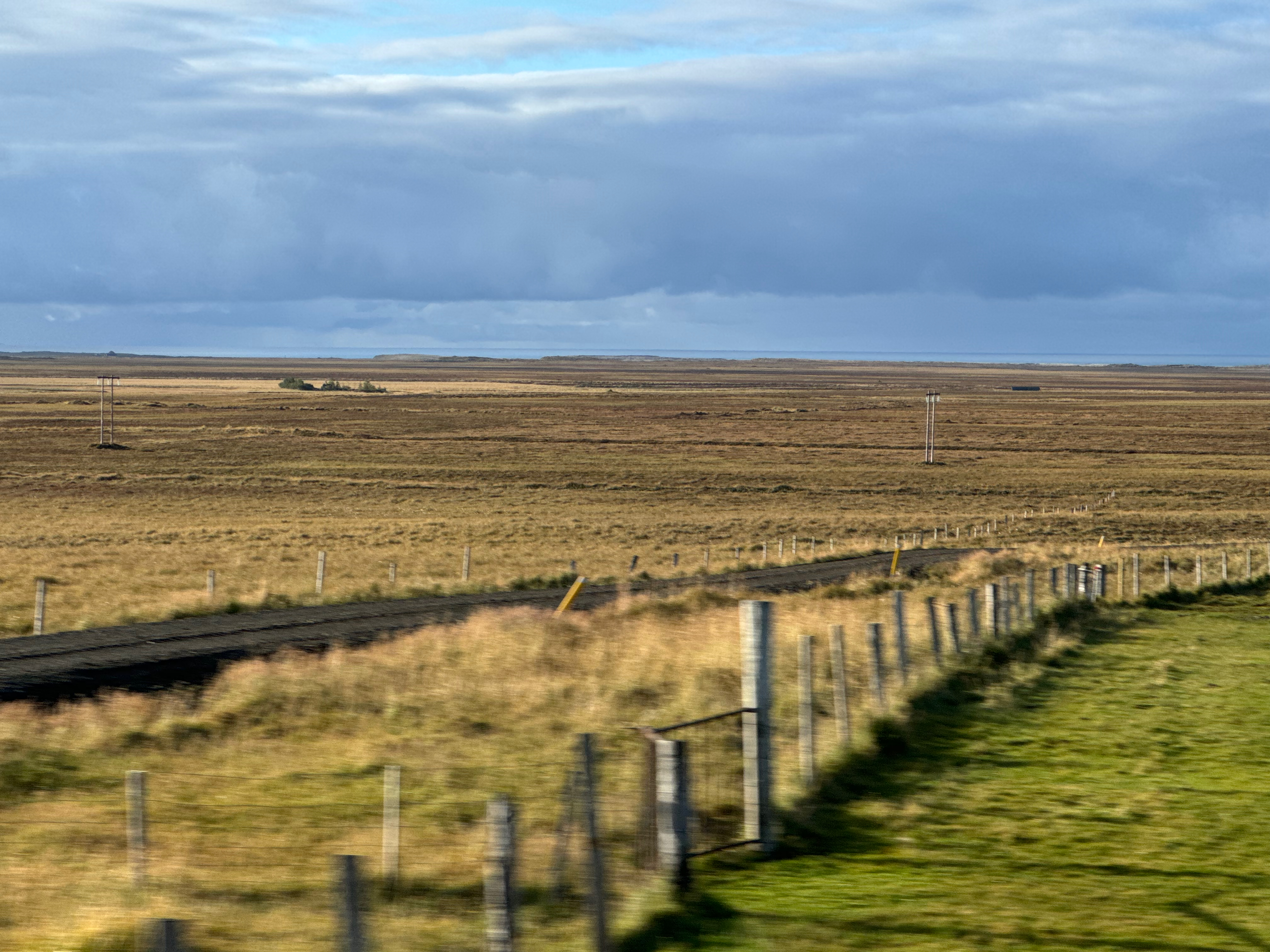


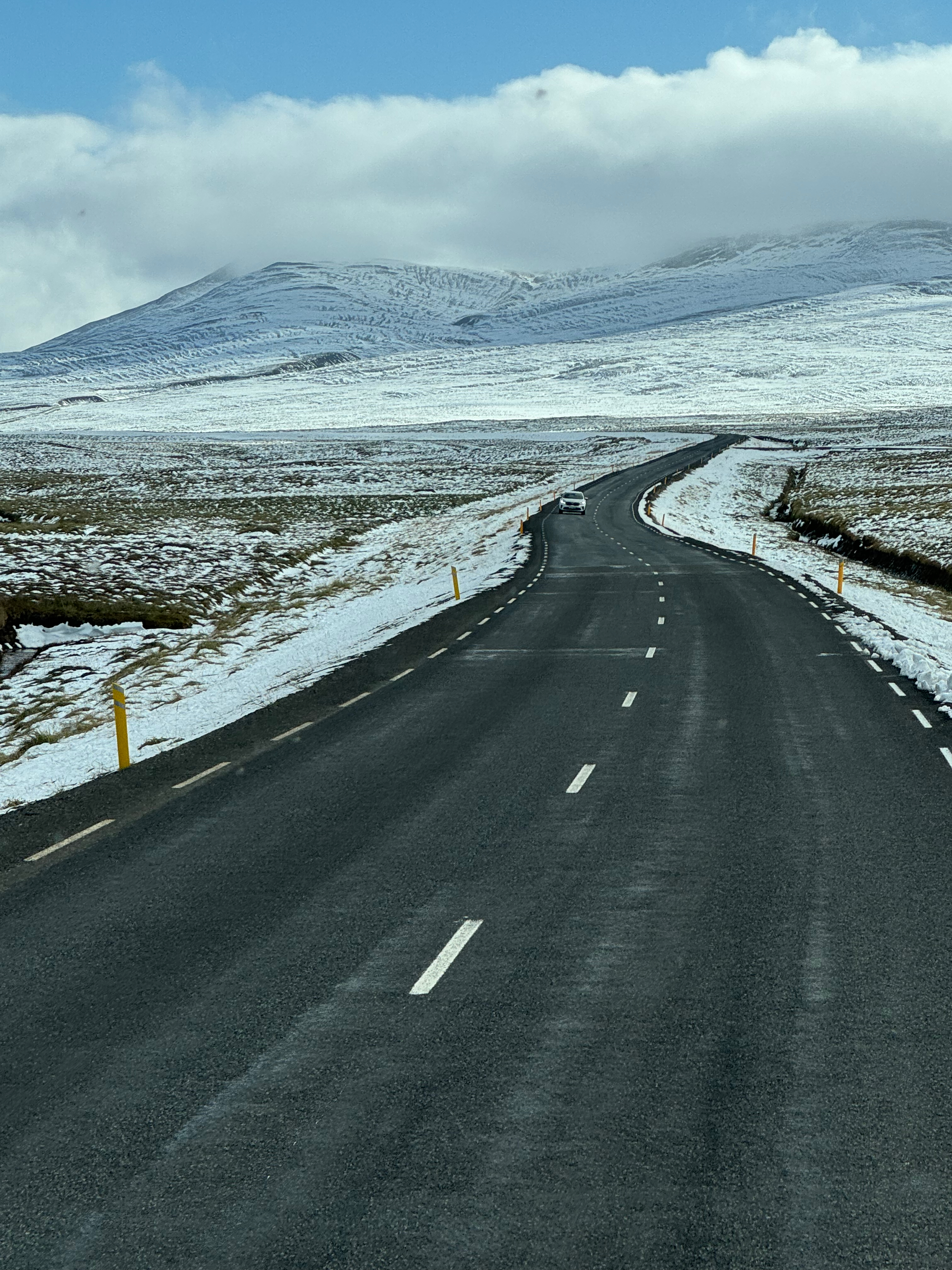

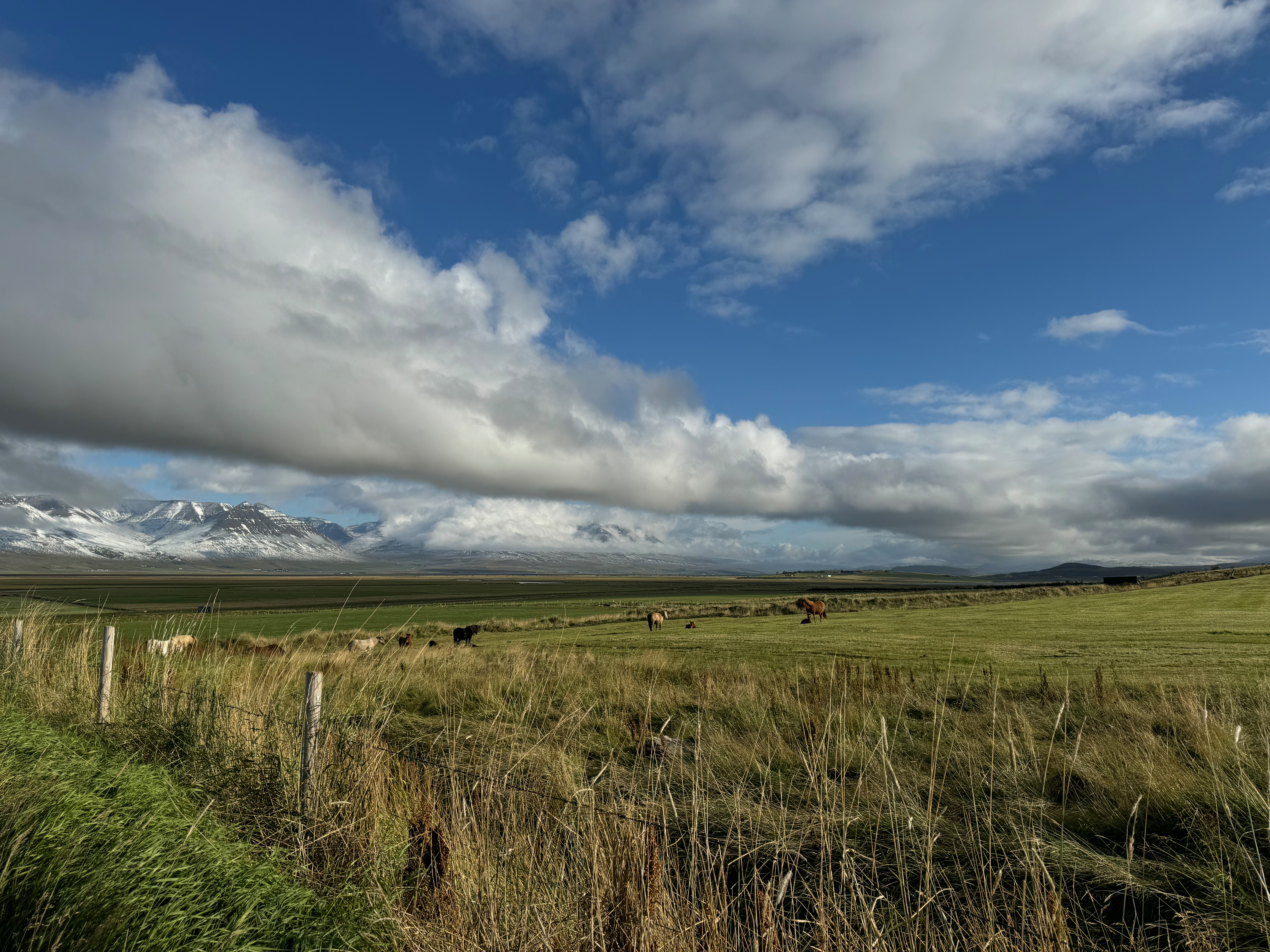
I loved this 3000 year old volcanic crater called “Grabrok” or “Grey Underpants”. It is one of a series of 3 small craters. Although we had heard the many stairs up might be a challenge, it was raining so heavily at the time of our arrival that there was zero will by any of us to give it a go. I wanted to – very much – but not alone.

As an aside – signing up for a job as a weather forecaster would be a poor career choice in Iceland. One day will be sunny and warm (keep the word “relative” in mind”) and the next a mix of snow and rain even though sun was in the forecast. Weather changes suddenly and unpredictably. So happy I brought that waterproof coat…
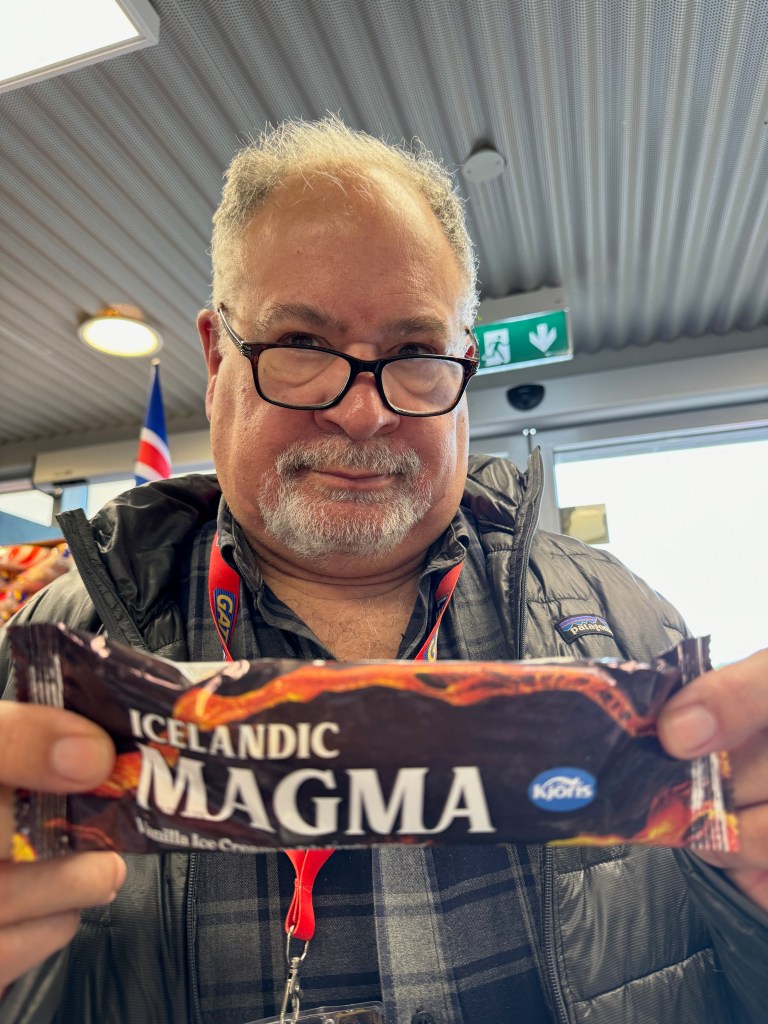
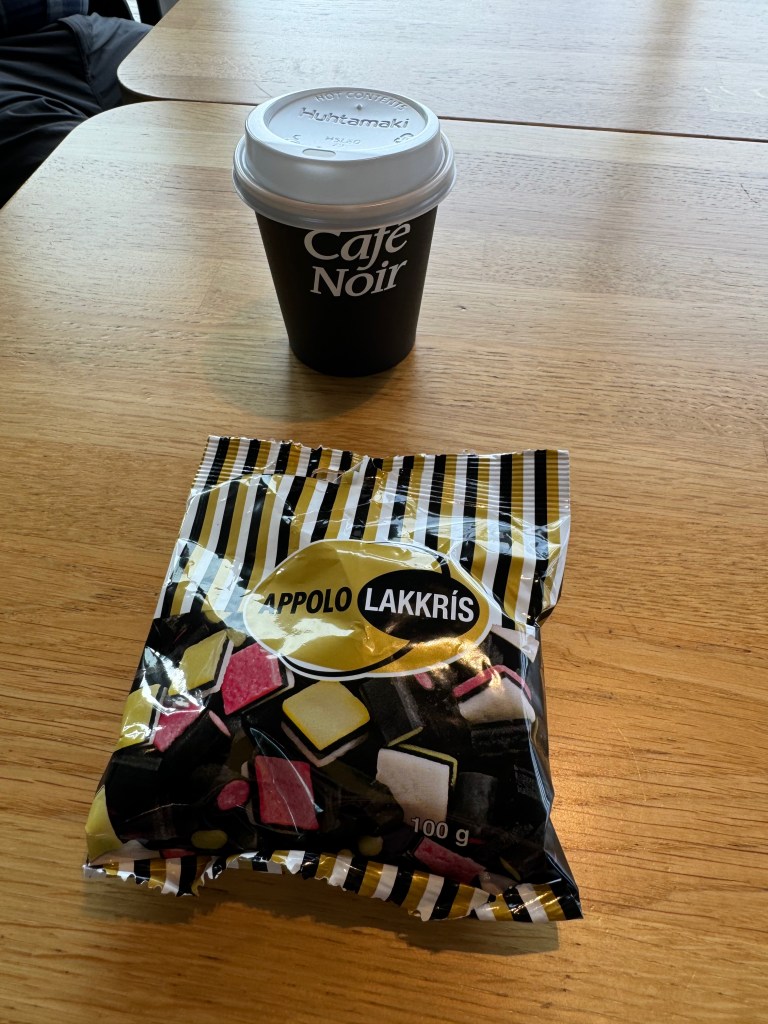
We had a couple of fun snacks at one of our colloquially named “comfort” stops. The licorice was recommended by Fosse and he was not wrong – it was delicious. The Icelanders love their licorice and the shop had an entire wall of different types. Of course I never made it past the Allsorts.
Our second (or third?) stop was in the middle of nowhere in the mountains. It marked the historical location where post from the north and south of Iceland had been exchanged, indicated only by a fairly modest statue.
As we were driving through the mountains, Berclind was telling us about the many ghosts that resided there as it was the only way to go from the south to the north and many people had died trying to make the journey. Followed by (and I quote) “”While driving over this highway, sometimes people who are sensitive to these things may feel there is a ghost in the bus. Don’t worry. That is very normal.” I loved it!
One of the real pleasures of this trip has been the way that Berclind has woven together the facts of history with the stories of magic, trolls, giants and elves. The names of the characters involved can be hard to grasp, but the stories are delightful and I will share a few as we go.
On that day, Fosse was also able to convince her to sing an old Icelandic song to us about lost love. The words meant nothing at all really, but the melody was beautiful and haunting and somehow we could feel it, even though the details were lost to us.
She also told us about the 4 guardians of Iceland. There is one for each area of the island: a bull, a mountain giant, a bird, and a dragon. They appeared when King Harald of Denmark asked a man, well-versed in magic, to travel to Iceland to see what was happening there. When the man arrived he was greeted by the four guardians and their armies who were able to keep him away. Now, these 4 guardians are enshrined on the Icelandic coat of arms.
(Side note, the Icelanders always seem to refer to Iceland as “an island” no “a country”. The separation and isolation that comes from living on this island is deeply woven into who they are. It just sounds natural now.)
King Harald is famous for something else very familiar to all of you. He was the nicknamed Harald “The Bluetooth” because he loved blueberries so much that they had stained his teeth. He was known for his ability to facilitate communications with people who were in disagreement. He became king over Denmark (which included Iceland) and Norway and brought the Danes to Christianity. Bluetooth technology is named after Harald, and the logo is his initials, an H and a B, in Nordic runes. Now that is cool right?
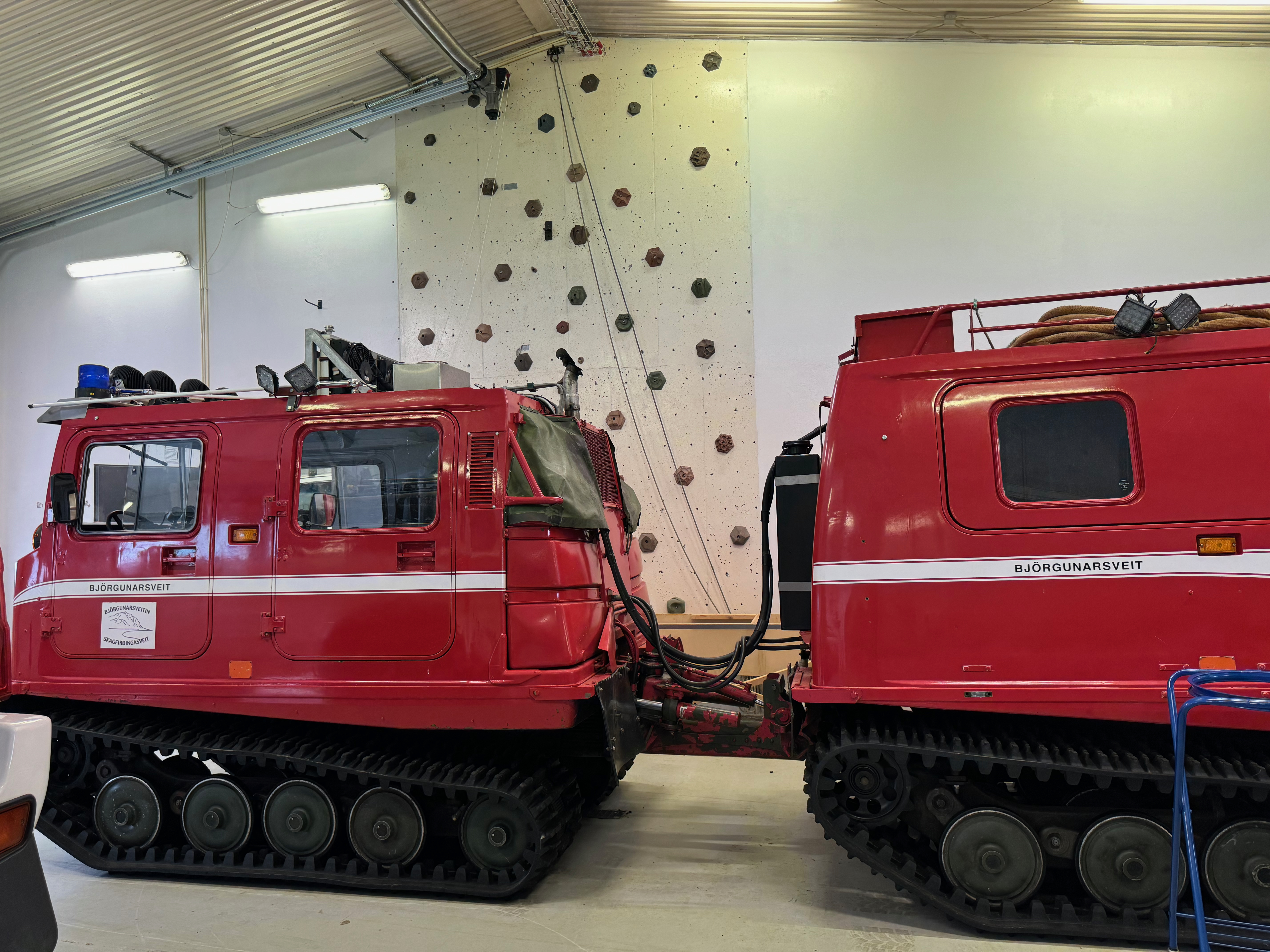
We had a surprise stop in Saudarkrokur to visit one of the volunteer search and rescue stations there. Shockingly, of the 90 stations operating around the country, only 2 of them are fully government funded – all the rest are unpaid volunteers. They train themselves, and each other, and must raise money for their vehicles and equipment. Their biggest annual fundraiser is the sale of vast quantities of fireworks for New Years Eve, which Icelanders seem to do in style with every household lighting fireworks for an hour or more. It does strike me that fireworks are not the safest thing to be mucking about with after a bunch of partying…? They also sell some cool key chains, modelled after actual volunteers. We bought two as a way to fulfill our desire to contribute in some way.


Our last stop of the day was at the ancient Glaumbaer Turf Houses in in Skagafjord. This site was a farm and the place where Snorri Porfinnsson lived. Snorri was likely the first European child to be born in America around 1010, while his parents were exploring there – long before Columbus discovered America. He was the grandson of Erik the Red. The middle photo is a small statue of Gudriour Porbjarnardottir and her son Snorri. She is herself famous for being one of the most well-travelled women in Iceland in the middle ages having made 8 sea journeys and crossed Europe twice on foot.
We had seen a few turf houses here and there on our travels. They came into use in the ninth century and were used by both the rich and the poor. These particular turf houses were built in the 18th century and were inhabited until 1947. The family that owned the largest (12 rooms) would have been quite wealthy.
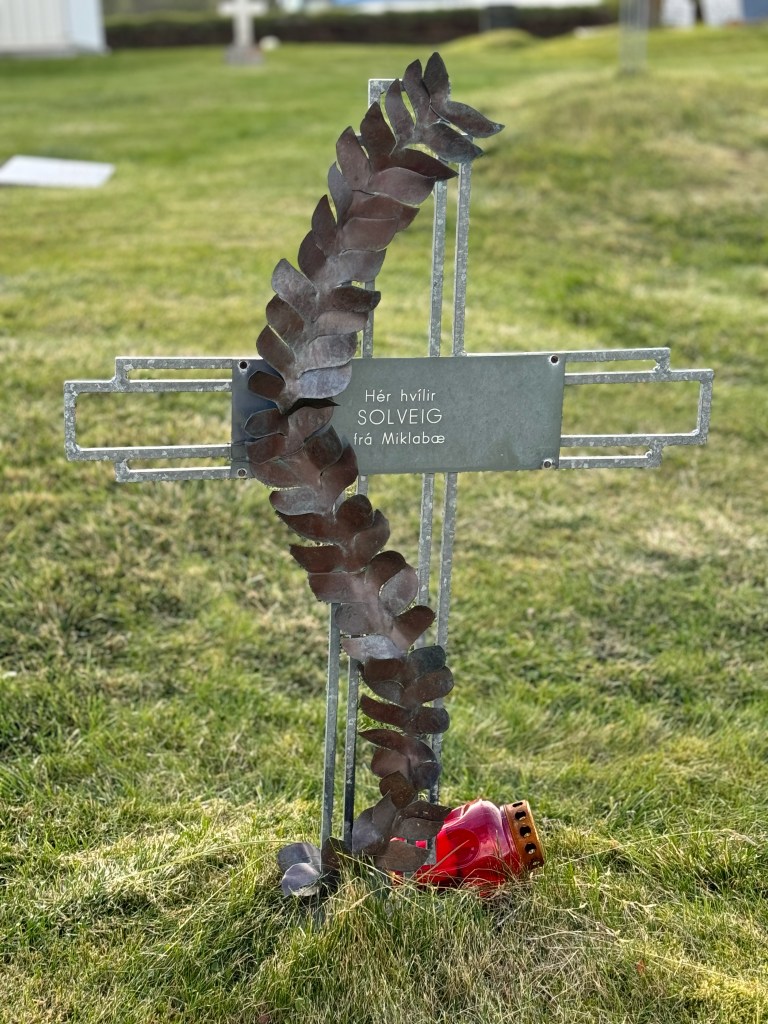
The little church next door is also lovely. There is a well-known story about a local woman named Miklabæjar-Solveig. She is said to have committed suicide after a love affair with Reverend Oddur of Skagafjord. The local church refused her dying request to be buried in the churchyard, so her her ghost haunted the manor, the minister, and his family. Solveig’s ghost was also held responsible for Reverend Oddur’s later disappearance. Her remains were finally moved to the cemetery in Glaumbaer in 1937. (Mom, I could not help but think of Solveig, my friend Dean’s mother, who lived just down the hill from us. Perhaps that is why the story stuck in my head….)


And then of course you already know what happened that night :0) It certainly was a day filled with a wide range of adventures.
And now I must get ready. More Northern Lights are expected tonight and I plan to be ready with my hat and boots on, and my coat close at hand.


 Adventures of a curious mind
Leave a comment