While in Akureyri we took a day trip to Siglufjordur to visit the Herring Era Museum. It has won a number of awards which I regrettably doubted at first look. I loved the museum and especially the story of the herring girls.
The entire journey was very scenic on such a beautiful day.

Giants are real in Iceland. Along the way we passed through Dalvik where a real life giant, Johann Kristinn Petursson, had lived since the age of 4. He developed normally until the age of 15 when he began to experience accelerated growth. By the age of 17 he was exceptionally strong and could reportedly lift a truck. At his tallest he was 7’8″ and weight 359 lbs.
In 1948, joined the Ringling Bros. & Barnum & Bailey Circus and moved to the US. The tallest Icelandic man on record, his home, living trailer, vehicles, furniture, and clothing were all custom-made. He used the stage name “The Icelandic Giant” in the U.S. He also acted in several movies.
Johann retired in Florida, returning to Dalvik after he was injured in a fall. He died only a few months later in November 1984, at the age of 71. We passed a large picture of him, next to his custom-built bench, on our way through town.
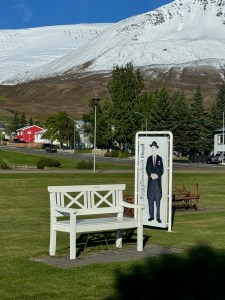
Our journey included 3 very long tunnels. The first tunnel was the shortest, but also the oldest, and only had one lane. Vehicles heading south have the right of way. Anyone heading north was required to pull into a designated pullout to wait. There were several of these spots along the tunnel’s length. It’s a good thing that Iceland’s transport trucks travel at night, though there seems to be very little traffic in general once outside Reykjavik.
The next two tunnels were newer and had 2 lanes, one going each direction. Together they are Iceland’s longest tunnel with a total distance of 11 km. It opens up briefly in Hedinsfjordur after 7.1 km and then continues for another 3.9 km to Siglufjordur. Hedinsfjordur is a very small, pretty fjord with a sandy beach where a few cars were stopped to camp.
It wasn’t long before we arrived in Siglufordur, Iceland’s northernmost town – the closest point we would get to the Arctic circle at 66.15 degrees. (The Arctic circle is 66.33 degrees… sooooo close.)
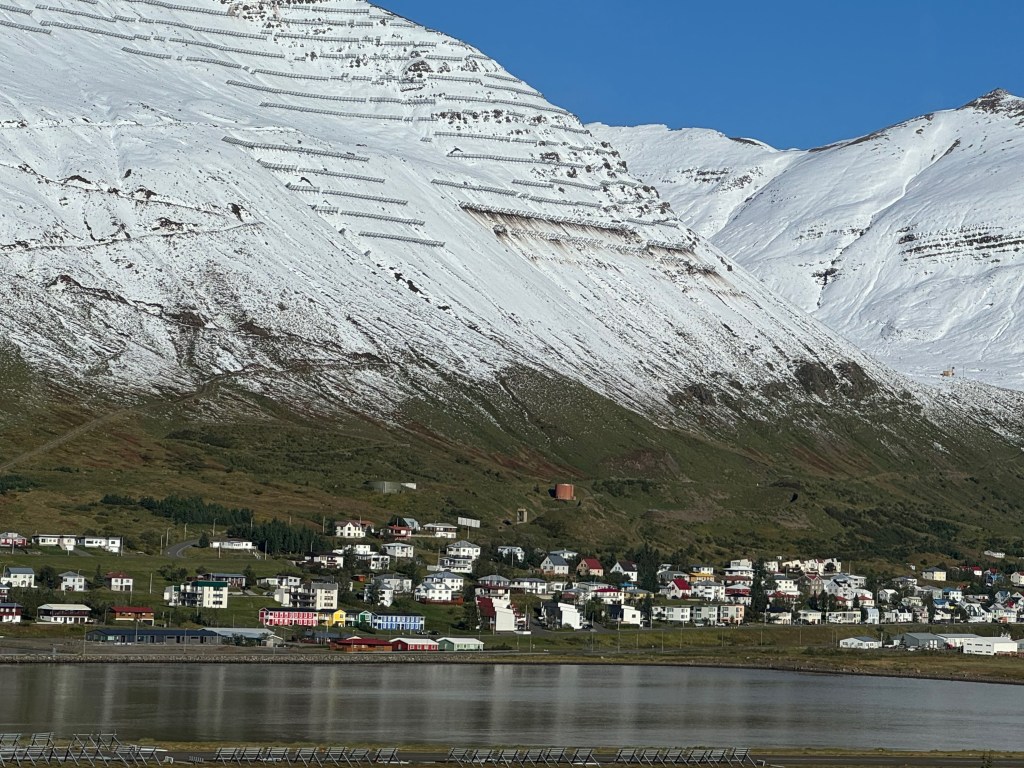


It is a lovely village that found a way to survive after the end of the herring fishery. In 2012 the Herring Era Museum was established.
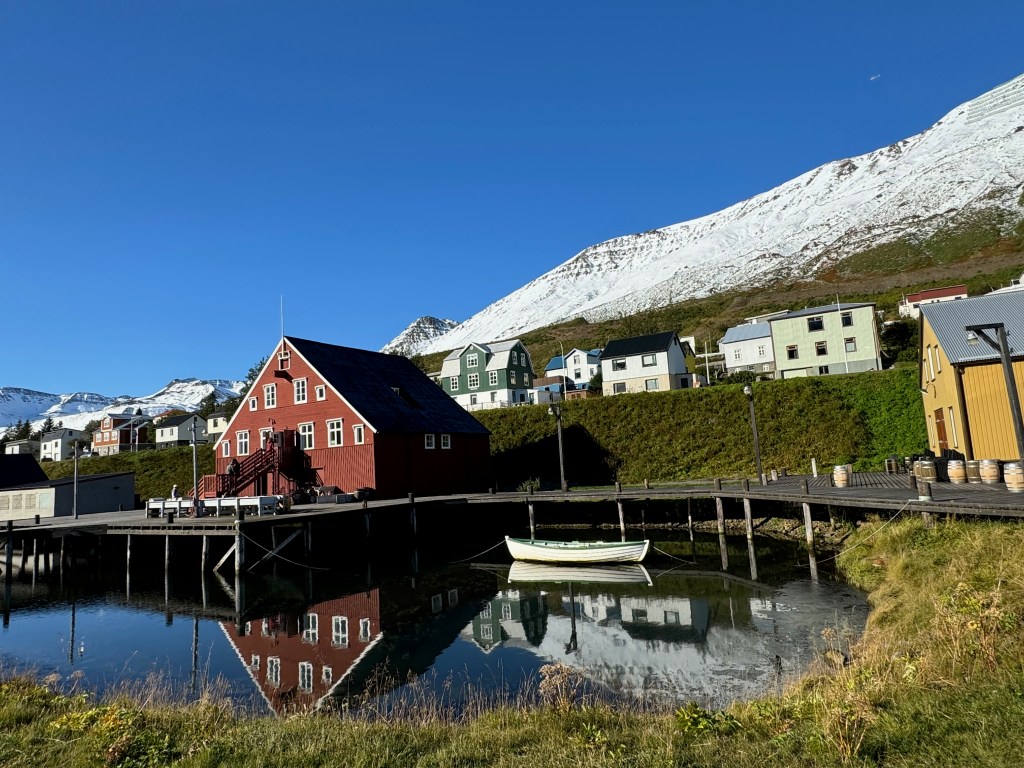
The herring fishery has often been considered Iceland’s first industry. The first plant to process fish meal and oil was establishedin Siglufordur in 1911 by Norwegian entrepreneurs. (Fun fact: Herring oil used to be in Nivea cream and Brill cream for men’s hair. ) The herring fisheries also produced salt herring for human consumption.
The number and capacity of the plants increased quickly, as did the profits for their owners. Herring accounted for a quarter to a half of Iceland’s national income, and herring became known as the Silver of the Sea, or Iceland’s Gold.
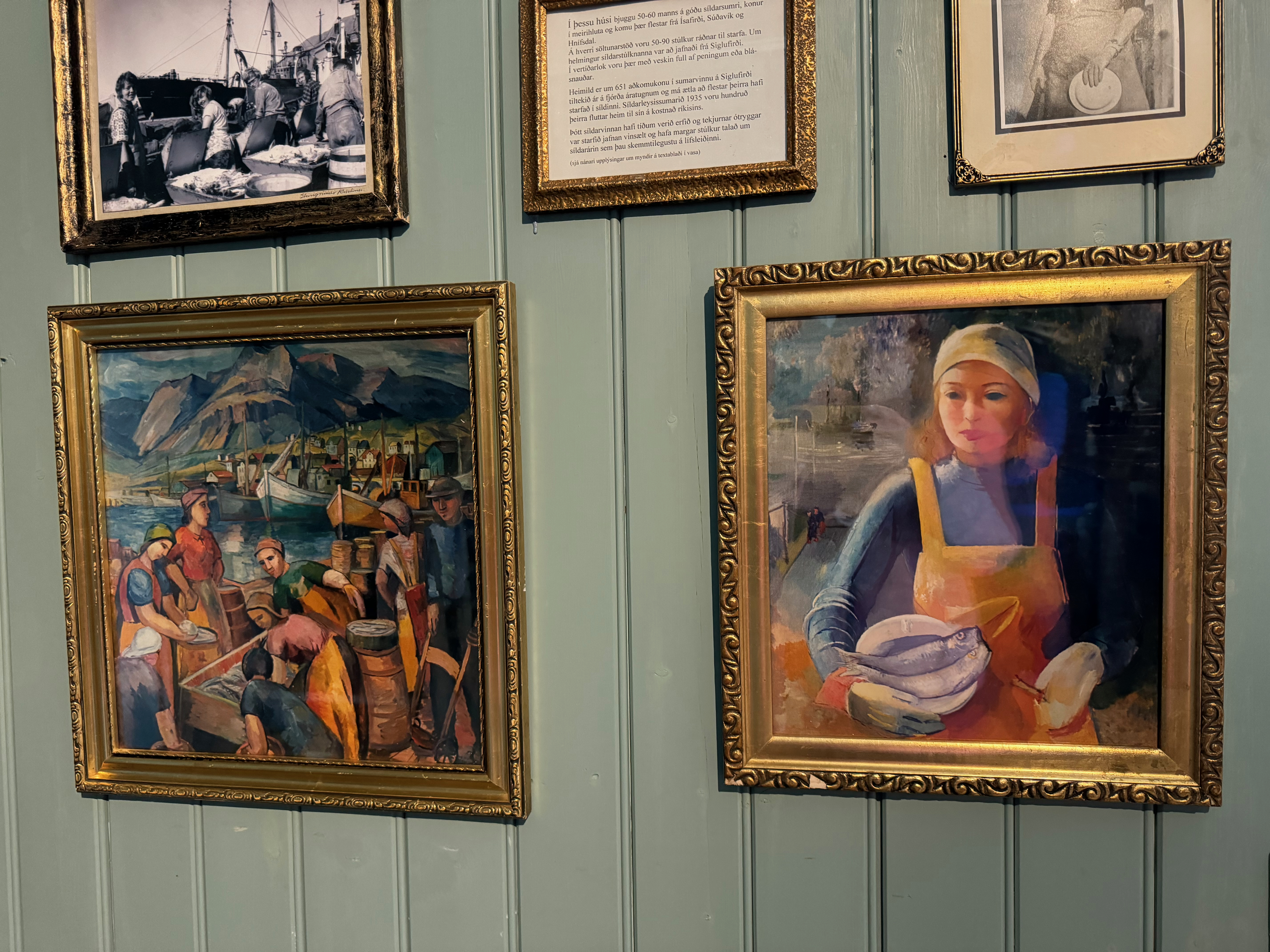
The herring girls would arrive in Siglufordur each year between June and September to process and pack the herring in barrels. This involved working at long troughs, gutting the fish and packing them neatly in barrels with layers of salt. They could gut herring at the rate of 40-50 fish per minutes and the best could pack 3 barrels in an hour. They were paid 1 Krona per barrel. (The men that managed all the rest of the activity on the dock were paid 1 Krona per hour.) The women would work until all of the fish were processed. Sometimes, this could mean a shift of 1-2 days straight, using sharp knives and enduring the back-breaking work required to bend and fill the barrels.
They lived in cramped housing provided by their employers, sharing tight quarters and sleeping 2 to a bed. The beds were very small.
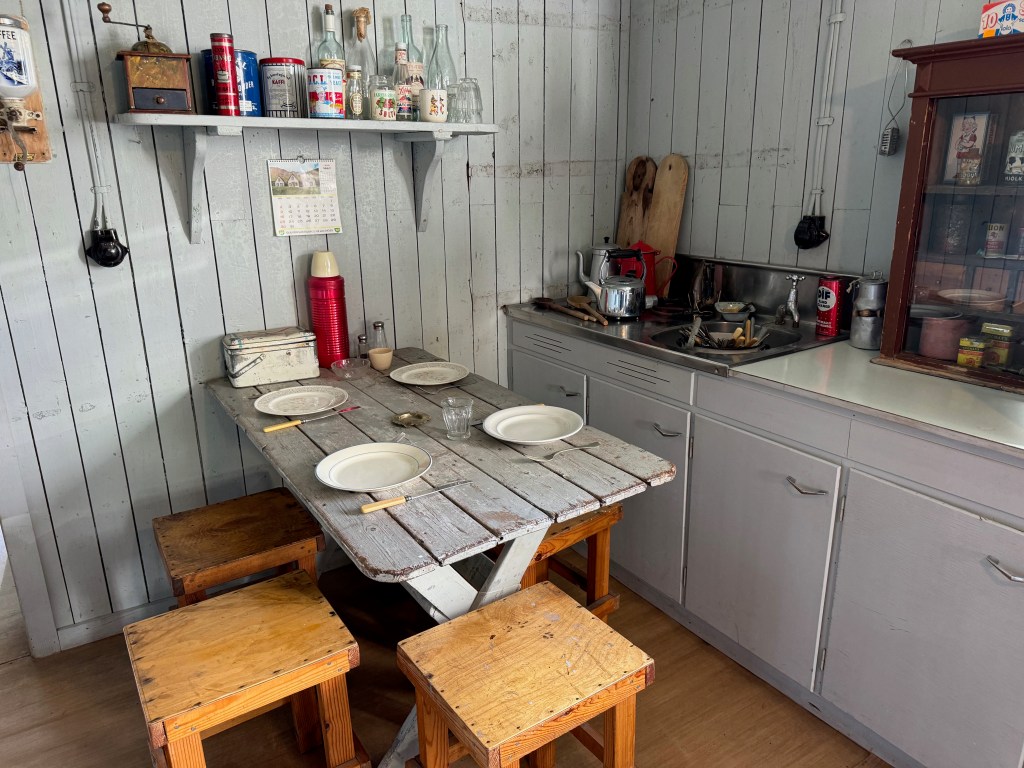
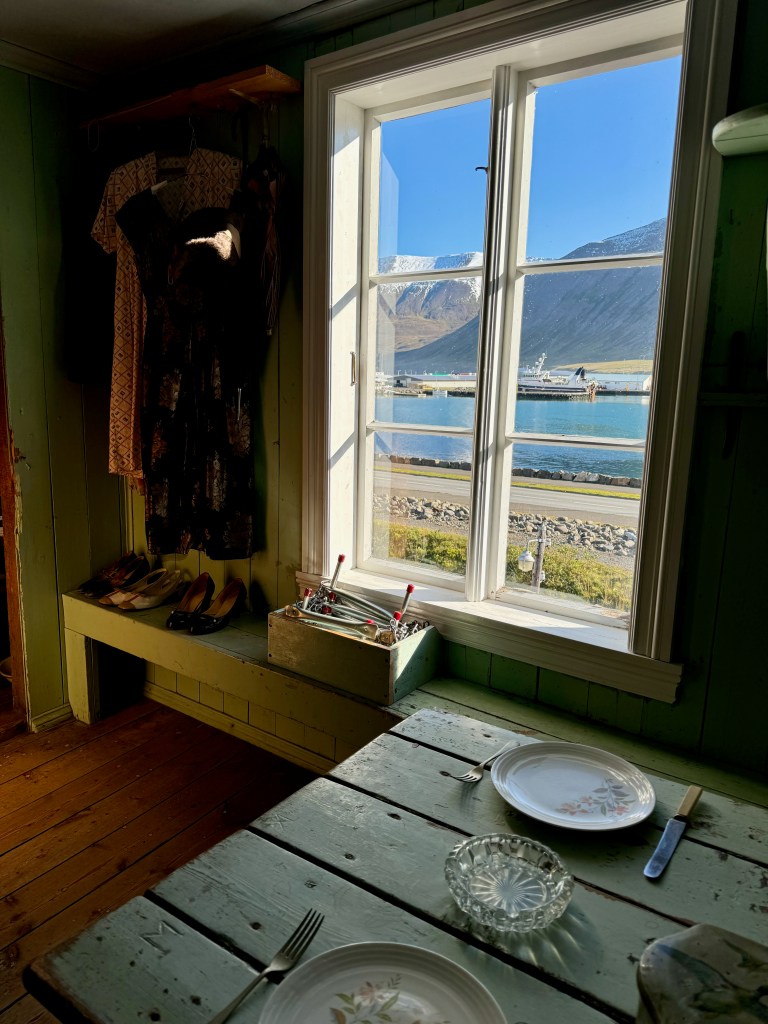

At it’s peak in 1950, the village had 3000+ full-time inhabitants. The population of the would grow to 10,000 during herring season. (Today Siglufordur’s population is about 1300.)
During the herring boom there was fashionable clothing shops on the main street. Workers could go for a drink at one of the dozens of bars or soda fountains, and dance the night away at several halls. Movies were screened 4 or 5 times each day. Many of the workers found summer romances – a tricky business in such crowded quarters.
The herring girls played a key role in securing the gender equality that Iceland is known for today, fighting for equal pay and labour rights. In 1922 they formed a union. In 1925 they went on strike when the employers wanted to lower their wages from 1 Krona a barrel to 0.75. The strike lasted only 3 days before the employers gave way. The girls also developed financial independence and a taste for life beyond their hometowns and farmsteads.
The boom ended abruptly in 1968 when the herring did not return; the huge schools of herring had been over-fished and depeleted to almost nothing. The herring girls never returned to Siglufjordur, leaving their possessions from the previous season behind.
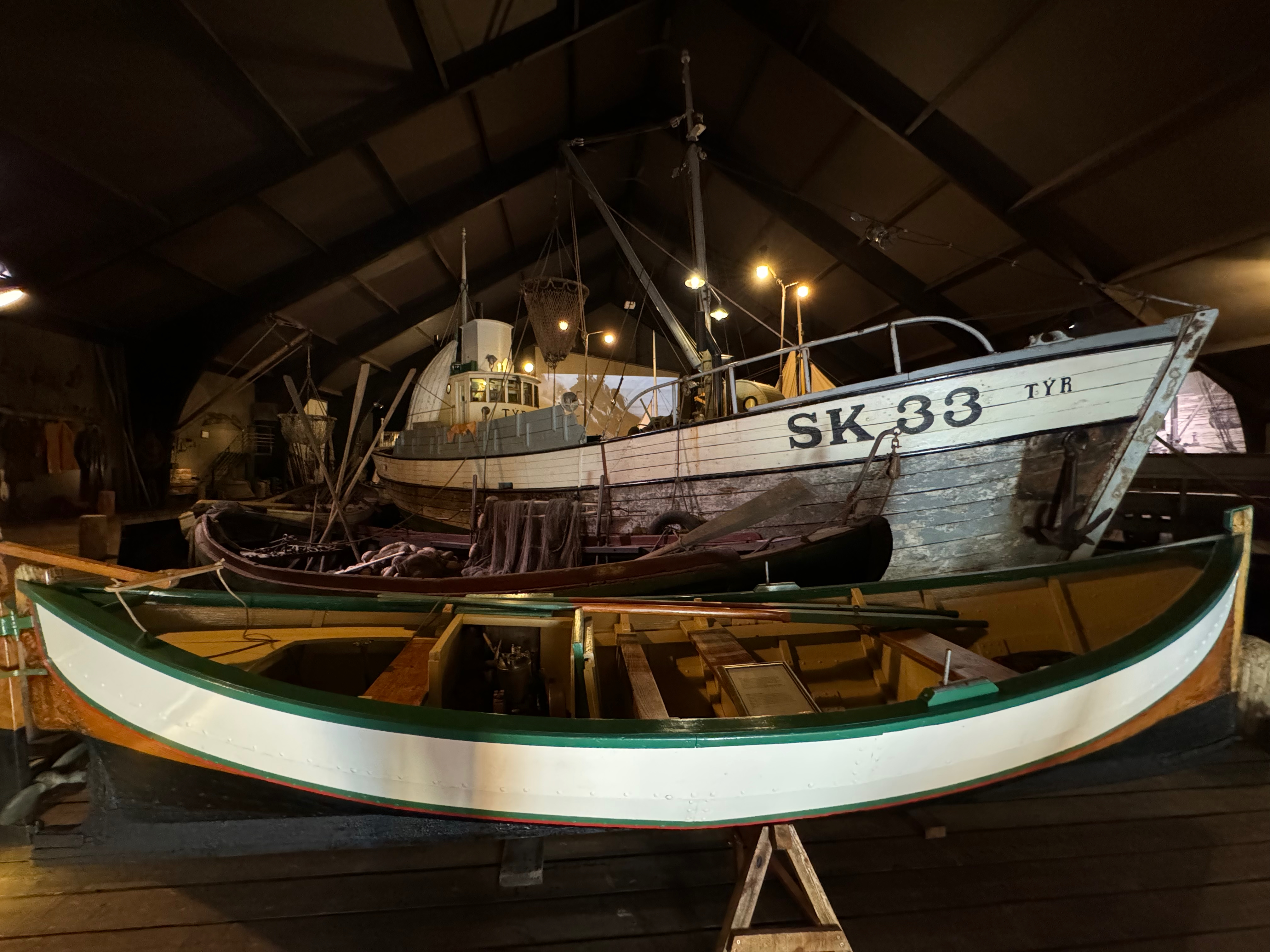
There was a lot more to see in our tour of the Herring Era Museum.


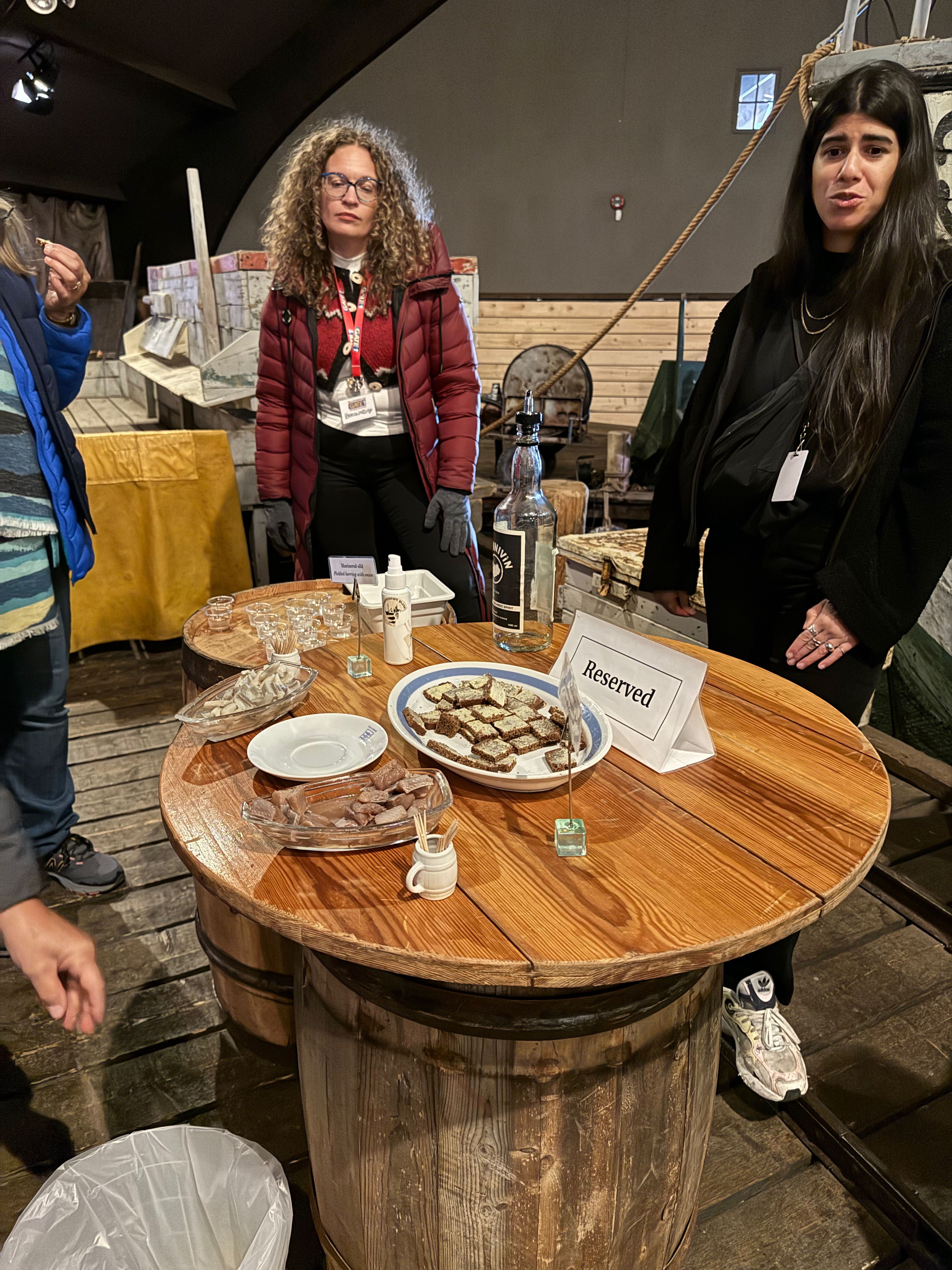
After the tour we had an opportunity to sample some pickled herring. One version was pickled only with onions and the other included some spices, primarily cinnamon, in the pickling juice. Black Death liquor and rye bread were provided alongside – similar to the fermented shark tasting. I must say I really enjoyed the first version and went back for some additional samples. I vaguely recall Mom and Dad having jars of pickled herring in the fridge. I did not appreciate the look of the shiny skin, though I may have eaten them at some point. I think they were called rollmops?
Rick and I talked about the similarities between Ocean Falls and Siglufjordur on the bus ride back. It extended beyond the obvious red roofs. Both were remote villages that could really only be reached by sea – a freighter or a sea plane in Ocean Fall’s case. Both were small villages that boomed with a single industry. Both were almost deserted when that industry failed. Yet somehow, Siglufjordur managed to rise up and find a way. Good for them!
If you are interested in knowing more, this article in the Atlas Obscura was the most interesting and includes a number of photos.


 Adventures of a curious mind
Leave a comment