Last night was dark and stormy with howling winds and ferocious rain. It was very peaceful being tucked up in our comfortable bed. We woke to low overcast though the sky was slowly beginning to lift with blue patches appearing.
With the fully sun, out, we took a short detour back to the Vatnajokull Glacier which was in full view now that the clouds had cleared. It looked so different from our visit the day before. Yesterday’s icebergs had shrunk considerably and re-positioned themselves close to the bridge, preparing to go out to sea. The tide was up so the section of black sand beach along the lagoon was virtually gone. The wind was really howling.
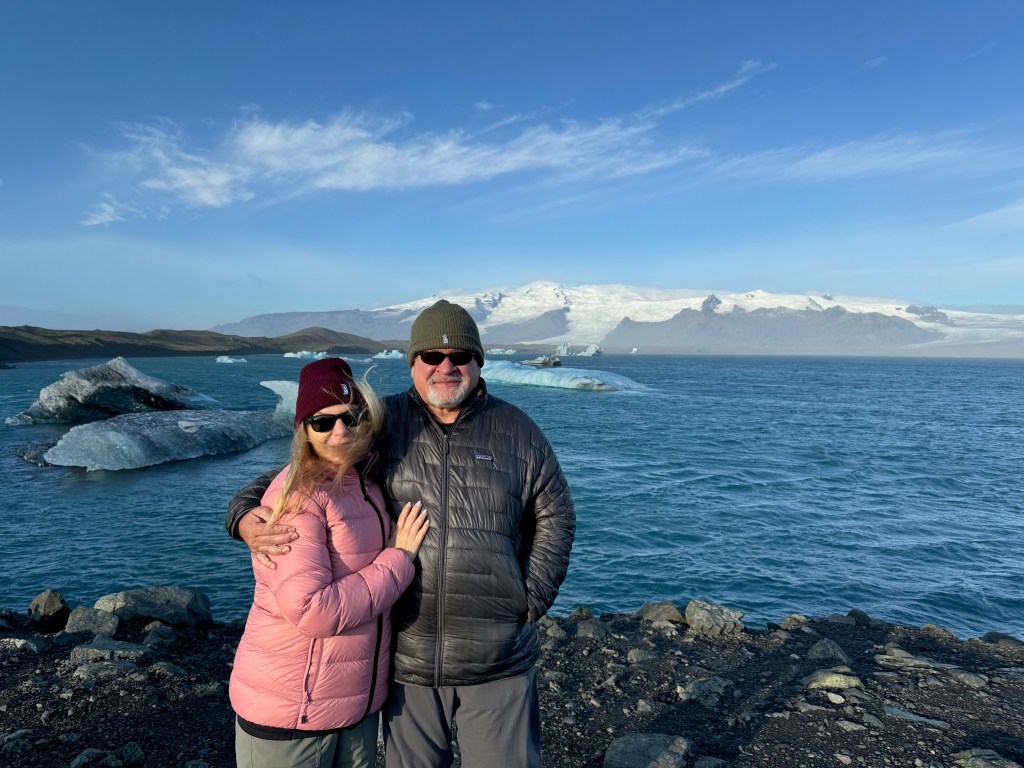


We could see to the very top of the mountain. This time, the glacier was visible in all its immensity and it really looked like it deserved to be the 2nd largest in the world.
Although the sunny start had made us all very optimistic about the weather, it gradually deteriorated with increasing cloud and then rain for almost the entire day. It never really kept us from getting out there and having the full experience.
We had seen two seals at the lagoon again, so as we were driving Berglind told us an Icelandic folk tale about a seals transforming to humans.
One day a man was walking past a cave and saw a pile of seal skins at the entrance. He could hear laughing and singing inside the cave. He quietly stole one of the seal skins and left. The next day he returned to the cave to find a beautiful woman sitting alone, naked and crying. He took her in – because what else would any decent man do with a beautiful naked woman? When he realized that the seal skin he had taken was hers, he locked it in a box so she could never leave. Over time they fell in love and had 7 children. She would often look sadly out to the sea but he kept the key to box safely hidden away. One day she was feeling unwell so stayed home while the man and his children went off to church. While he was in church he realized he had left the key to the box in the pocket of his work clothes. He immediately rushed back home. But she was already gone, having discovered the key and opened the box. As she returned to the water she was heard to call out “Woe is me. I have 7 children on land and 7 children in the sea”. Although the man never saw her again, he was often lucky and would catch some of the biggest and best fish. The children would find beautiful stones and other gifts from the sea. She never returned to the land.
Our journey took us to the Svinafellsjokull, an outlet glacier of Vatnajokull. It was a relatively short and easy walk in. I enjoyed the walk and actually did a short (very short) run up the hill which felt glorious. Sometimes we just need real movement.

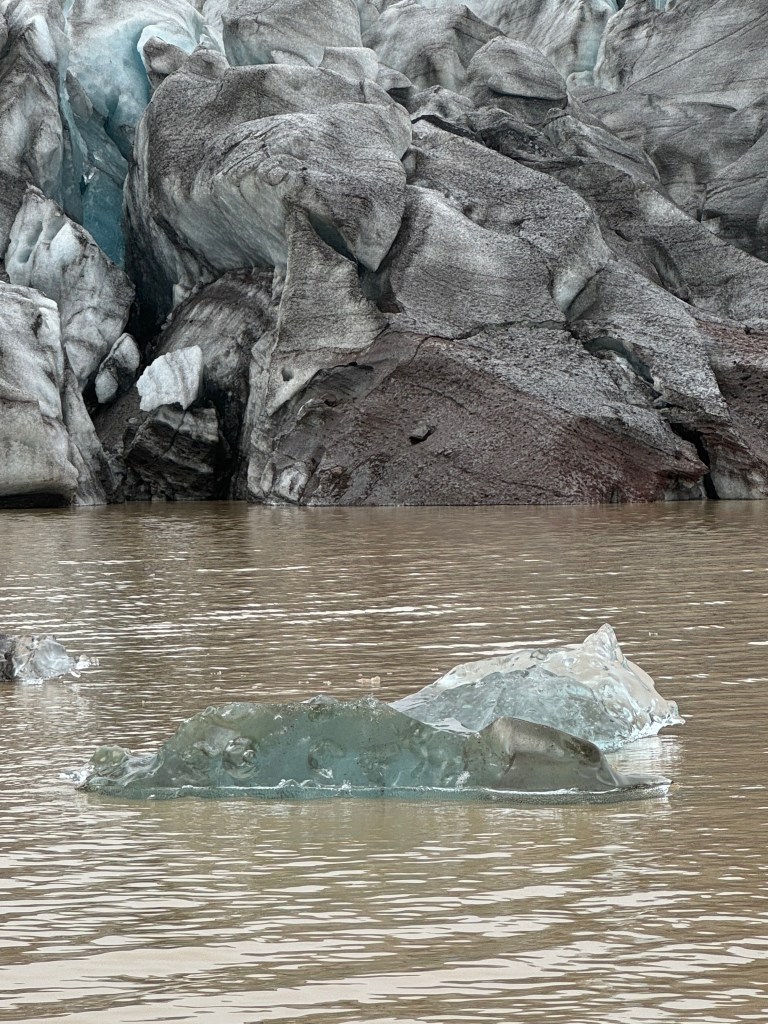
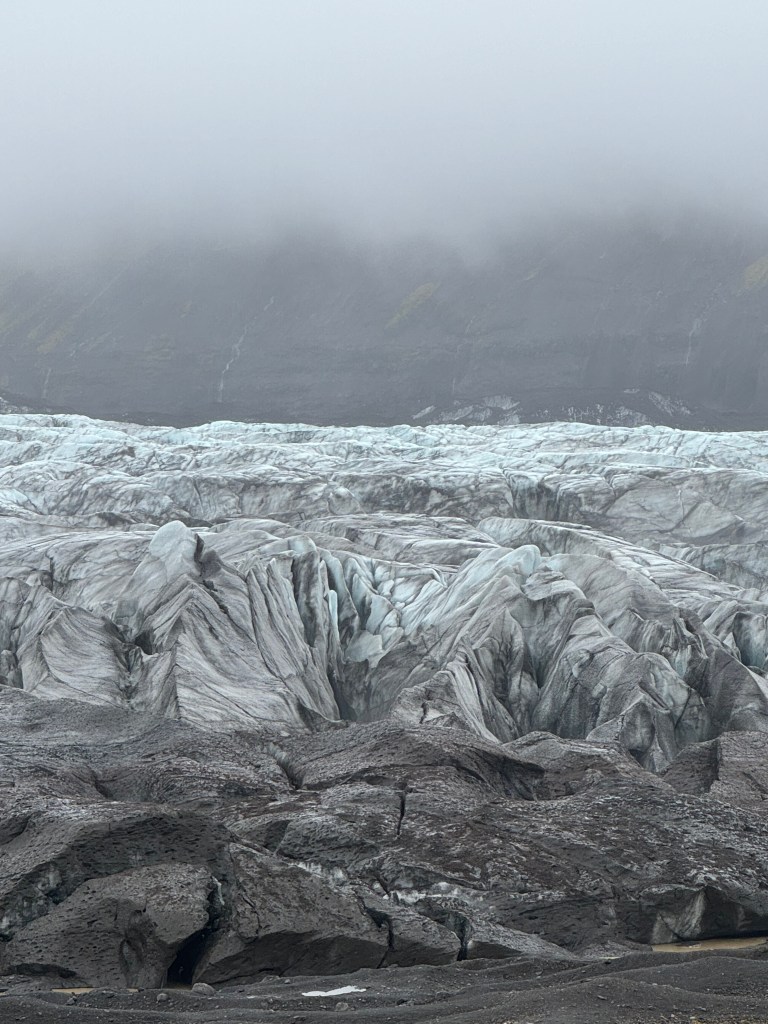

We have had enough bits of sun to see a few rainbows. In folk lore, rainbows are the bridges between the human world and the land of the gods. We were fortunate enough to see a rainbow just before arriving at the glacier.

Iceland has 130 volcanoes. Only 18 of them have erupted, a total of 200 times in all. The most dangerous volcanoes have female names as they can be “explosive and unpredictable”. The process of eruption is likened to giving birth; it begins with small earthquakes that increase until the eruption occurs. (I have read that back a few times. Although it seems a strange description – it is also apt. So I will leave it there.)
Today we passed through the Eldhraun lava field. It was created during the Laki eruption that began in 1783 and ended in 1784. The biggest lava flow in the world, it covers 565 square km. It is 12m thick and covered with fragile moss. It was a cataclysmic event, for Iceland and also for Europe. In Iceland, it caused disease, crop failure, and famine; 50% to 80% of domestic animals and 20% of the human population perished. The eruption haze blocked the sunlight, causing crop failures and famine in Europe. Because of this, many historians speculate the Laki eruptions helped contribute to the French Revolution.
Some of you may recall that there was a big (appropriate) fuss recently when Justin Beiber filmed a music video there. People were walking on the fragile moss and damaging it. It will take decades to heal.
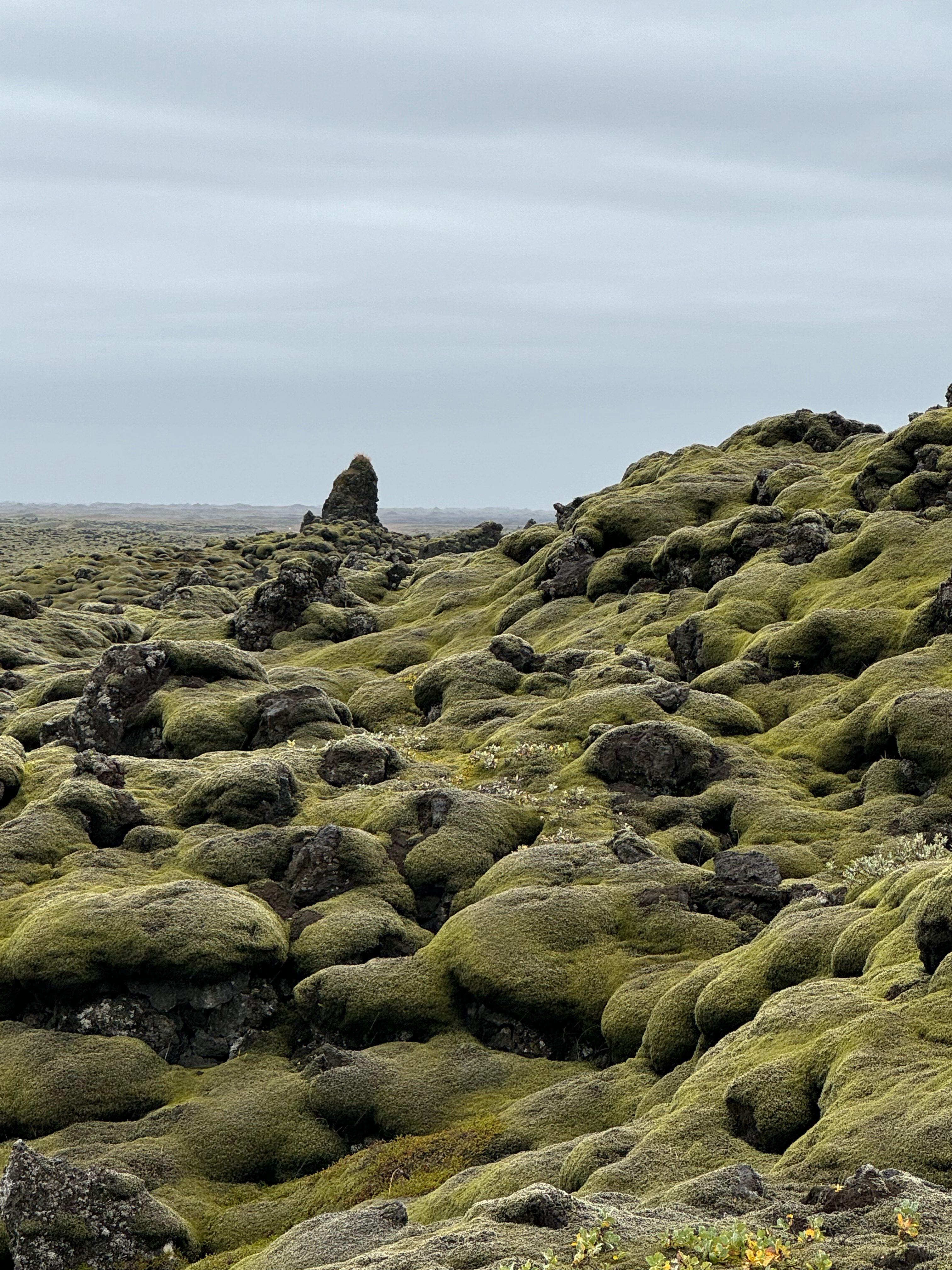
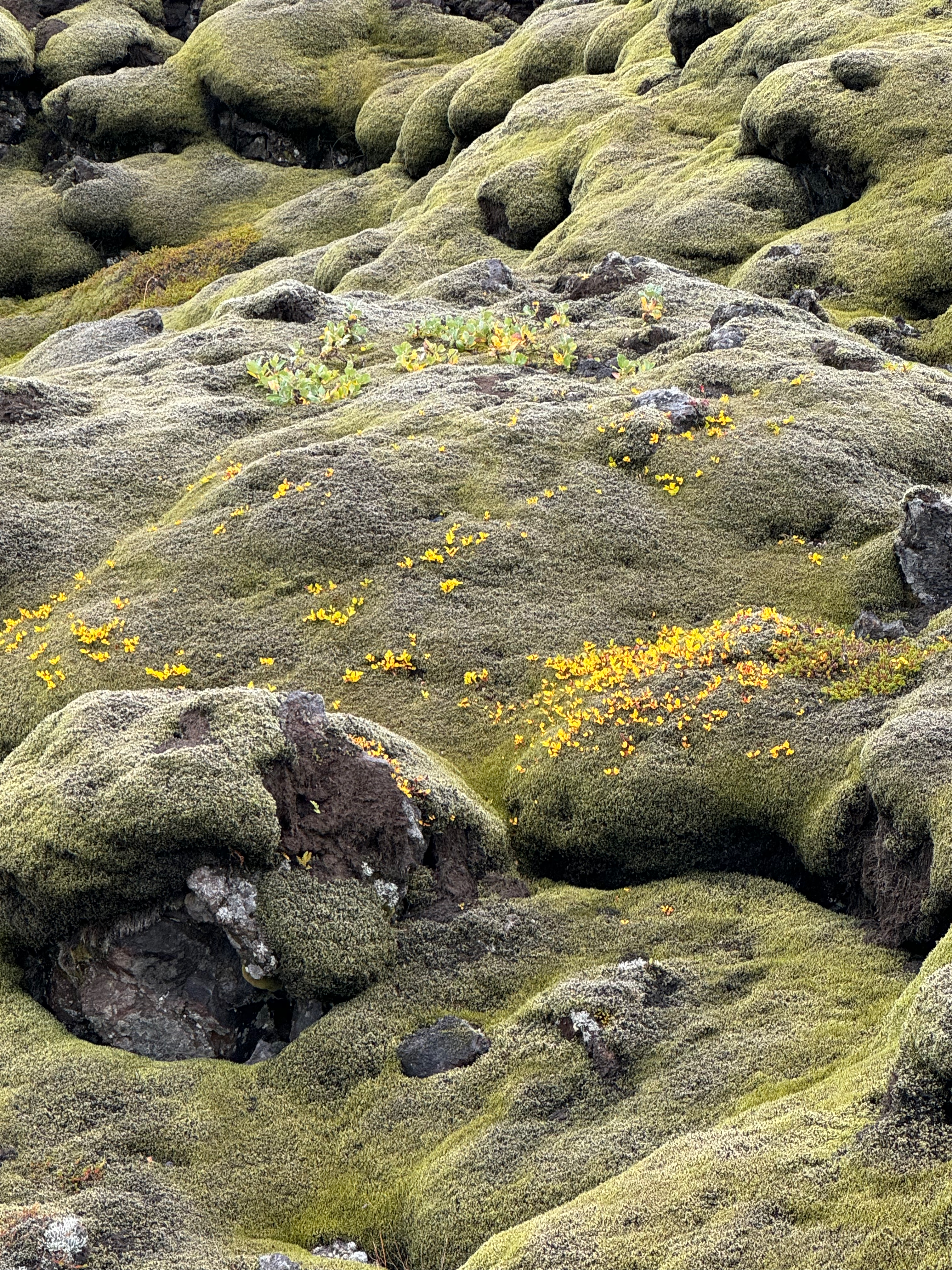


I confess – I was beginning to get rather confused by which lava field came from which eruption and when. There are a lot of lava fields. Some are still jagged and raw, while others have smoothed into beautiful hillocks covered with moss. I am further burdened by my complete inability to translate a spoken name into anything resembling letters so that I can refer to it later. All this to say – the location and timing may not be quite right on this story but here goes.
The story goes that two nuns were buried on top of the oddly shaped Sisters’ Rock after being burned at the stake in the 14th century for breaking their vows. One of them, Katrin, was said to have sold her soul to the Devil, taking a consecrated wafer to the loo and having sex with many men. As a result, she was condemned to be burnt alive at the stake. Another nun is said to have spoken badly about the Pope (blasphemy) and was burnt at the stake along with Katrin. On top of Sisters’ Rock, there are two tussocks marking the graves of the nuns. The second nun is now considered innocent as beautiful flowers grew on her grave, while the grave of the Katrin was barren.
It is also said that a group of nearby monks would make regular visits to the convent to visit the nuns. There is one spot where the monks would begin to sing as they came over the hill. I imagine there may have been a few different reasons for their singing; the fact that the lava mounds they passed over closely resembled breasts may have been one of them. There were many rumours and stories about what happened during those visits….
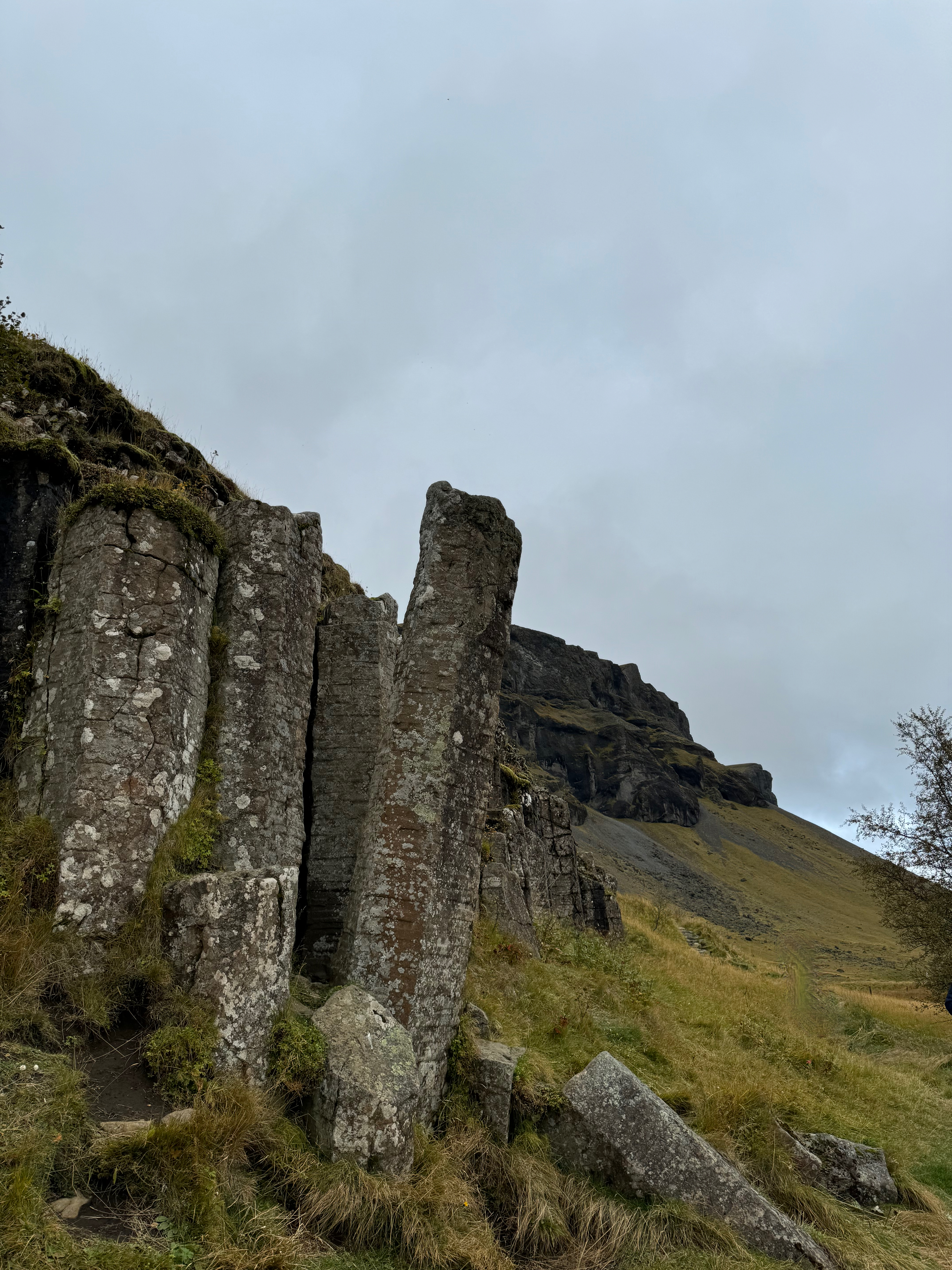
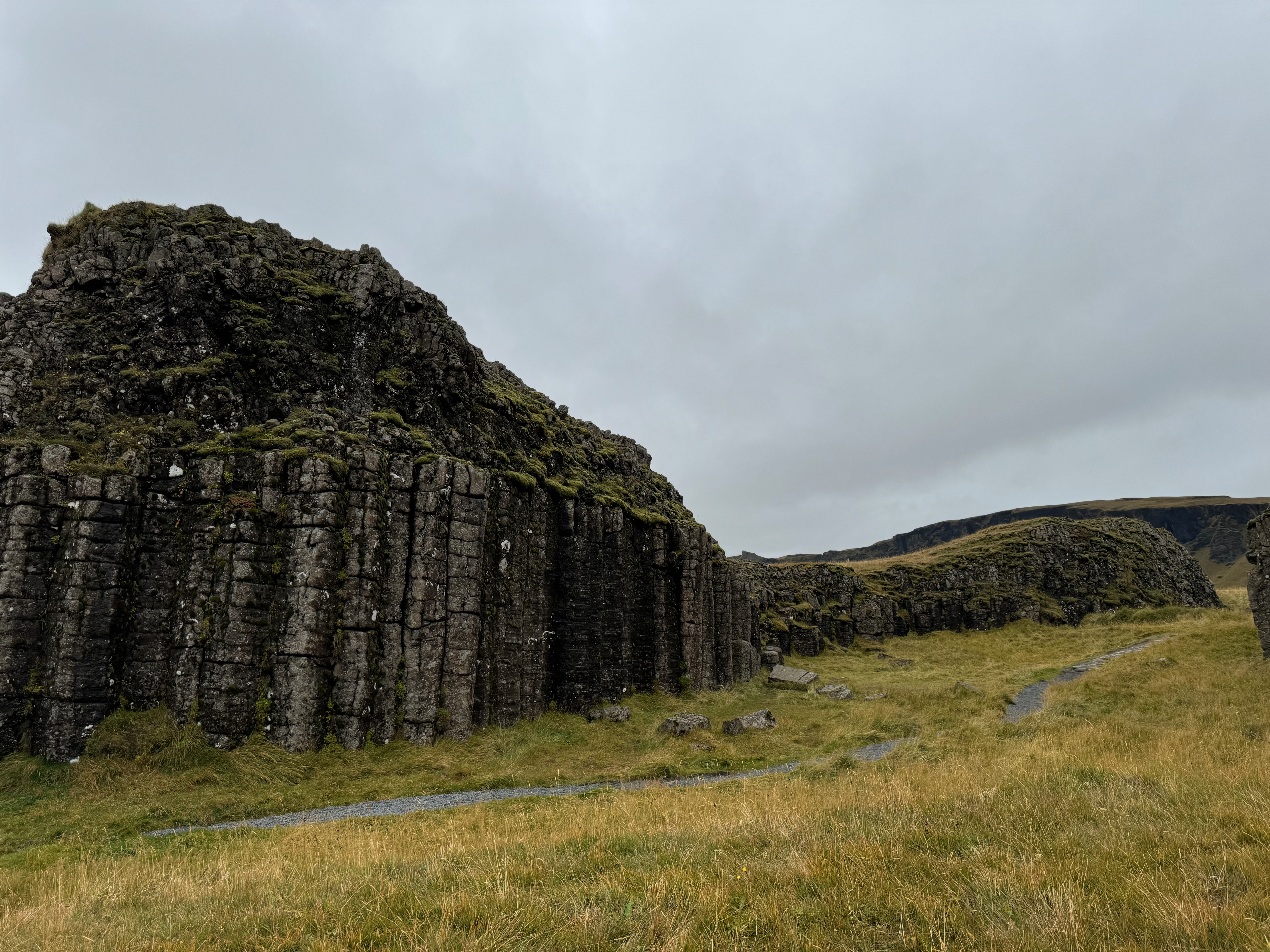
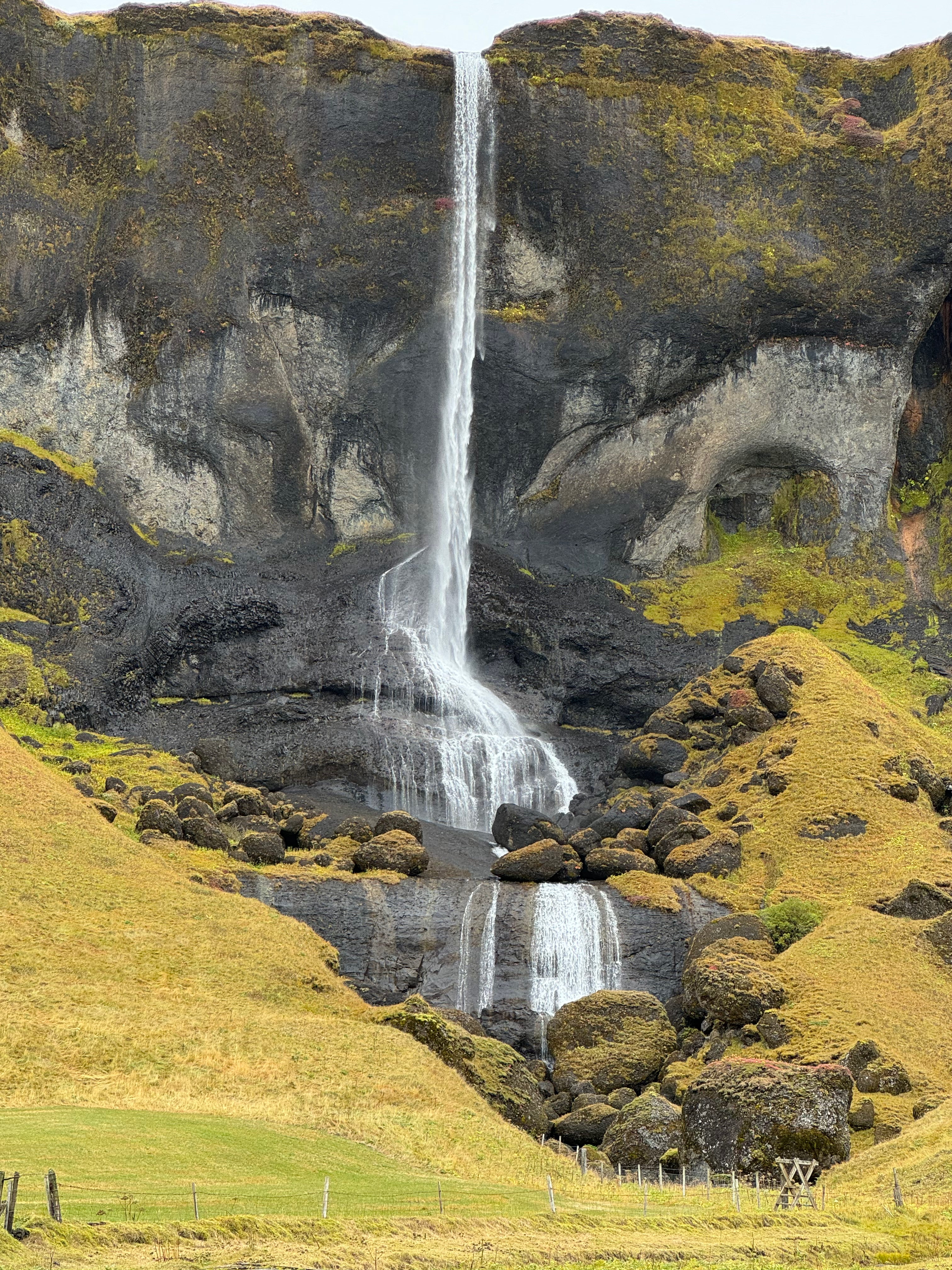
Next we had a very brief stop at the the Dverghamrar Cliffs. According to local myths and legends, dwarfs live within the cliffs — that’s why they’re known as the Dwarf Cliffs. It is quite a pretty location with basalt columns and a nearby waterfall.
There is also a story about this area. In 1904, a young girl living in a nearby farmhouse was walking near the Dverghamrar columns when she heard a sound coming from the rocks. She thought she could hear somebody singing, so she tried to see where it was coming from. She listened and looked, but couldn’t find the singer. She kept listening and realized that the song being sung was a Christian hymn about ‘Our Father in Heaven.’ Many believe that the unidentified singer was one of the dwarfs that live within the rocks.

It was definitely a day of mythical creatures. The mountains were filled with trolls, like 2 trolls kissing, and a troll seated on a chair reading. In each case the trolls would have been turned to stone when touched by the first light of day.
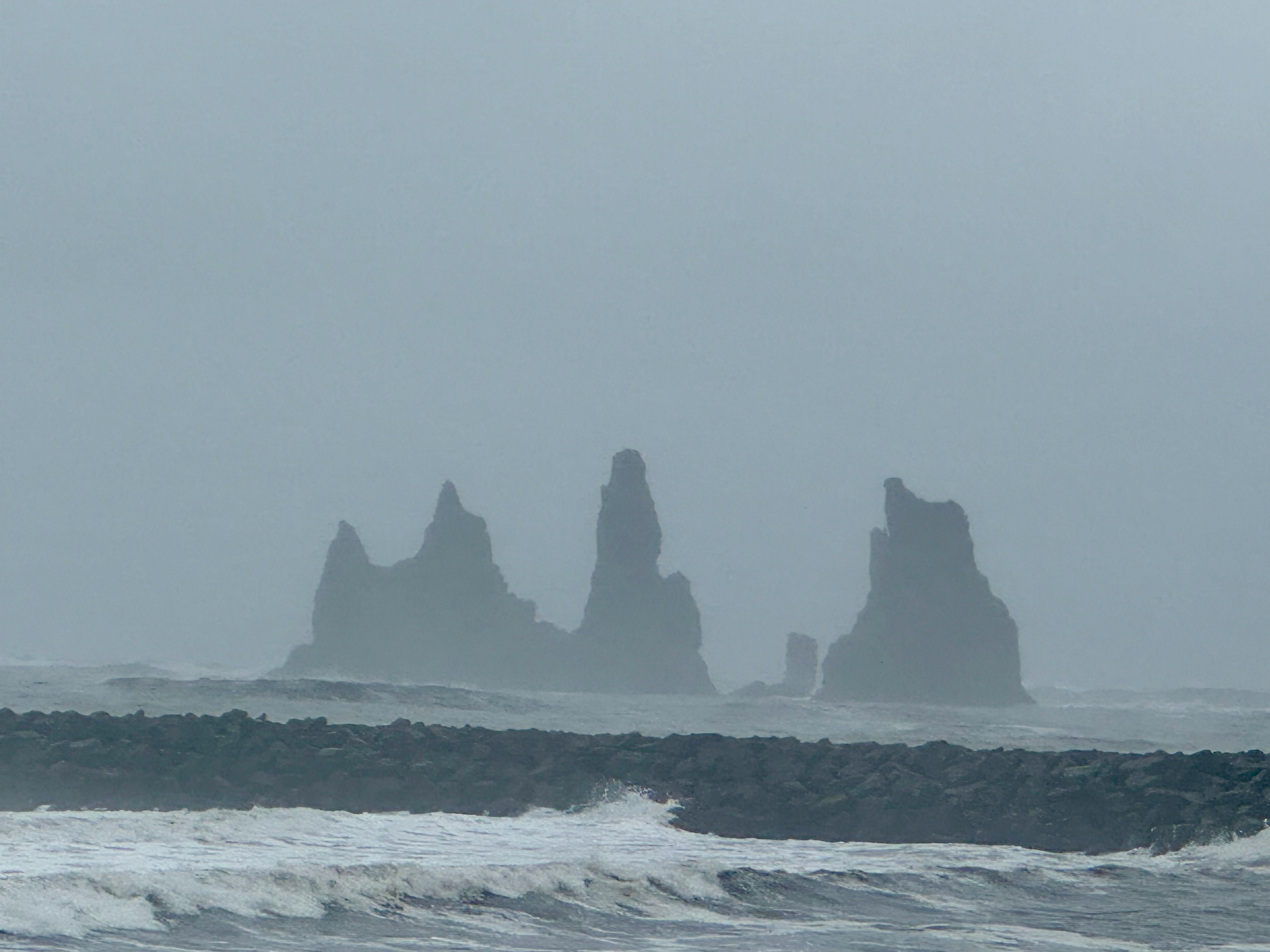
We made a brief comfort stop near Vik and there was an mysterious looking troll ship visible in the distance. The waves were very intense and the wind was howling. It was all quite eerie.

We had lunch in Foosay’s (sp? I will stay with the phonetic) home town today. He was raised on a farm and gave us the headlines on his life: up at 6 to feed the animals, shower and prep at 7, school bus pickup at 8. Farmers work damn hard. You can take the boy out of the farm but not the farmer out of the boy. We made a brief stop at an unknown location so Foosay could pick up a bunch of potatoes which he sells or delivers to other people.
Many of our meals have been included on this trip – more than usual. I think that is partly because we have often stopped or stayed in more isolated places with few choices. In spite of this, our meals have been excellent. Every one of them. We have had it all: fish, chicken, lamb and beef. It is all Icelandic, grazing animals are all grass fed. and I believe they have had a happy life after observing thousands on our journey.
I have especially enjoyed the soups- lamb, cauliflower, and tomato have been my favourites with squash not far behind. Almost all have been beautifully presented. Lunches are typically two courses with coffee, tea and water. Dinners are three courses with a starter, main and dessert and include a glass of wine or beer. Everything comes with bread and has consistently been excellent. I shall have to go on a semi-starvation diet when I return if I wish to stay in my hard won small pants. But it has been worth it – I have enjoyed every bite.
Liquor is very expensive as it it mostly imported. Rick has really enjoyed the Icelandic beer: Skull and Viking. The wines are typically from Italy with a few Argentinians for good measure. They have all been very good – though I say that having only really sampled a few of the red wines.
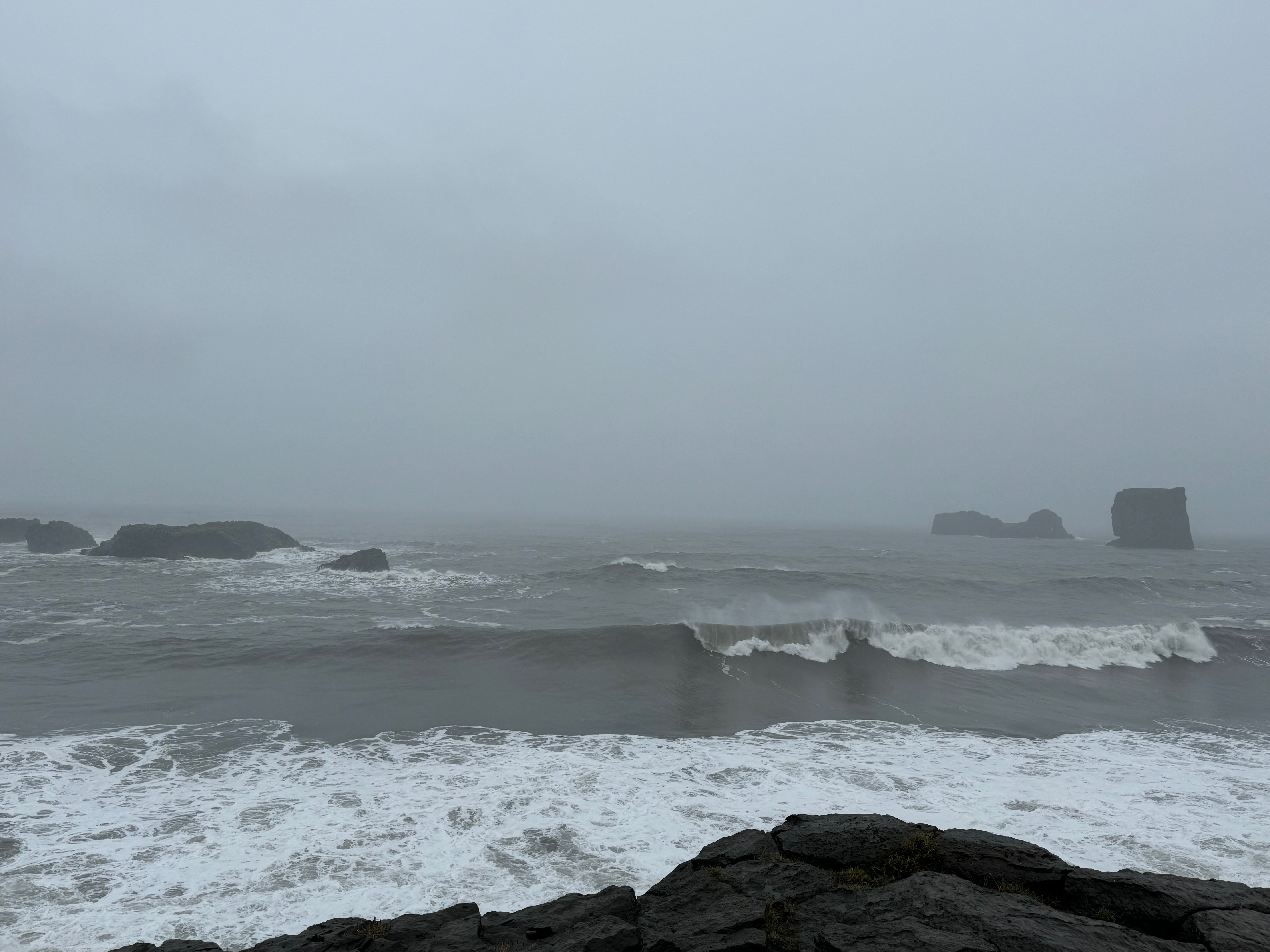
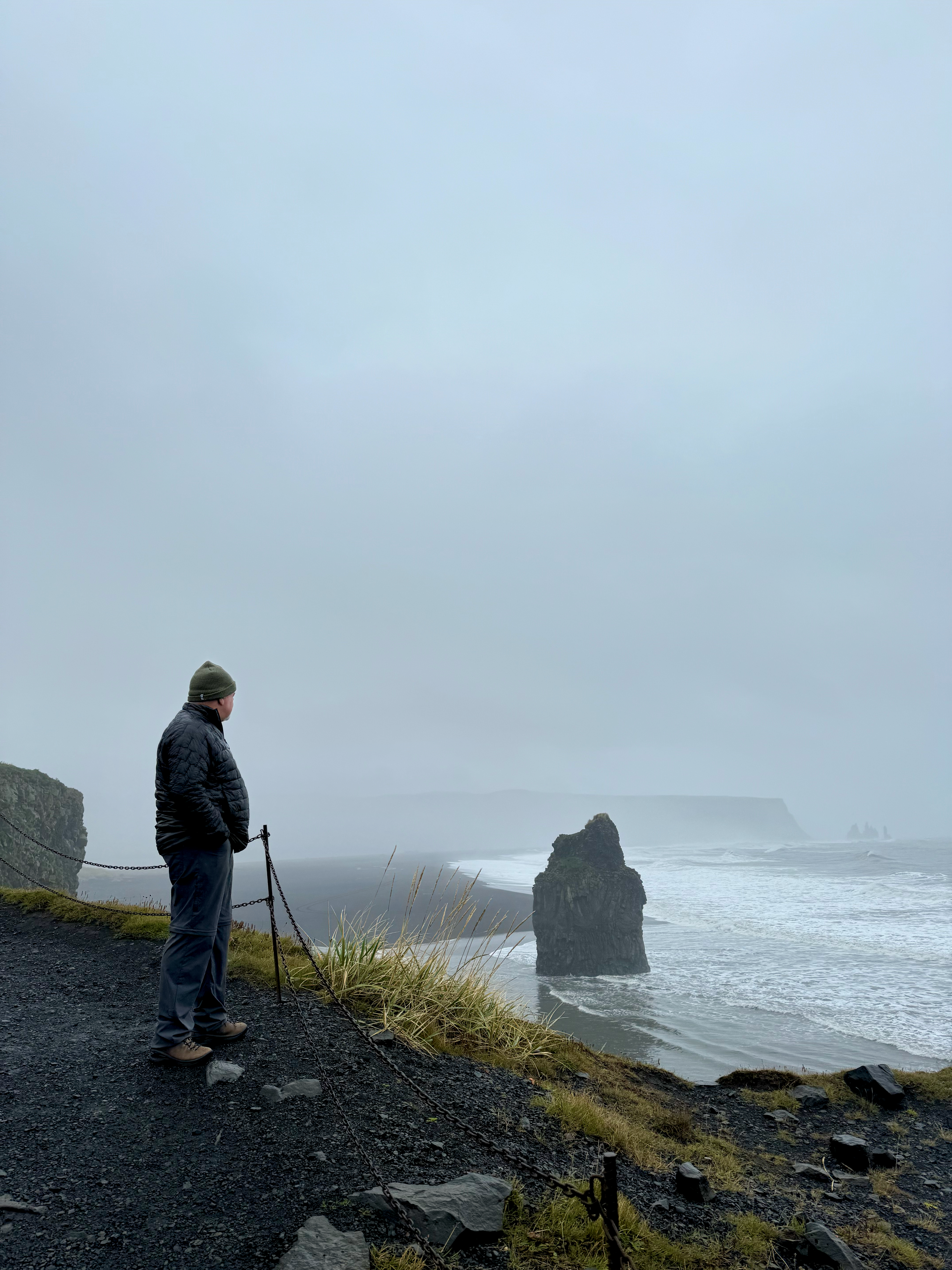
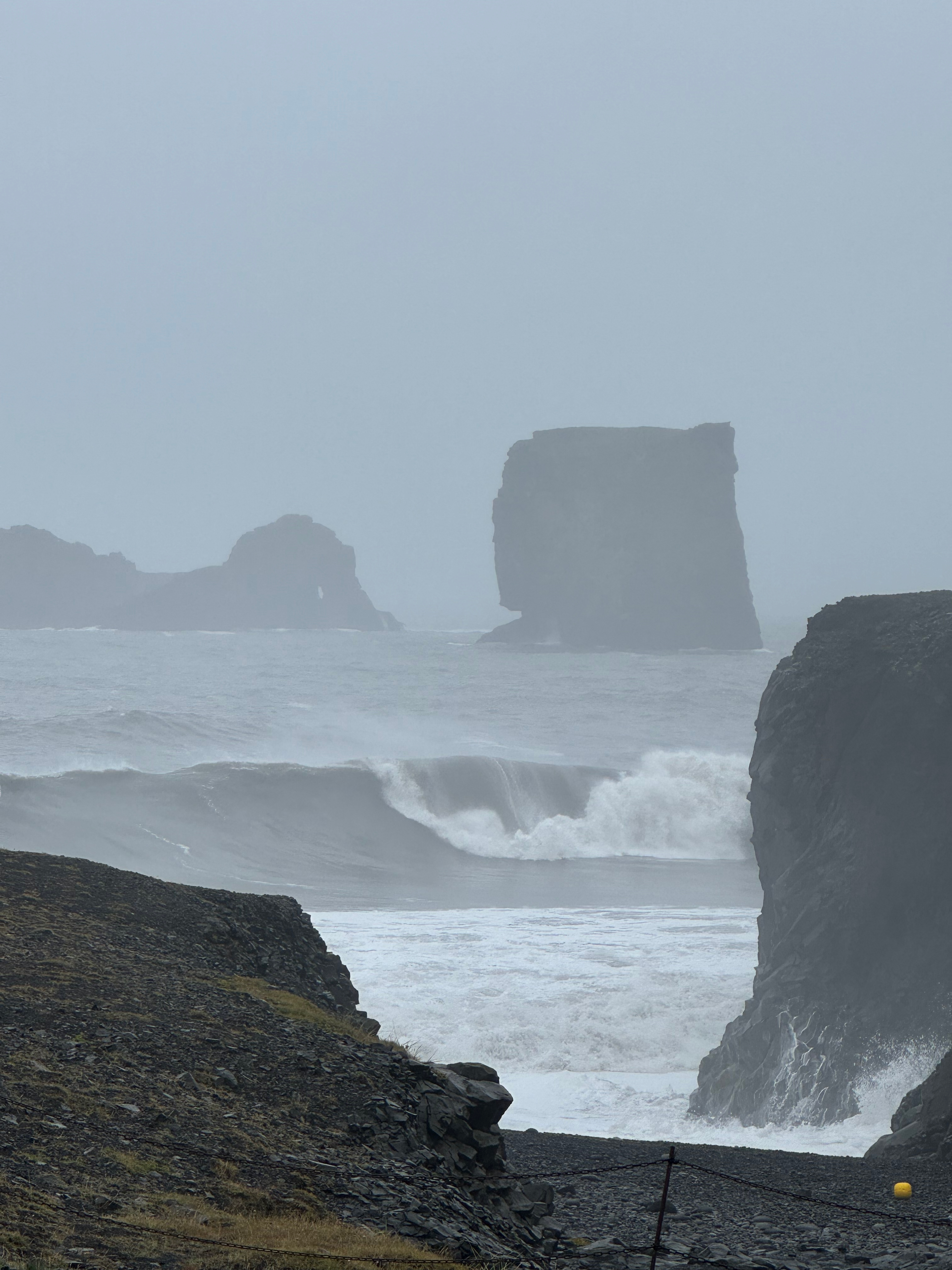
Our next stop was bird island. We did not expect to see Puffins as they typically return to the ocean in late August after breeding. We did see some impressive ocean views and some very active waves. It reminds me of why we love Ucluelet so much.


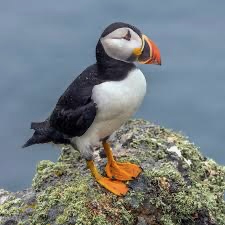
Puffins really are amazing creatures. They are able to fly as fast as 90 km per hour and flap their wings 400 times per minute. They can also dive 200 feet into the ocean to feed. They are so round and charming looking that I tend to think more penguin than Puffin but they are mighty. There are about 10 million of them in Iceland during the breeding season.
Unsurprisingly, no Puffins were spotted, though we did see a few Fulmars which are prettier than your average seagull and in fact their resemblance is misleading as they are not actually related. One to two million pairs breed in Iceland; each has a single egg. Non-breeding Fulmars will remain on their ledges to ensure that no other birds take over potential nesting sites. They defend themselves by vomiting an oily liquid over aggressors.
Images of both follow – obviously web-borrowed and not my own. I do have a less appealing photo of a Fulmar above though.

I will share this last stop of the day at Seljalandsfoss. It was raining so heavily that we all spontaneously started singing together “Singing in the rain! Just singing in the rain…” as we climbed off the bus in our many shapes and shades of rain gear. Collectively we actually made it through two verses.
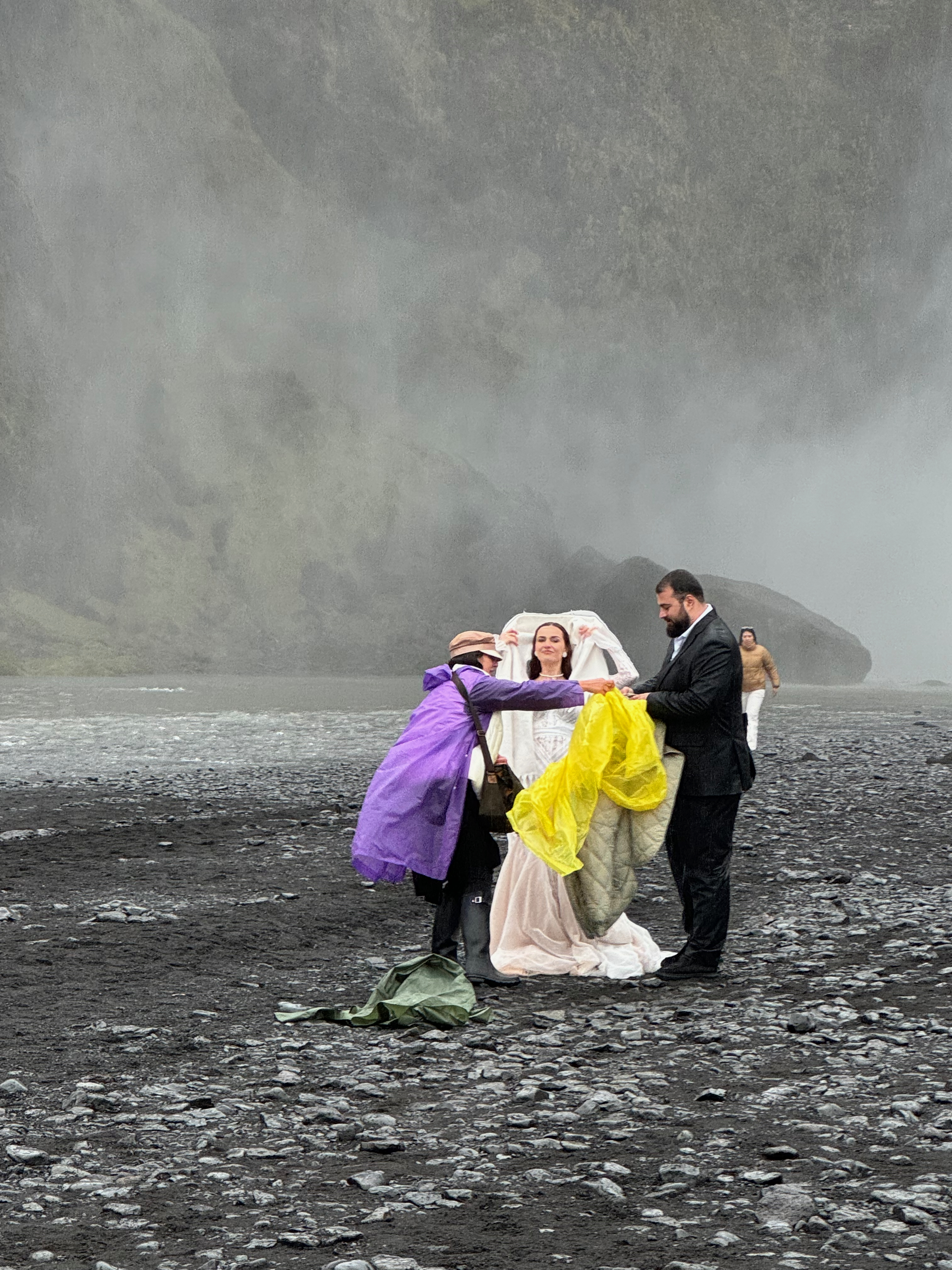
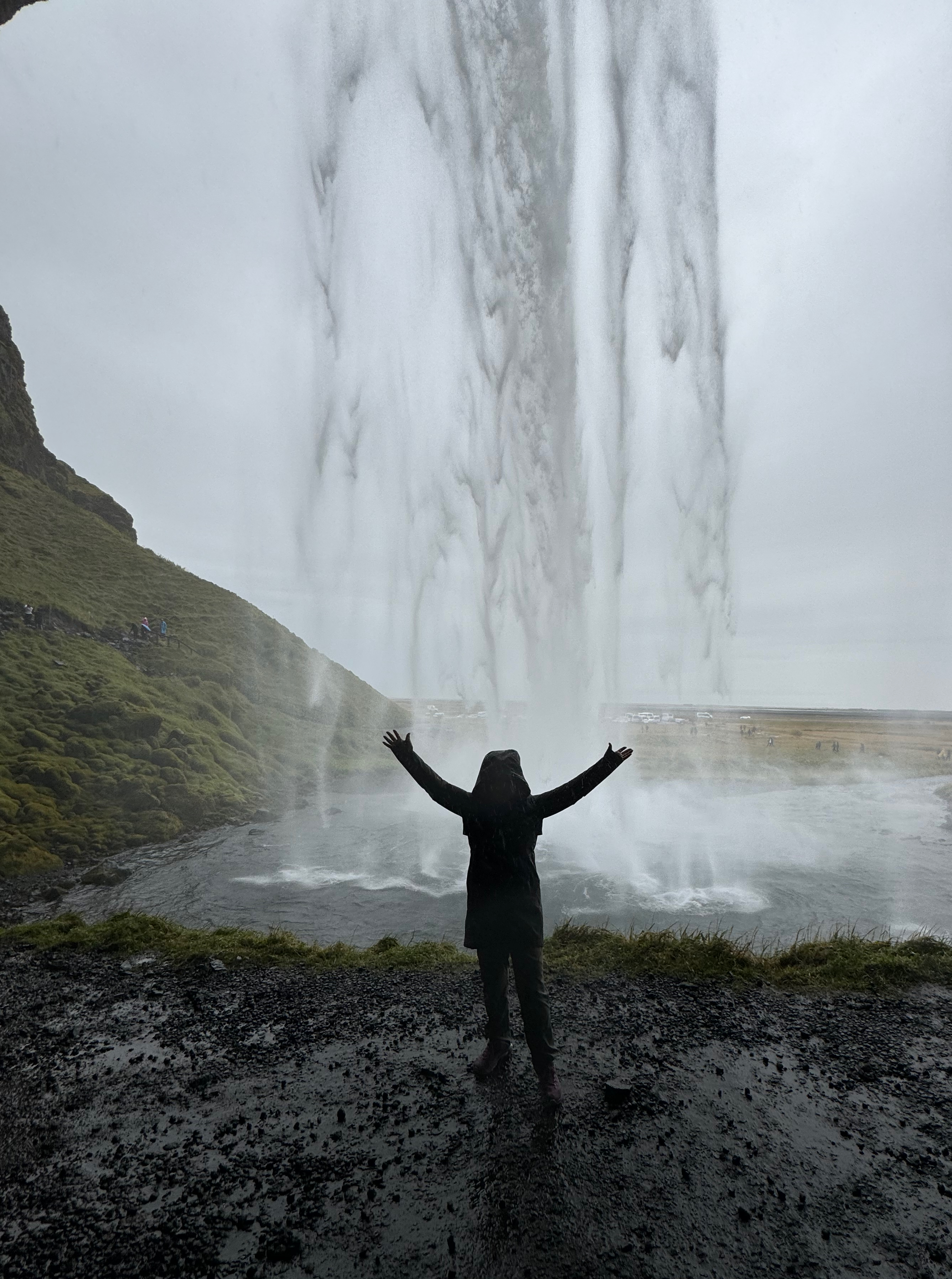
Seljalandsfoss a lovely waterfall made slightly more intriguing by the fact that you can actually walk behind it. Which we did. Even with the heavy rain, we watched a bride and groom being photographed in the chilly weather. I think the falls actually threw off more water than the rain and it was quite cold out there.



My final thought for the day. I have found Icelandic a challenging language. Some words are quite recognizable when written down, especially those that are close to German, so that helps a little. However, I have a very difficult time listening to words and being able to convert them to a written word. Sadly, I did not improve much in this regard. What was interesting though is that in most countries I have learned to speak ‘food’ first. I can get by with a menu in most countries. In Iceland, I have collected words that describe the features of the landscape. This seems fitting.
- Foss – waterfall
- Strond – beach
- Jokla – glacier
- Fjall – mountain
- Anni – river
- Fjord – I think we just use this as is
- Takk fyrir – thank you
- Godan daginn – good morning (phonetically it is go-thah-n die-in) which we said to each other when we boarded the bus each morning. I got by substituting a quiet “golden lion” for a few days. No one noticed.
- Ja – yes
I did have a look. Sadly Duolingo does not offer Icelandic at this time.

 Adventures of a curious mind
Leave a comment