Yesterday was the day. After my usual flurry of morning Zoom calls and a few hours in onsite sessions we all headed off on a short tour covering some of Seoul’s high points.
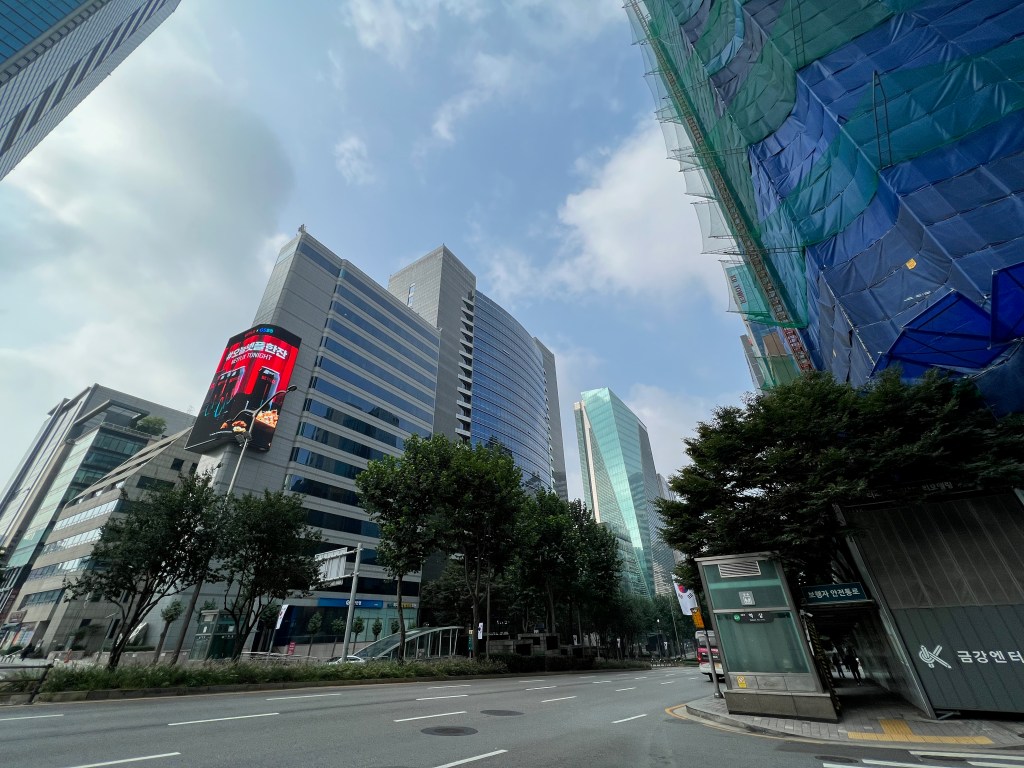
Our hotel and the EA office are located in Gangnam (which translates to ‘south of the river’). The Korean government wanted to extend the size of the city so acquired a large region of agricultural land in the 70’s and began to develop. Unsurprisingly, government officials, aware of the plan, made some tidy profits through buying and reselling fields of watermelon and cabbage.
Gangnam is now the wealthiest area in Seoul, notable for its luxury cars, high real estate prices and for having the largest population of both psychiatrists and plastic surgeons in Korea. It looks very different from the rest of the city with it’s wide treed boulevards, tall office towers and glass apartment buildings.

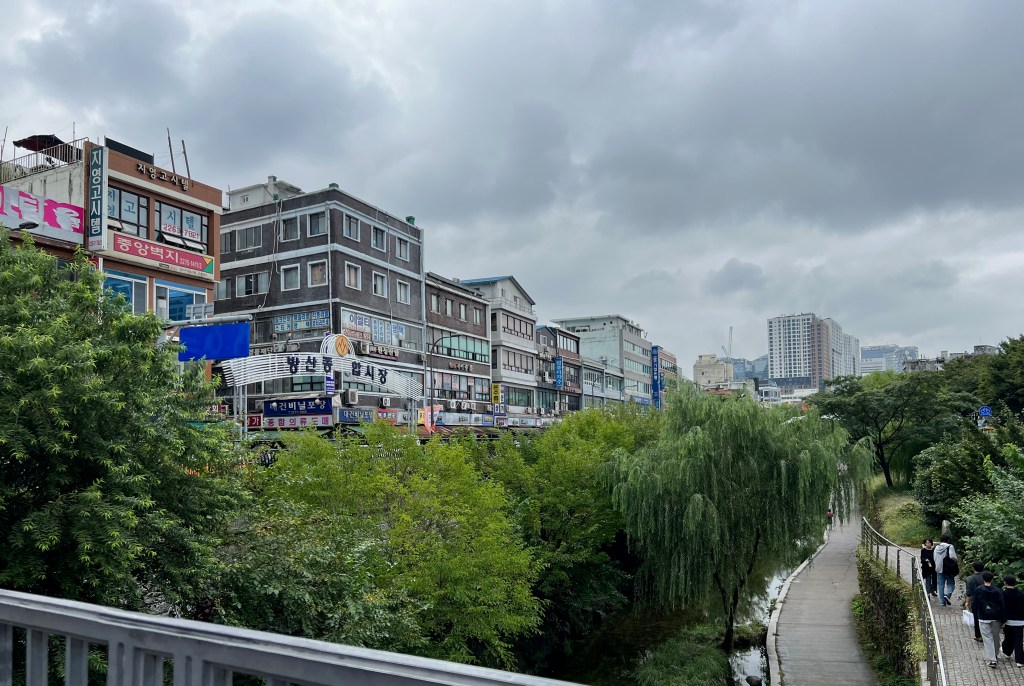
Below is the Seoul I remember from my last trip to Korea, about 20 years ago. These photos were taken on the northern side of the Han River, which is crisscrossed with 27 bridges connecting the north and south of Seoul.
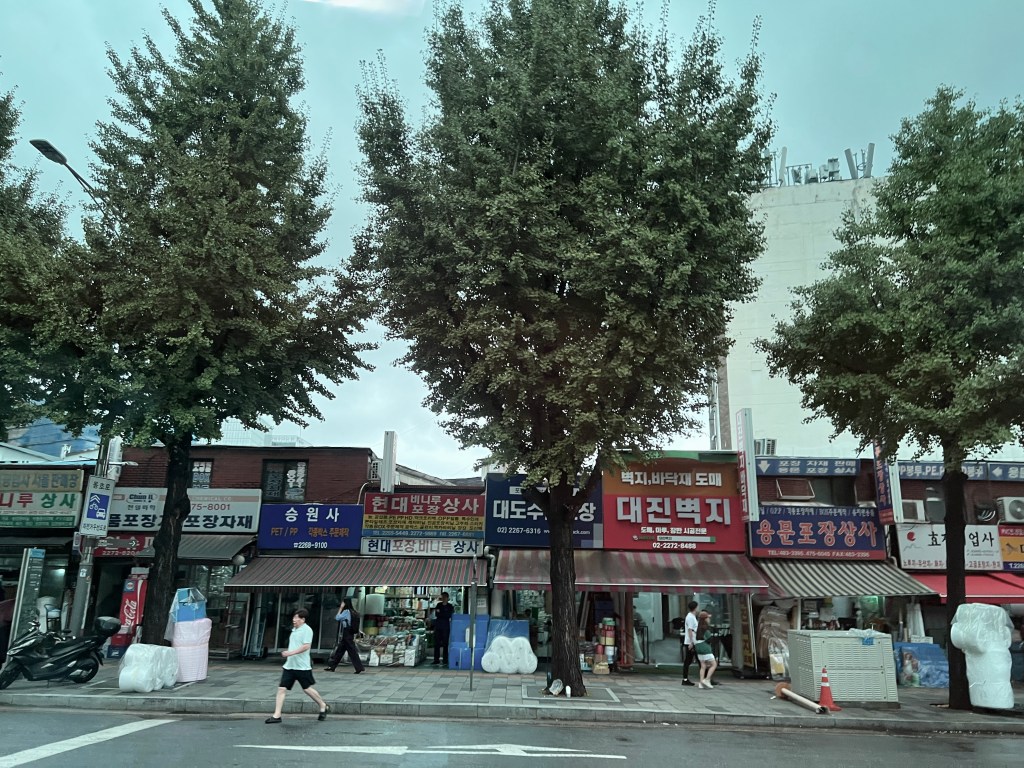
Our first stop was the Gwangjan market. Primarily filled with small food stalls, there is also a healthy collection of tiny shops and stalls around the edges of the market and in the surrounding streets. You can buy everything from toothpaste to t-shirts.
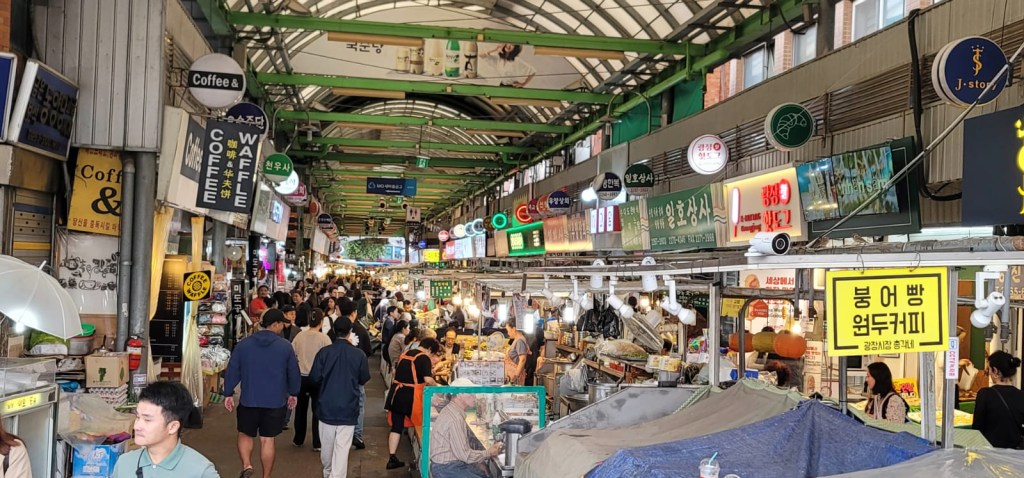
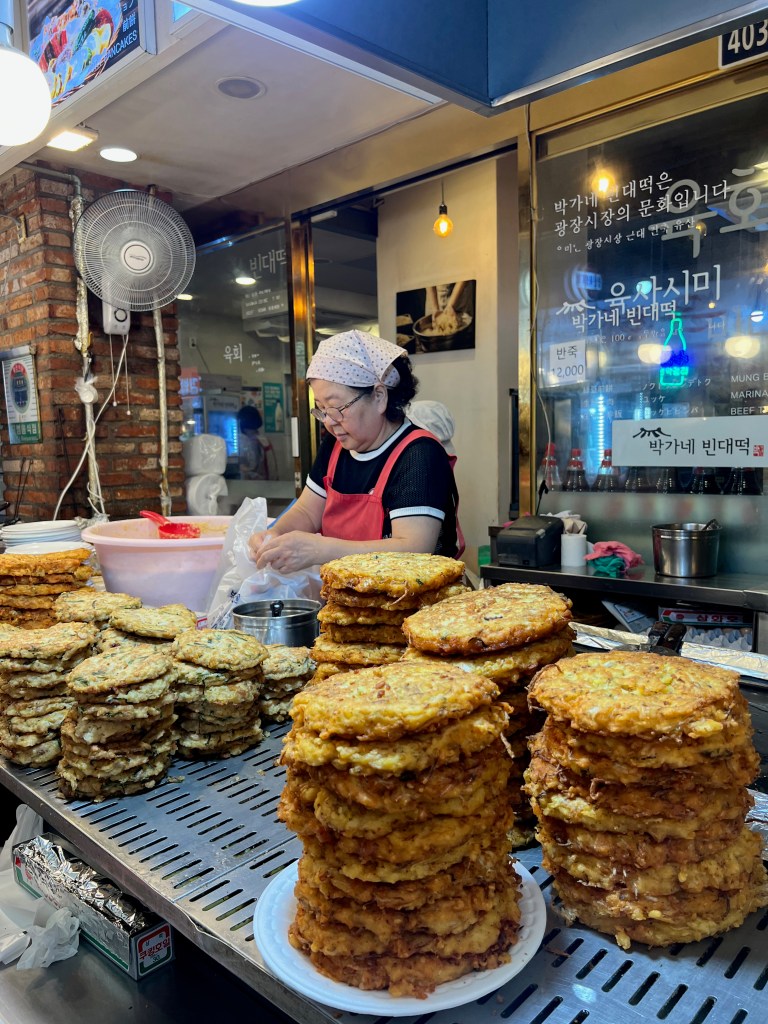
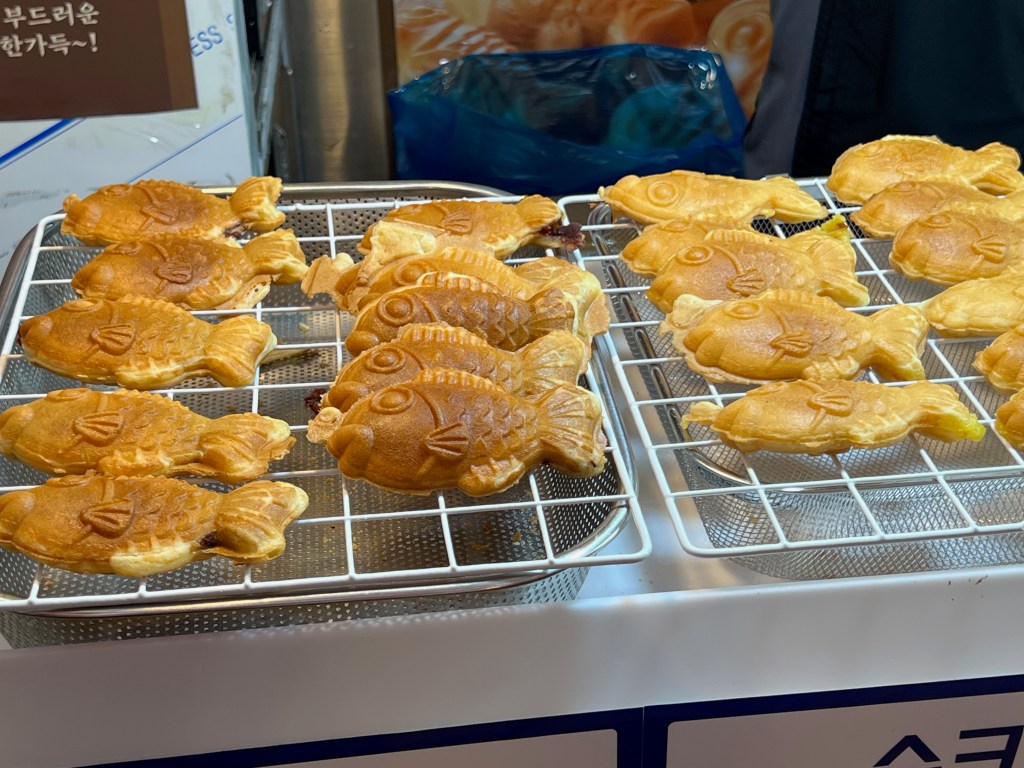


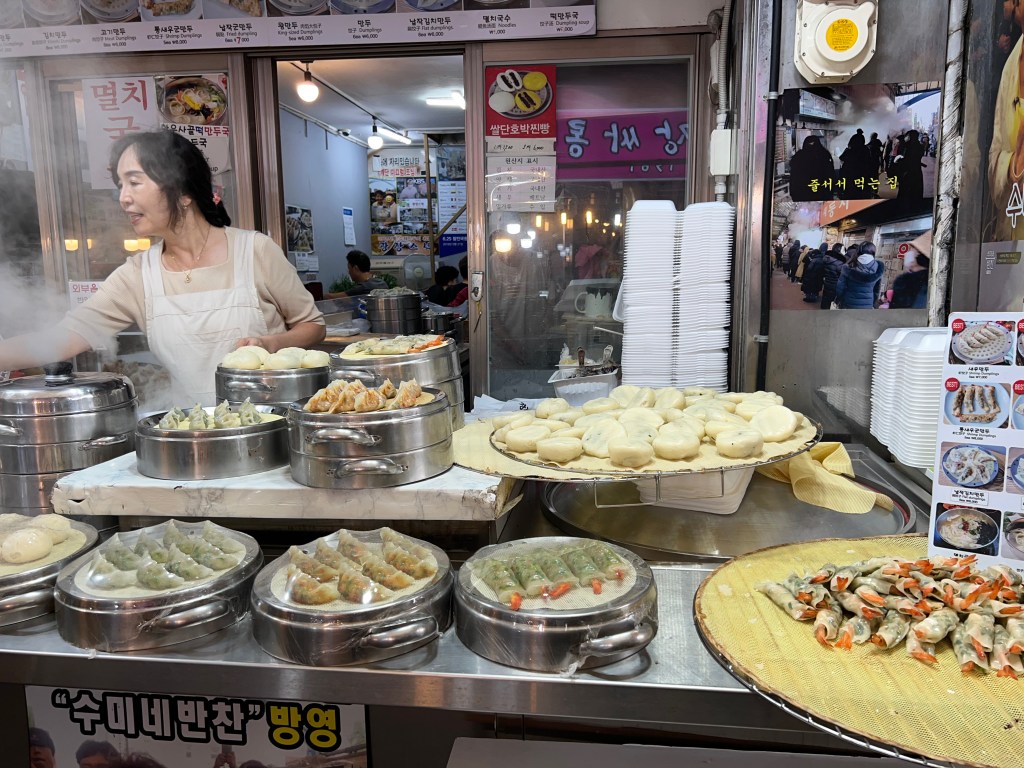

The market is large, and difficult to navigate as you can easily lose your way with the many twists and turns. It is also very crowded. Most of the stalls have only 4 to 6 seats for patrons who order from the giant pots and plates of food in front of them. Some of the larger stalls, typically located at the intersections, actually had lines of waiting customers. Turnover is fast. No one wanders while they eat.
I was intrigued and occasionally disturbed by the huge blood sausages, barbecued pig faces and tanks of adorable tiny octopus. (I feel comforted when I imagine small children taking them home as pets.)
Lunch had been arranged for us at a small restaurant just above the market. They specialized in mung bean pancakes which are famous in the Korean food scene. You can see stacks of them in one of the photos above. They are a celebration food and in high demand this time of year as Korea is celebrating the 3 day Chuseok holiday this weekend.
We climbed 4 stories of rickety stairs, past a kitchen that would never pass a health check, to arrive at our private dining area. I use the term ‘dining’ lightly.
There was food. We ate it perched on wooden benches around an ancient, scarred, stainless steel table. We drank mung bean wine which had little resemblance to actual wine. There was a lot of mung bean sediment, which was part of the experience but a bit hard to get past. Although the taste was rather sweet, it was not unpleasant and had a light effervescence. We drank it from shallow tin cups, maybe prison issue?
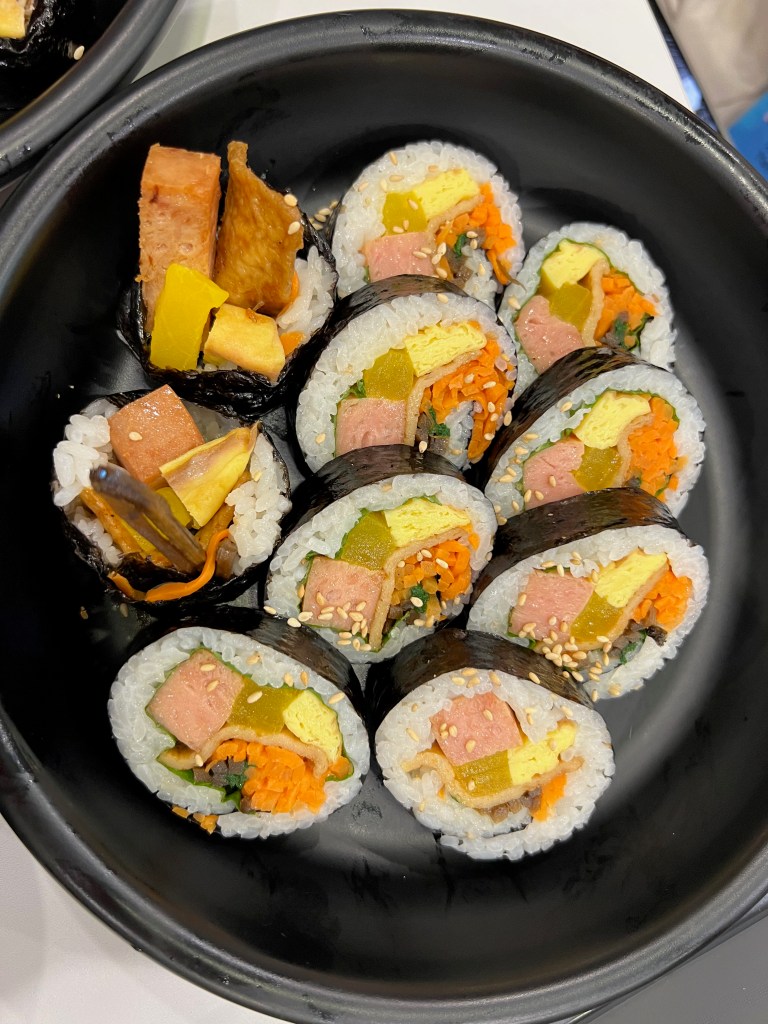
Our meal included vegetable mung bean cakes, pork mung bean cakes, thinly sliced beef dipped in egg and fried (think beef french toast), and a kind of gnocchi in tomato sauce made with rice flour which made it very elastic and chewy. My personal favourite was gimbap, the Korean version of a sushi cone with vegetables only.

Warning: If you are squeamish – skip ahead to the next paragraph. The featured course, and by far the most expensive, was ‘live’ octopus and beef tartar. It was horrendous. There was not enough mung bean wine or beer in the world to compel me to eat it. I reminded everyone of the movie “My Octopus Teacher”. I told them stories of octopus suckers getting stuck in peoples throats. I made sure they knew how intelligent an octopus was. I was a flat out nuisance. I cannot unsee it. The freshly killed octopus was rapidly chopped into small pieces which continued to wriggle about on the serving platter for several painful minutes. Almost everyone tried it. I couldn’t, wouldn’t, didn’t.
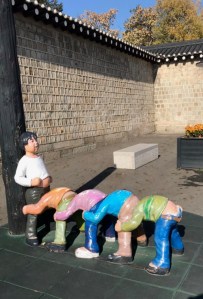
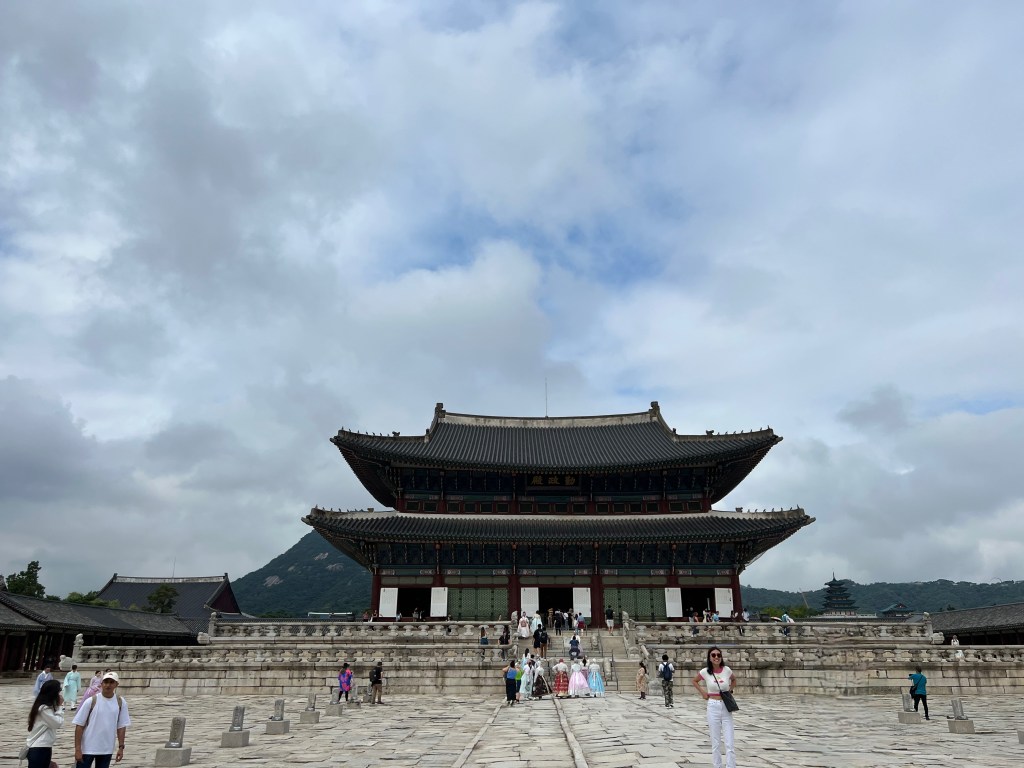
Lunch done, we piled back into our mini bus and 15 minutes later arrived at Gyeongbokgung Palace. But not before passing this somewhat alarming statue of children playing a “popular Korean children’s game”.
The last ruling King of Korea was Gojong , the 26th monarch of the Joseon Dynasty which had ruled Korea for 519 years. He died in 1919. His second son was the last officially recognized King for three years before Japan took control of Korea in 1910 and tossed the monarchy.
Outside the palace walls there are a number of shops that rent traditional clothing for visitors to wear when visiting the palace. There are beautifully dressed men and women everywhere which really brings the experience to life.

The palace itself is very impressive. It consists of many buildings, some heated for the winter and some with large wooden window panels that can be used to funnel cooler air in the hot summers. The emperor would move from room to room and building to building as a safety precaution.


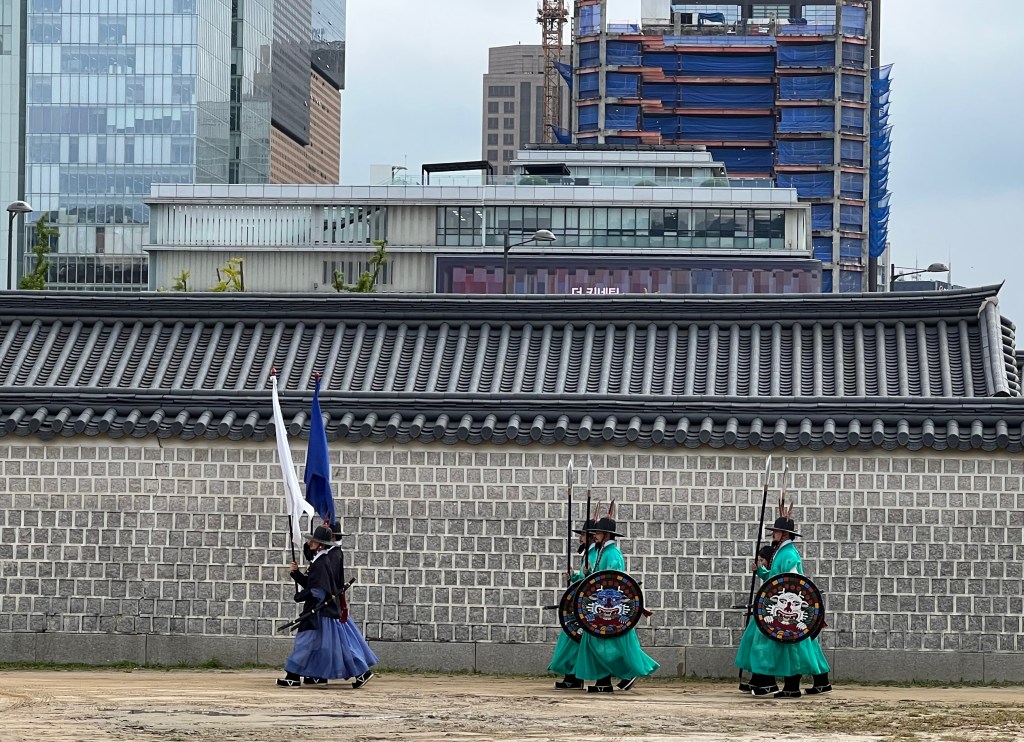
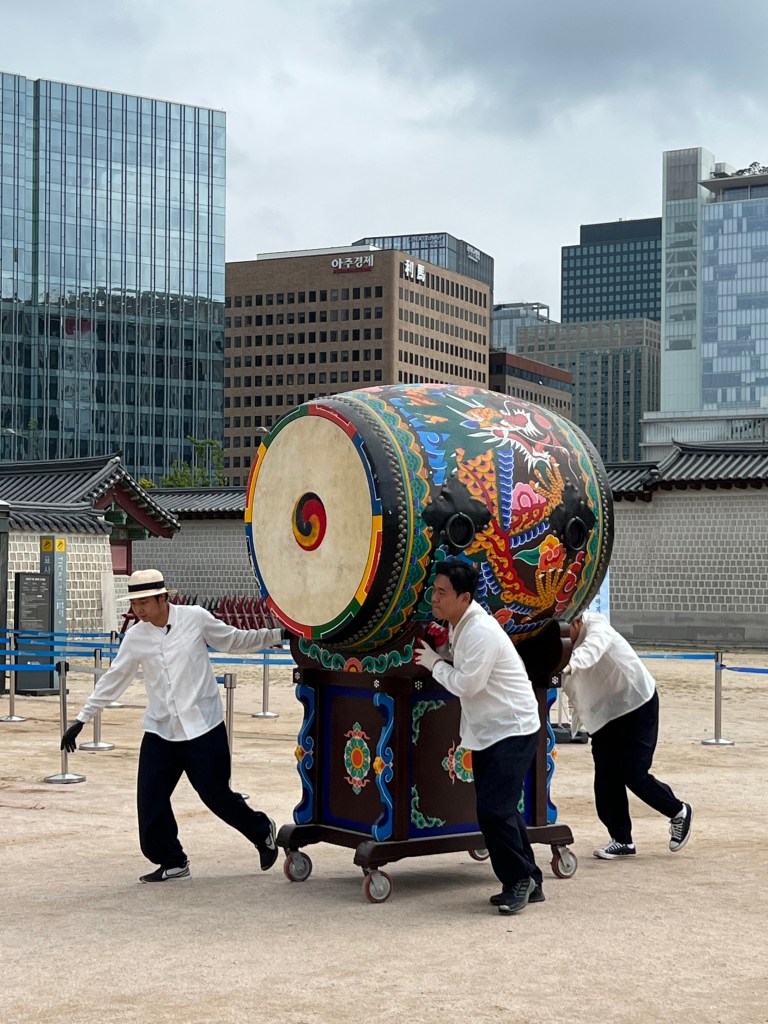
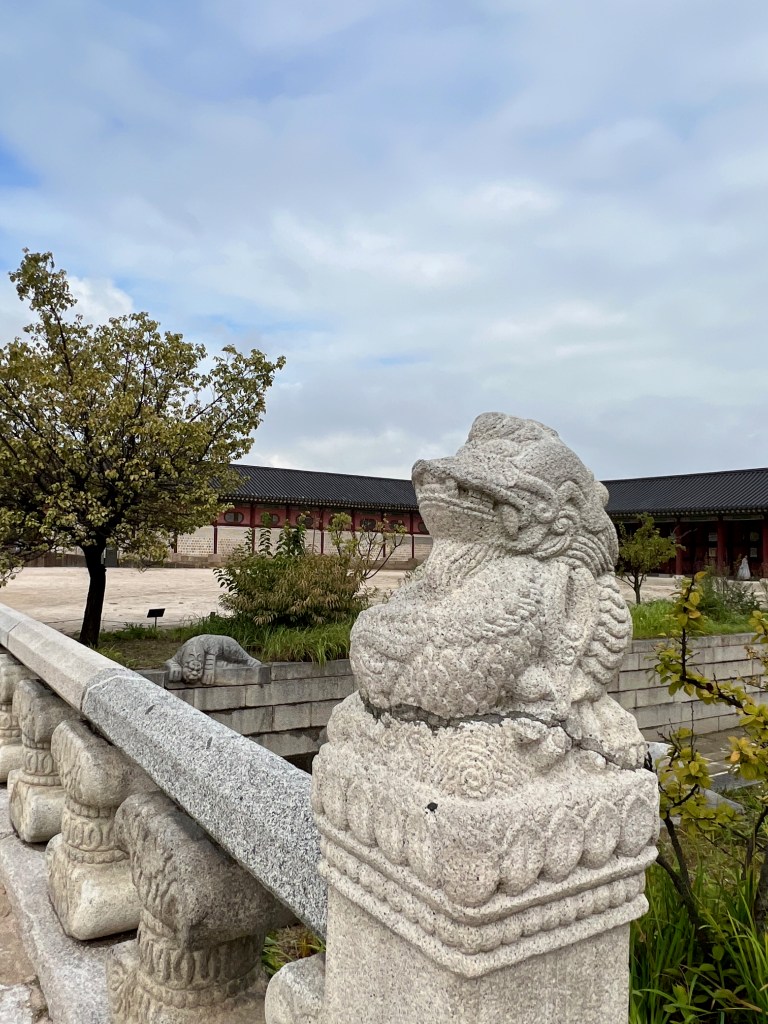
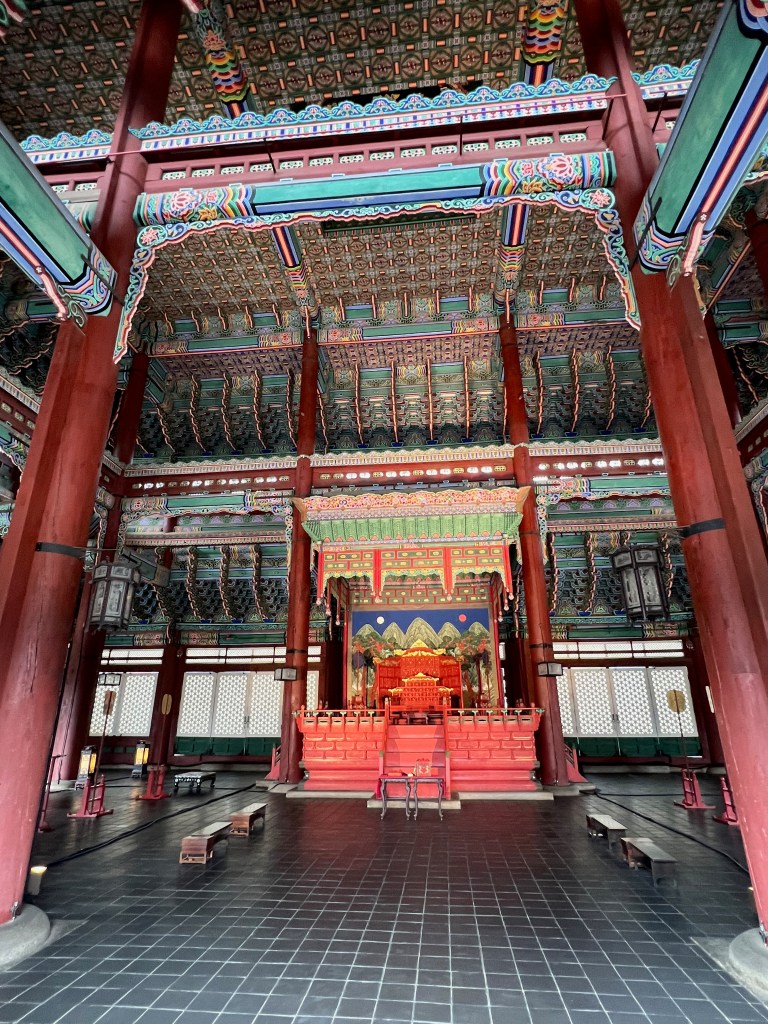
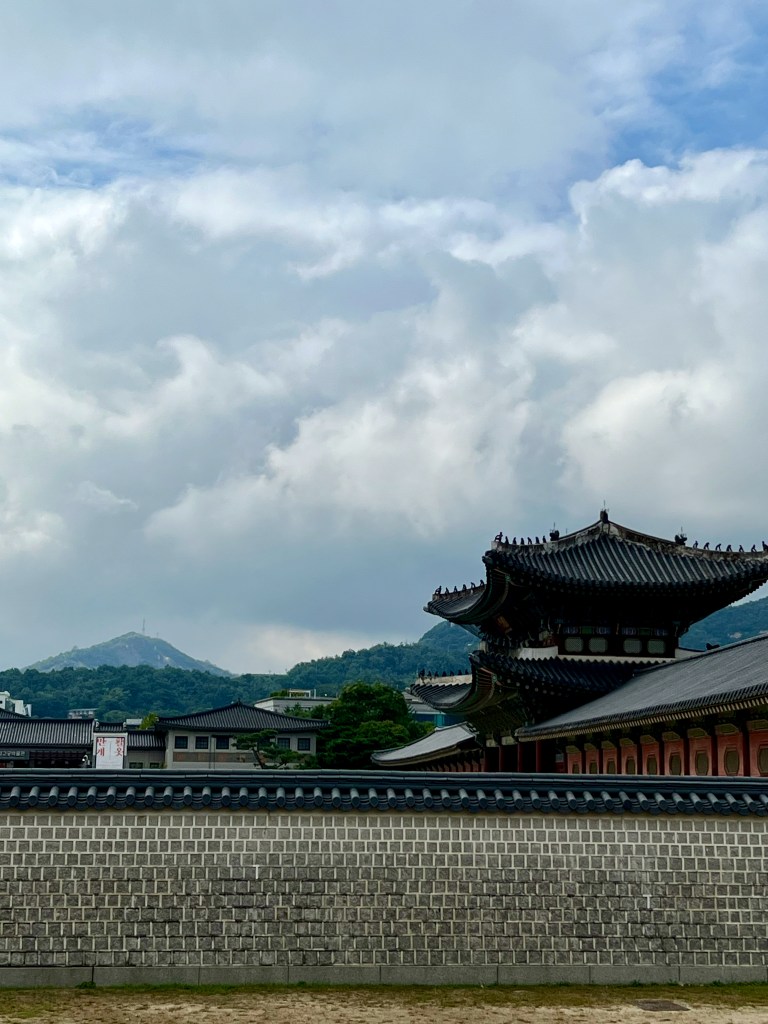
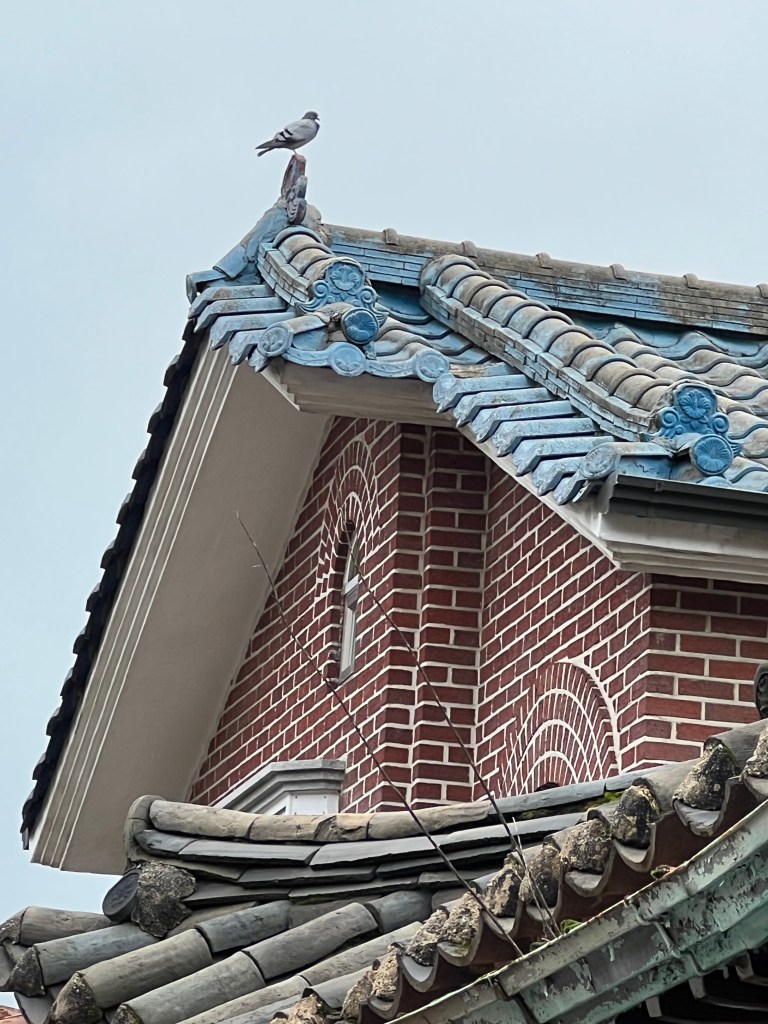
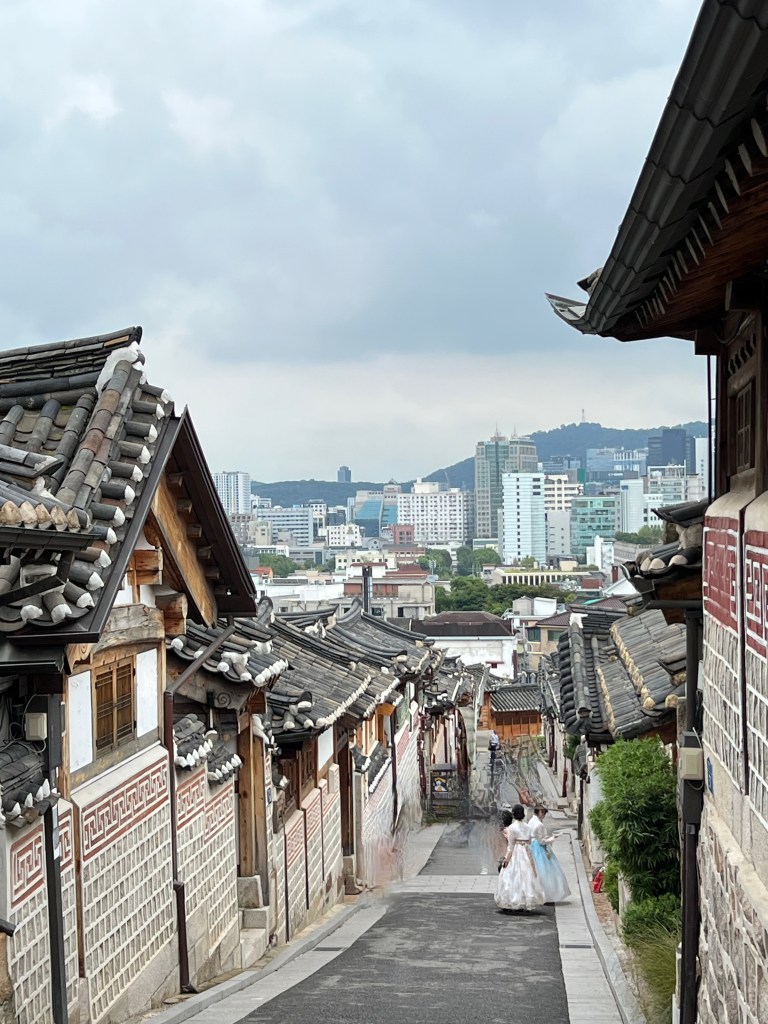
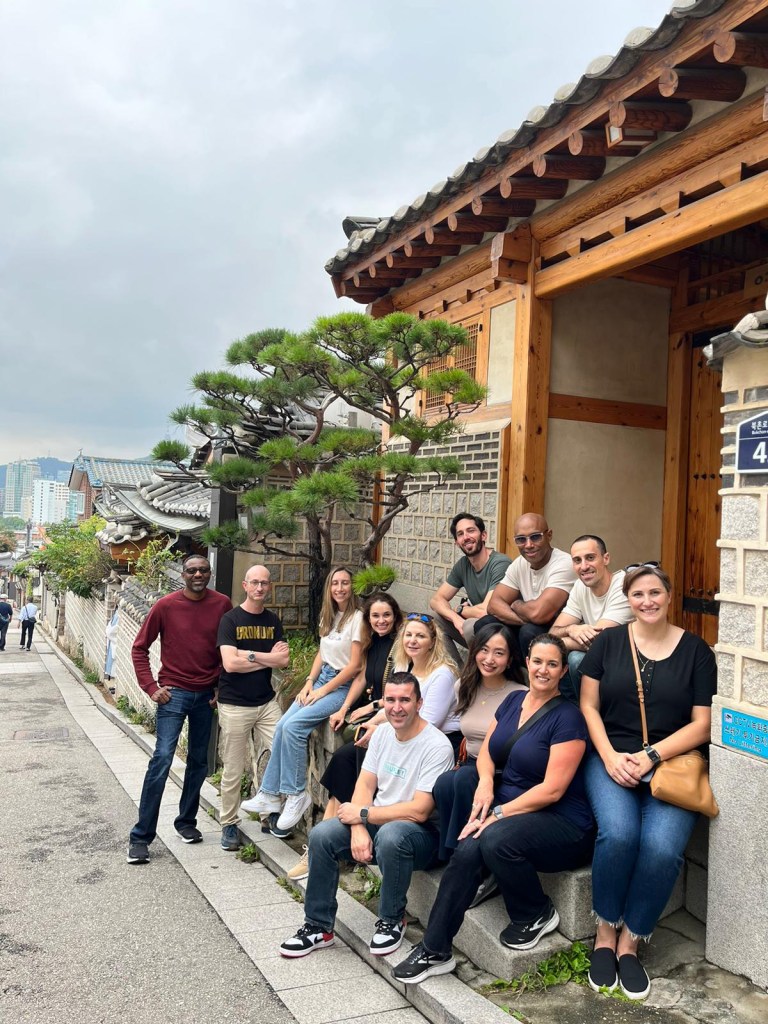
Back in bus, another 15 minute drive, and we arrived at Bukchon Hanok Village, home to hundreds of traditional houses, hanok, that date back to the Joseon dynasty. The homes are still in use, and the government offers subsidies to encourage people to live there and maintain the buildings. It was a very hilly walk along narrow streets, but very beautiful well worth the effort.

Our final event of the day was a cooking class. To get there we had to drive through more busy streets and then walk through the Yangyeongsi Herbal Medicine Market. It was a very, very cool experience. I had no idea what most of the herbs and remedies were. Some smelled so amazing while others… much less so.


Our journey led us through an incredibly stinky market where the main product was fish in many forms. I was increasingly worried about how this cooking class was going to turn out as the smell followed us up the 4 flights to our classroom.
Places had been set and some of the ingredients prepared for us in advance. We were going to make bibimbap (rice with vegetables) and jeyuk bokkeum (spicy fried pork). The chef was great and we managed to pull off a pretty decent version of the meal. Jessie, our local guide, returned to our pan of spicy pork more than once saying it was the best in the class. She wasn’t wrong – it was definitely the crispiest and that seems to be the trick.
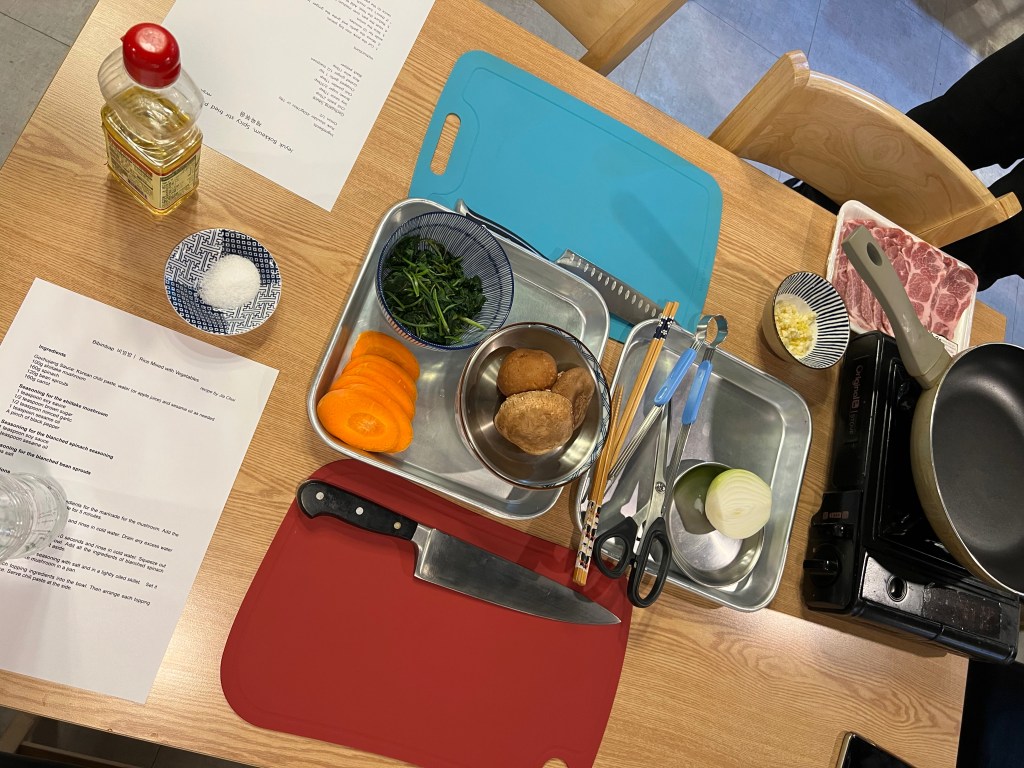
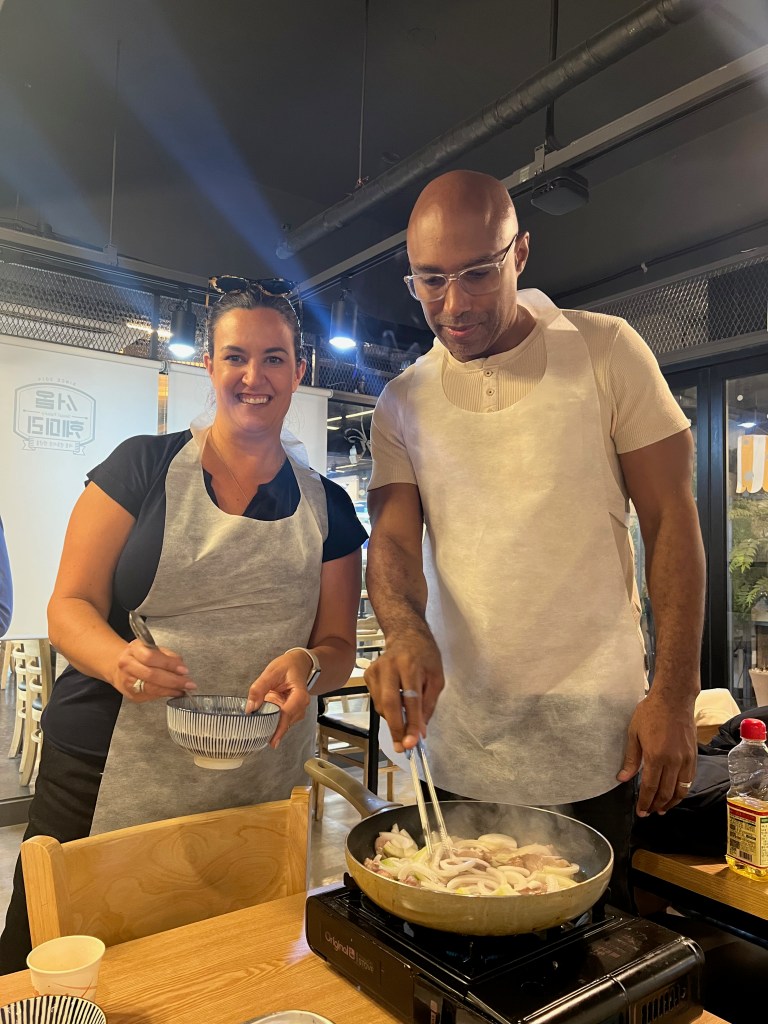

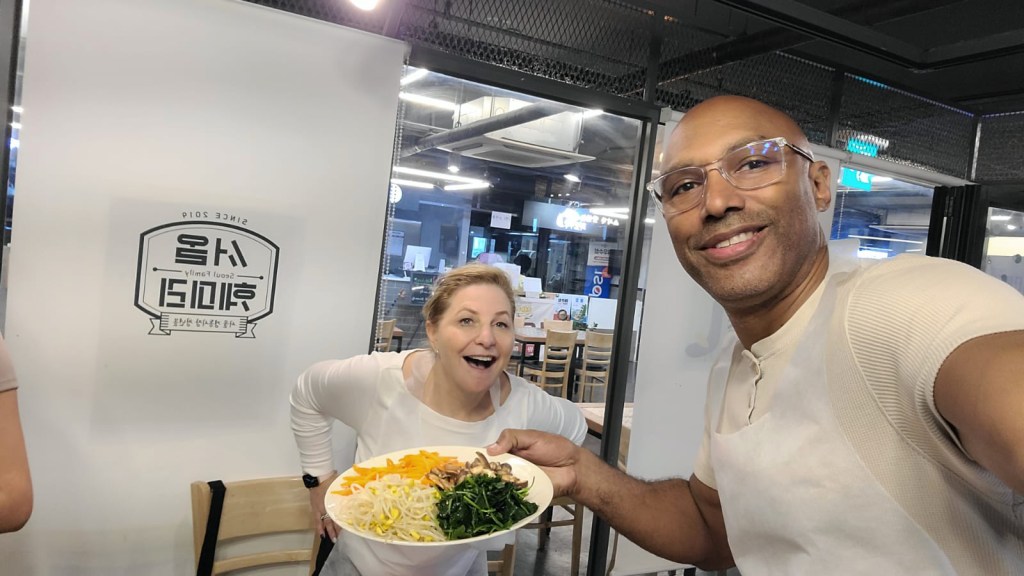
The end result was quite delicious. Unfortunately I had in my head that we would be making kimbap, Attorney Woo’s favourite food from the Netflix show. No way I was going home without enjoying her favourite food. The first photo below is the bibimbap we made and the second photo is my lunch from today, the kimbap I was so keen to try. There seem to be a number of ‘baps’ but so far they have all been delicious!
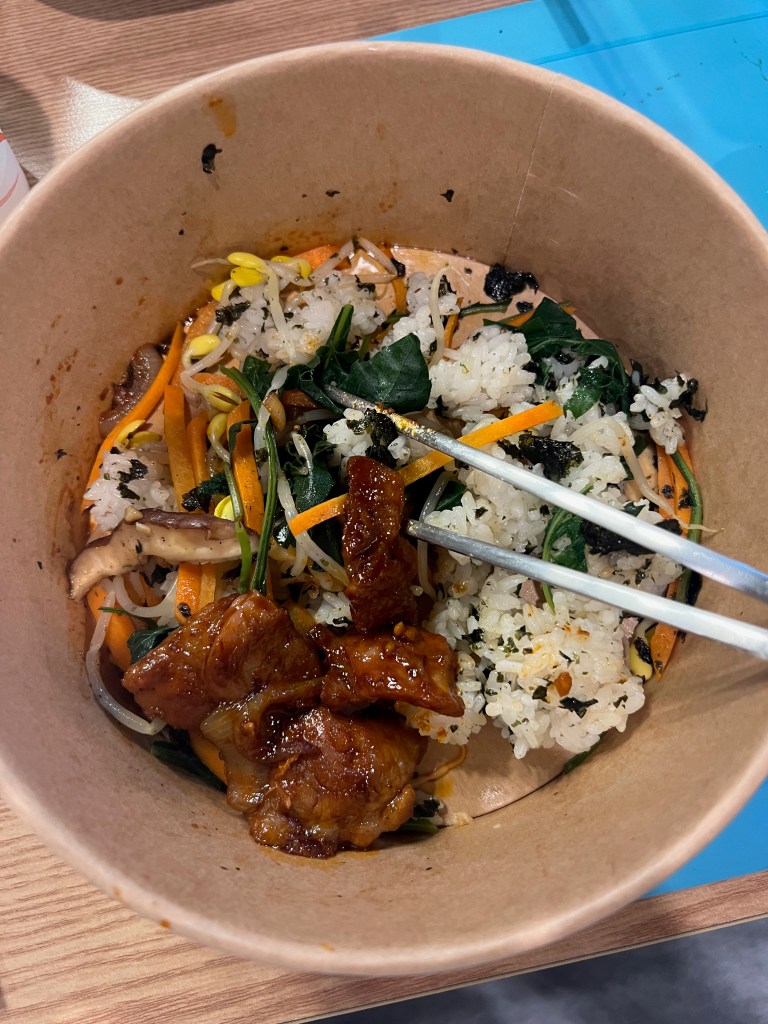
After such a full day I was in my room and out in minutes. I did try to stay awake, but it was an epic fail. Of course I was then wide awake at 1:30 but that is a story for another day.
Good night from all of us.



 Adventures of a curious mind
Leave a reply to mzraquel Cancel reply