As I contemplate this post I am a bit unsure about where to even begin. We have seen, done, tasted, so much in such a short time.
Our day was focused on a peninsula on the southwest coast, Snæfellsnes. The peninsula is the product of the volcanic belt running down its centrre with the Snæfellsnes volcano at its western tip.
Normally I would think about an orderly sharing of our experiences based on our schedule for the day. With volcanoes and beaches and hikes and waterfalls scattered throughout our very active day, I have decided to focus on experiential types instead. Hopefully it will make sense when I am done.
Tastes:
Breakfast: The Moms would be pleased to know that the hotel serves “porridge” for breakfast. They make no effort to call it anything fancy and it is at its most basic in its preparation. I have had Skyr (pronounced “skier”) each morning – yogurt that is slightly more fermented than the Greek variety, without any added sugar. Delicious with bit of fruit. I tried the sausages – which were very small and essentially a cocktail weiner. Not a fan. The coffee was good though.
Fruit: Our driver Foosay (spelled phonetically) is a fun fellow. He has excellent skills photography skills. While we were keeping ourselves busy at Black Pearl Beach, he was crouched down in the mossy lava picking tiny blue berries called Moss, or Crow, berries. They are small but mighty, somewhat similar to huckleberries as they are a bit tart with an astringent aftertaste. He picked enough for everyone to have a handful.
Boiled Birds: Berclinda (yep, that is the Icelandic spelling and I have finally found my way to actually being able to pronounce it!) told us about the tradition of eating Ptarmigan for Christmas Eve. Ptarmigan are known for their feathers that are brown in the summer and white in the winter. They are considered quite a delicacy. The bird’s feathers are plucked before it is pan roasted then boiled. The stock is used to make a sauce. Although Berclinda says it is delicious, she is no longer able to eat it after seeing a mother ptarmigan with her 10 fuzzy babies. They are not large birds, maybe the size of a pigeon, so it would have taken a fair number to make a family meal.
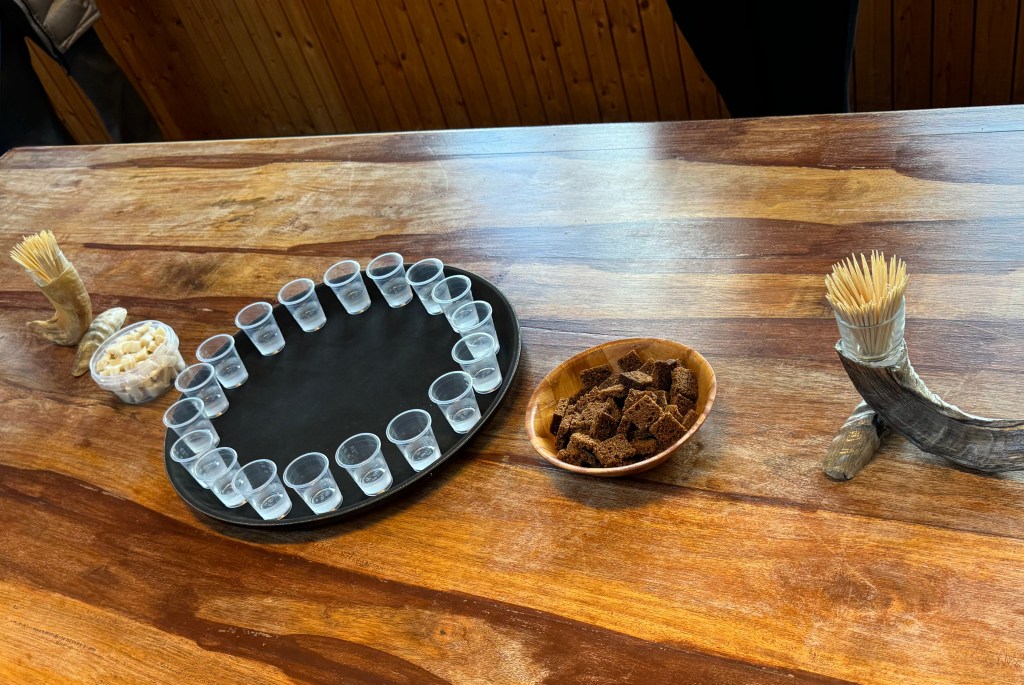
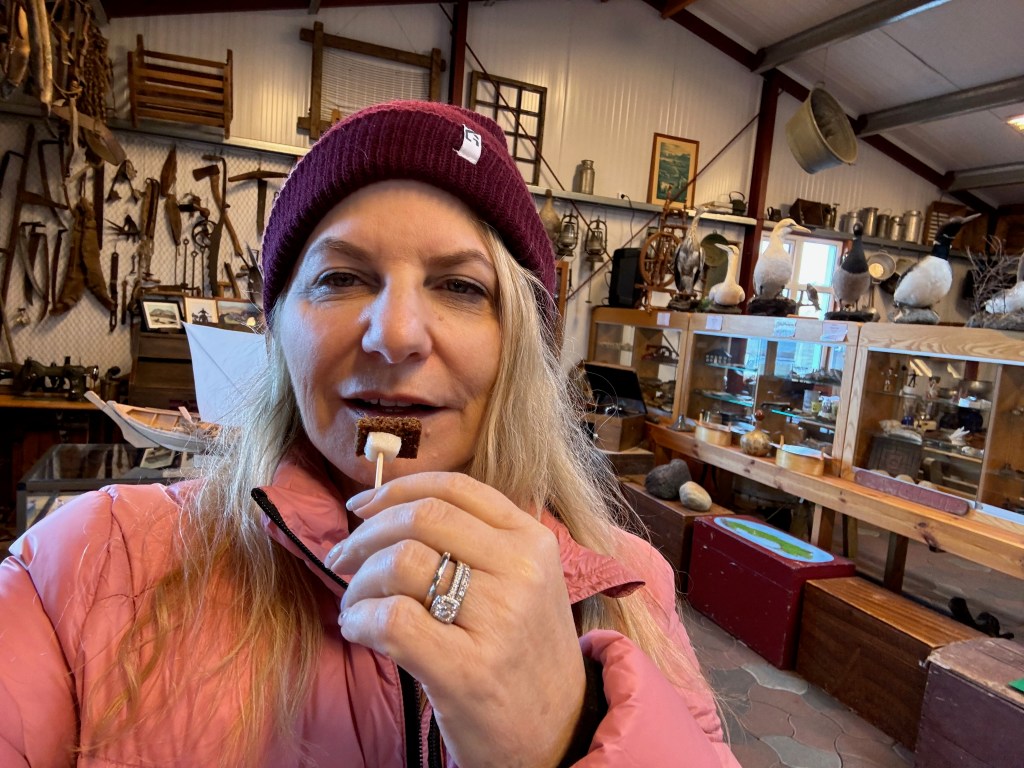
Food of the day: Fermented Greenland shark at the Shark Museum in Bjarnarhöfn. It was an experience! Although Icelanders used to fish for sharks (many, many years ago) it is no longer sanctioned. The current catch is solely sharks that have been accidentally found in fisherman’s nets. Greenland sharks are one of the largest (23 ft long weighing almost 2.300 lbs) and can live to be 400 years old. They swim in the deepest, coldest waters, so no one really knows what their numbers are. If eaten immediately they are poisonous because urine courses through their entire bodies to act like a sort of antifreeze. To properly prepare the shark it is cut into large chunks, skin attached, and stacked in wooden boxes to ferment for 6 weeks. Then it is hung in a drying house for 3-4 months where the urine converts to ammonia and evaporates. (The drying house is a pretty smelly place, even though the sides of the building are wide open). I tried two chunks; the first with the local schnapps called “Black Death” and the second with a piece of pumpernickel bread. I preferred the latter as the caraway was a bit of a complementary flavour. Glad I tried it. No need to do it again. Fermented shark is supposed to be good for your stomach. I have no evidence either way from the two small pieces I consumed.


Sights: There may need to be a few subgroupings to make this comprehensible.
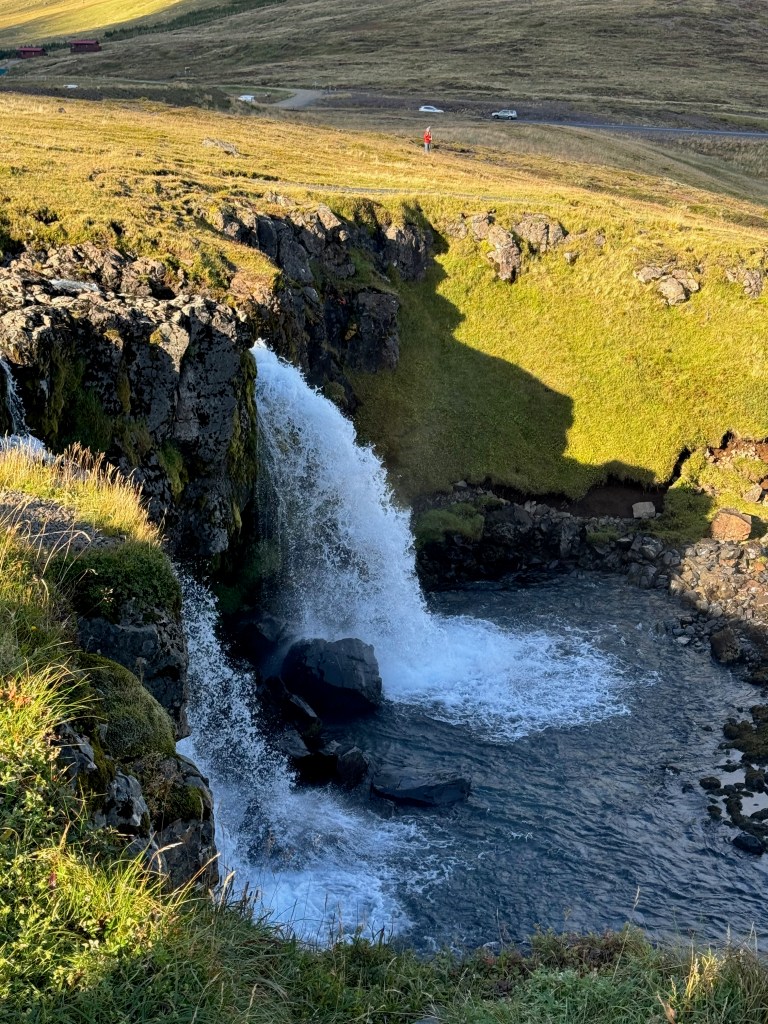
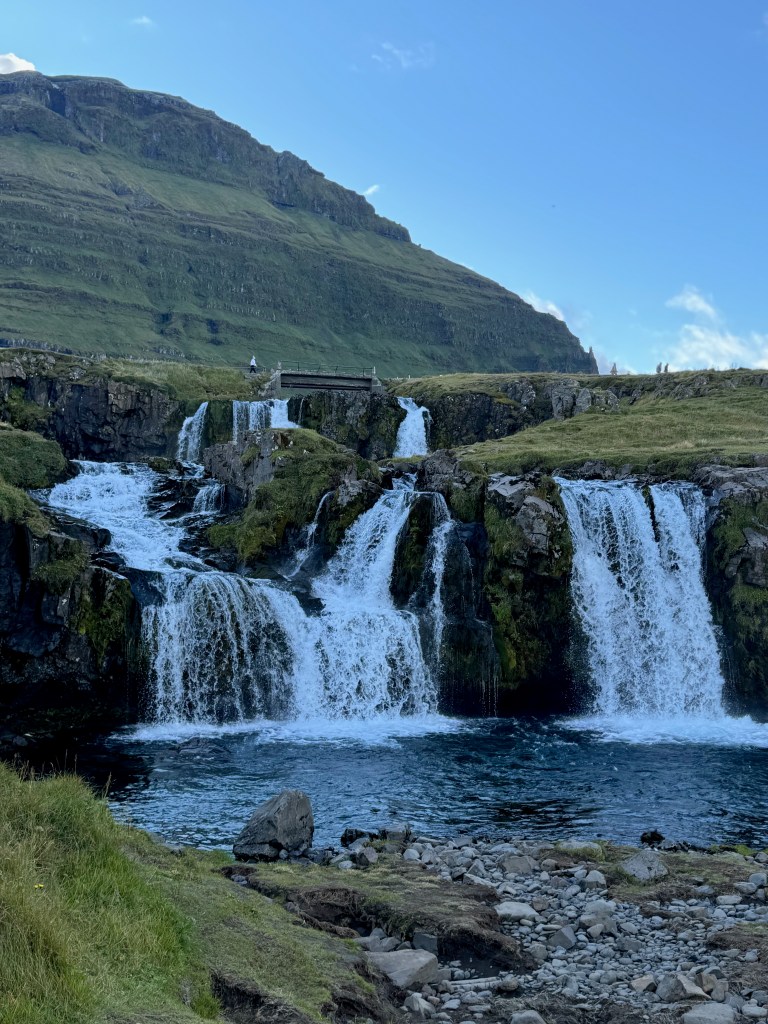
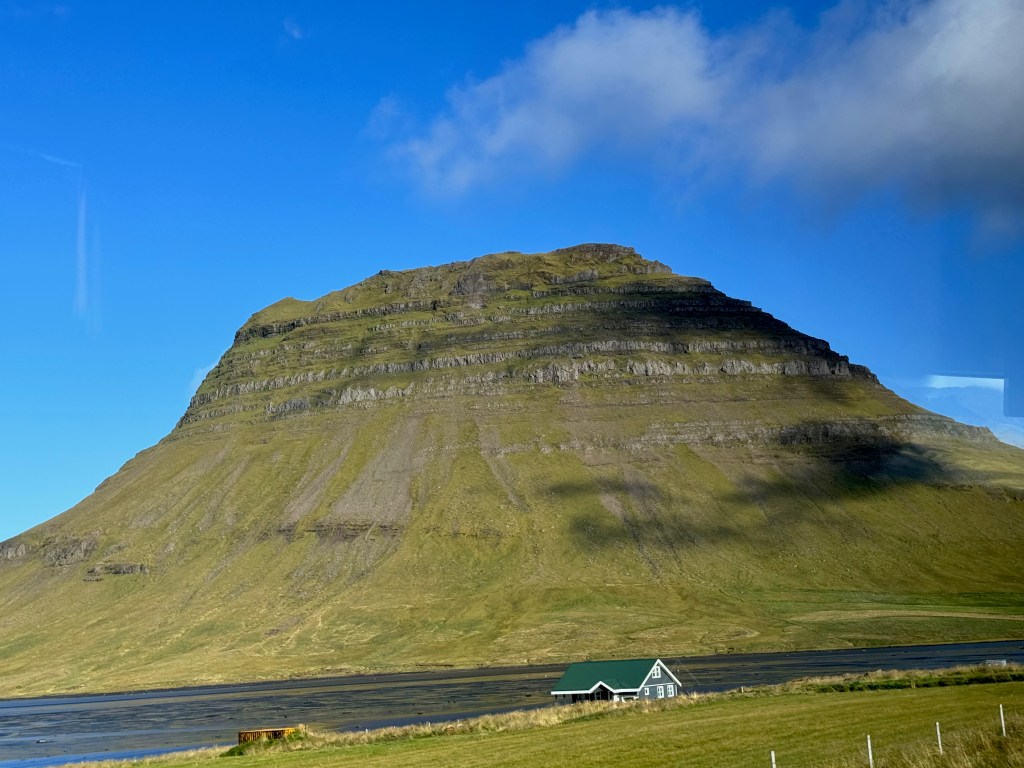
Waterfalls: there are so many in Iceland that most do not have names. We saw a few as we trundled along the road. Some were quite impressive, in spite of being nameless. The Kirkjufellsfoss cascading waterfall was by far the most impressive so far, and our last waterfall of the day.
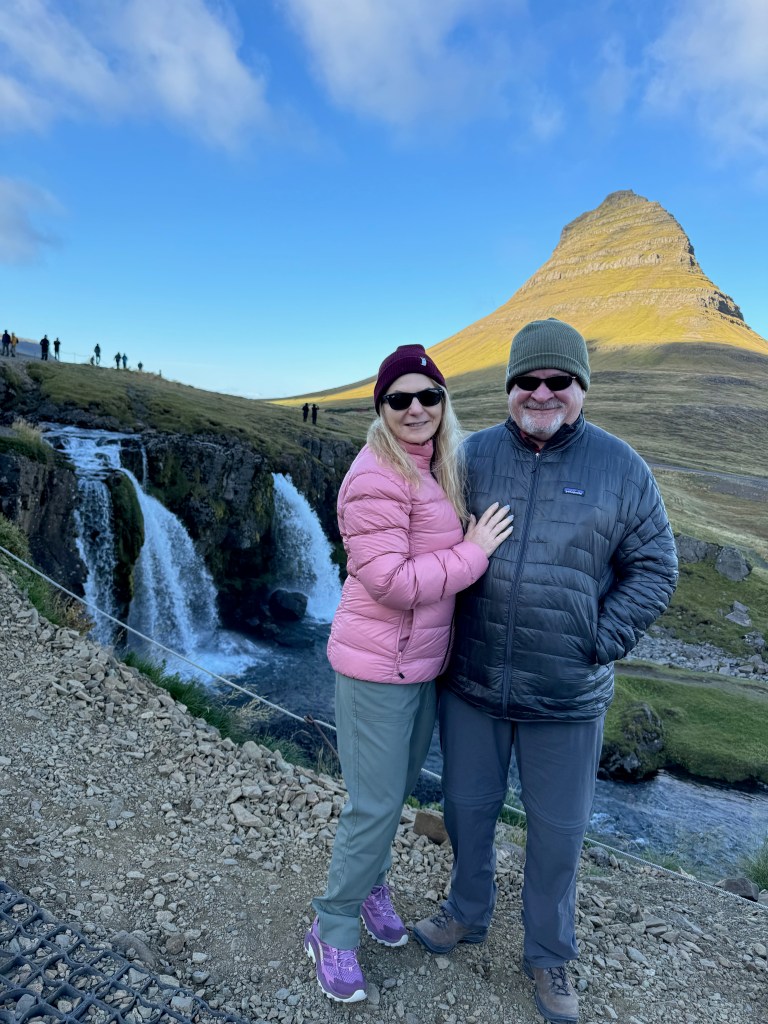
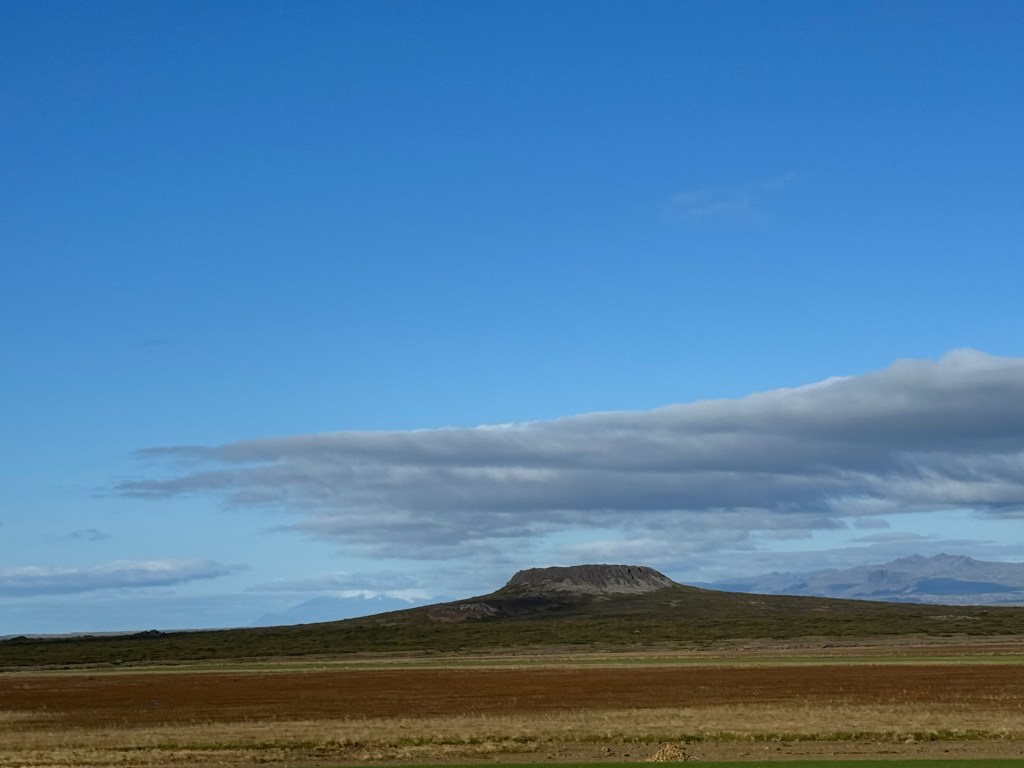
Volcanoes: So… many… volcanoes…. I am doubtful of my ability to even name a fraction of them all. Most have been quiet for some time, though volcanic activity remains a reality in Iceland so none are considered extinct. This is a sampling of a few that I thought were particularly interesting for their size or shape. Some are mountains, others are craters or cones. They are literally everywhere I look, often surrounded by rocky lava fields of varying ages as represented by the jagged edges. Some of the smaller ones are just sitting in a farmer’s field with sheep grazing about – not a concern in the world. This gives me some comfort as I do believe animals are able to sense pending natural disasters; I am sure they would not be lounging about if a spew of red hot lava was imminent.

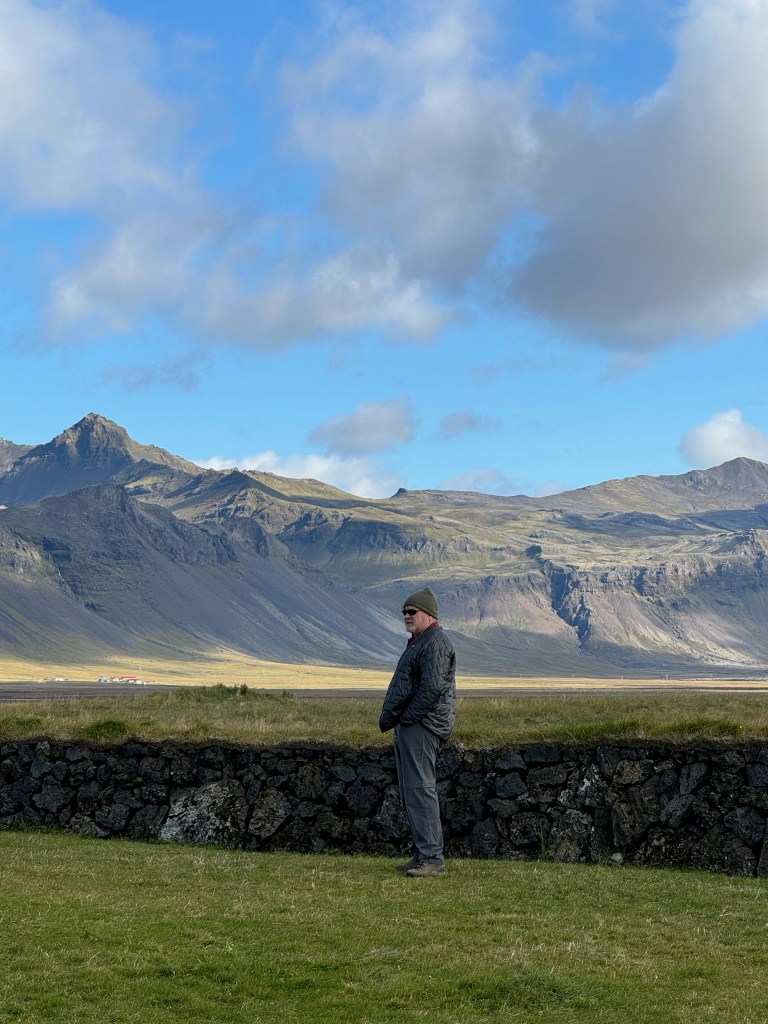
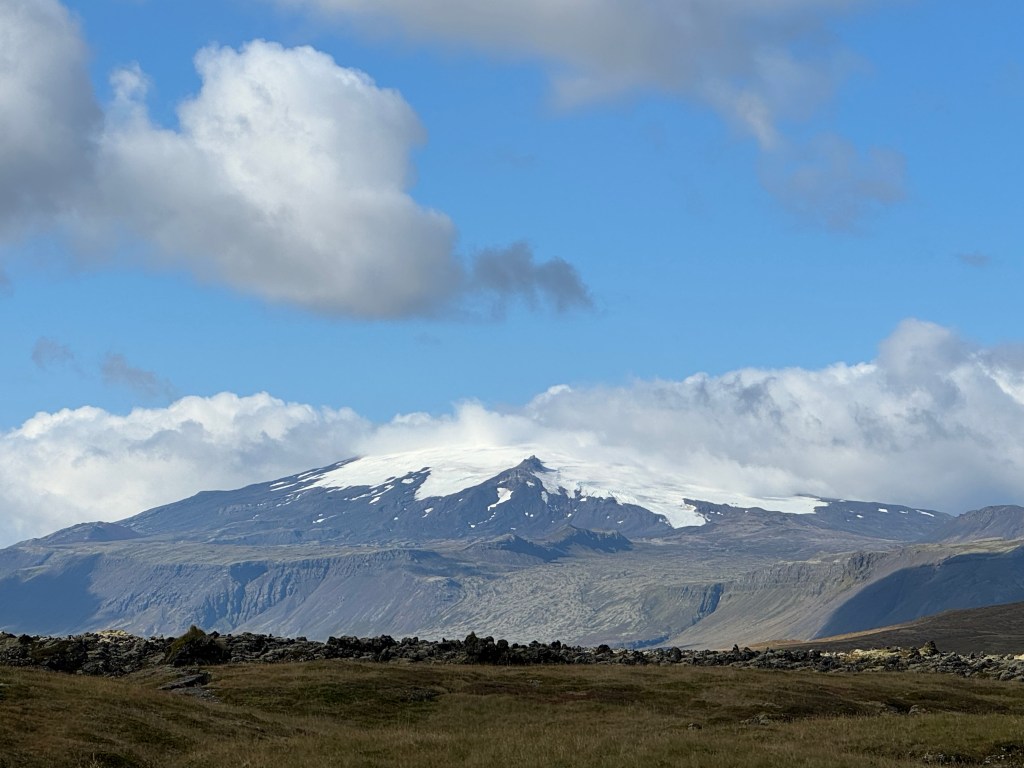
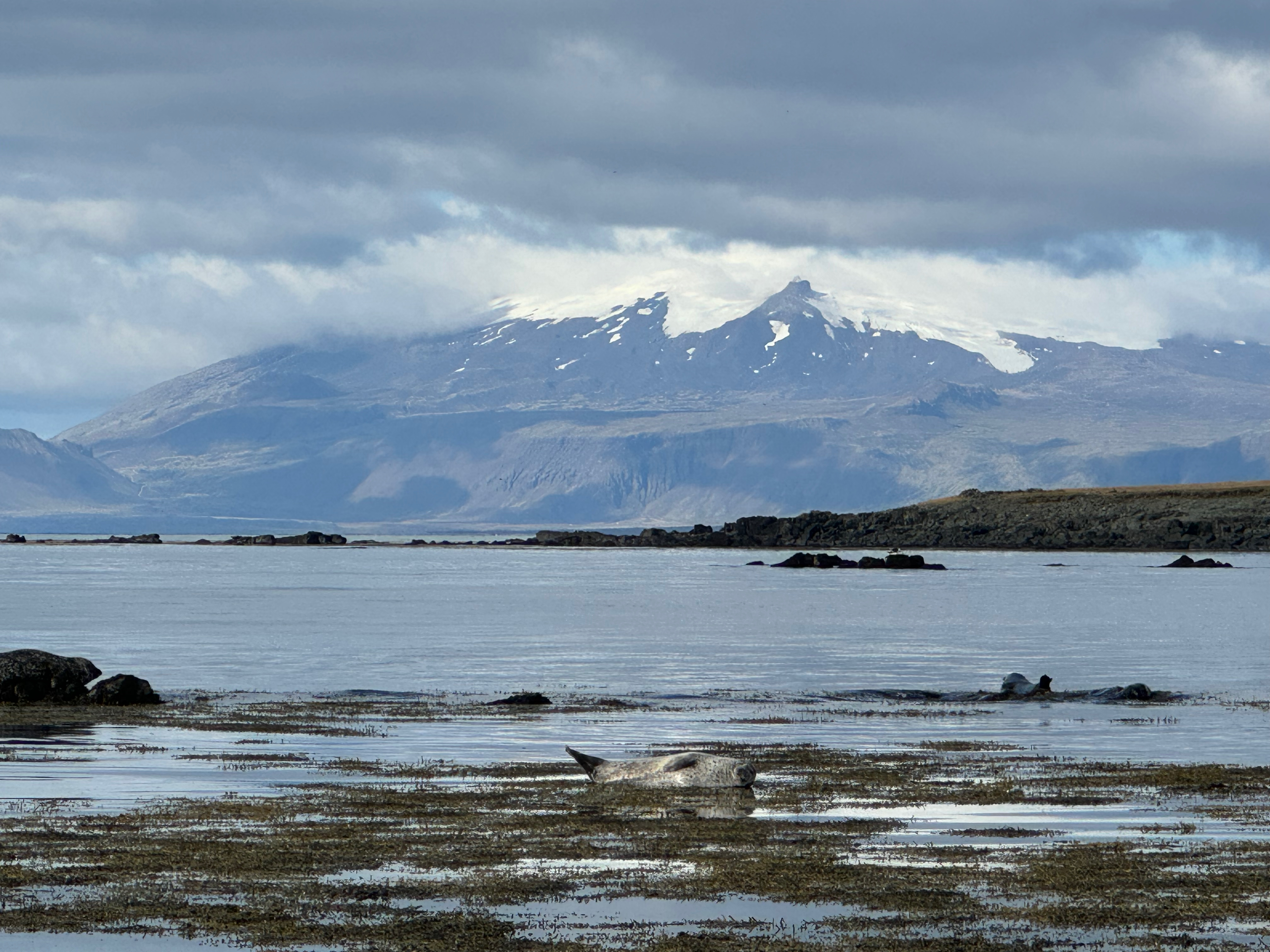
Glaciers: There are 5 major ones in Iceland. Conveniently, they are often located atop volcanoes. This is Snæfellsjökull. It became famous in Jules Verne’s “Journey to the Centre of the Earth” as the location that where their subterranean adventure began. Jules Verne had never been to Iceland, yet he described the location with a high degree of accuracy based solely on research material.
Beaches: Black sand. Yellow sand. Black Pearl Beach – named because of the masses of smooth round volcanic stones. There are also the remains of a wrecked trawler “Epine GY7” which was destroyed in 1948 during a blizzard. Five men were saved by the locals; 14 lost their lives.

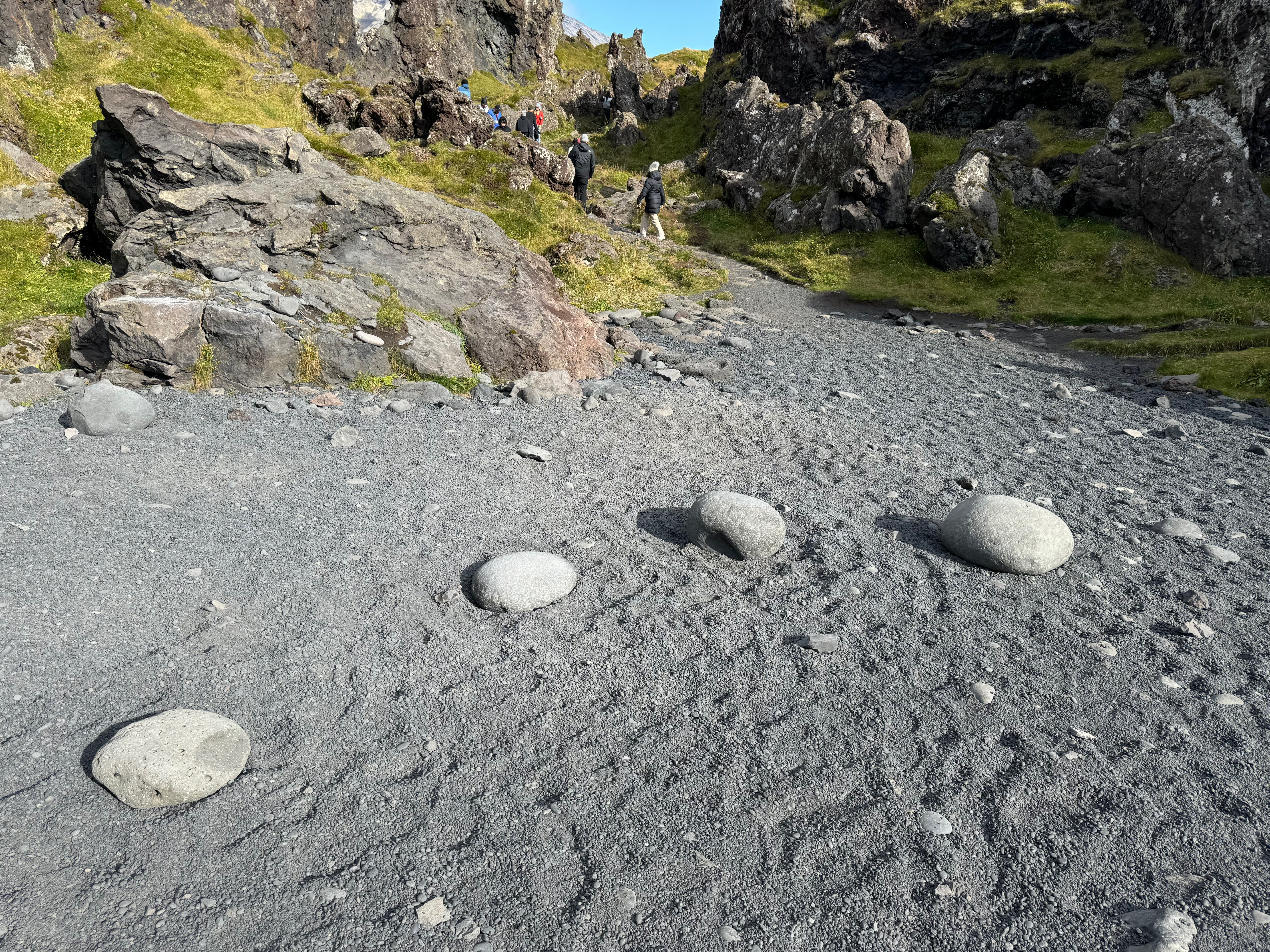
Those 4 random looking rocks are actually lifting stones used as a test of strength for anyone wanting to be a fisherman. They are 23 (lightweight), 54 (half as good), 100 (half strong) and 154 (strong) kgs respectively – named according to their difficulty.
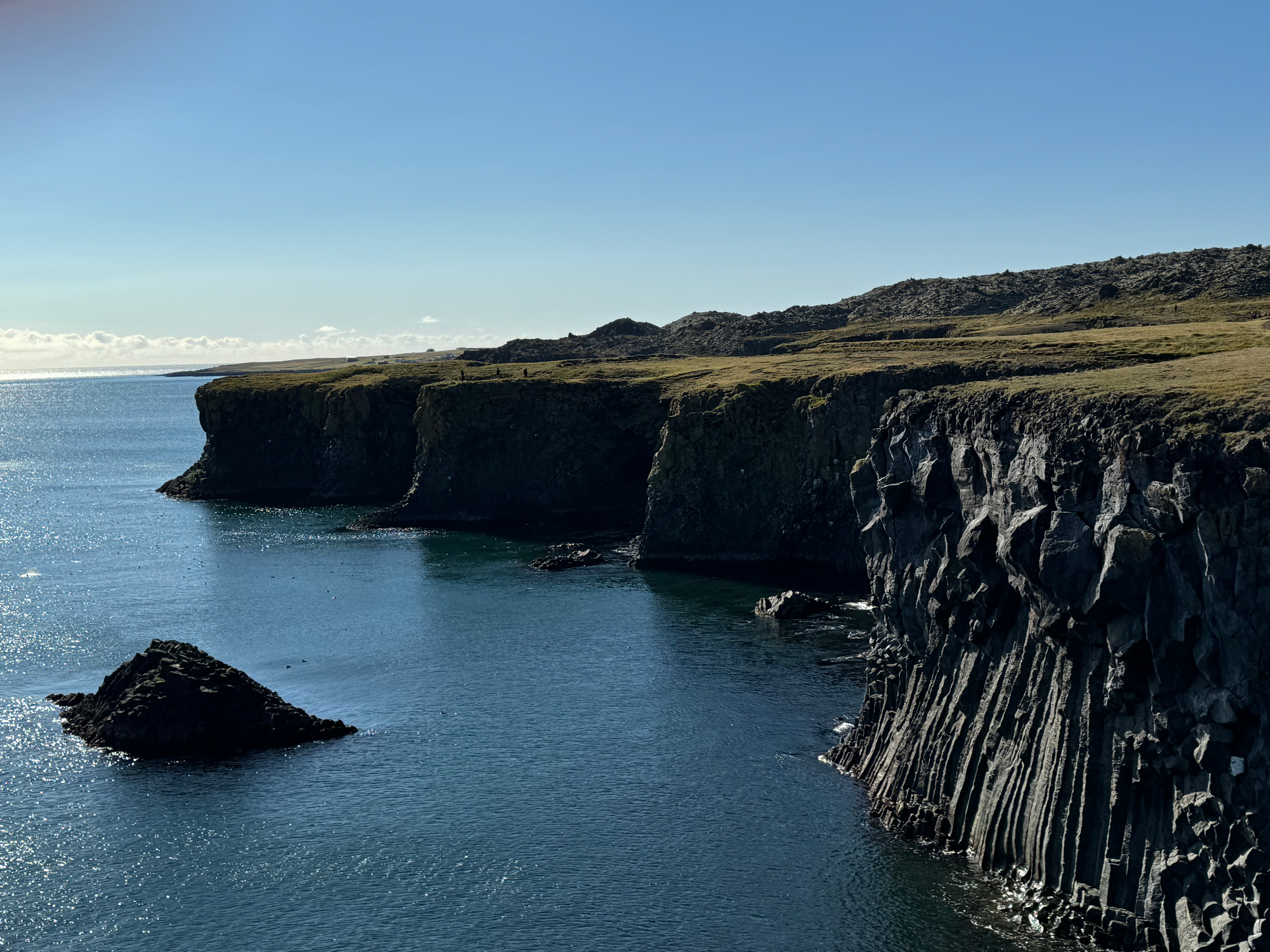
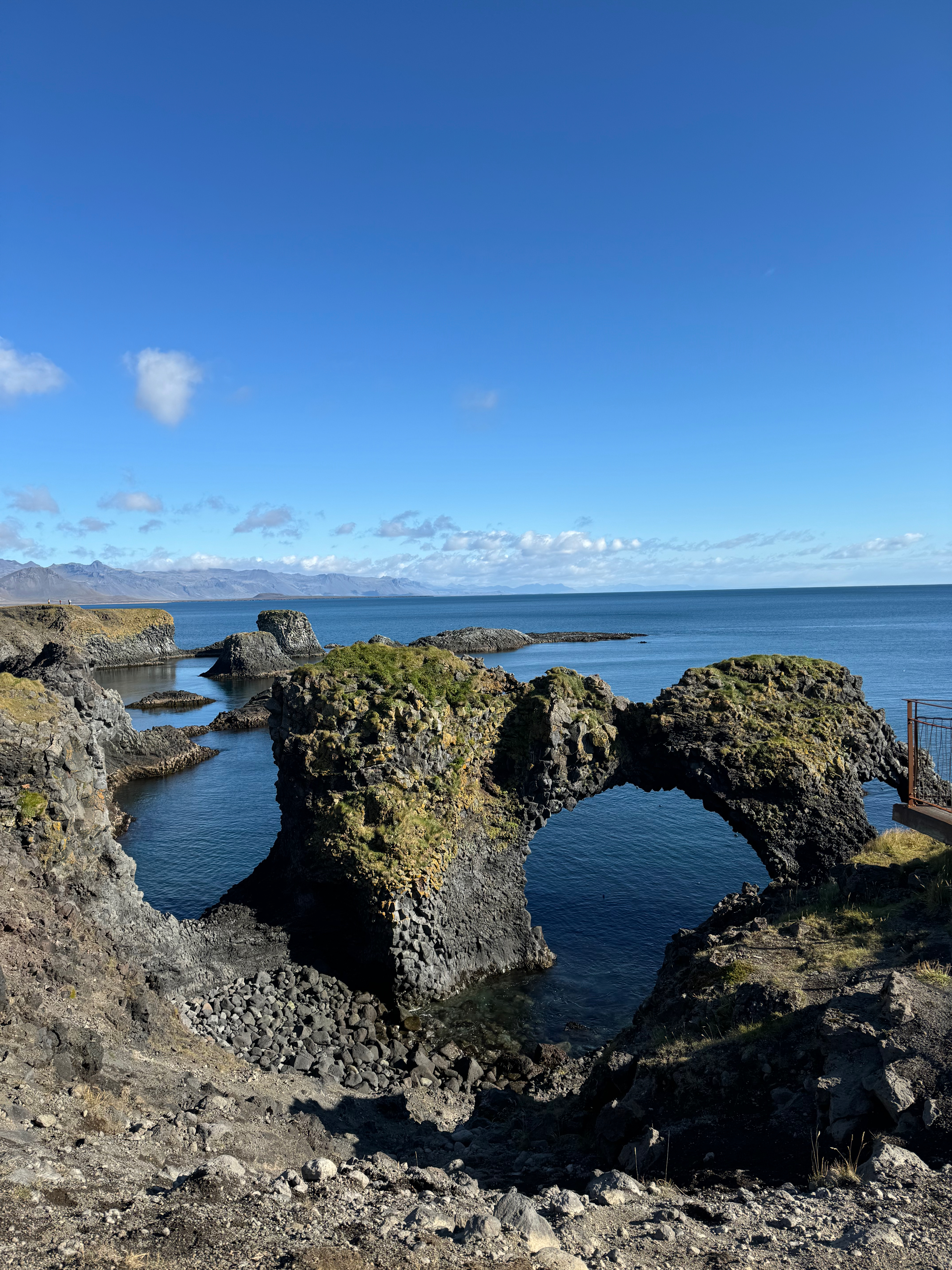
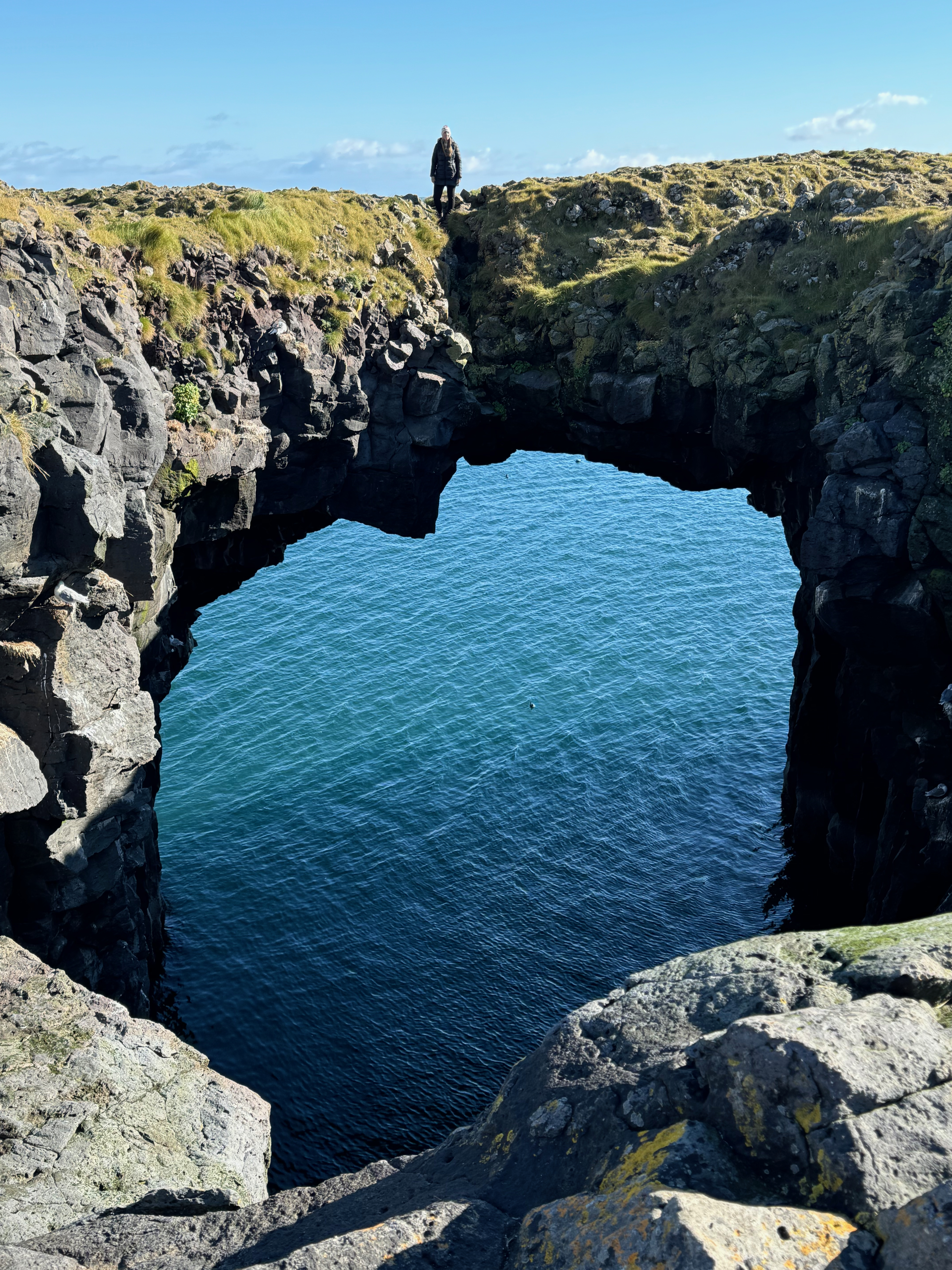
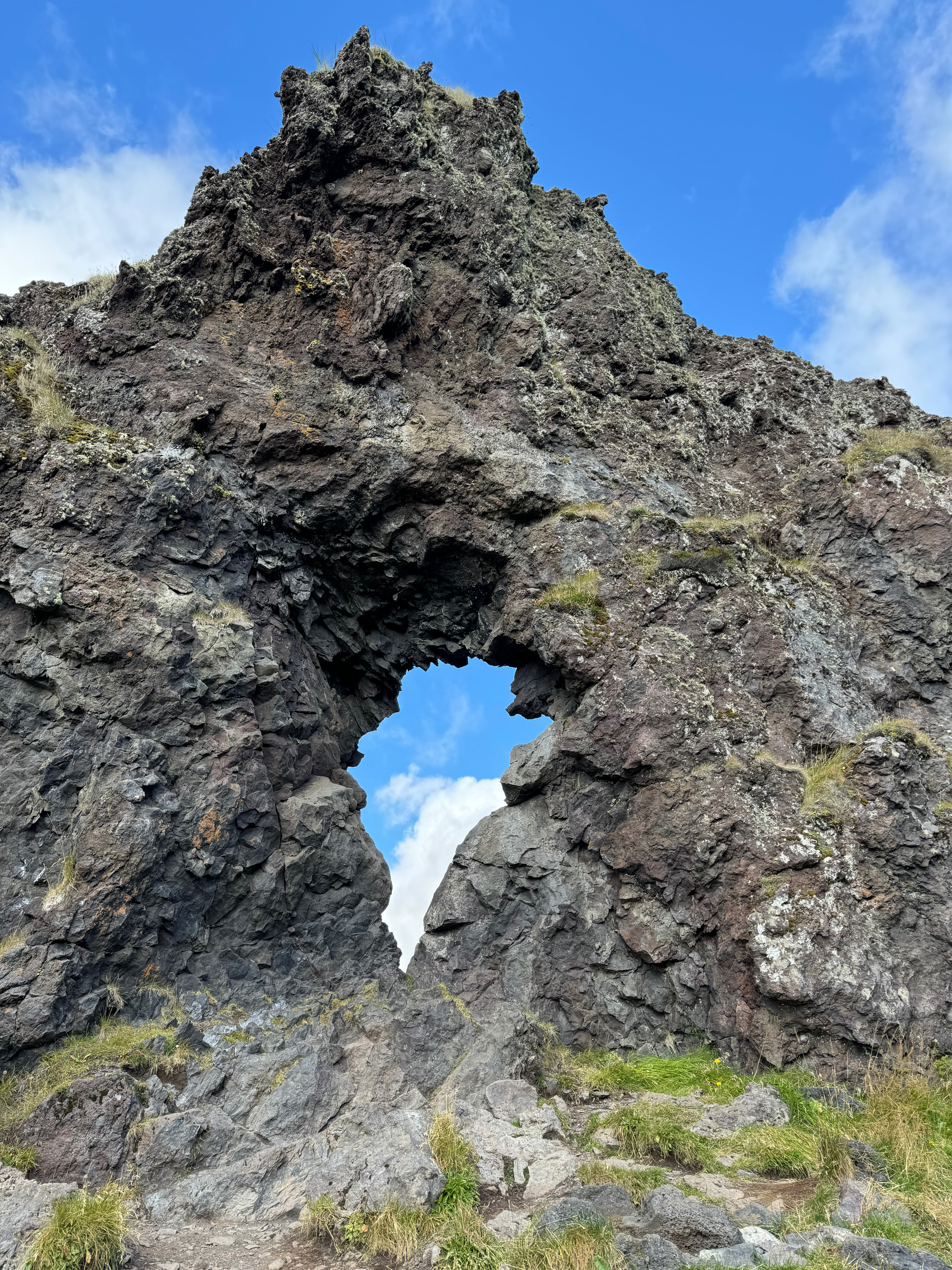
At least 3 of the beaches included basalt cliffs, lava columns, windows or bridges that were built up as the lava gradually extended Iceland to the west. Since their creation, they have been slowly eroded by the sea, creating so many interesting shapes.

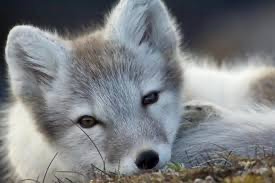
Wildlife: The only native creature is the arctic fox. It comes in two colours: grey for much of the year and white in the winter. I do not expect to see any. I did purchase a beautiful book all about the little creatures and am happy with that alternative. (Credit to the internet for the adorable borrowed image.)
Salmon: There are many salmon rivers on the peninsula. It can cost $3000 or more a day for a license to fish. Only fly fishing is allowed and also only catch and release. Many fish have been posted on social media multiple times which means they are a) Instagram famous and b) slow learners.
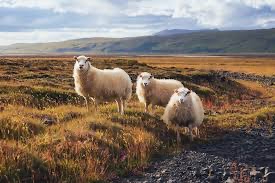
Sheep: Each year 450,000 sheep across Iceland are kept inside over the winter. During the summer, the population rises to one million. They are everywhere we travel. (I will say I have sometimes been surprised when a small flock of sheep turned out to be a flock of rocks….) The sheep are tagged and allowed to roam free in the mountains. They are collected at the end of the season using quads and drones and related technology then sorted into farm groupings in a large sorting ring with sections like a pie. The lambs go off to slaughter. Ewes typically produce 2-3 lambs per year so the ones that produce only a single lamb are also slaughtered :0(. There is a great deal of talk about the quality of lamb in Iceland (which means this could have also been part of the Tasting section). I have also seen some lengthy descriptions on how (and why) to cook a sheep’s head. It’s real and a rather ugly process. No one will convince me that it is a delicacy.
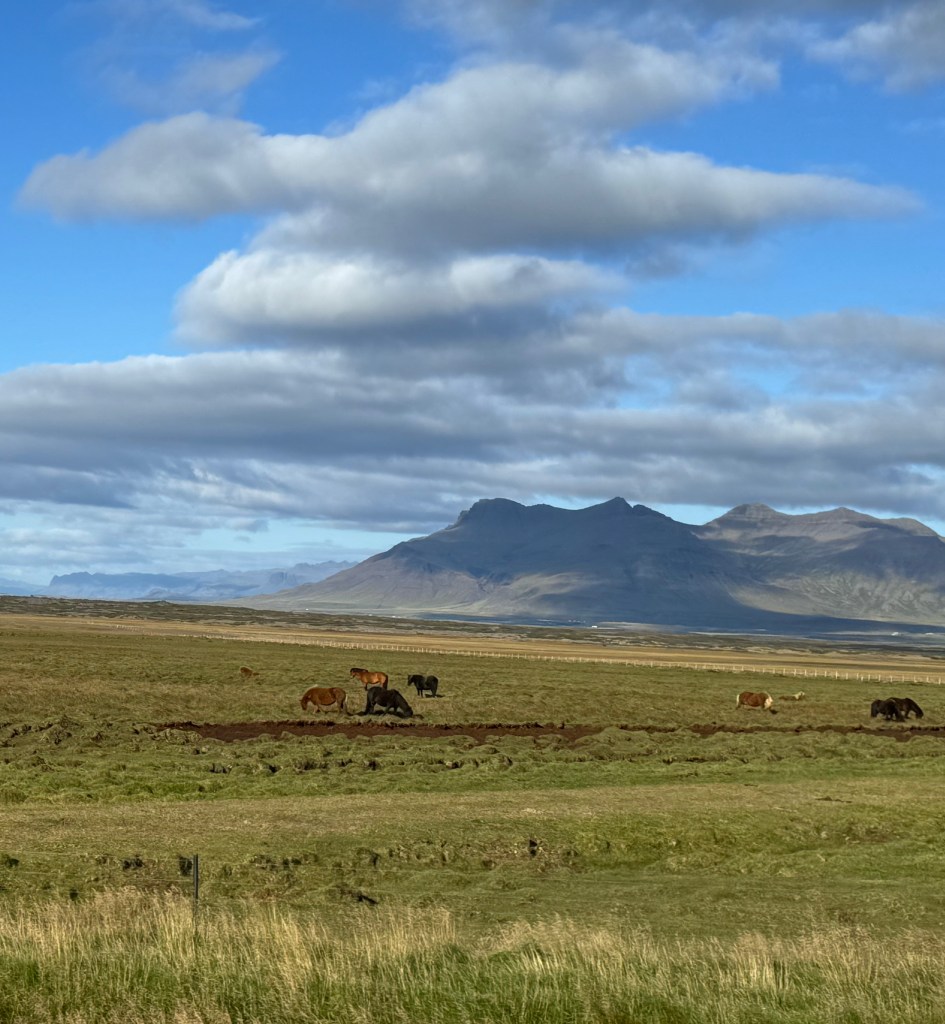
Icelandic horses: They are beautiful and plentiful; more than 100,000 on this small island. (Aside: My sister and I used to count horses out the side windows of our car when driving to visit our Nana. Here – we would have struggled to count them all, but would probably have been good at large numbers at a very early age.) Iceland stopped importing horses in the 11th century. Their bloodline is so pure that if a horse leaves Iceland for something like the Olympics it is not allowed to return. That thought stopped me in my tracks. Icelandic horses are famously strong, they can cross a raging river without being swept away, and hardy enough to stay outdoors all winter due to their heavy winter coats. While all horses have 3 gaits (walk, trot and canter), Icelandic horse also has tölt and flying pace for a total of 5. At flying pace some can travel 48 kmh for short distances. Hard to imagine. Sadly, they are not bred only for riding – product is primarily shipped to Japan. ‘Nuff said. One of my goals has been to get a good photo from close up, rather than the many blurry shots I have from the bus.
Harbour seals: Are endangered in Iceland. Several years ago there were 30,000 and now there are only 6,000. It is unclear what has happened to them – vacationing in Victoria perhaps? One of the first beaches we stopped at had a number of harbour and grey seals lounging about. They were completely undisturbed by our presence.
Birds: So many sea birds. No visible ocean birds (like the adorable Puffin) though we hiked past several rocky breeding grounds. Ocean birds live most of their lives in the ocean and use their wings to swim. They only come to land to breed. Sea birds, like gulls, swim with their feet and live predominantly on land. I had no idea about this until coming here. Puffins live alone at sea for 8 months of the year.


A few quick facts:
- There are no snakes in Iceland
- There are two types of mice and two types or rats in small numbers. Both arrived by accident and are not really a problem (That’s what Edmonton says about rats as I recall.)
- There are some rabbits and they have no natural predators. I wonder how that is going to turn out? I have seen the Australian movie “Rabbit-Proof Fence”.
- There are imported wild reindeer. The first ones all died in their first winter. A different breed is no successful.
- There are a few types of cows – all imported. They produce 400 – 7000 litres of milk a year. Much is used for that delicious Skyr.
- There are pigs but they are always kept indoors.
- Minks were bred for their fur. A few clever ones escaped and began attacking sea birds and their nests. You are allowed to hunt them.
And that is all for now. Tomorrow – a big surprise!


 Adventures of a curious mind
Leave a reply to Jill Cancel reply