The day began cloudy and rain was threatening for the late morning. With raincoats at the ready we were off on one of our greatest Icelandic adventures.
Part of the day would include a boat ride around the lagoon. Although I had been assured it was slow and smooth, I preferred not to take any risk and loaded myself up with Gravol before departing. (The wind rocking the bus yesterday had been sufficiently problematic to make me cautious).
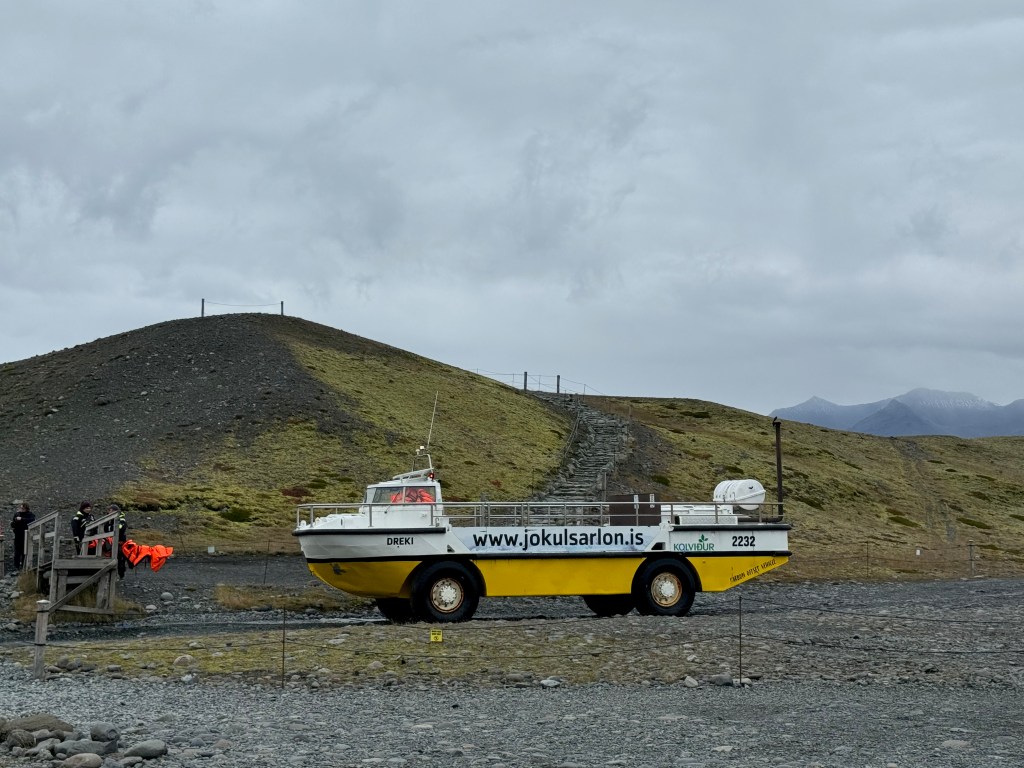
On reflection, yes the ride was very smooth and although the rain struck just as we were preparing to board the amphibious boat, I could have cared less. Today’s experience was at least as magical as the Northern Lights, even in a downpour.
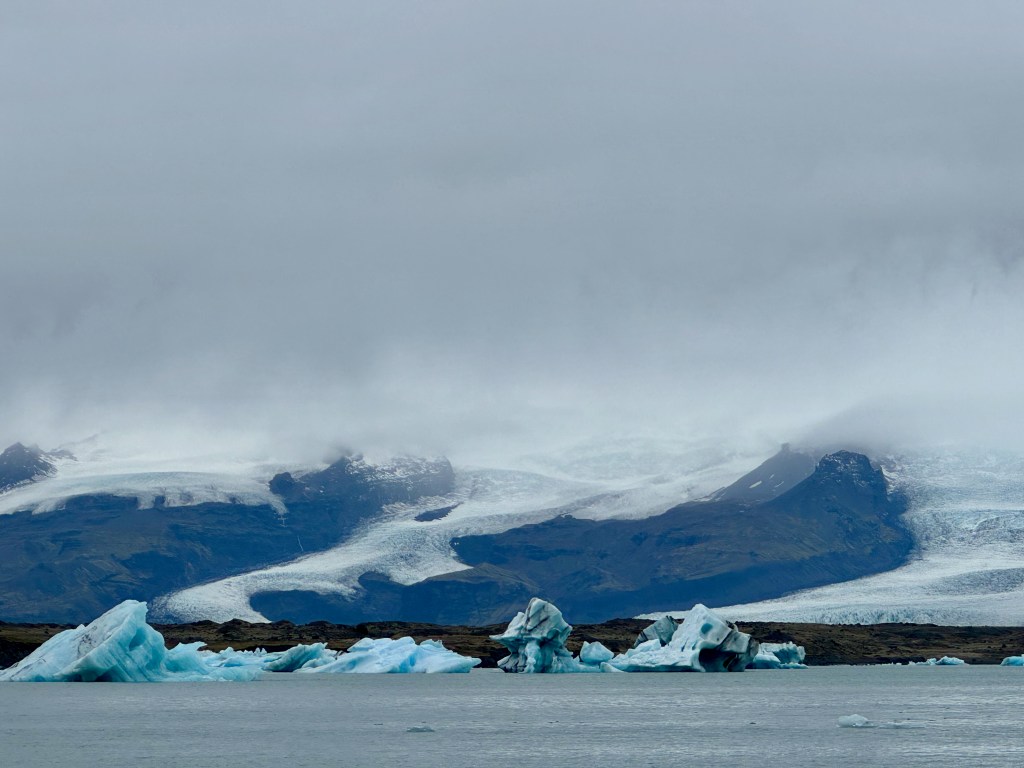
This is the glacier and lagoon at Vatnajokull National Park. It covers 14% of Iceland and is the largest national park in Europe (except for one in Russia) at 14,000 km2. The Vatnajokull glacier itself is Europe’s largest outside the arctic, with a surface area of 8,100 km2. It measures an average of 400–600m in thickness, though is 950m at it’s deepest.
Because of the glacier’s location at the weather boundary between north and south Iceland, it receives 2000 inches (that’s right – inches) of rain each year and much of that as snow. For comparison, the northern side of the weather boundary receives 200 inches. And for those who are dying to know, Ocean Falls, where I spent a few years of my childhood, receives a paltry average of 173 inches of rain each year. There is so much water currently stored in Vatnajökull that the largest Icelandic river would need over 200 years to carry all of it to the sea.
The lagoon itself is very deep, over 930 feet and getting deeper. It is so deep that even the largest icebergs, with 90% of their mass below the surface, do not touch the bottom.
At the start of WWII, the Vatnajokull glacier touched the sea. Now, the sea is 5 miles away from the glacier tip. (Climate change is real!)
So here it is – for your viewing pleasure. I tried to pick a few of the best – it was a challenge. I hope you enjoy them
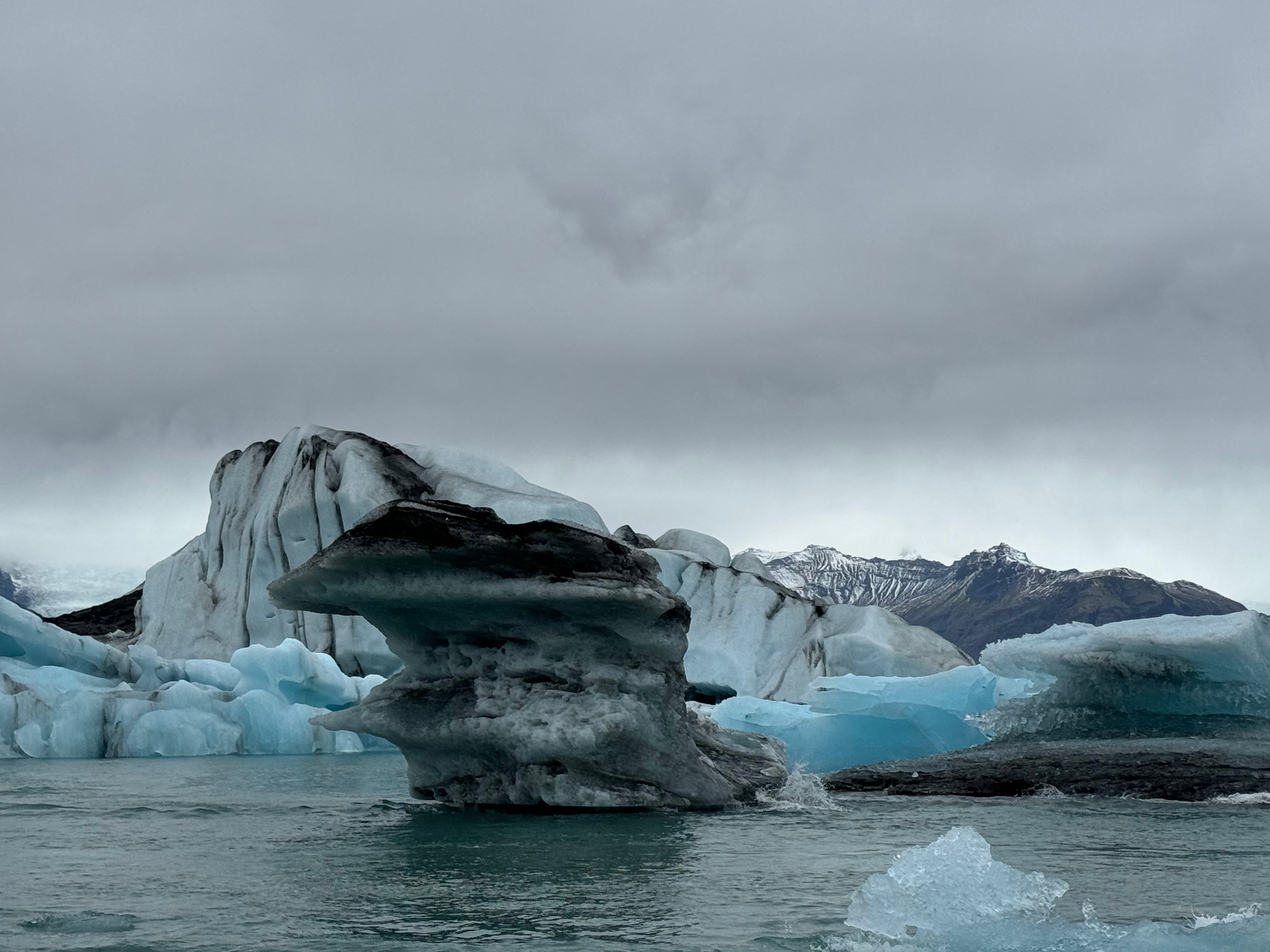


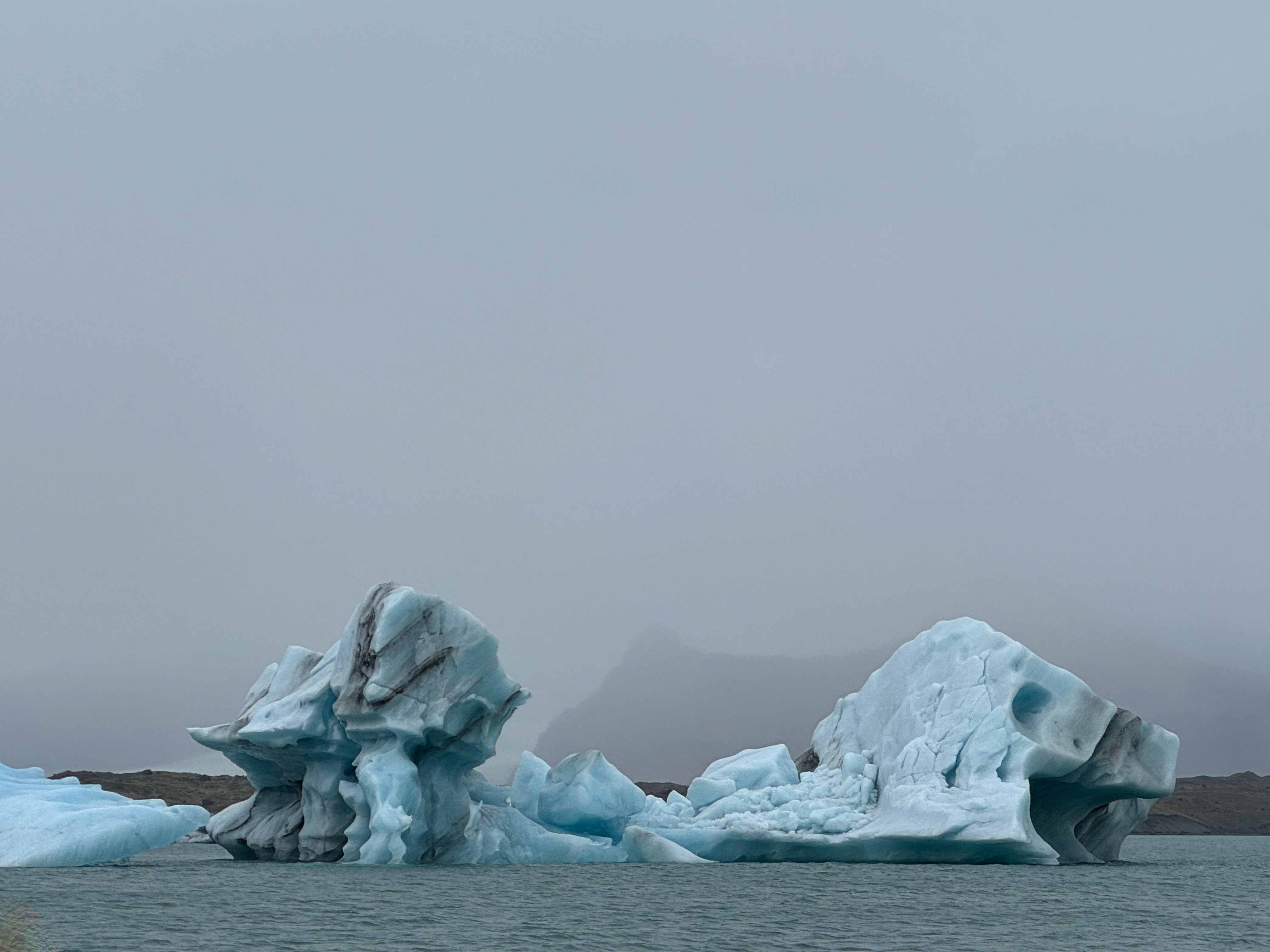


Whys is the ice blue? Well, its all about the physics :0) Pure glacier ice, it is compact with few air bubbles, since the air is squeezed out by the weight of the ice. Water is very good at absorbing light. Only the strongest light with the most energy, blue light, is able to escape and is reflected back to us without being absorbed. The thicker the glacier is, the darker blue it appears. As the ice ages and melts, more air enters and it becomes increasingly white. The yellow, black and brown stripes within the ice are formed in the glacier. The moving ice sheet picks up rocks, dirt and sediment as it carves it way into valleys. Some of the icebergs were so dark they were almost black, while others had little to no stripes at all.
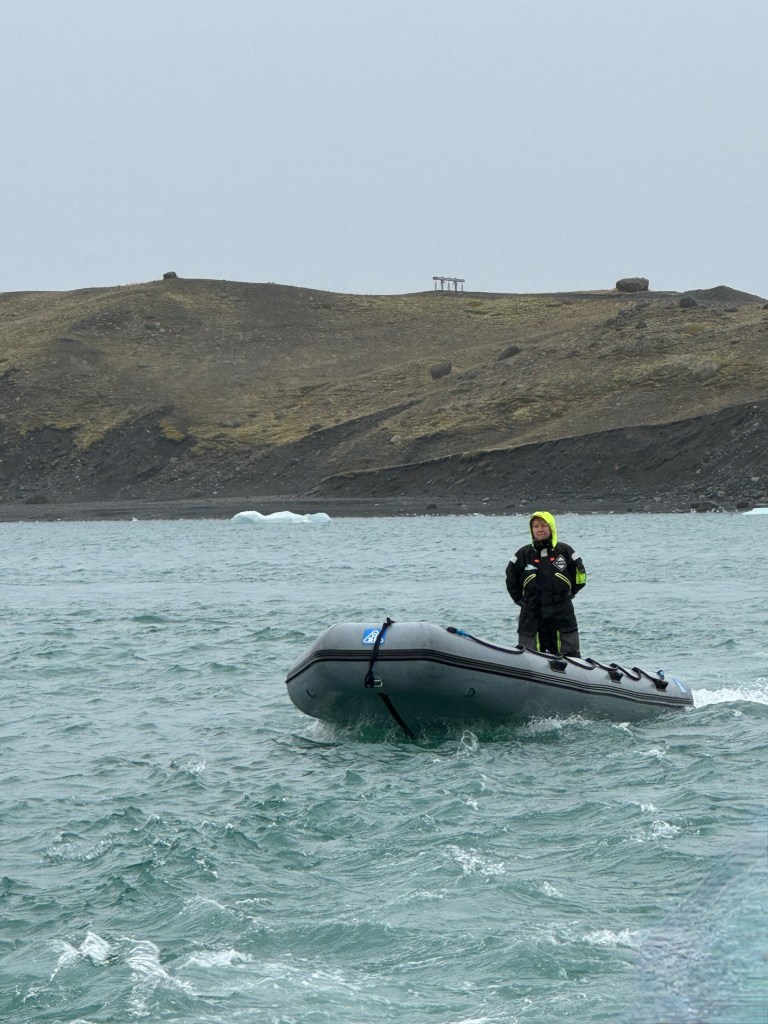
Small footnote to the lagoon cruise. Each amphibian was closely followed by a small zodiac who’s sole purpose was to rush to the rescue of any tourist that may have been so unlucky as to fall in the water. We were all wearing life jackets, so drowning was not the concern. The water is so cold that death can occur within 15-45 minutes. All of the staff wear survival suits.

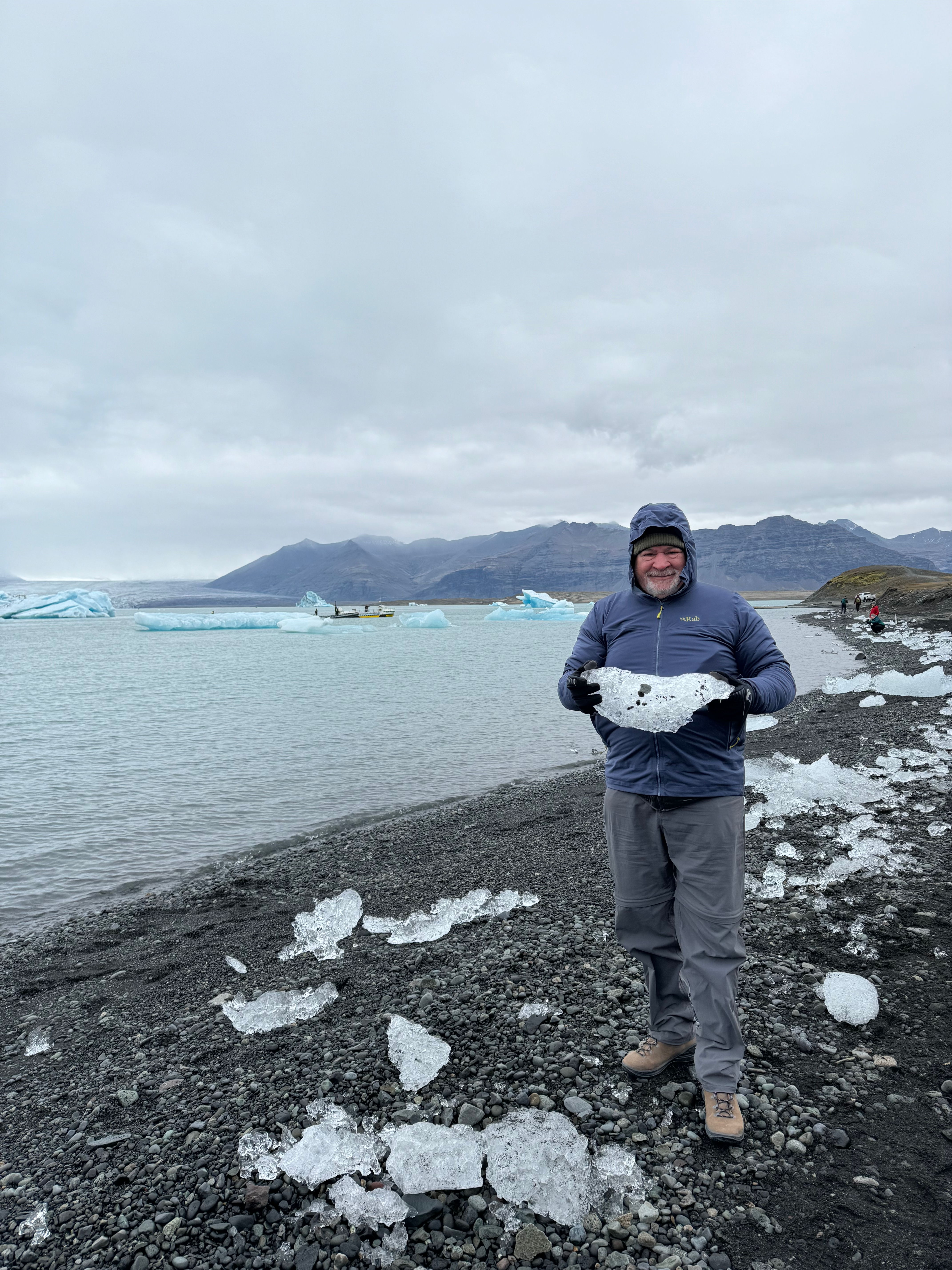
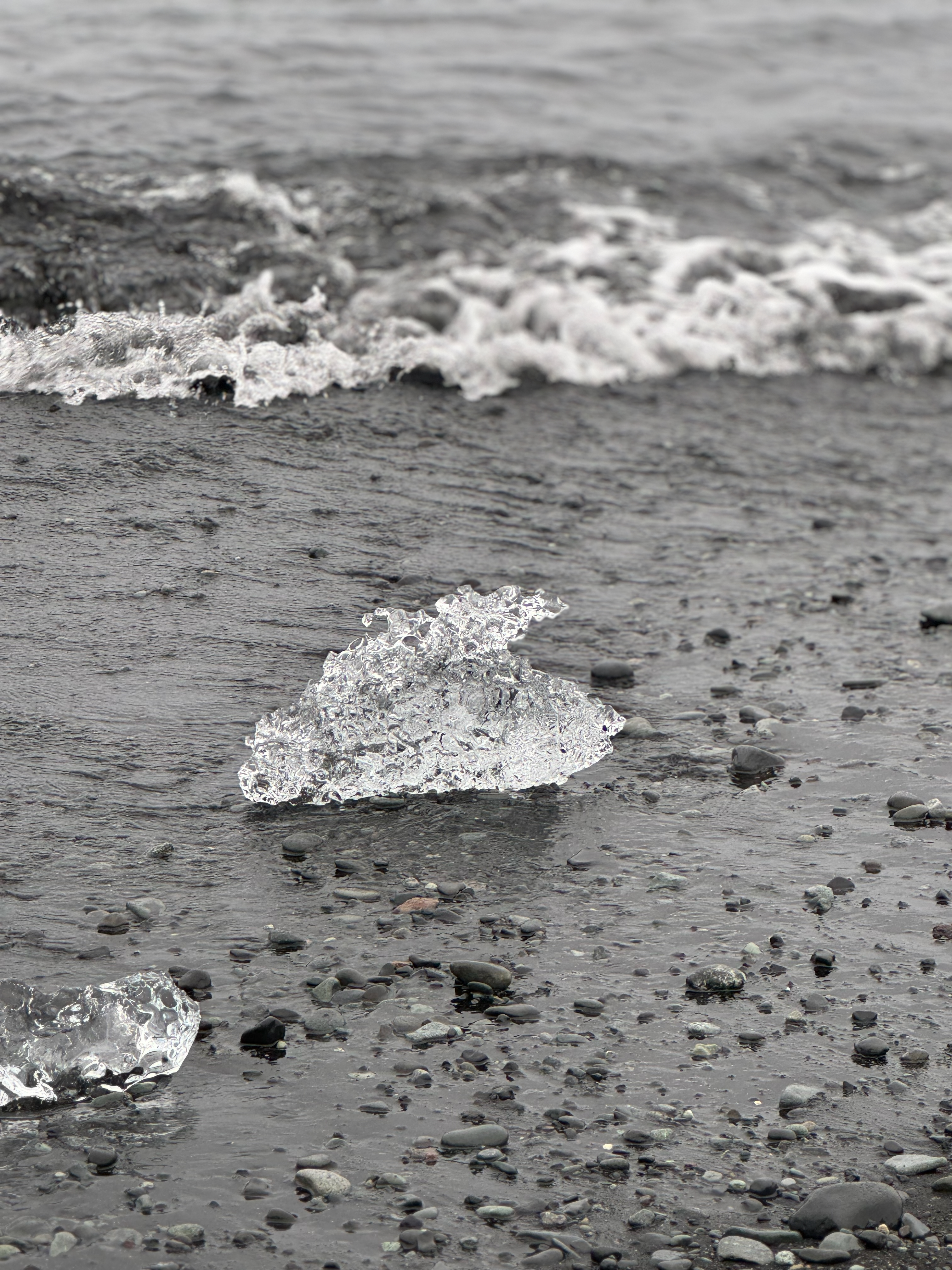
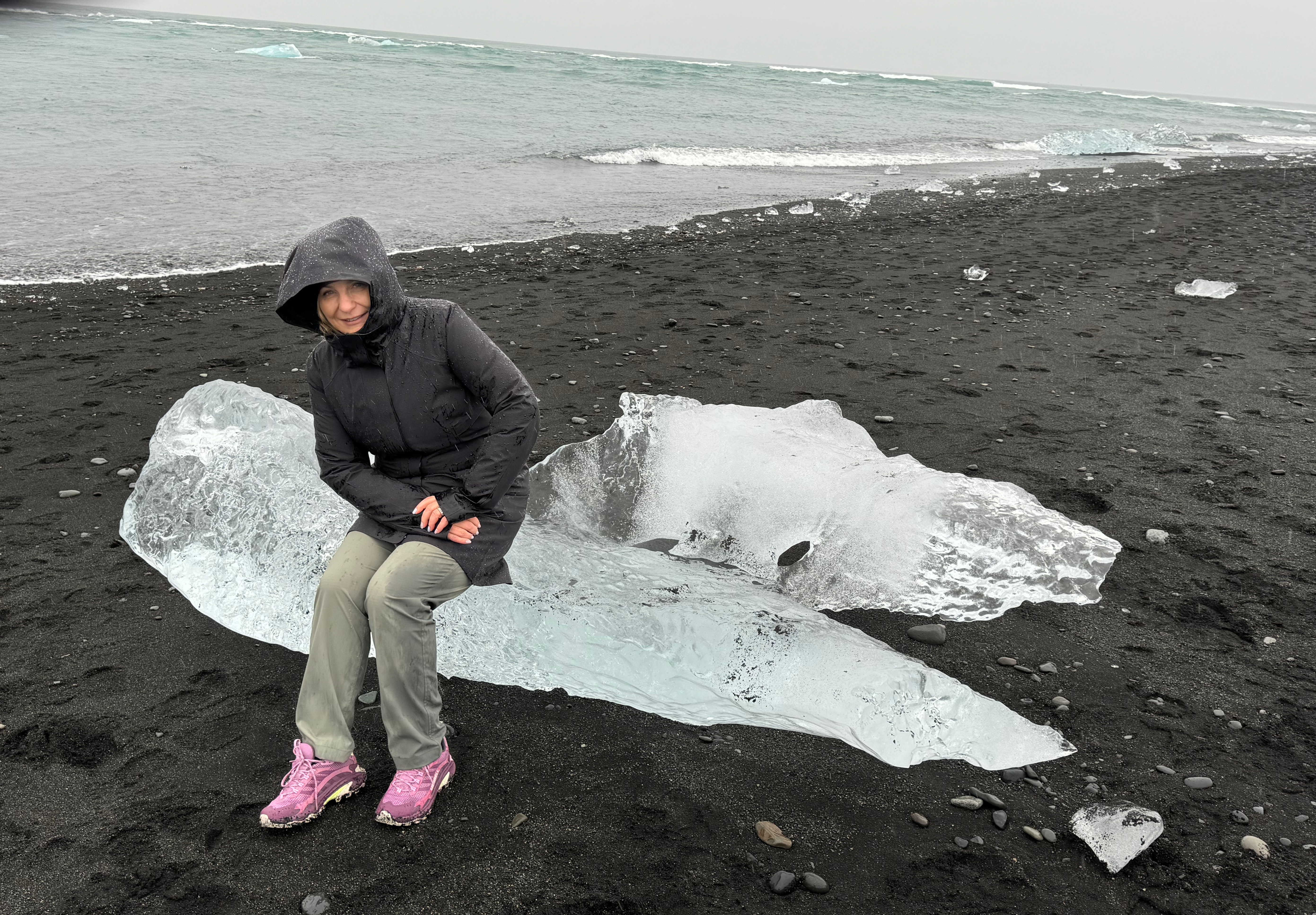
Just under the bridge and beyond the lagoon is Diamond Beach. The black sand beach is covered with iceberg fragments that have broken off from the Glacier and become small enough to float under the bridge and out to sea. As these icebergs wash up along the shore, they break into smaller chunks giving the appearance of diamonds. The ice forms interesting shapes and patterns as it is washed by the waves and the small pieces become completely clear. They were quite stunning in spite of the rain – I can only imagine how much this beach would sparkle on a sunny day.

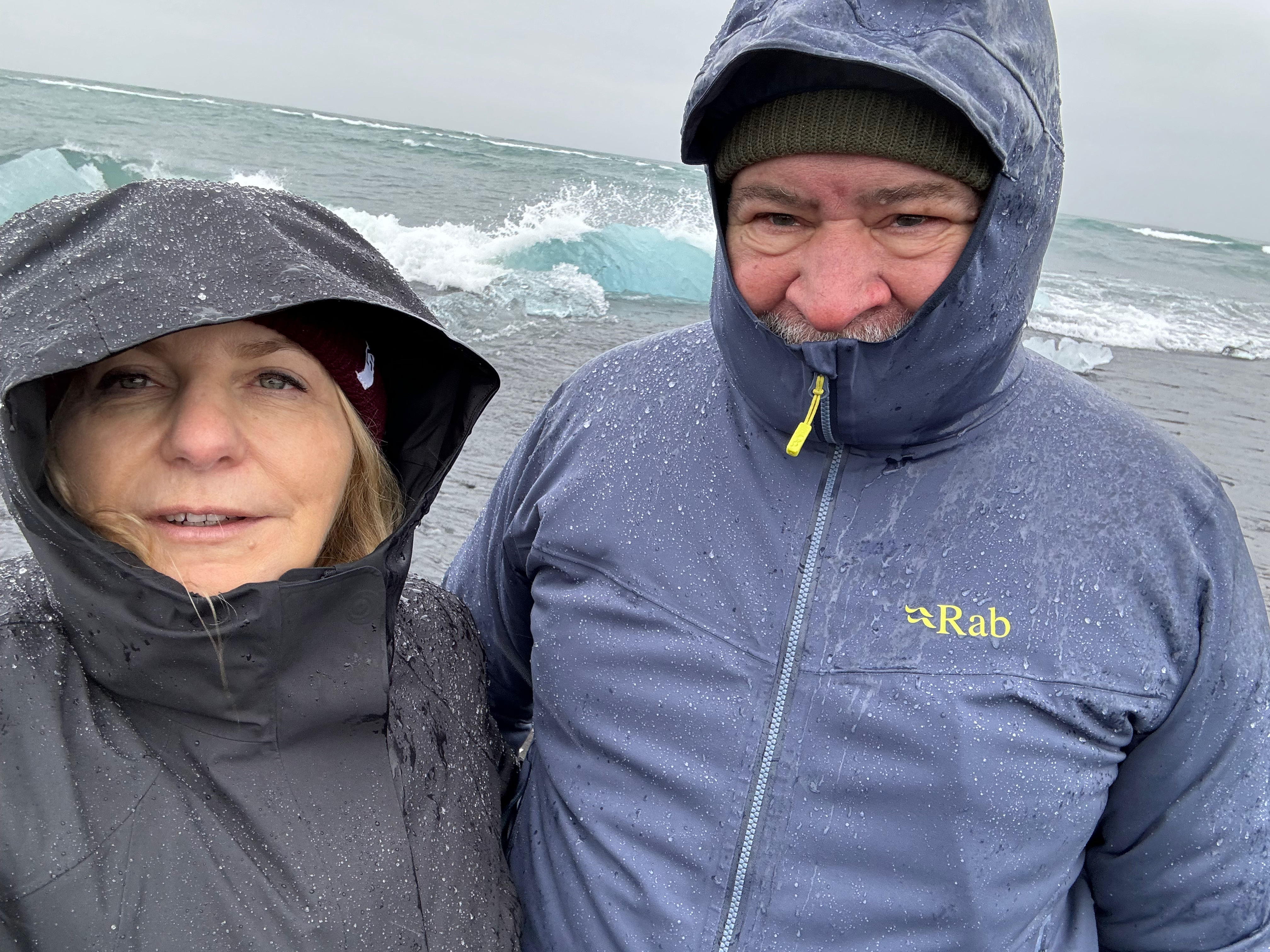

Diamond beach also happens to be a great place to see seals, and we were fortunate enough to see two swimming about near the bridge. Unfortunately I was not remotely quick enough to capture a photo :0(
On the return trip we stopped for lunch at a little restaurant called Frost. After some soup, and a some time to dry out, we took a short walk to the nearby lagoon of a different sort. This one had no outlet to the sea, however, we were able to get very close to the front of the glacier.
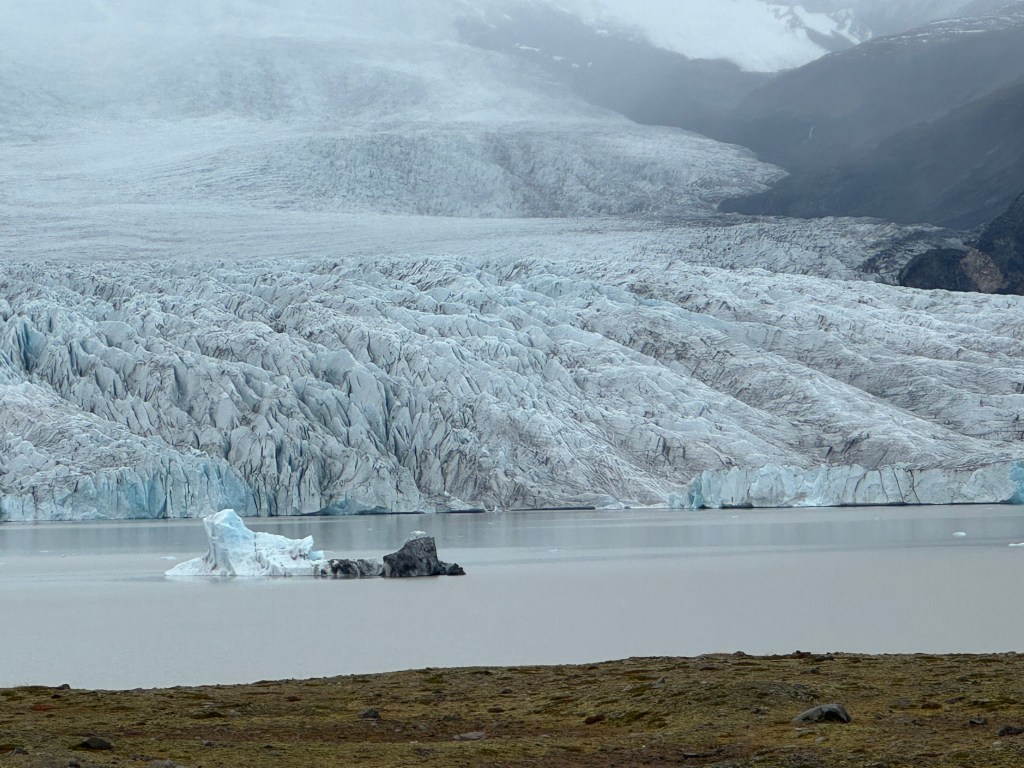
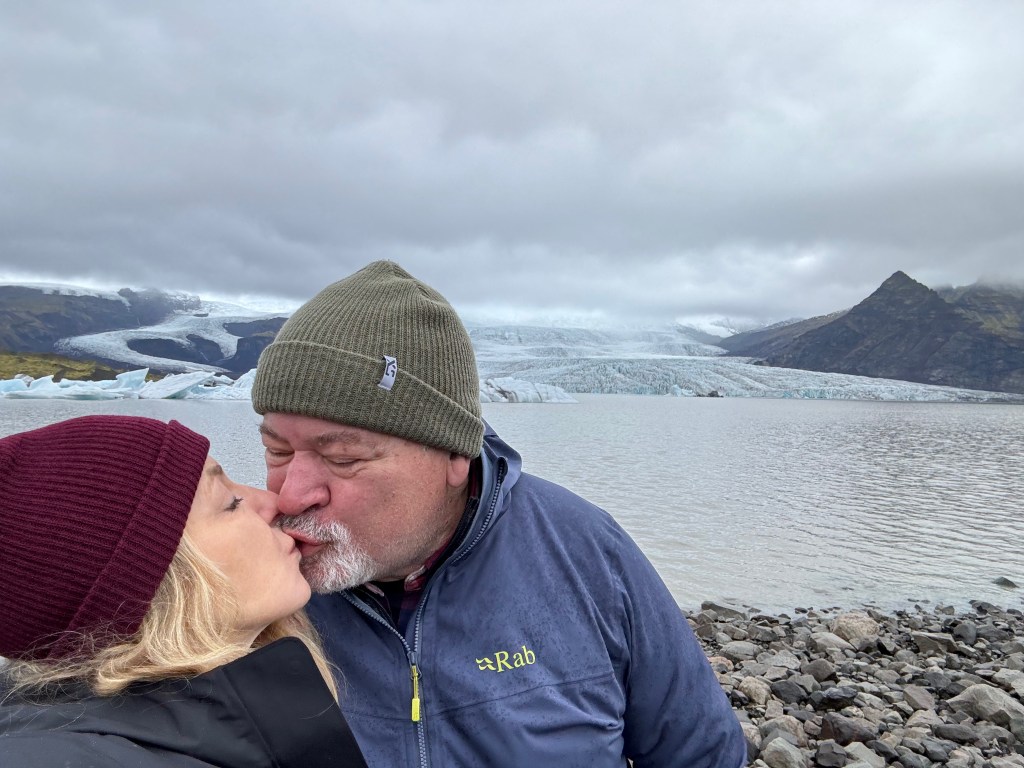
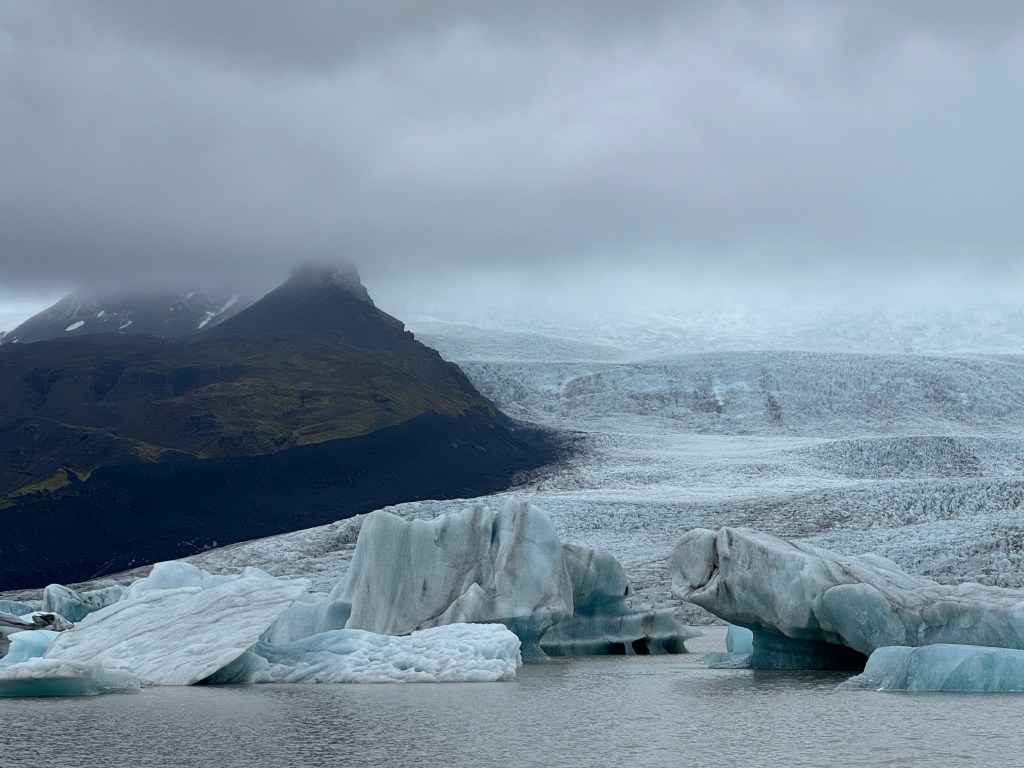

A bit wet and a bit weary we returned to the hotel mid-afternoon. I immediately plopped down and sorted through all of the amazing photos from today’s adventures. In this case I have let them tell the story.


 Adventures of a curious mind
Leave a reply to Raquel Cancel reply