Rick fell asleep in an instant last night. I was awake for a few hours before finally dropping off. Just over-tired I guess. A Youtube knitting video was the thing that finally tipped me over. I do find them very soothing.
We slept much longer than I had expected. I woke up to a quiet scuffling sound outside our door and assumed it was the 7:00 a.m. milk delivery. Checking my watch, I realized it was already 9:00! We didn’t rush, which was nice, and ended up downstairs for breakfast by 10:00. We had deliberately planned a relaxed day in the city so we could adjust to the time change.
The coffee was perfect. My avocado toast was weirdly tart and tangy – perhaps from lemon juice or the unexpected addition of some capers? I need to be a more flexible thinker when it comes to food, but the flavour profile was disappointing.
Our original plan to go directly to York Minster was derailed when Rick suggested we walk to the car rental office first. He had been unable to confirm our rental via email and though we could do it in person instead. OK….
The walk took us to the train station and then behind it. We ended up on a lovely path, following what I have decided to call “the gray river” of people on their way to the Train Museum. They are mostly old folks like us – or much older – vacationing after the rush of summer when everything is a bit quieter.
Confirmation complete, Rick wanted to just take a quick peek inside the train museum. Entry is by donation so two tickets in hand – in we went.
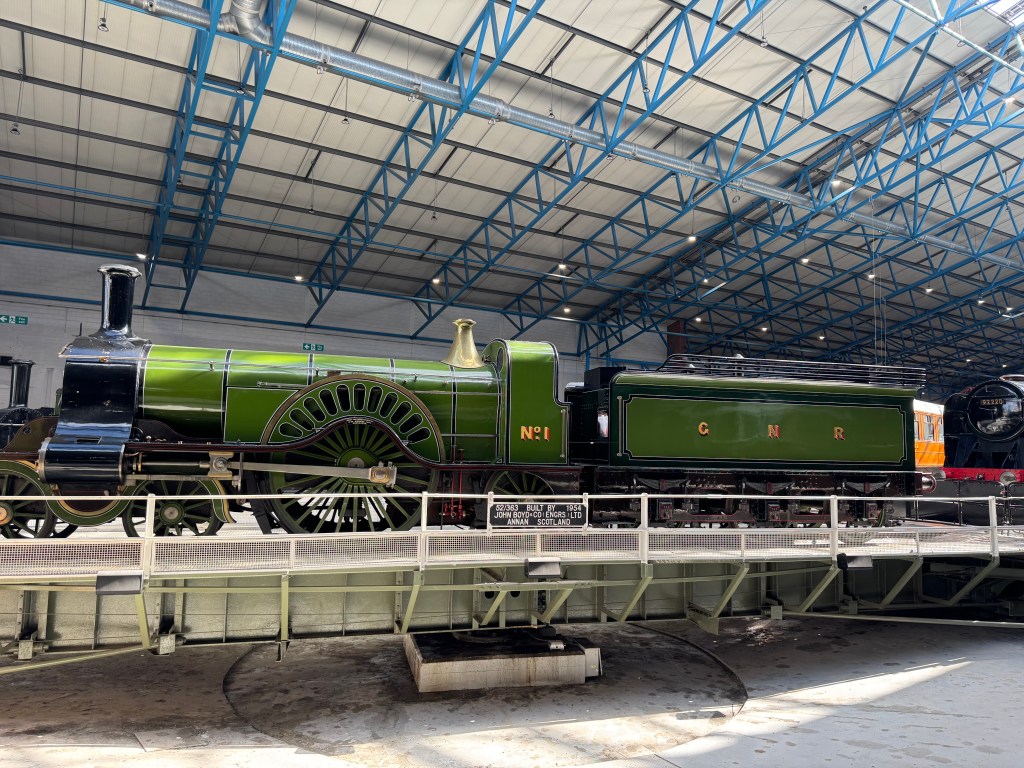
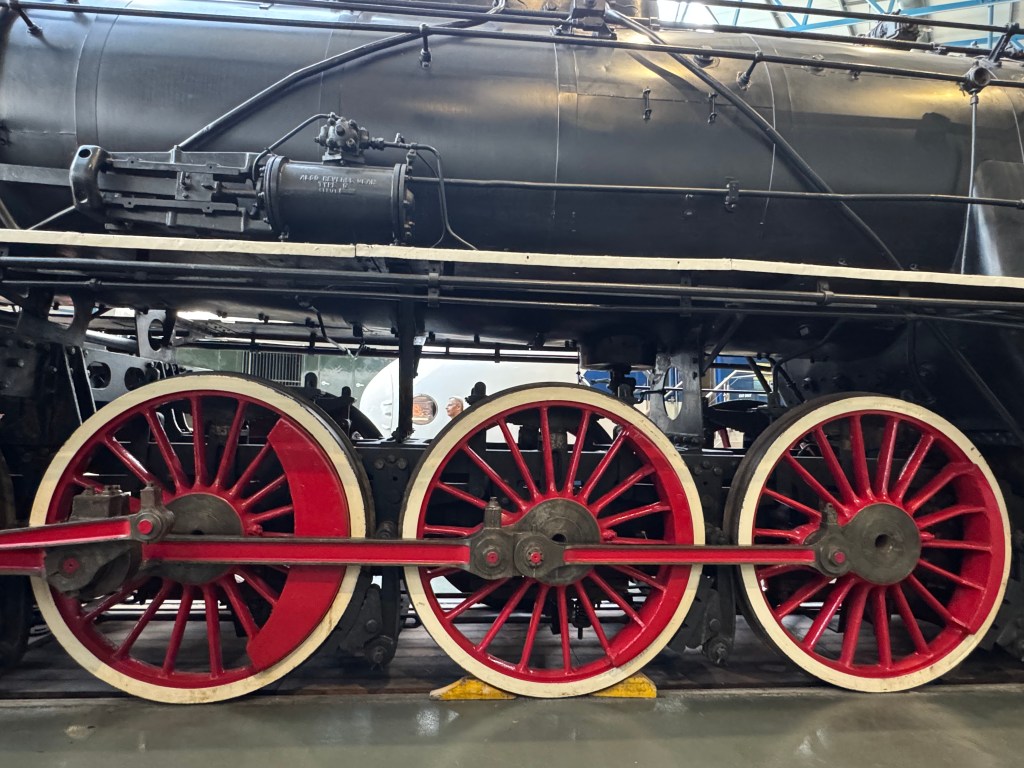
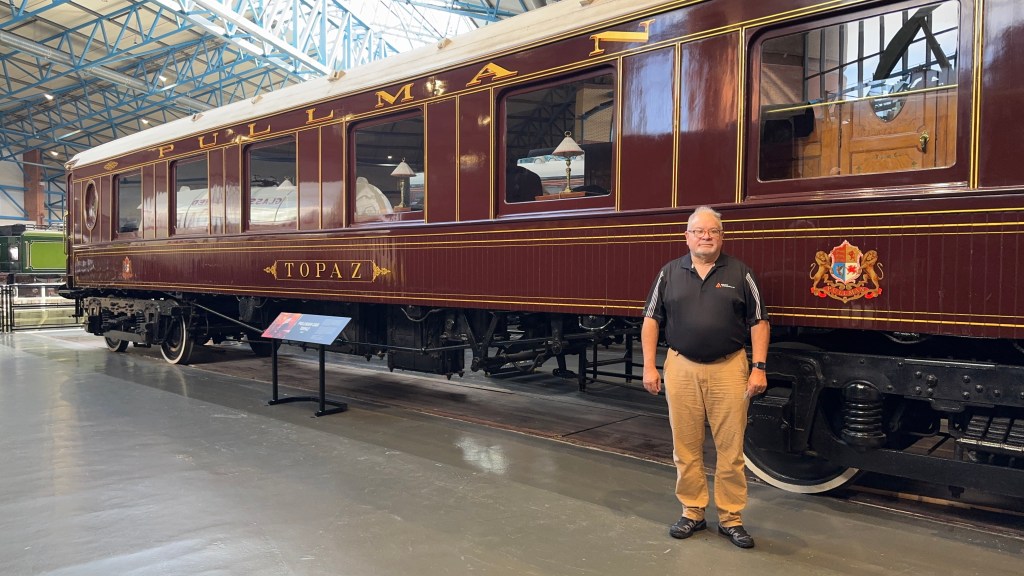
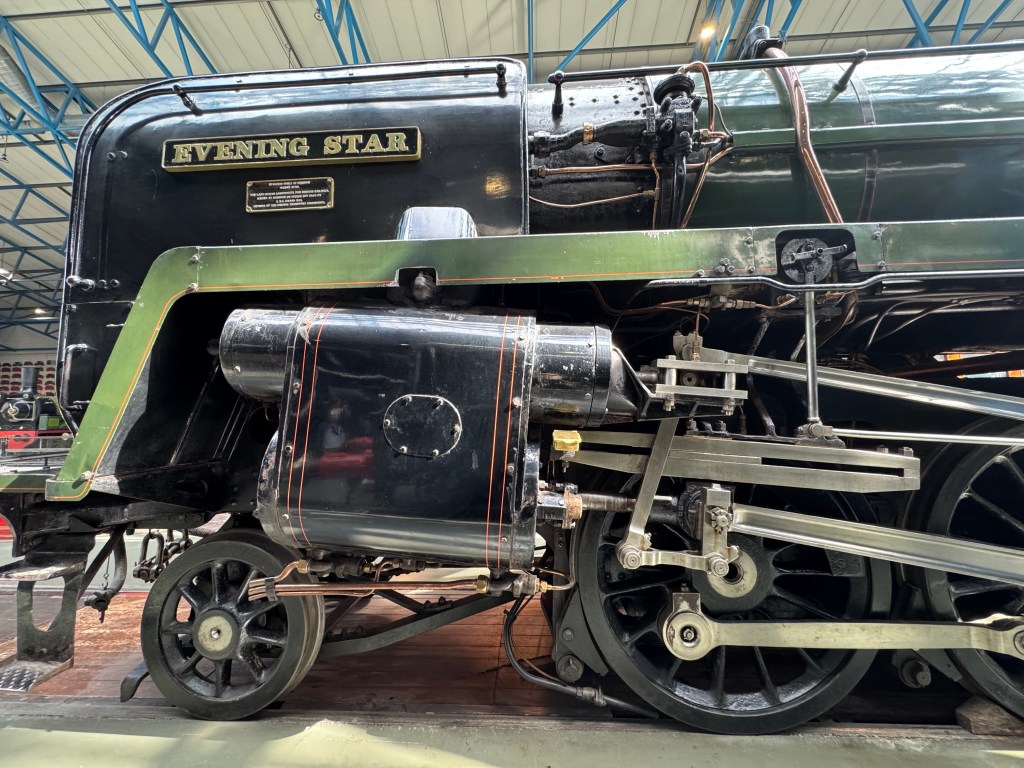
I have to say I was pleasantly surprised. The main space was large, beautiful, and completely filled with restored and well-maintained train engines and cars.
It was interesting! I walked through the entire space, admiring each train, taking dozens of photos, and reading all of the information cards. I did stop short of going to the adjacent buildings that held model trains and overwhelming amounts of parts and paraphernalia. These were intended for someone far more into trains than I.
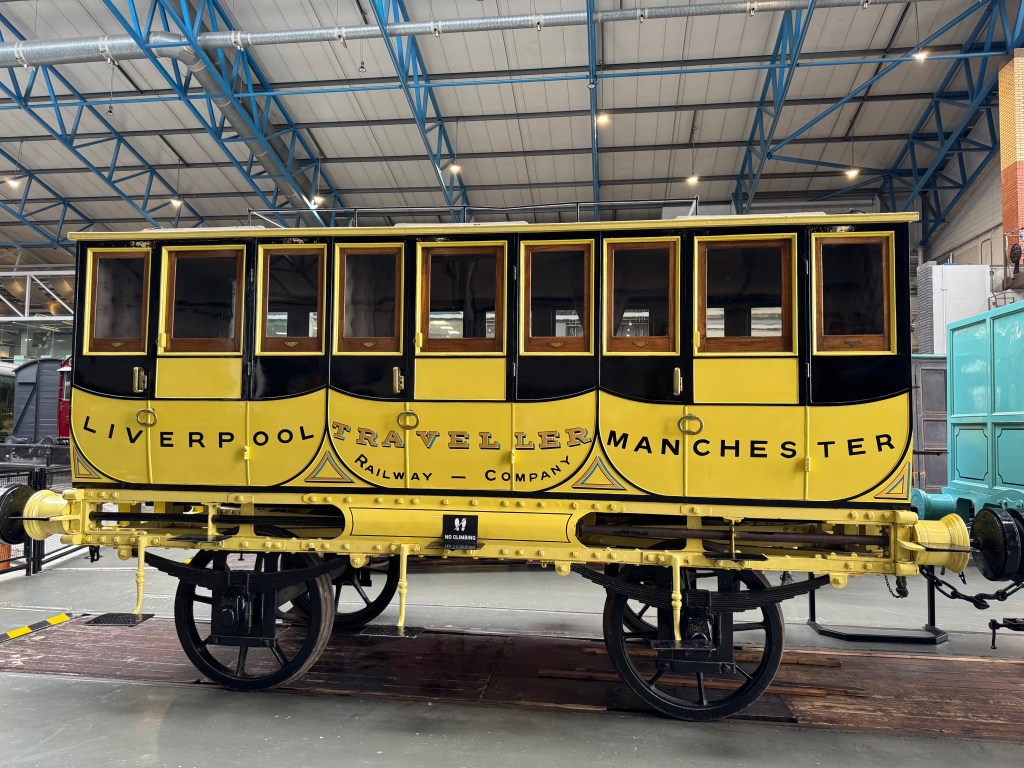
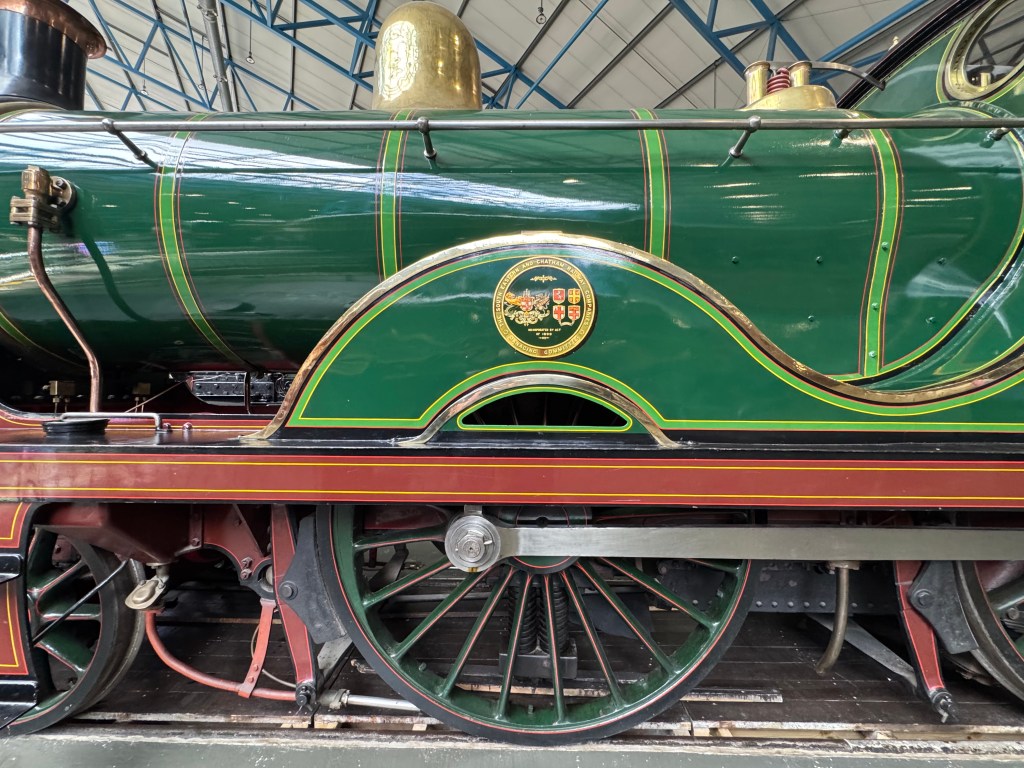
The return walk to York and the cathedral was quite pleasant. The air had warmed and wind had slowed compared to our chilly morning walk.
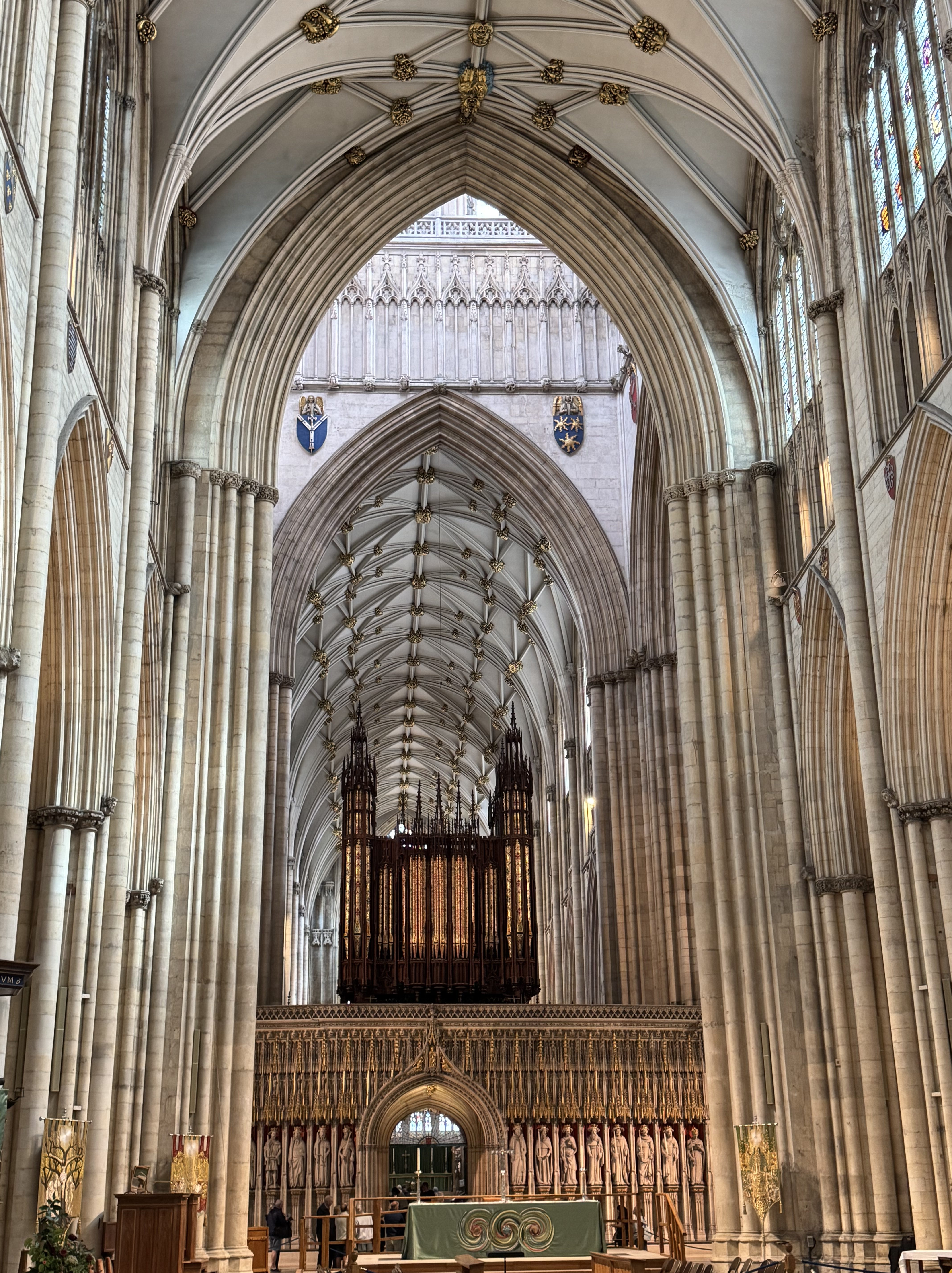
York Minster is lovely. We opted against climbing the 257 stairs to the top of the tower due to the claustrophobic space (shoulder width only). Instead, we attached ourselves to a tour that was just beginning. What an excellent decision that was.
The tour guide was an elderly woman, hugely knowledgeable, energetic, interesting and a wonderful speaker. She reminded me of my mother in all the right ways. And also of Dame Maggie Smith. If I could repeat everything she talked about I would, because it was all that interesting. I will try to focus on the things that really captured me.
The original church was built on the site in 627 AD. It was followed by a larger Saxon stone church repaired and rebuilt multiple times before being completely destroyed by the Normans in 1069 who then took 20+ years to build a new Cathedral. Parts of those early foundations and crypts still exist beneath the current building.
Archbishop Walter de Gray began building the massive Gothic structure in 1220. It took over 250 years to complete, finishing in 1472. The long duration means that the architecture includes 3 separate eras: Early English, Decorated and Perpendicular.
During the Reformation, Henry VIII kept the cathedral largely intact to serve as the northern capital for the Church of England. However, he did opt to take all of the gold and silver furnishings to add to his royal coffers.
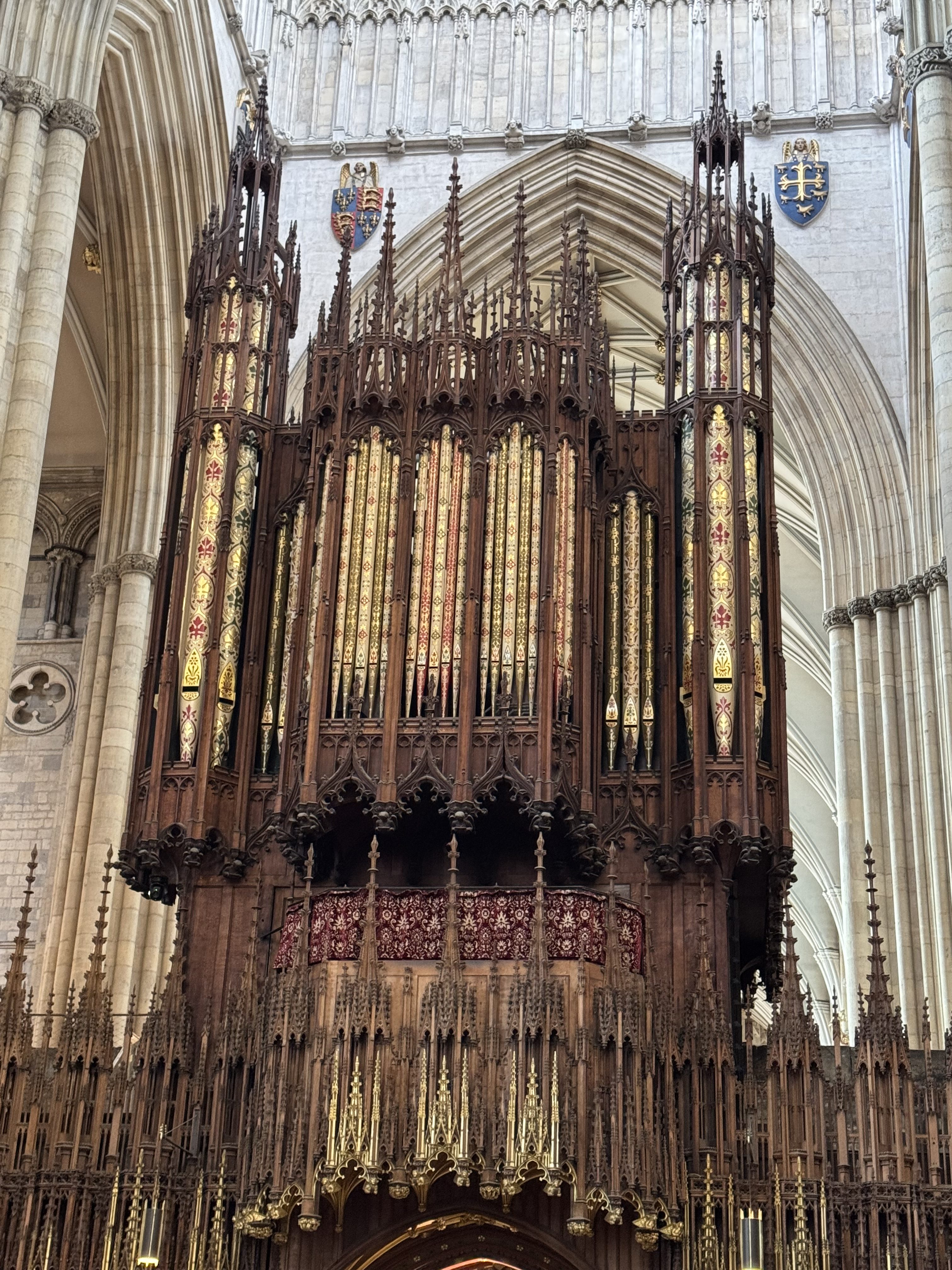
The cathedral has survived 5 fires. Three were set accidentally by: a candle, some burning coal and a tarpaulin. One was arson, deliberately set with prayer books behind a monument after the evening service. It destroyed most of the choir roof, the cathedrals organ and medieval woodwork.
The most recent fire, in 1984, was due to a lightning strike. The photos are alarming! It took over 100 firefighters to put out the 200 foot flames. In order to save the building, firefighters directed heavy water jets at the wooden roof beams to cause a controlled collapse of the south transept roof. This strategy broke the fire’s path, saving the rest of the building from destruction. While all of this was happening, the clergy and local residents ran into the building, forming human chains to carry out historic altars, carpets, books, furniture, etc.
There was a belief that the lightning strike and resulting fire were divine retribution for the consecration of Bishop Jenkins in cathedral 2 days earlier. Jenkins had publicly questioned the literal historical truth of the virgin birth as well as the resurrection of Jesus. A Bishop was challenging the voracity of the bible!
York Minster now has its own police force to protect against future arson attempts, as well as Acts of God (phrase deliberately chosen).
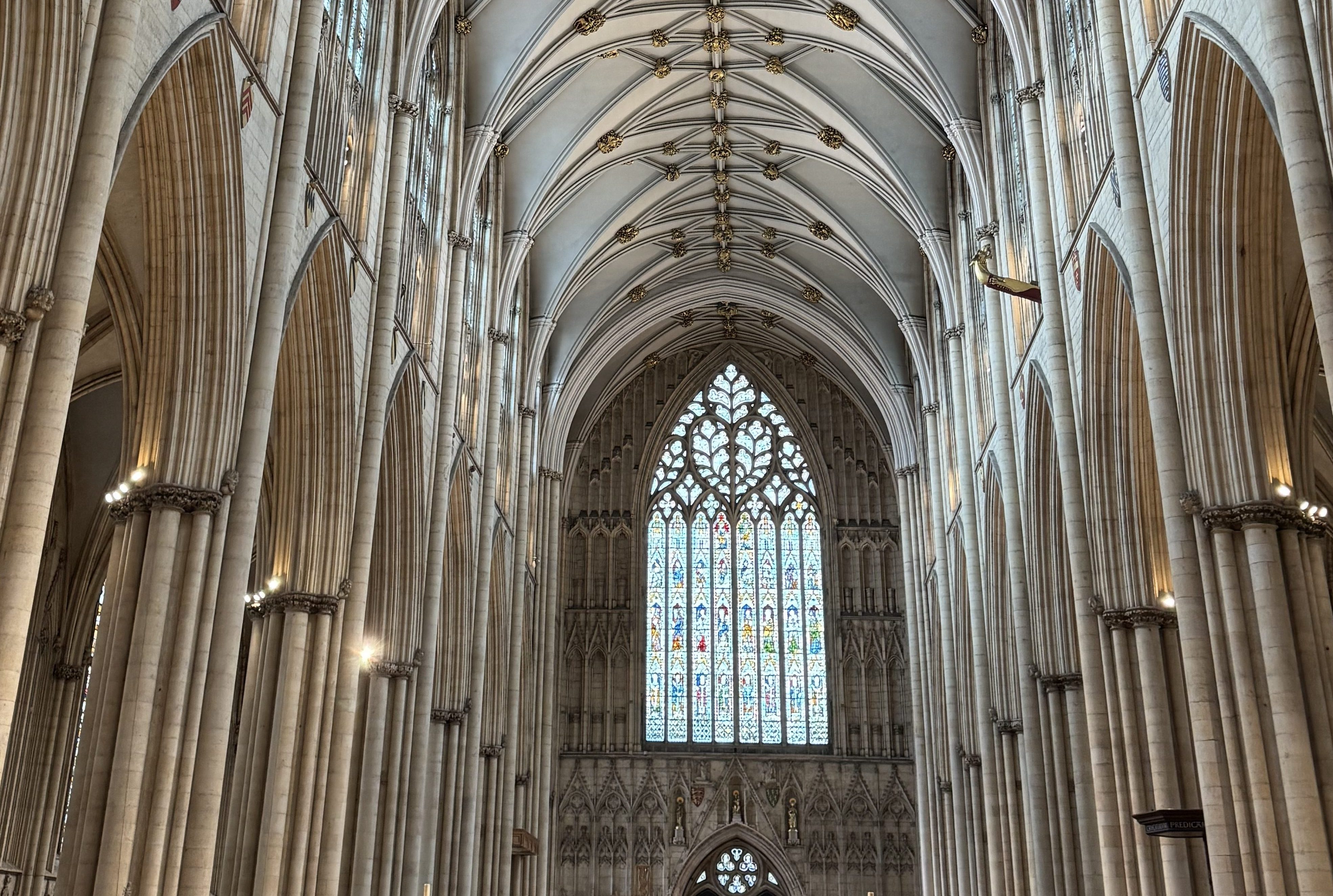
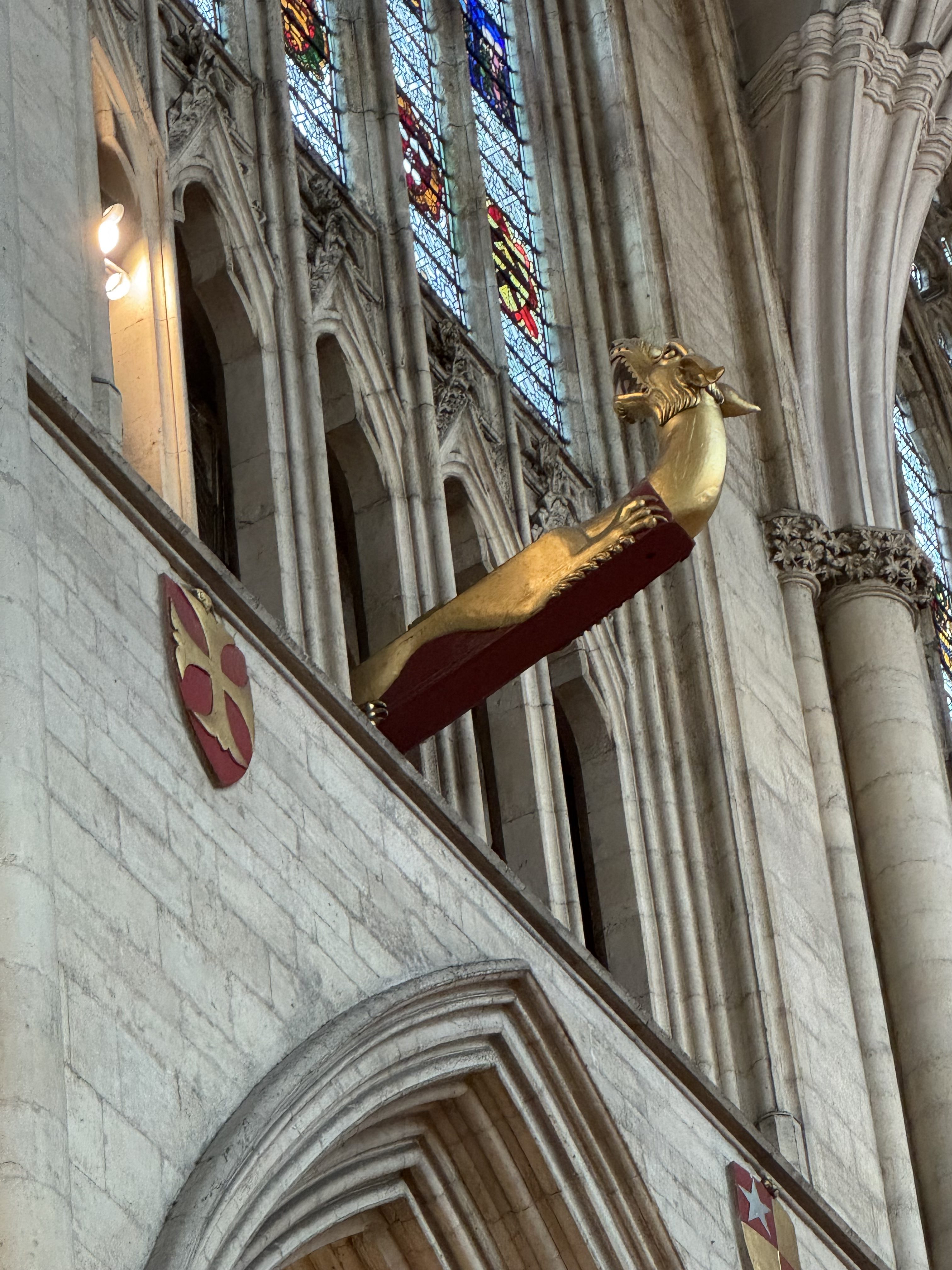
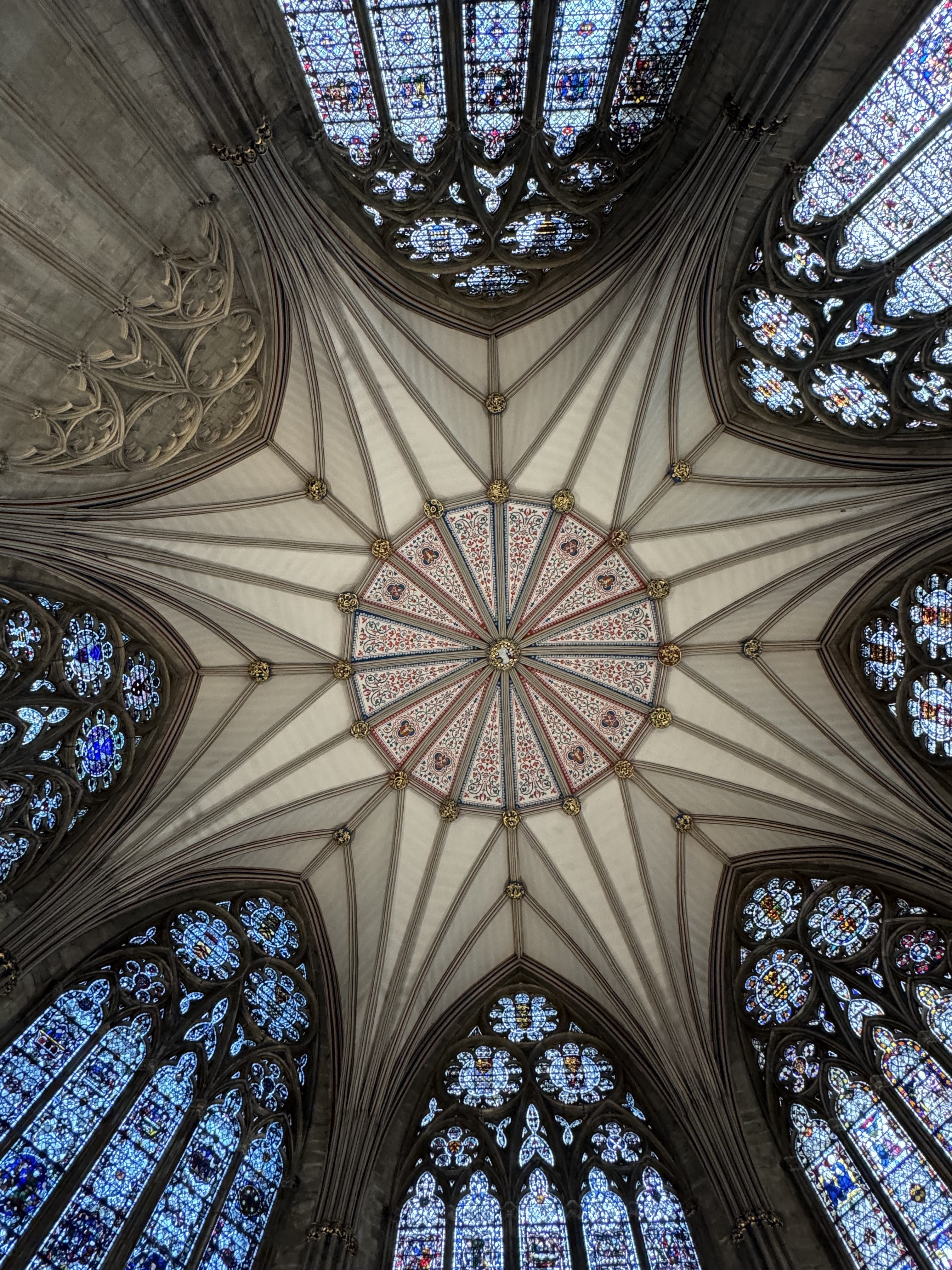
York Minster is stunning. The photos do not capture it. It is referred to as “The heart of York” because of the large heart shape prominently featured as part of the west window
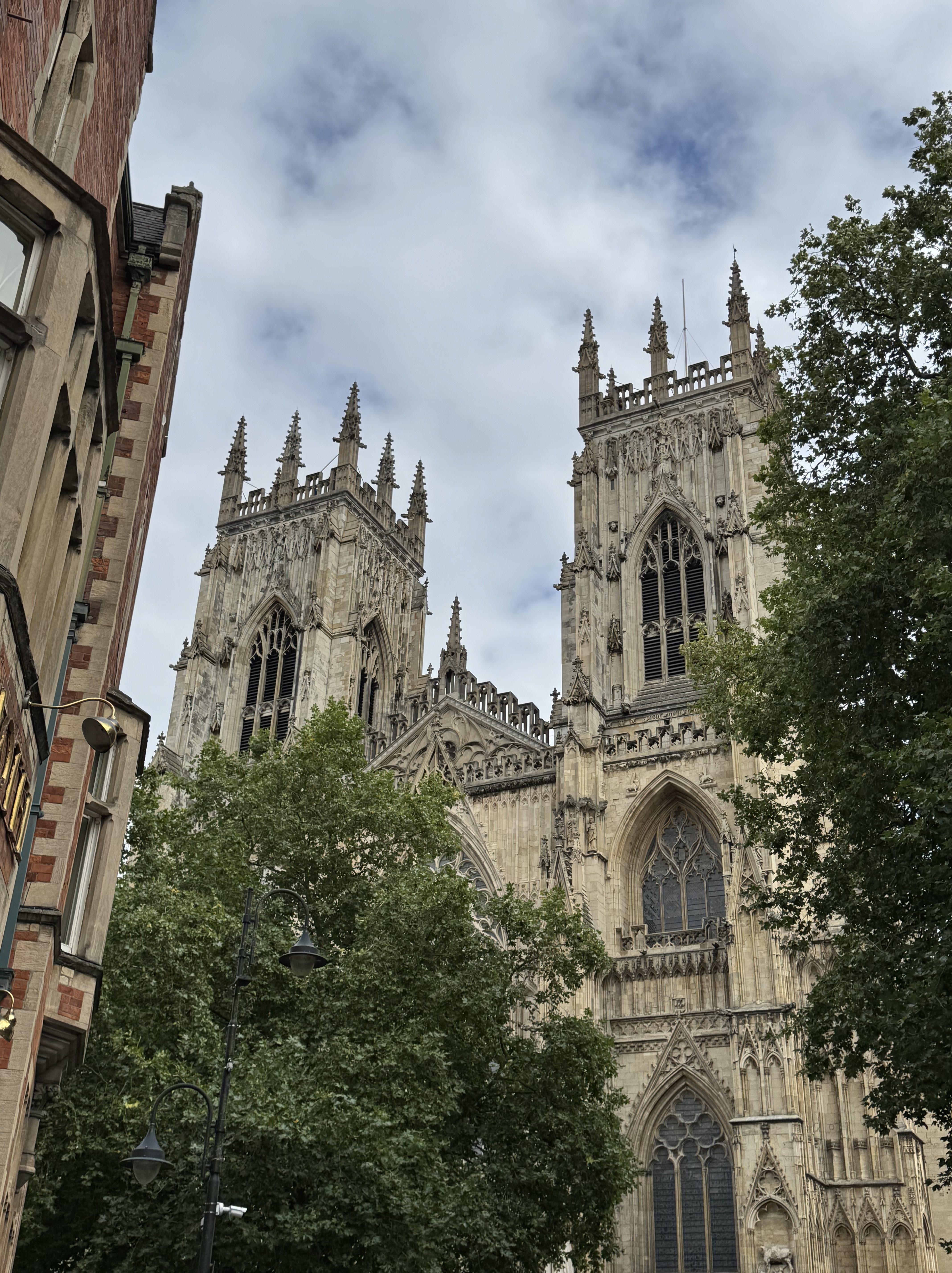
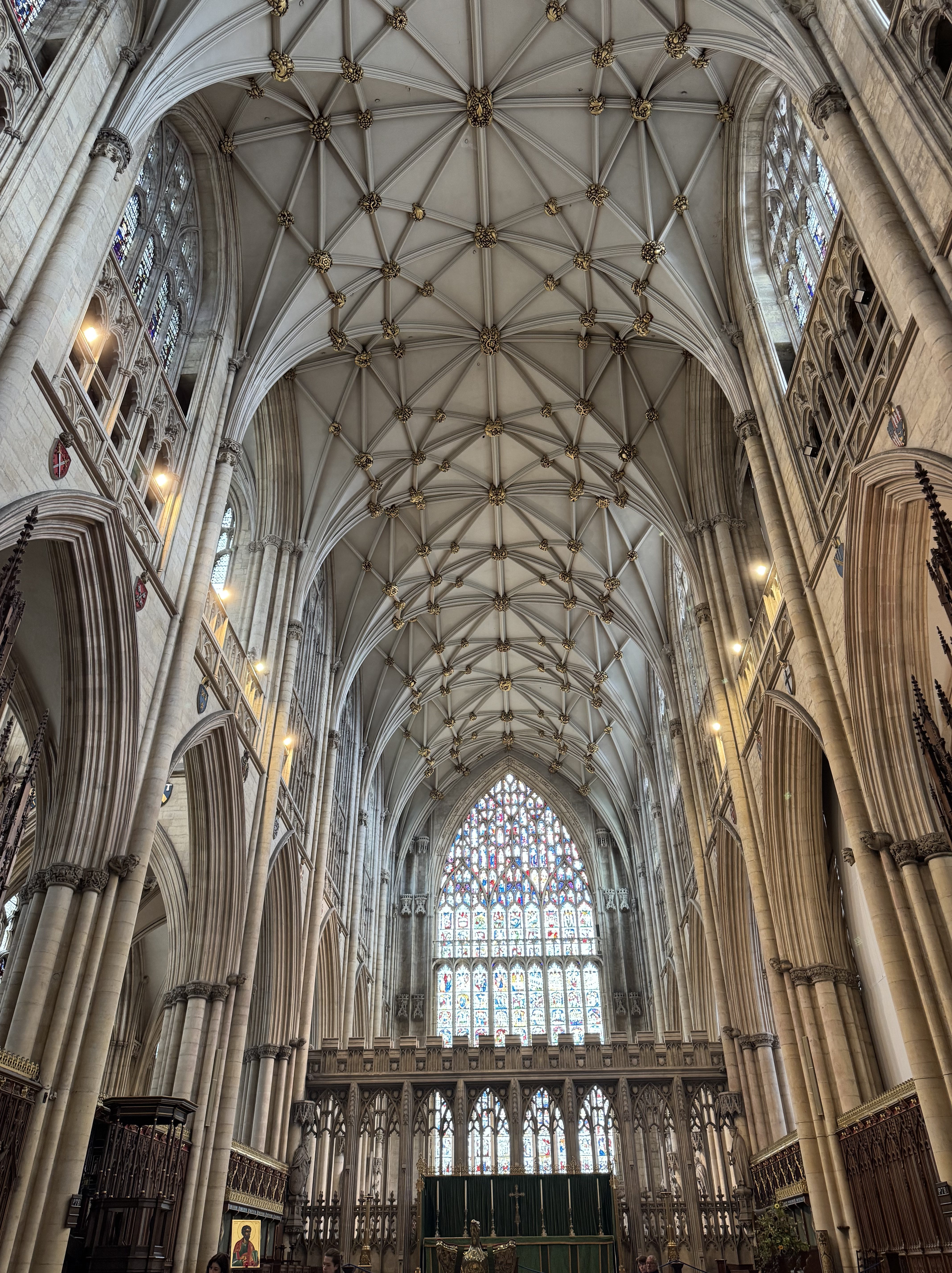
Our room has a wonderful view of the towers. The bells have been ringing for most of the last half hour (though I don’t recall hearing them for so long last night?) Perhaps a treat one might tire of eventually. We have a few more nights in York to decide.
We left the cathedral just as a rain shower was ending and the sun was beginning to poke through the overcast skies. As people began to put away their umbrellas, we wandered through the old part of town, heading towards the Jorvik Viking Museum.
I had bumped into the existence of this place quite by accident. It was a bit dodgy looking on the outside and not cheap. (Rick and I hearkened back to our visit to the Leprechaun Museum in Dublin; a bit tragic but a fond memory nonetheless.)
After a short wait we were ushered downstairs to a small presentation area with a glass floor. This allowed us to see some of the Coppergate archaeological site. Thousands of perfectly preserved Viking artifacts were found there including skeletons, houses, workshops, dishes, coins, jewellery and more.
It is also home to the Lloyds Bank Coprolite, officially recognized by the Guinness Book of World Records, as the largest piece of fossilized human poo ever discovered. Its real. We saw it ensconced in it’s very own glass case. It was alarmingly large. (I only briefly considered taking a photo.) It was left behind (pun intended) by a 9th century Viking who’s primary diet was determined to have been meat and bread. It has an estimated value of $80,000. Enough said on this topic.
Within a short time we were no longer skeptical about our visit. It began with a video presentation describing the original discovery of the first artifacts, then detailing some of the most interesting finds.
Next, we were swept away in little carts past displays of animatronic Vikings while a narrator described what we were seeing. It was a bit cheesy at times, but truly educational.
We were eventually dropped off at the start of a collection of galleries showing the real artifacts. The guides were extremely knowledgeable. They were all dressed in Viking garb and most, including the men, were wearing their hair in an interesting viking style. They clearly enjoyed their work.
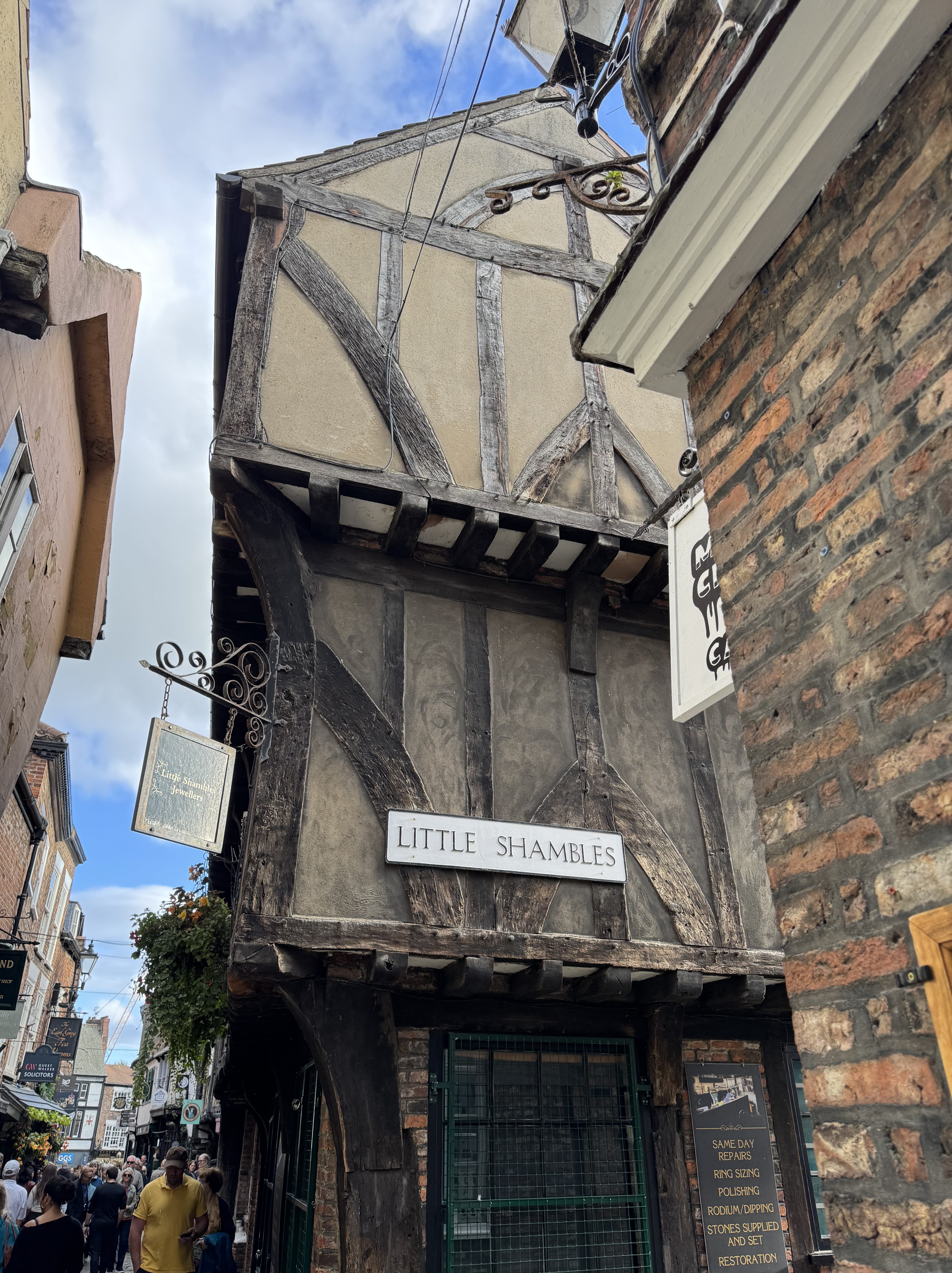
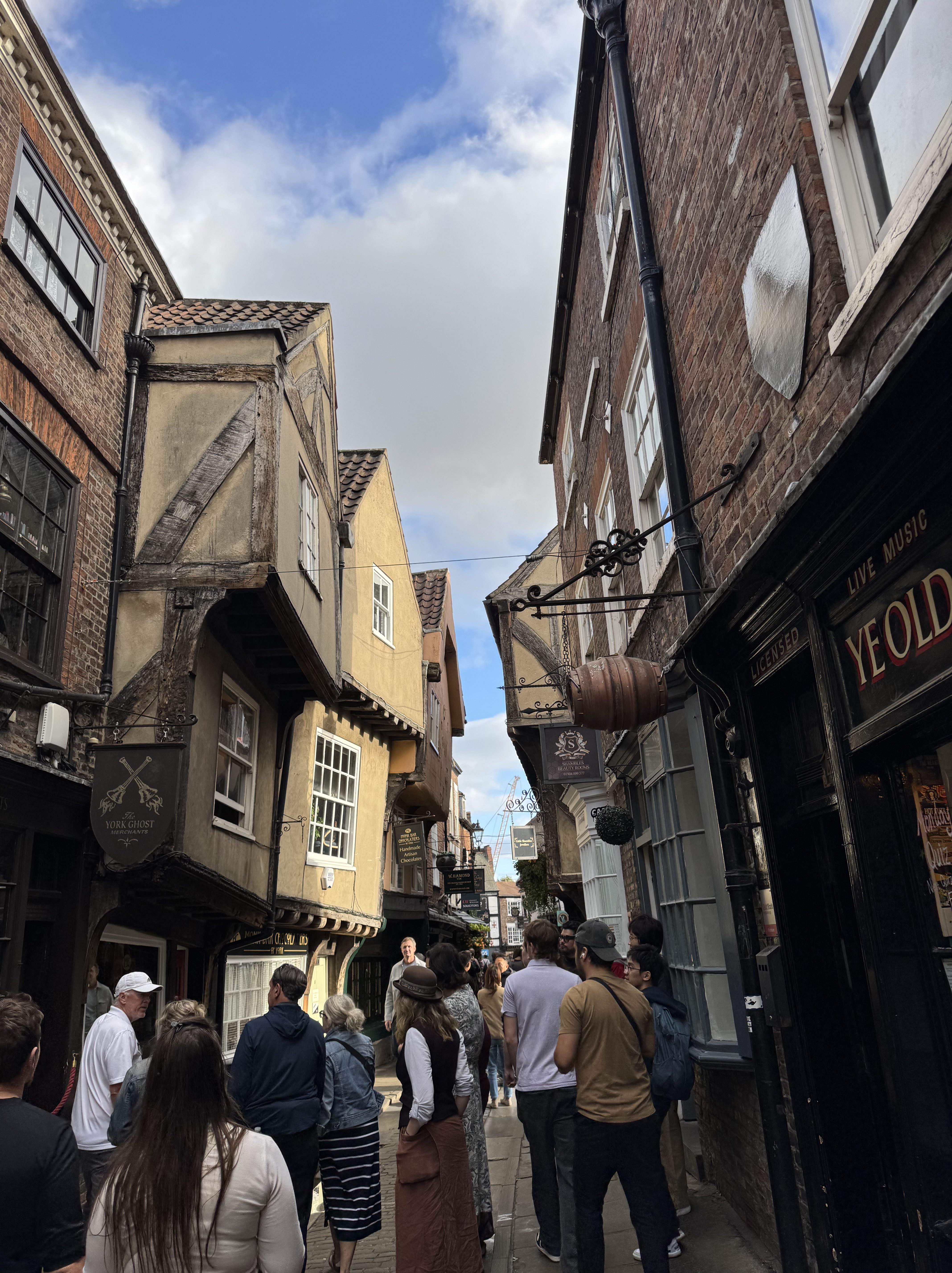
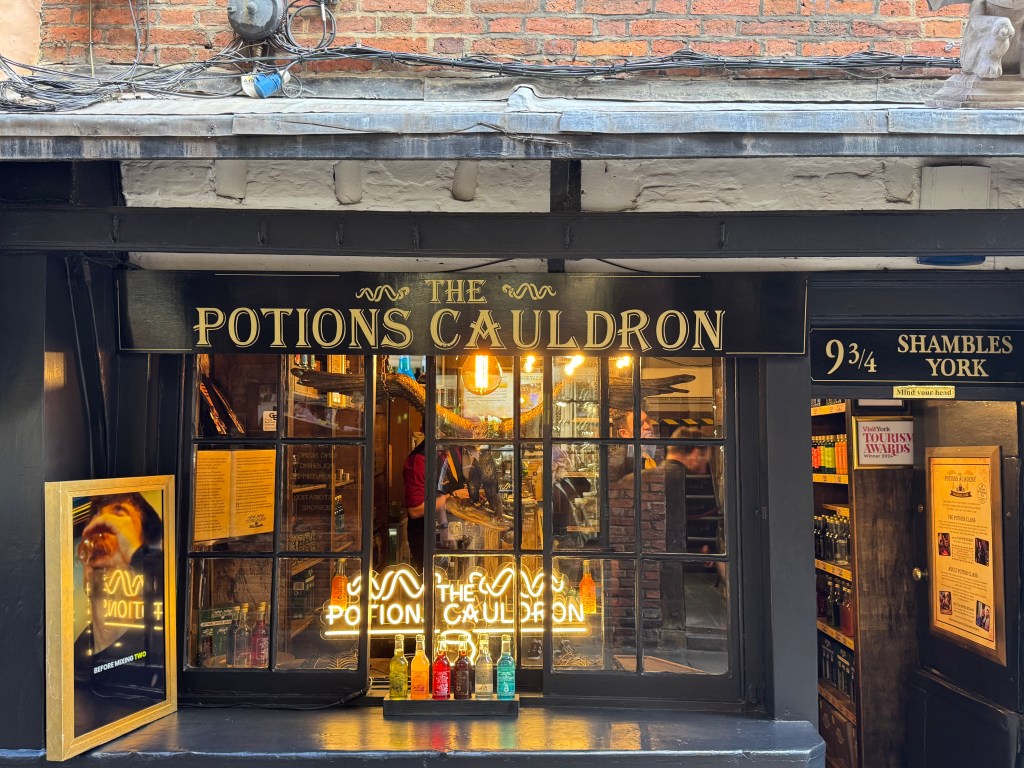
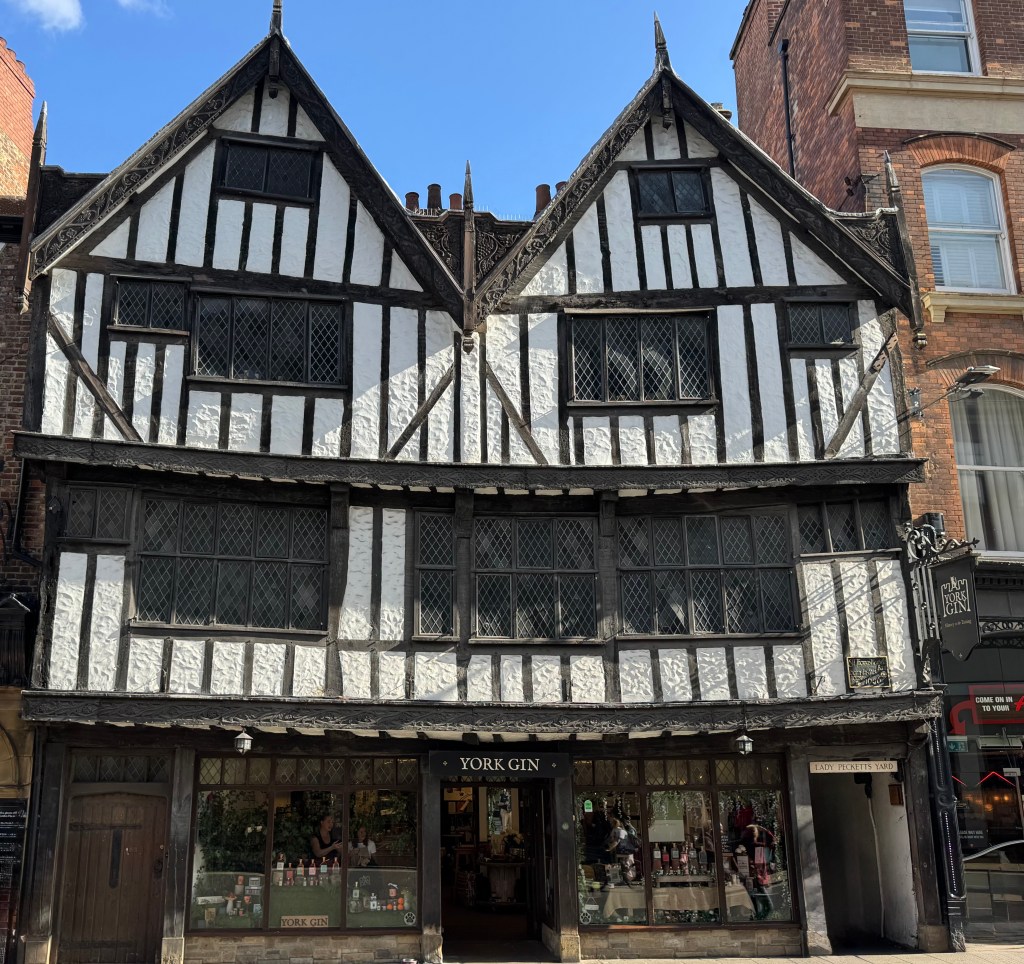
Afterwards, we spent some time wandering the tiny ancient streets in the area called The Shambles. We poked our heads into a few shops and tried some marvelous macarons.
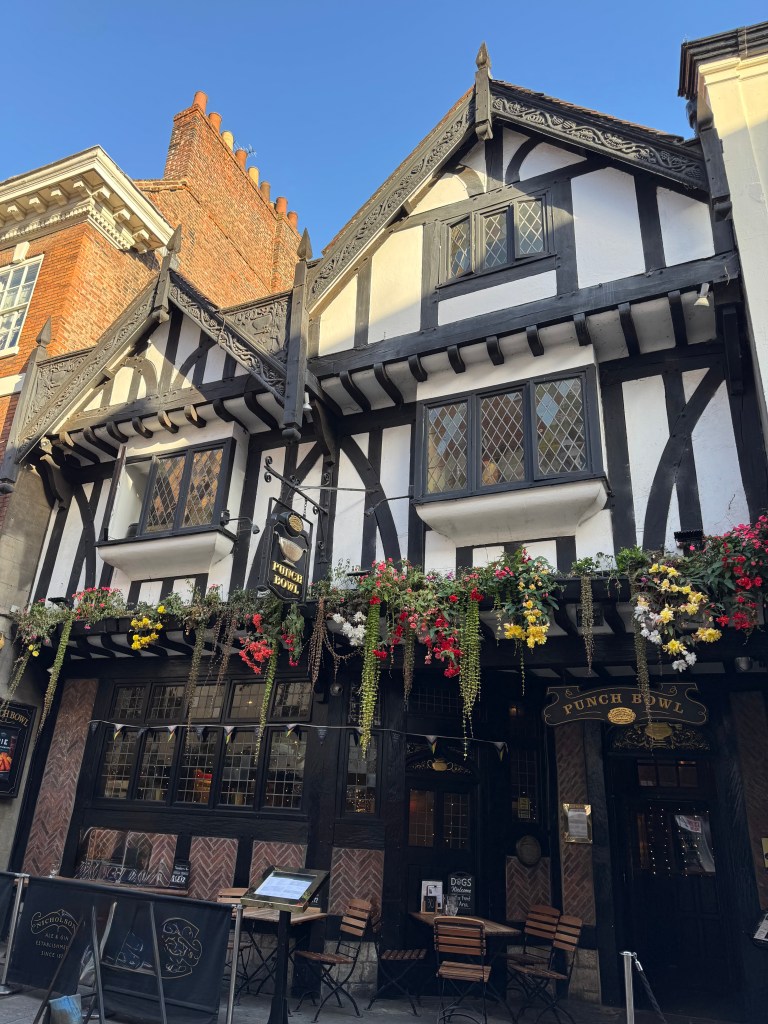
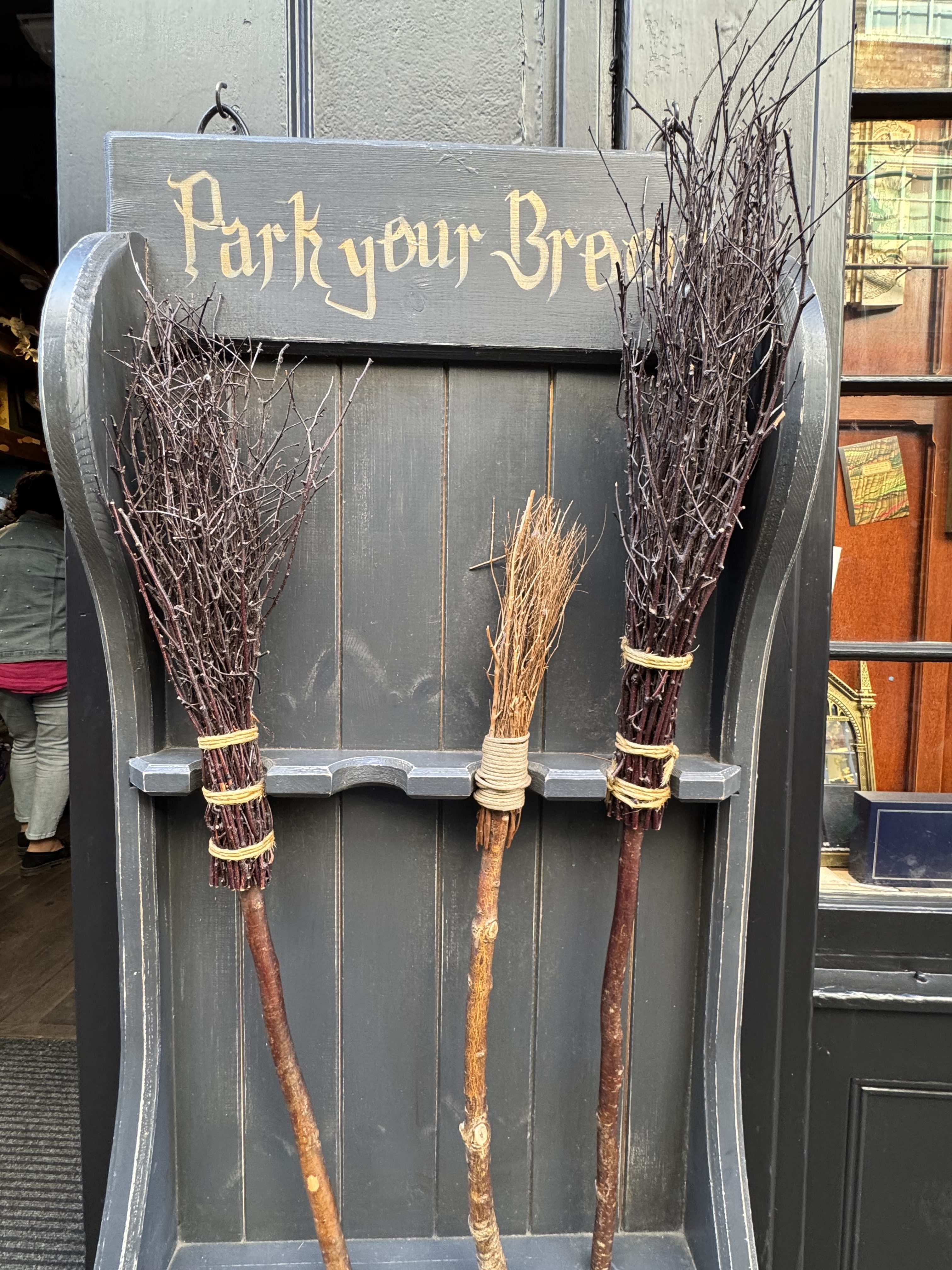
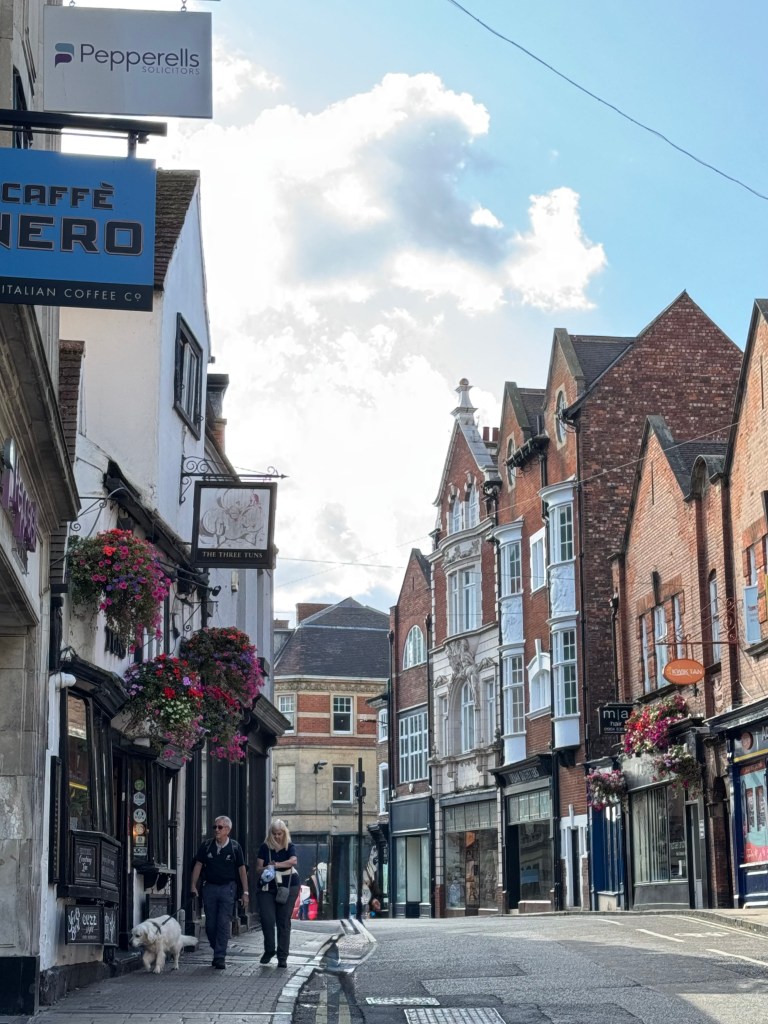
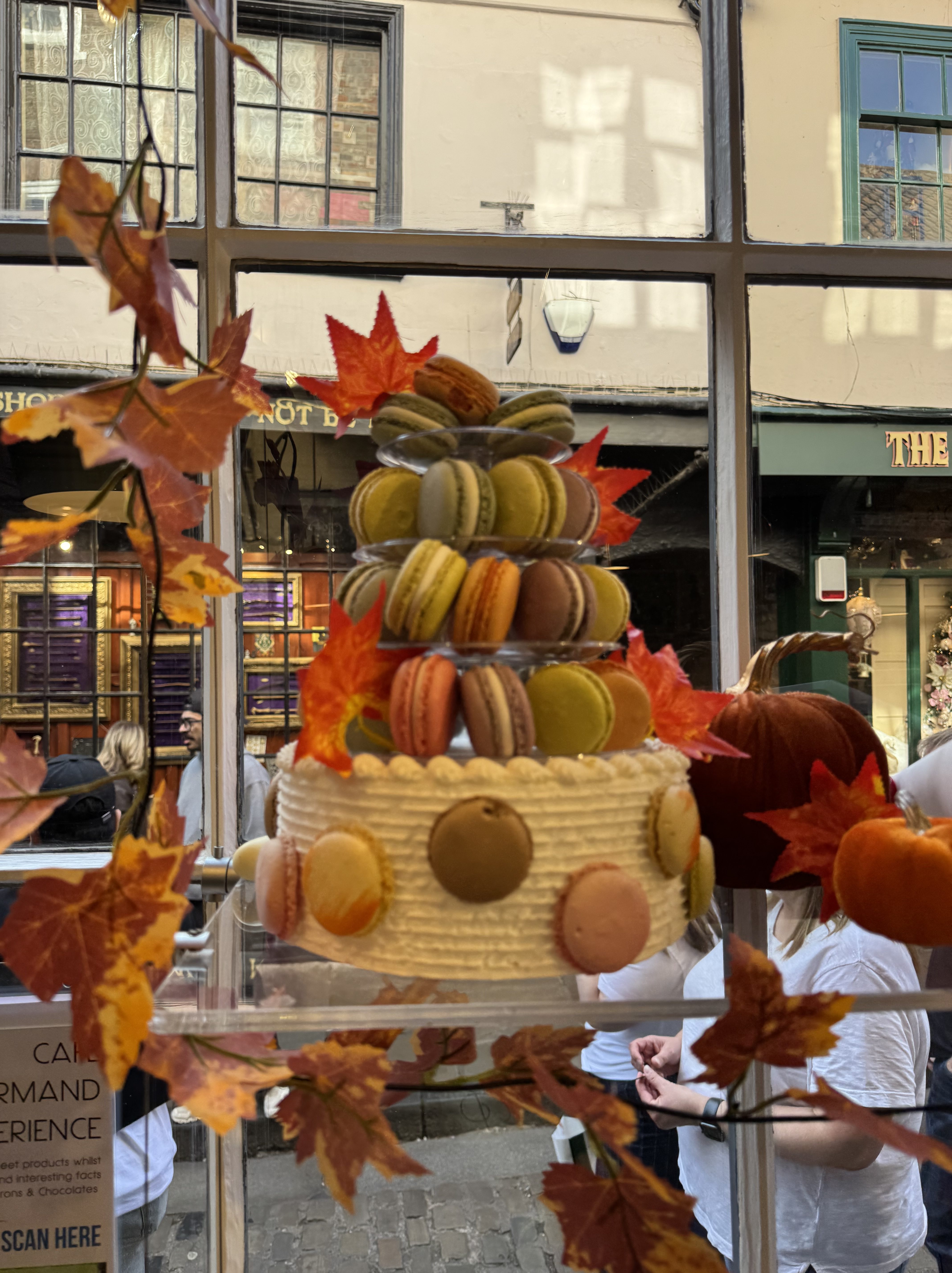
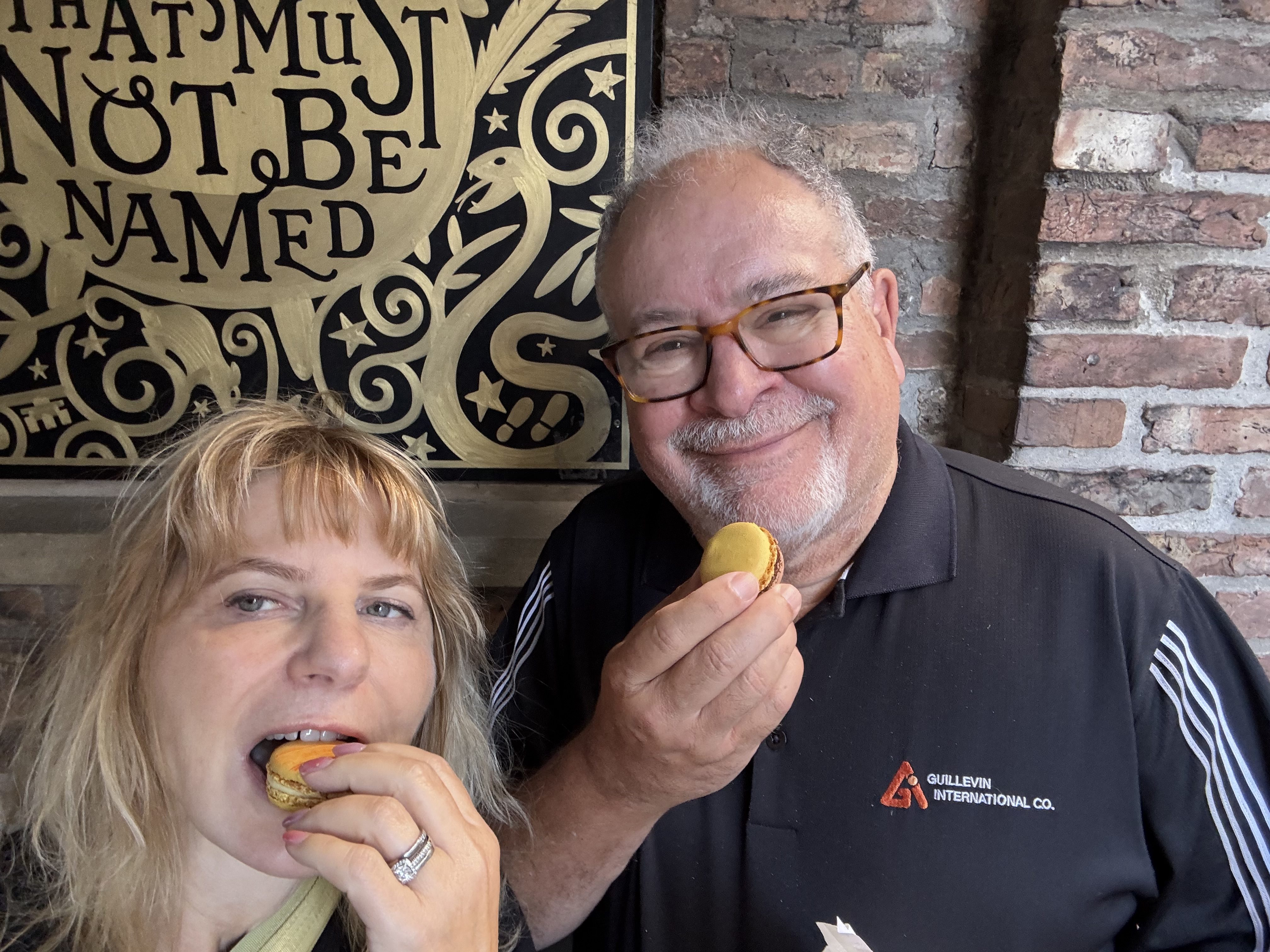
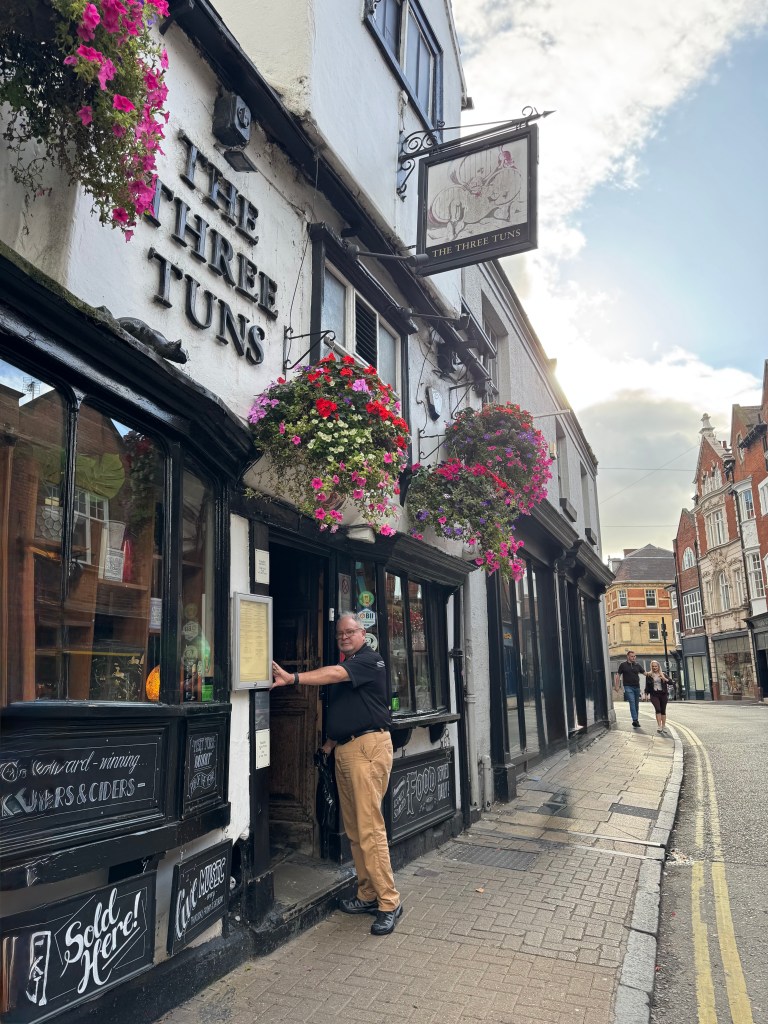
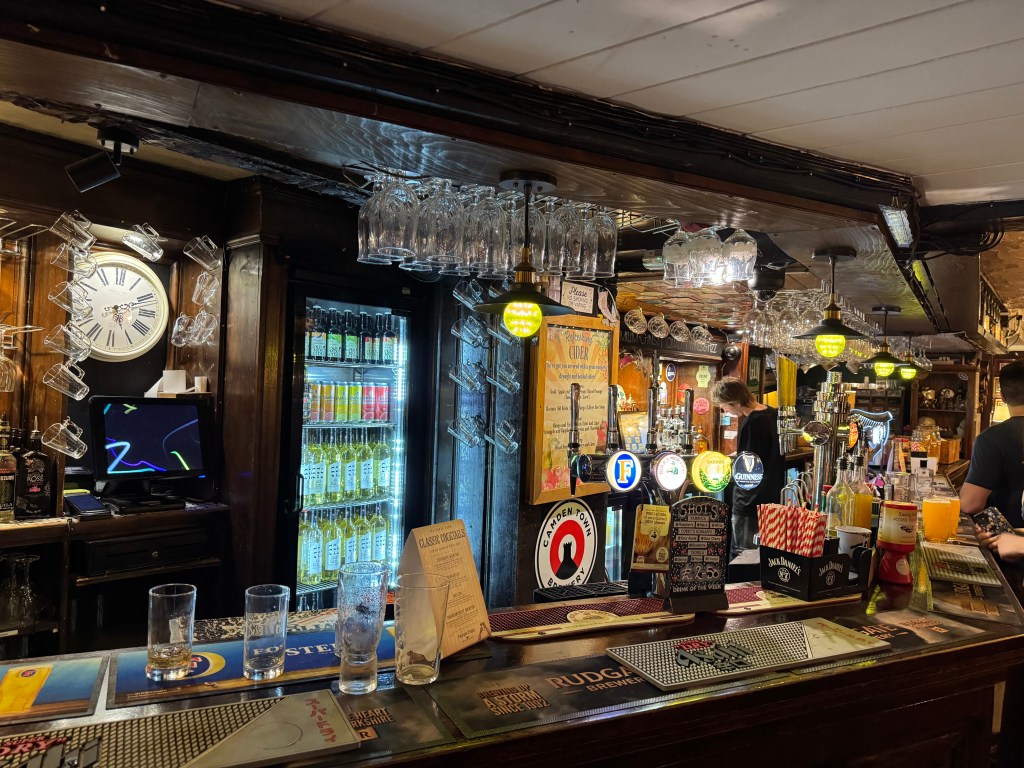
We eventually stopped for a beer at an ancient pub called The Three Tuns. It has been operating as a public house since 1782. It is not the oldest in York, but pretty darn old. Rick had a Battle Axe beer, recommended by the bartender. I had a soda water. There were so many interesting objects packed inside the low ceilinged building.
We took a short break back at our hotel then went out for dinner. I really wanted to eat at The House of Trembling Madness (best name ever) but they did not serve food after 6:00. We will have to go back for at least a drink in the next few days.
In the end we opted for dinner just across the street at a little Italian place. The food was very good and they had a nice selection of zero proof cocktails; they are not so much a thing in York I think.
We ordered a pork fonduta for our starter. It was a delicious concoction of a cheese fondue with pork, accompanied by bread sticks, large pieces of crispy pancetta and roasted pork rind for dipping. My taste buds screamed “yes!” while the rest of me was strongly advising caution. My pasta bolognese was delicious. Two small servings of hot chocolate came with our bill – the perfect way to cap off dinner.
The one thing we did not do today was follow the chocolate trail and it is doubtful there will be time before we leave York. York is the “undisputed chocolate capital of the UK”. Who knew? York’s wealth was largely built on three historic Quaker families: Rowntree’s, Terry’s and Craven’s. You can smell chocolate drifting from the Nestle factory when the wind is just right (sorry Mom!). Kit Kats are made here, one of my favourite chocolate bars. I kept my eye out for a Yorkie bar – named after the city of course – but to no avail. This will be on my agenda for the next few days.
Tomorrow we head for the Moors! Rick will be driving (on the left) while I gaze out the window admiring the scenery. Lots to look forward to.


Leave a Reply