We were up early (ish), had the hotel breakfast (surprisingly good), walked to the car rental (again) and were on our way before 10:00, as planned.
The roads were paved and generally at least two lanes, giving Rick a chance to adapt to driving on the left. He did magnificently, even on the narrower roads once we hit the moors
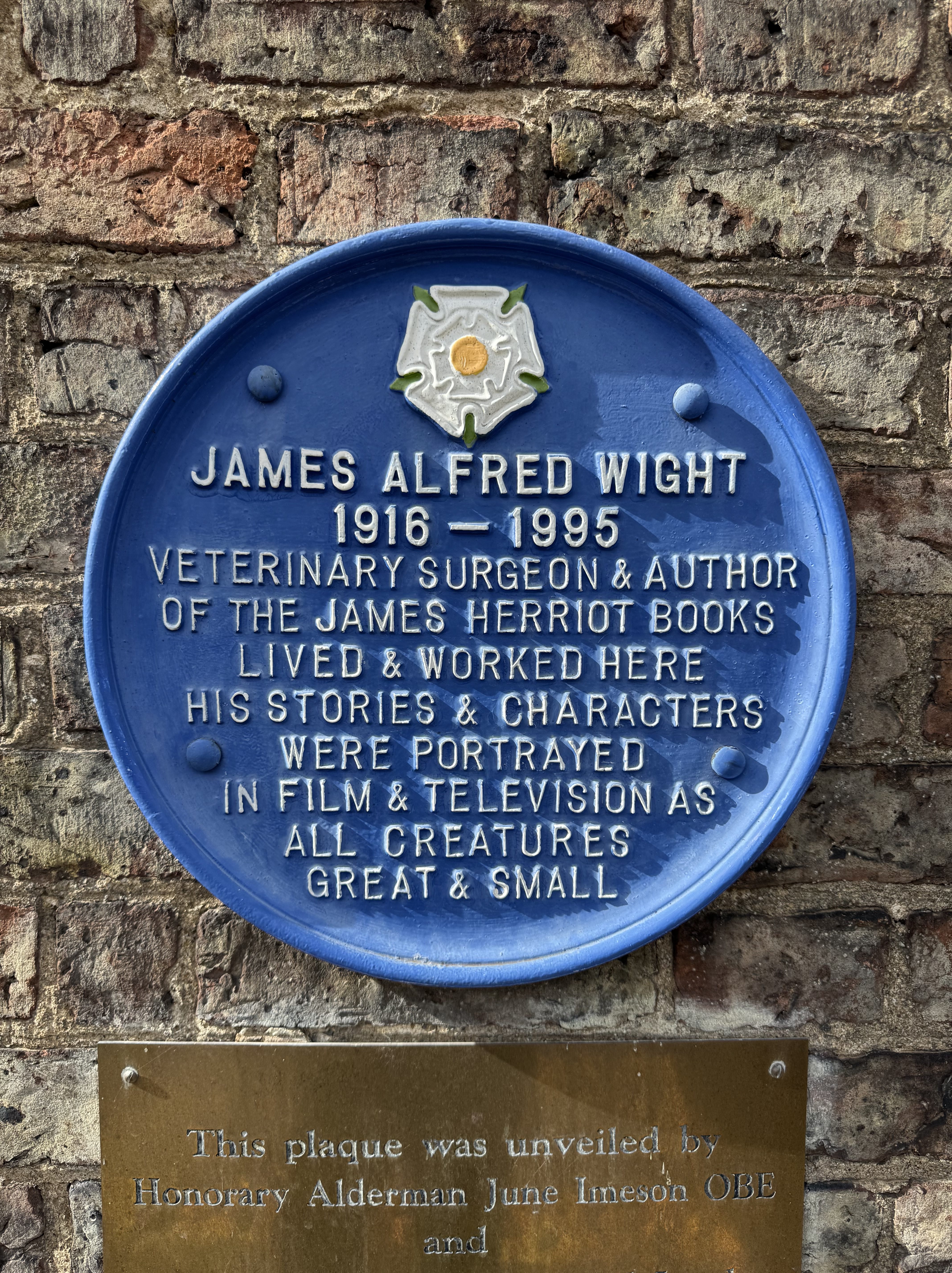
We modified our original plan – again – removing the Yorkshire Air Museum to avoid lengthy backtracking and adding a stop in Thirsk at the last minute, once we found out it had been the real-life home of Alf Wight. You might be more familiar with his nom de plume, James Herriot.
I remember reading some of his books during my animal phase, when I was much younger. I am currently a big fan of the BBC show, based on the books, “All Creatures Great and Small”. I have watched the entire original series. More recently, I been completely captured by the remake. It is true comfort food for me with beautiful scenery, lovely characters and all the kinds of animals you could ever want.
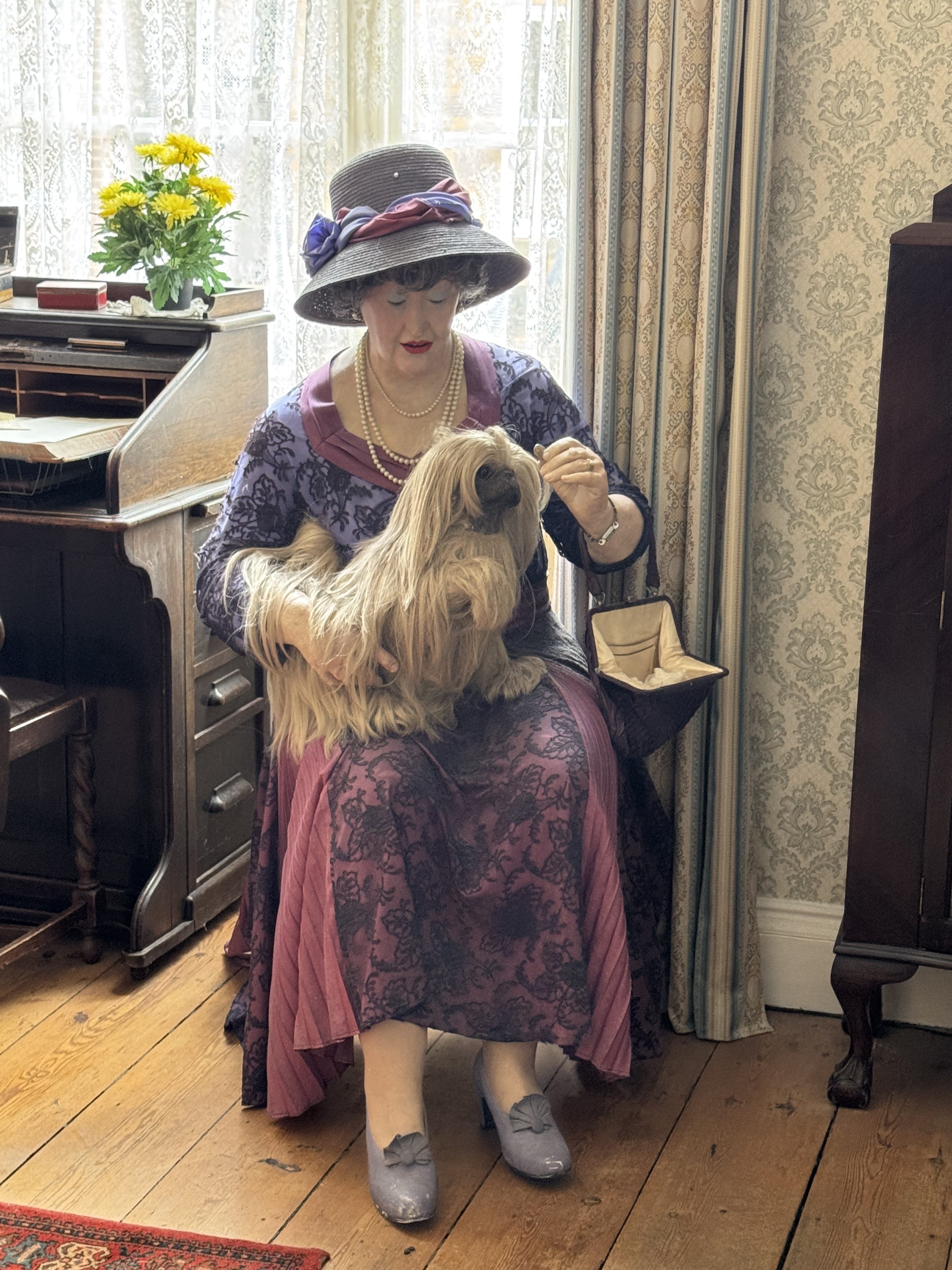
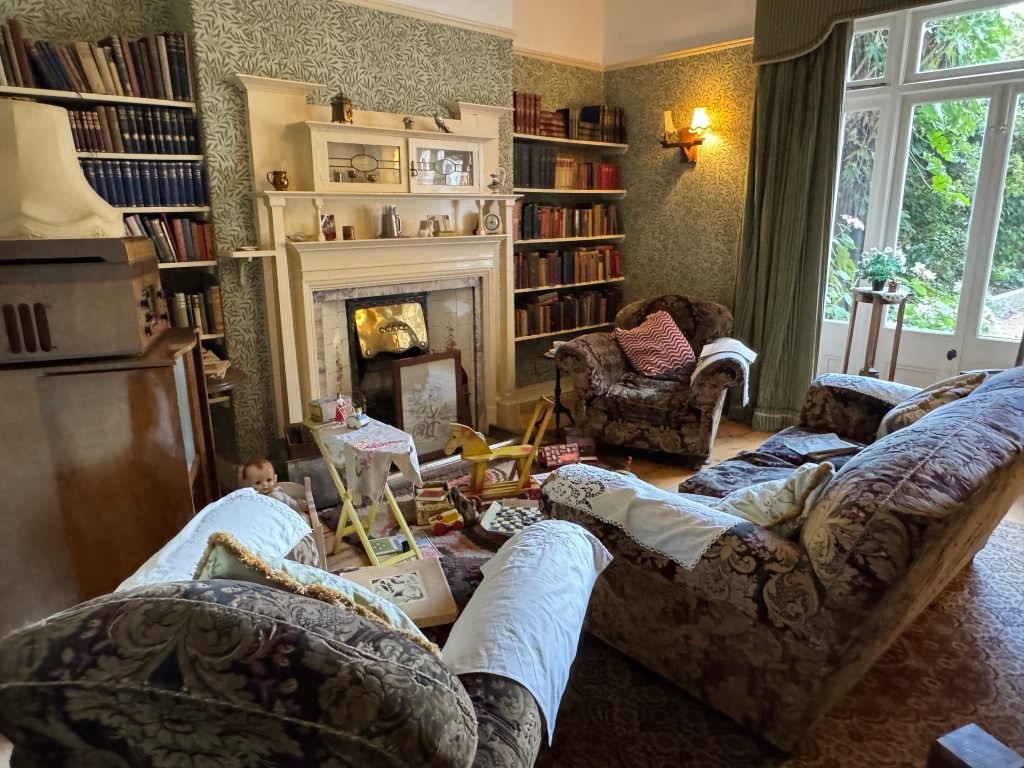
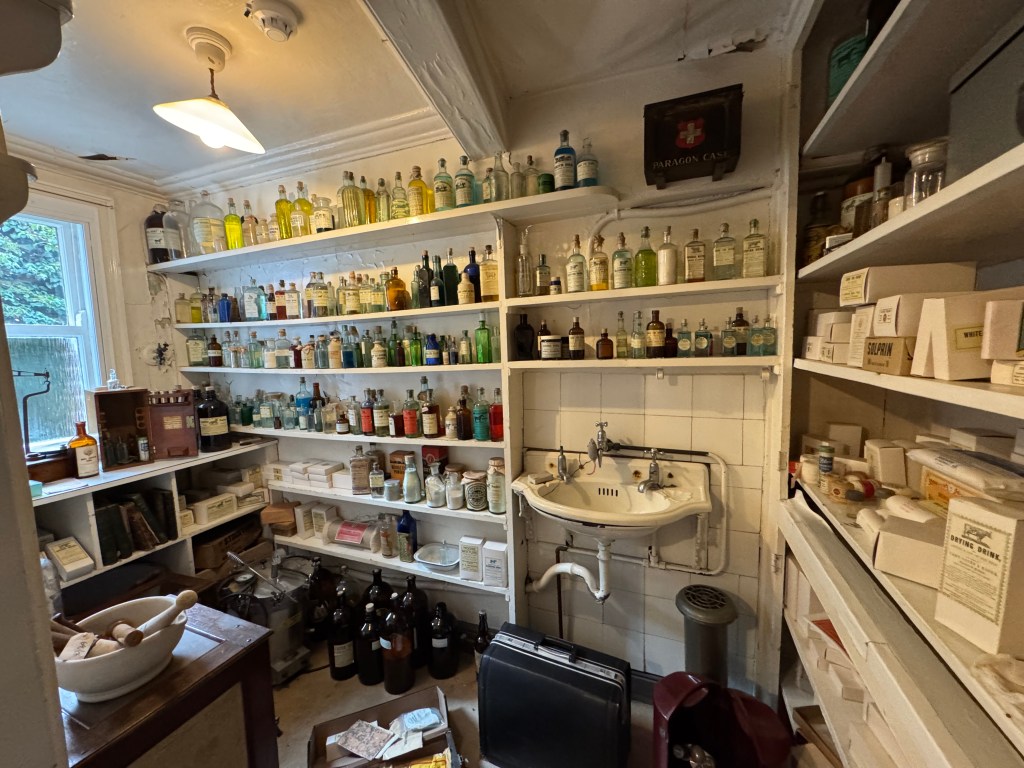
Every room in the house has been carefully restored, including all the areas used for his veterinary surgery and dispensary. The dining room was often used as a waiting room for patients, and the kitchen table was occasionally used to treat an animal when the actual surgery was already occupied. There is also a large selection of personal artifacts depicting his life in words and photos.
Although Alf’s original goal had been to treat small animals (cats and dogs), he spent most of his career going out into the dales to treat large farm animals. This includes the vets he shared his practice with that inspired the characters of Tristan and Siegfried.
During the many years he practiced, Alf faithfully recorded the events of his days, stories about the animals and the local people. He told his wife many times over the years that he was saving these anecdotes for his book, though he did not actually begin to write until he was in his 50’s. His first book was published in 1970 and there was little interest in the life of a rural veterinarian in England. When the first book was combined with the second and released as “All Creatures Great and Small”, it began to take off. Over 80 million copies have been sold worldwide and the books have inspired multiple movies as well as the TV series. He died at the age of 78.
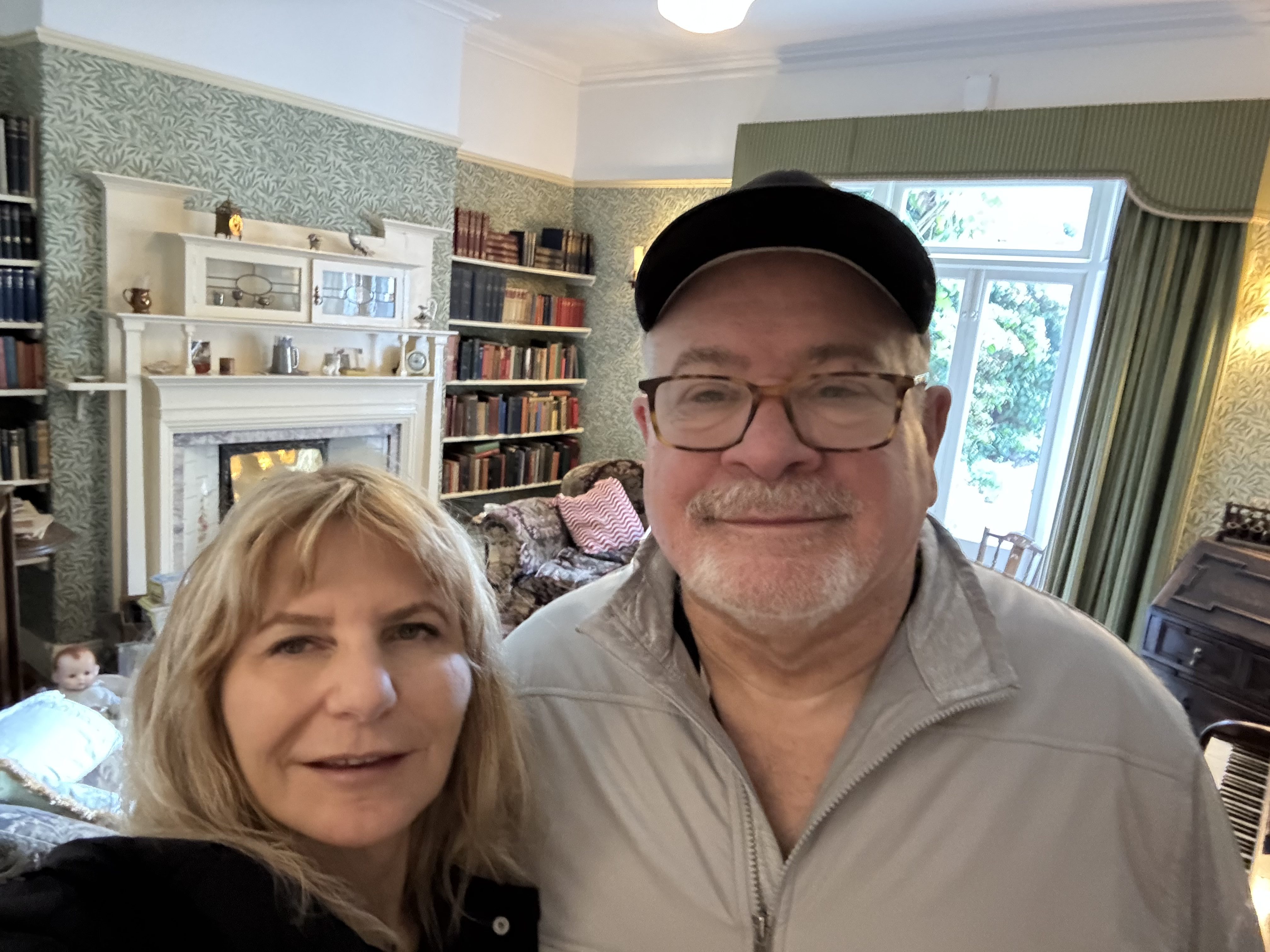
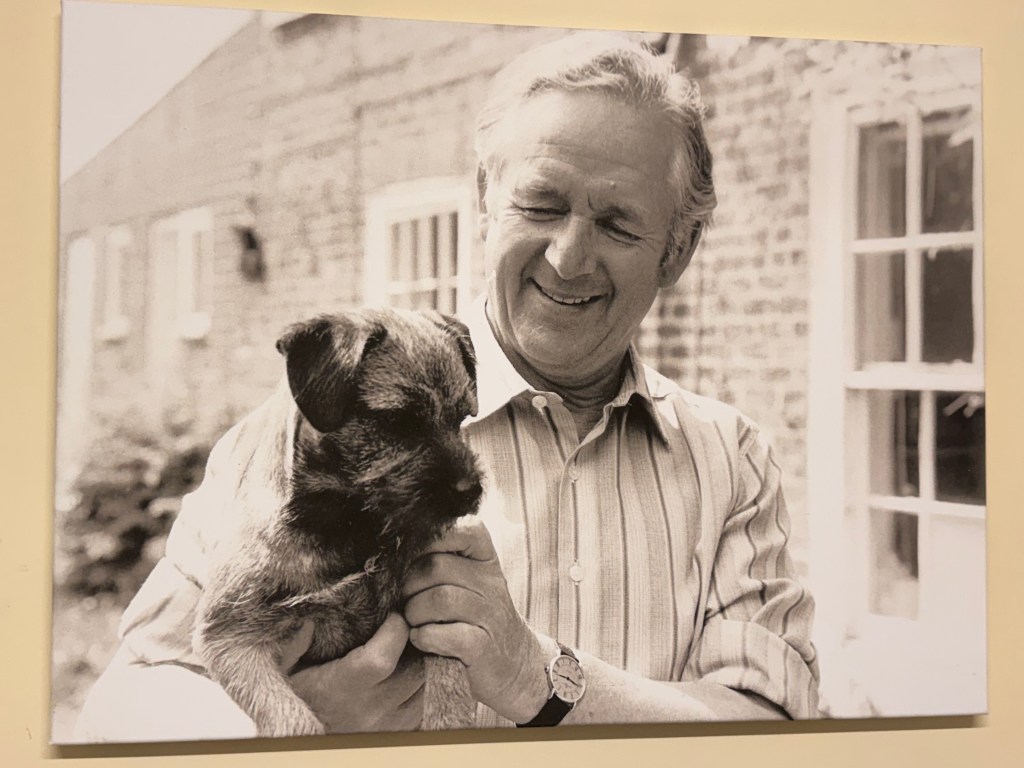
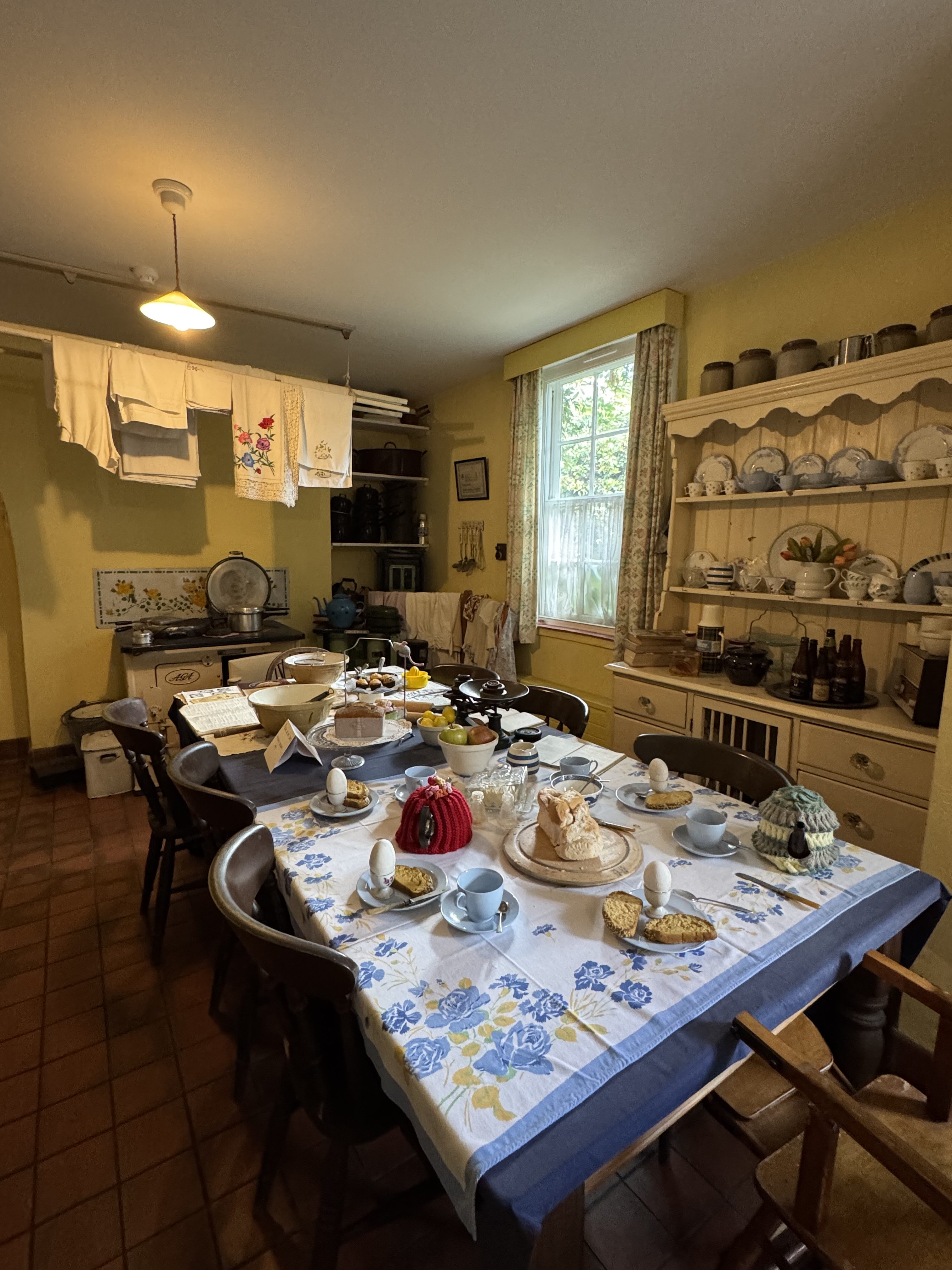
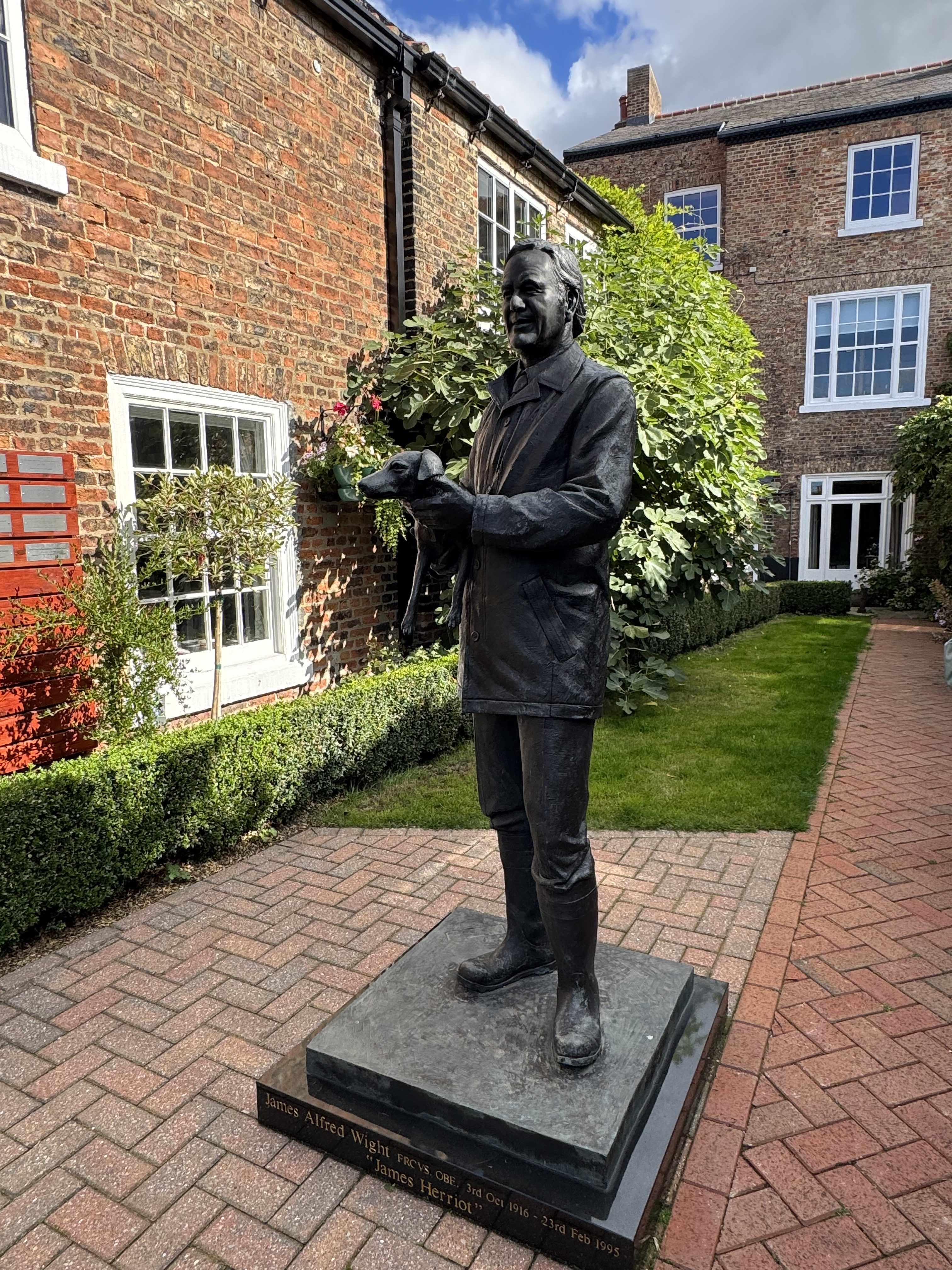
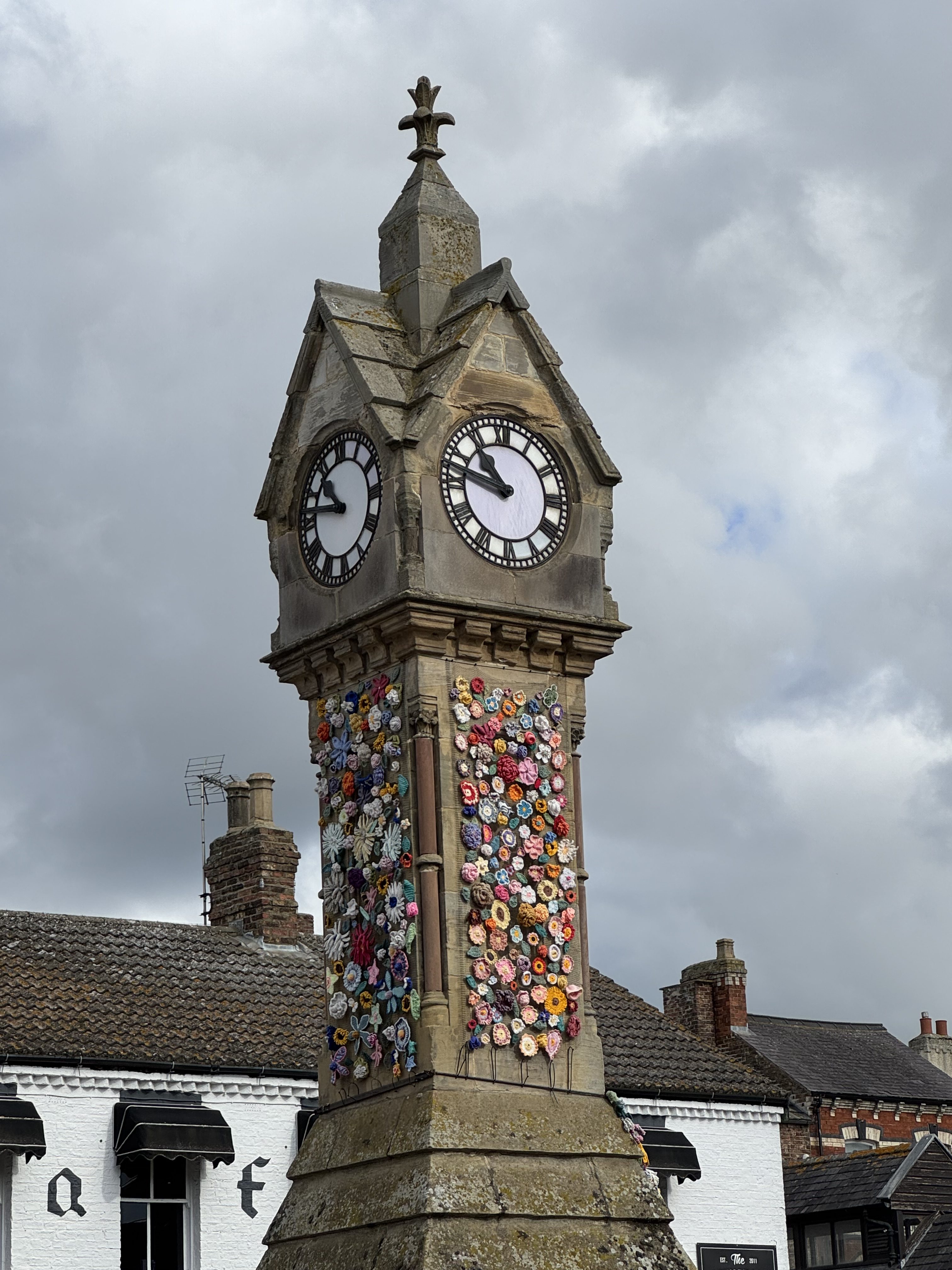
The visit was self-paced, and I think we spent almost two hours there before going back to the market square for coffee and a snack. Rick had a Portuguese tart; I had a Flapjack. It is very similar to the Rickety Uncle that I first had staying with Trudy and Warren. Delicious. We sat near the center of the square; I was quite taken with the knitting and crochet displayed there.
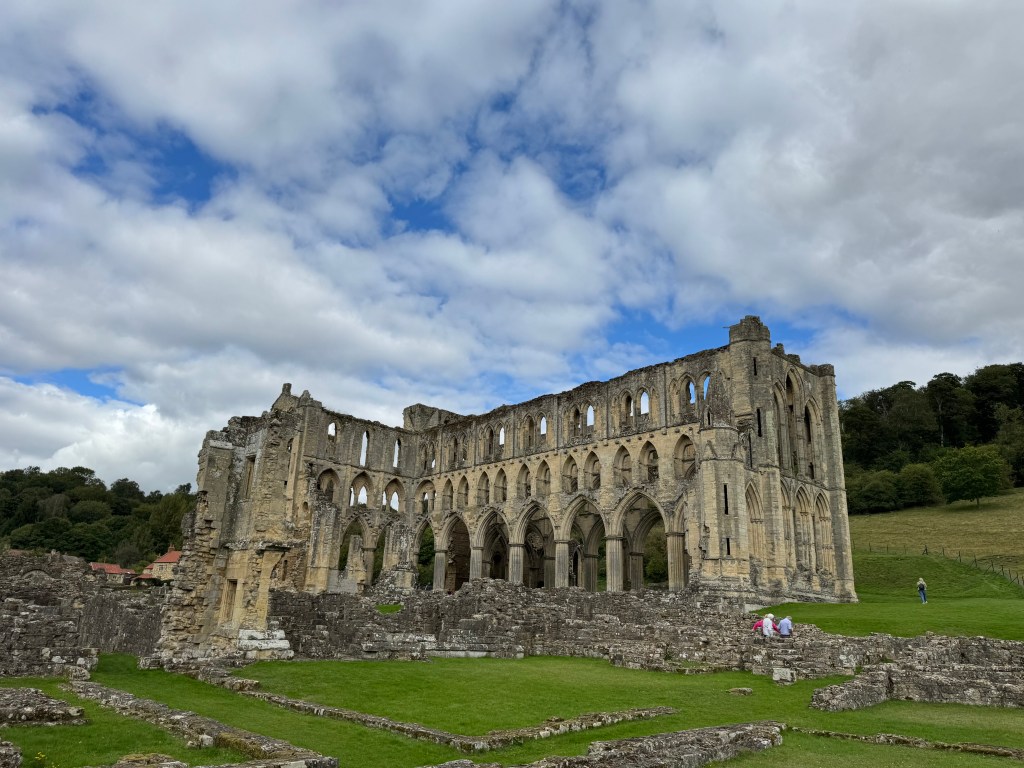
Our next stop Rievaulx Abbey. The journey there had lovely scenery but was on much narrower roads with frequent, small, single lane bridges.
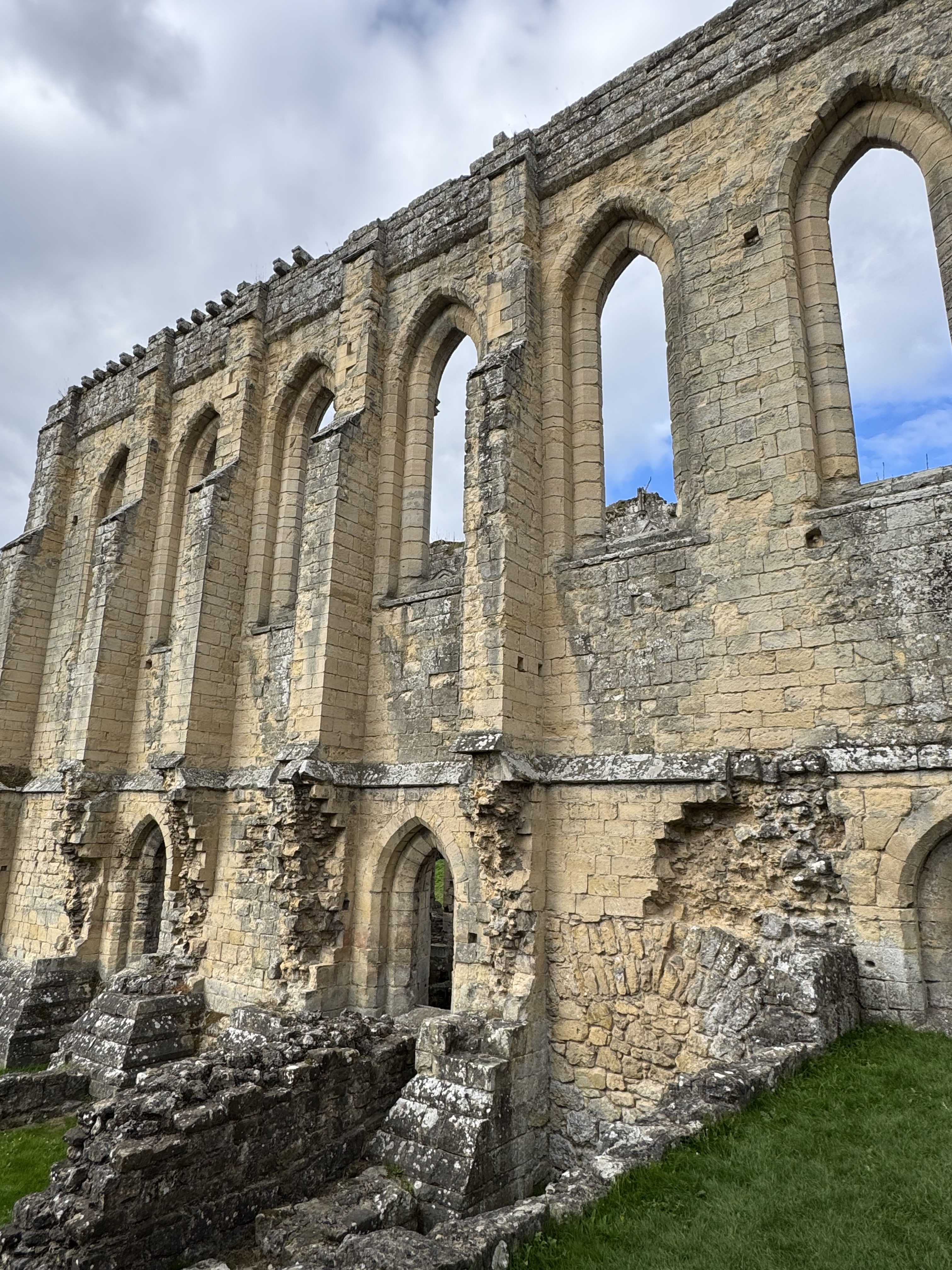
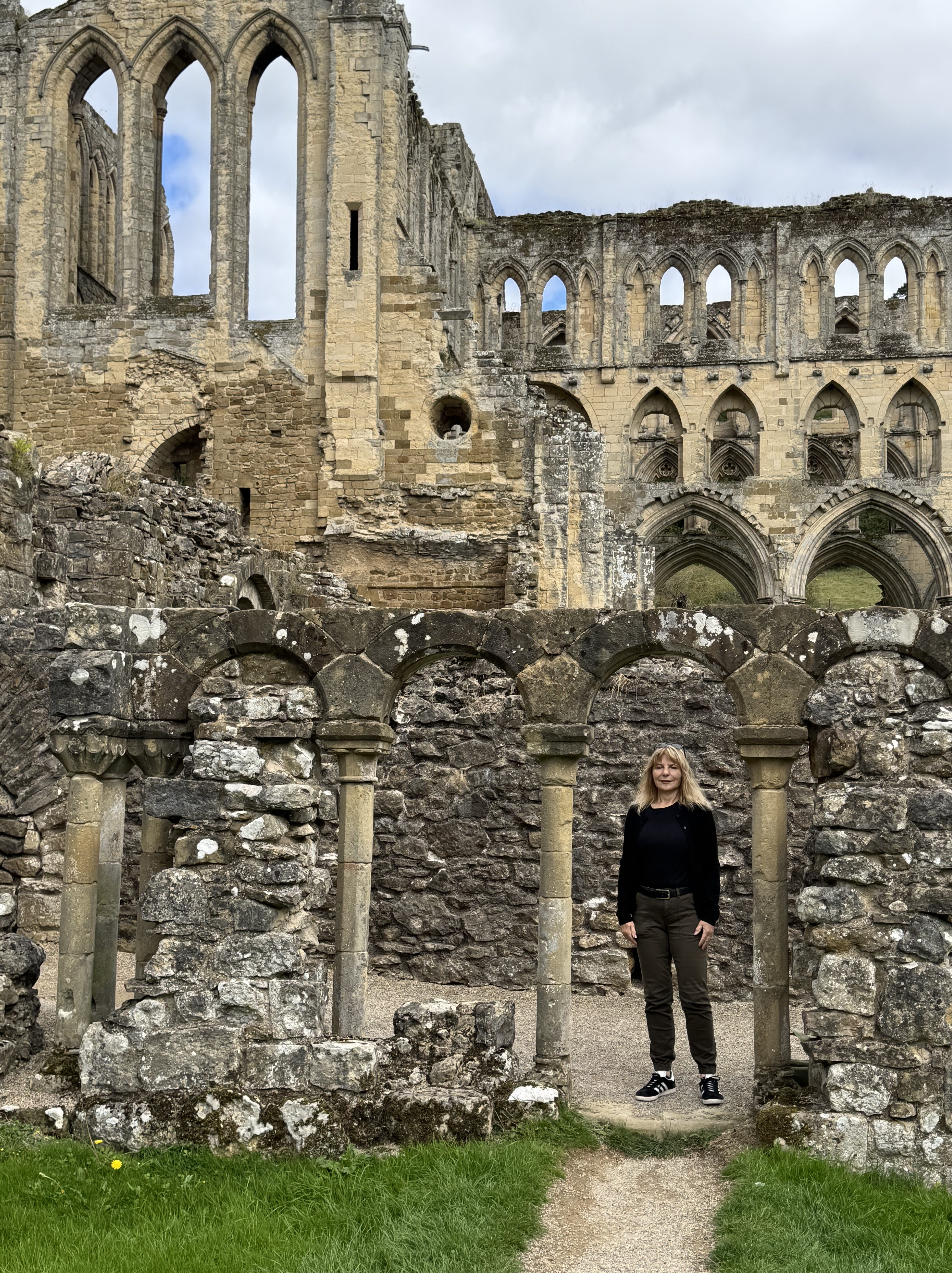
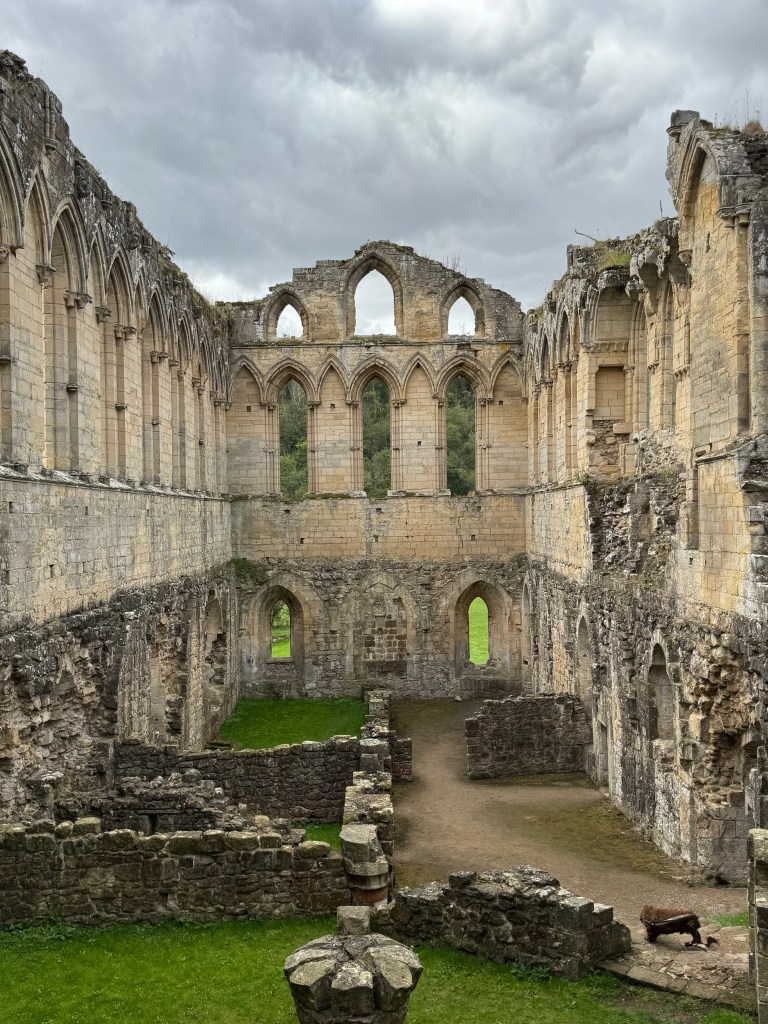
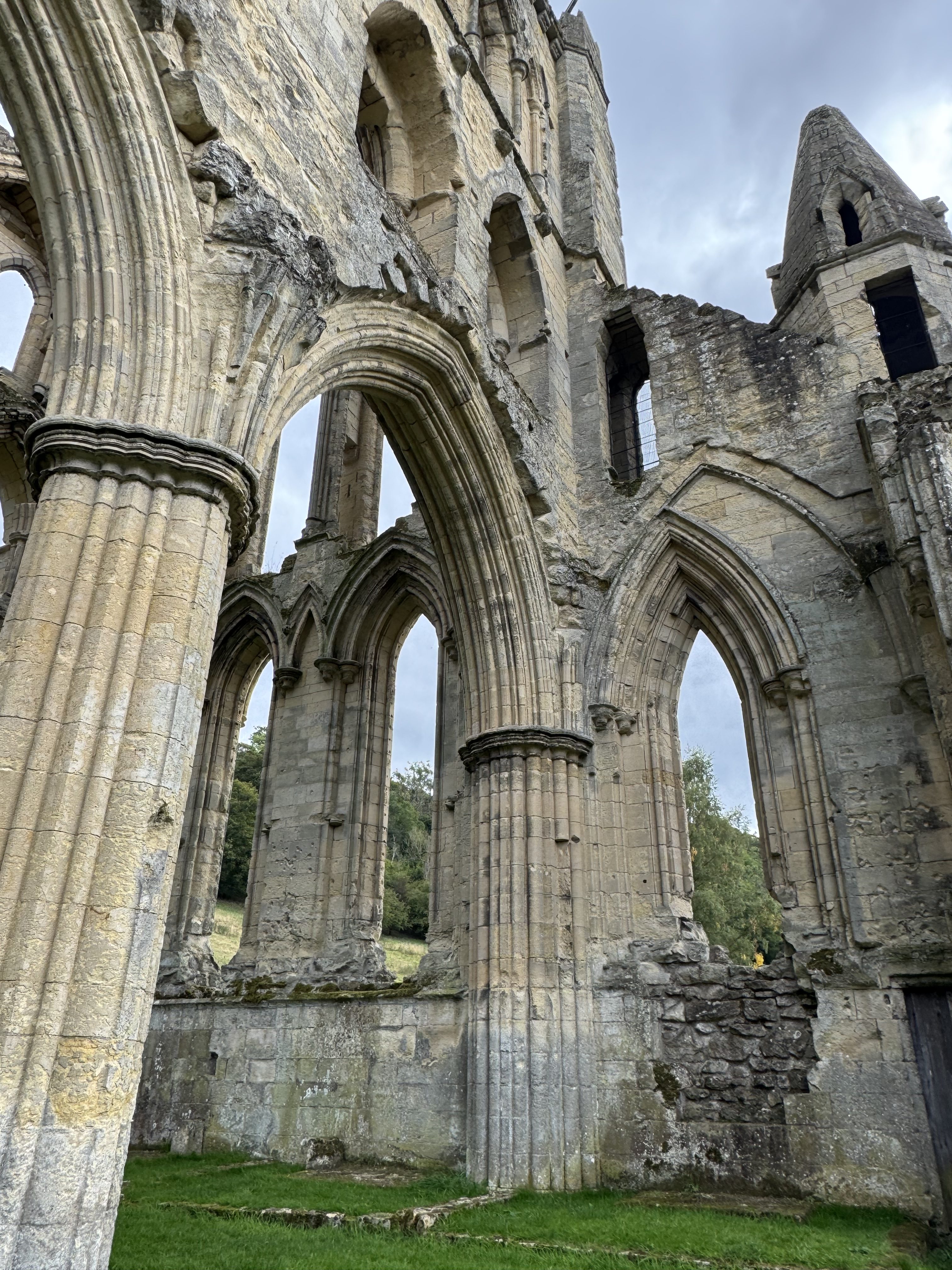
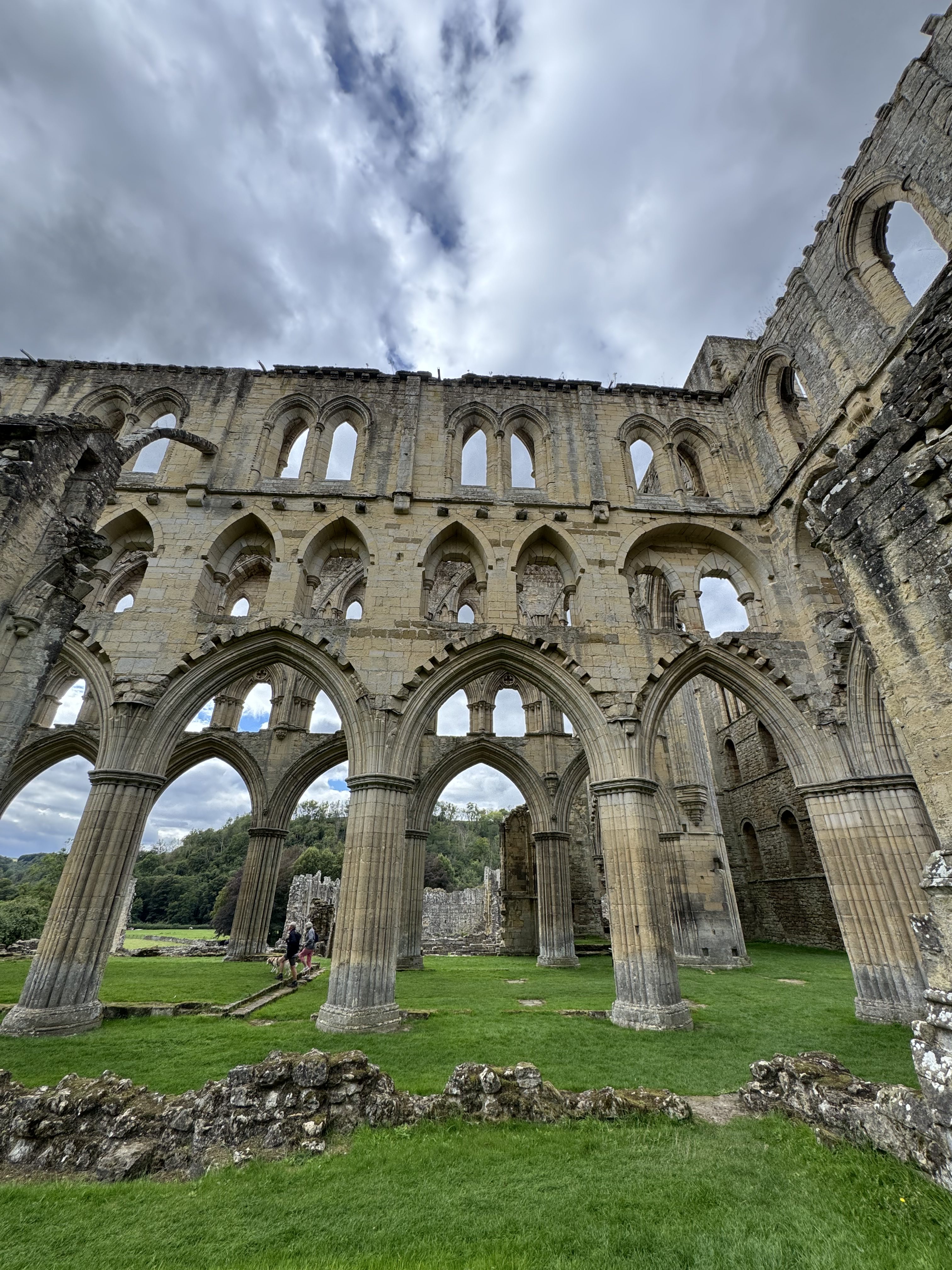
Although the Abbey is in ruins today, it must have been extremely large, and beautiful, in its time. It was originally founded by 12 monks as part of the Cistercian Order. The order’s ideal was a strict life of prayer and full self-sufficiency. They had little contact with the outside world.
William I was the first abbot and began construction in 1130. The second abbot, Saint Aelred, expanded the buildings and grew the population to 140 monks and 500 lay brothers, explaining its significant size. The monks actually diverted part of the river to create enough flat land for construction. They altered the course of the river on two more occasions in the 12th century.
The monks were quite ingenious, having developed systems for water delivery into the abbey as well as waste removal out. They also designed and built an early version of a blast furnace. They had profitable businesses: mining (iron and lead) and raising sheep for their wool. The order had also received multiple land grants and set up other houses in England and Scotland.
Ill fortune found them when Scottish raiders and Black Death reduced their population and made it difficult to recruit brothers. By the end of the 14th century their population was reduced to 14 monks and 3 lay brothers.
Although it recovered in the intervening years, largely due to less strict lifestyles, the Abbey was stripped of its valuables and rendered uninhabitable during the Dissolution by Henry VIII. All that remains now is this beautiful, peaceful place.
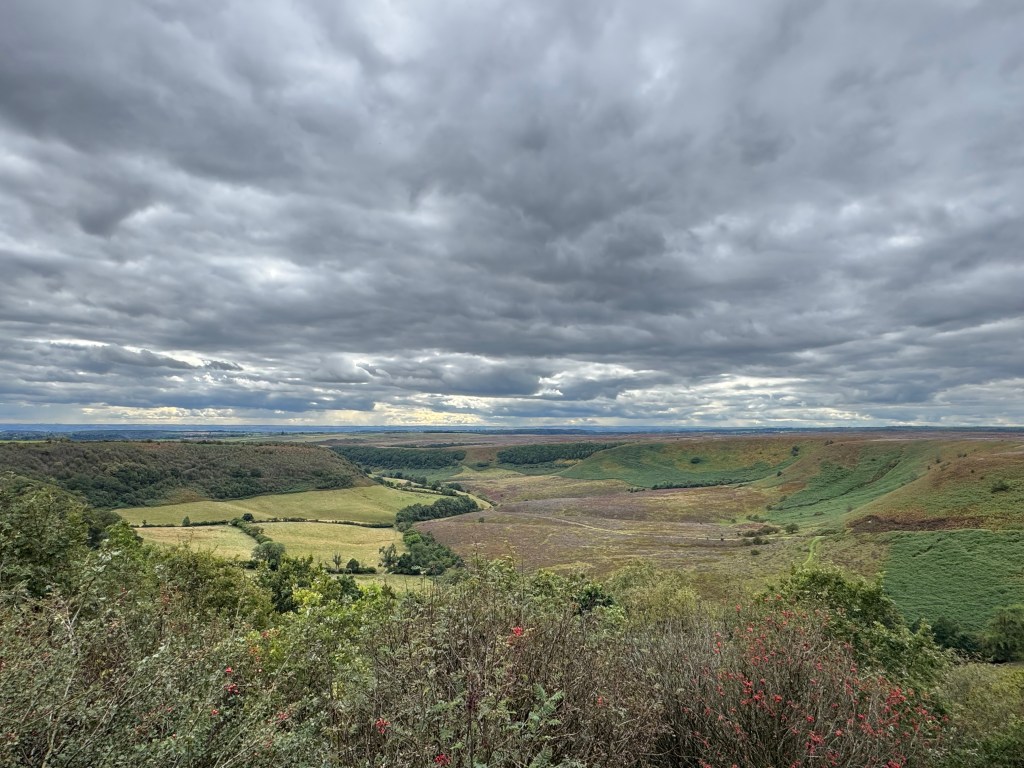
Our next stop took us over the Fylingdales Moor to the Hole of Horcum. It is a huge bowl-shaped amphitheatre 120m deep and 1.2 km across. It was a short walk to the viewing platform ,though it is possible to walk the full 10km loop. around the bowl. Perhaps on a day with better weather….
The Hole of Horcum was created over thousands of years by spring water emerging from the hillside and undermining the rock until it collapsed. It is difficult not to imagine a meteor or asteroid striking the earth and causing the hole, given the general shape and size. Legend is that Wade the Giant was having an argument with his wife Belle and became so enraged that he scooped up a section of the earth to throw at her. You choose the one you like best – I am going with meteor.
The moors themselves were quite dry and brown after the hot summer. There were patches that still bloomed, usually tucked against the protective side of a hill and that at least allowed us to imagine how it must look in full bloom.
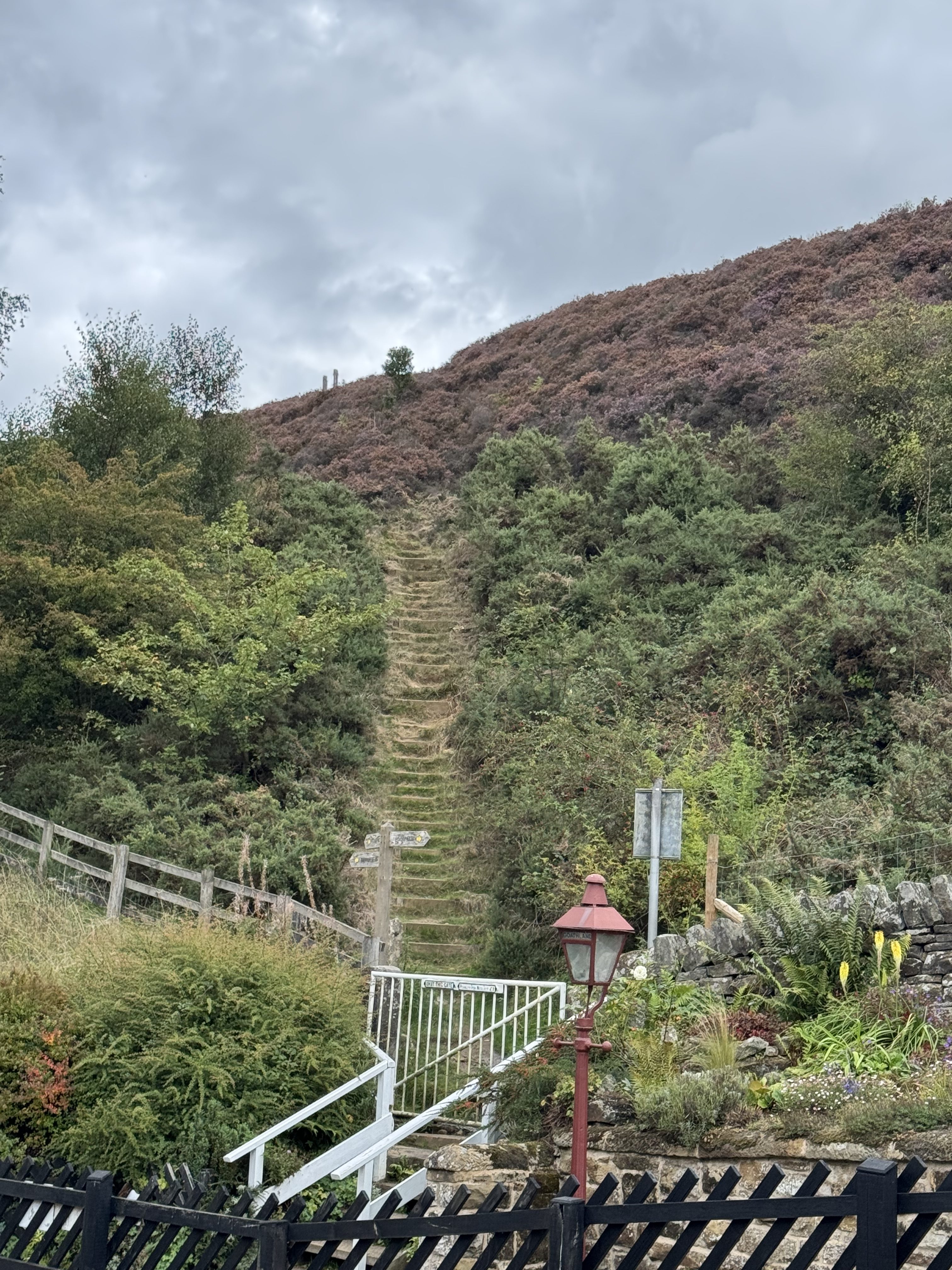
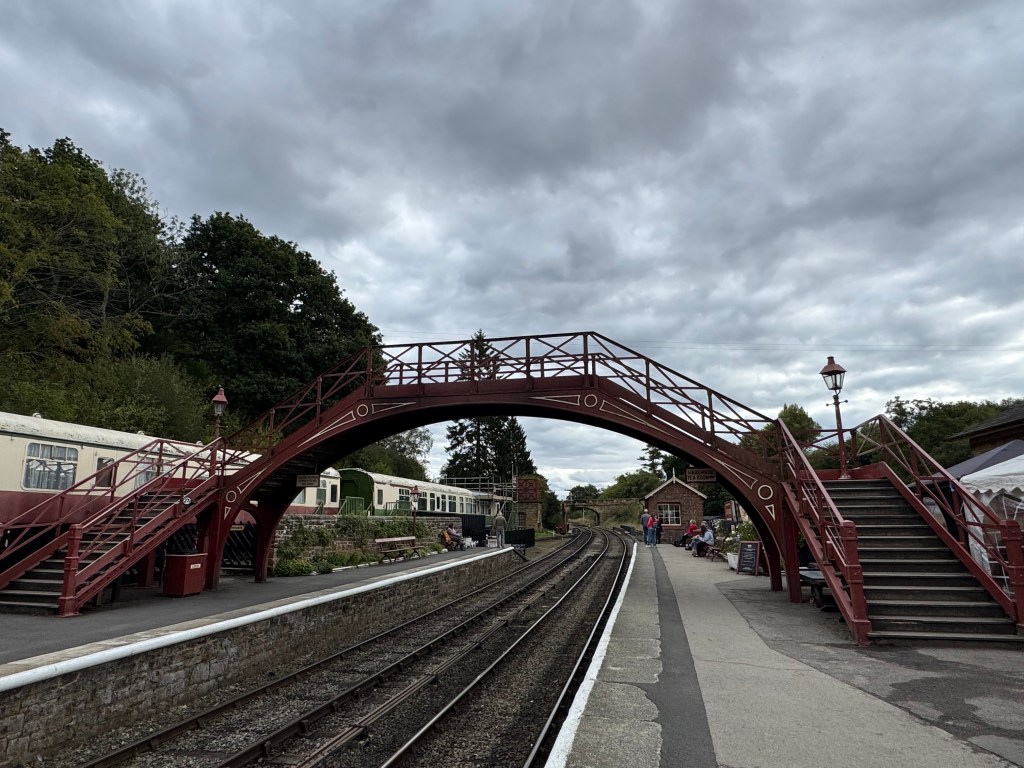
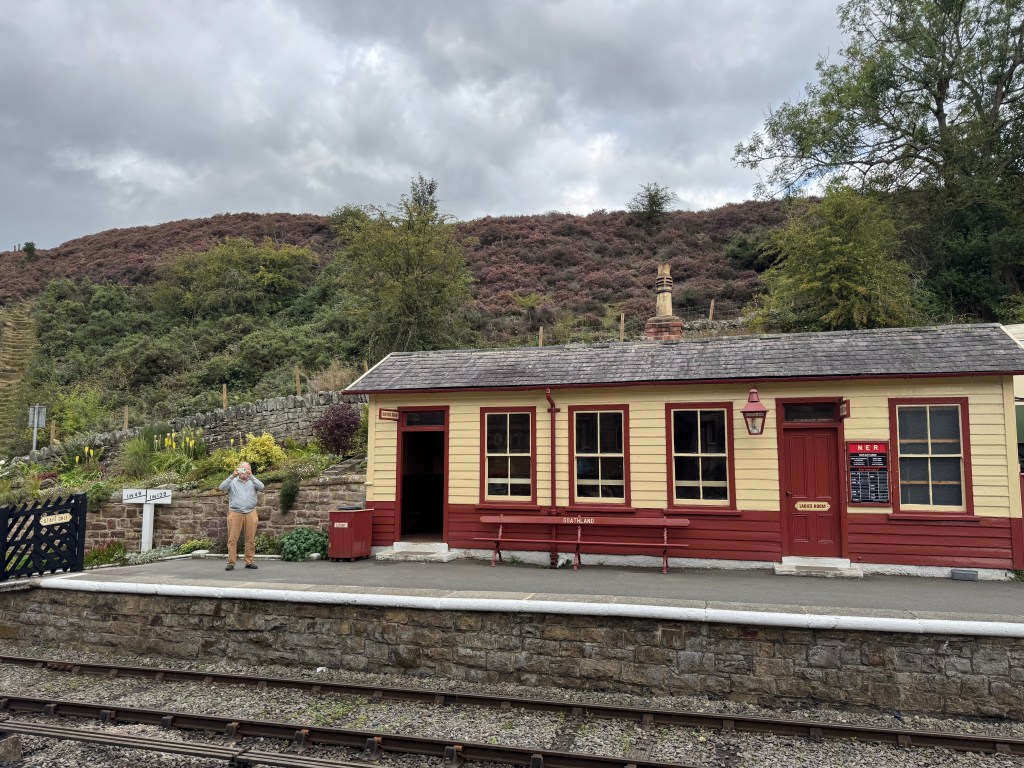
Our next stop was a quick dip into a tiny town called Goathland. Our primary goal was the train station – famous for being the Hogwarts station in the first Harry Potter movie. It was cute and quaint. If one is organized enough to plan ahead, we were not, it is possible to take a steam train journey to nearby Helmsley. Next time.
It was a short half hour drive from there to Whidby, a quaint fishing town on the east coast. We drove through quite a bit of the town trying to find a place to park. It was impossible.
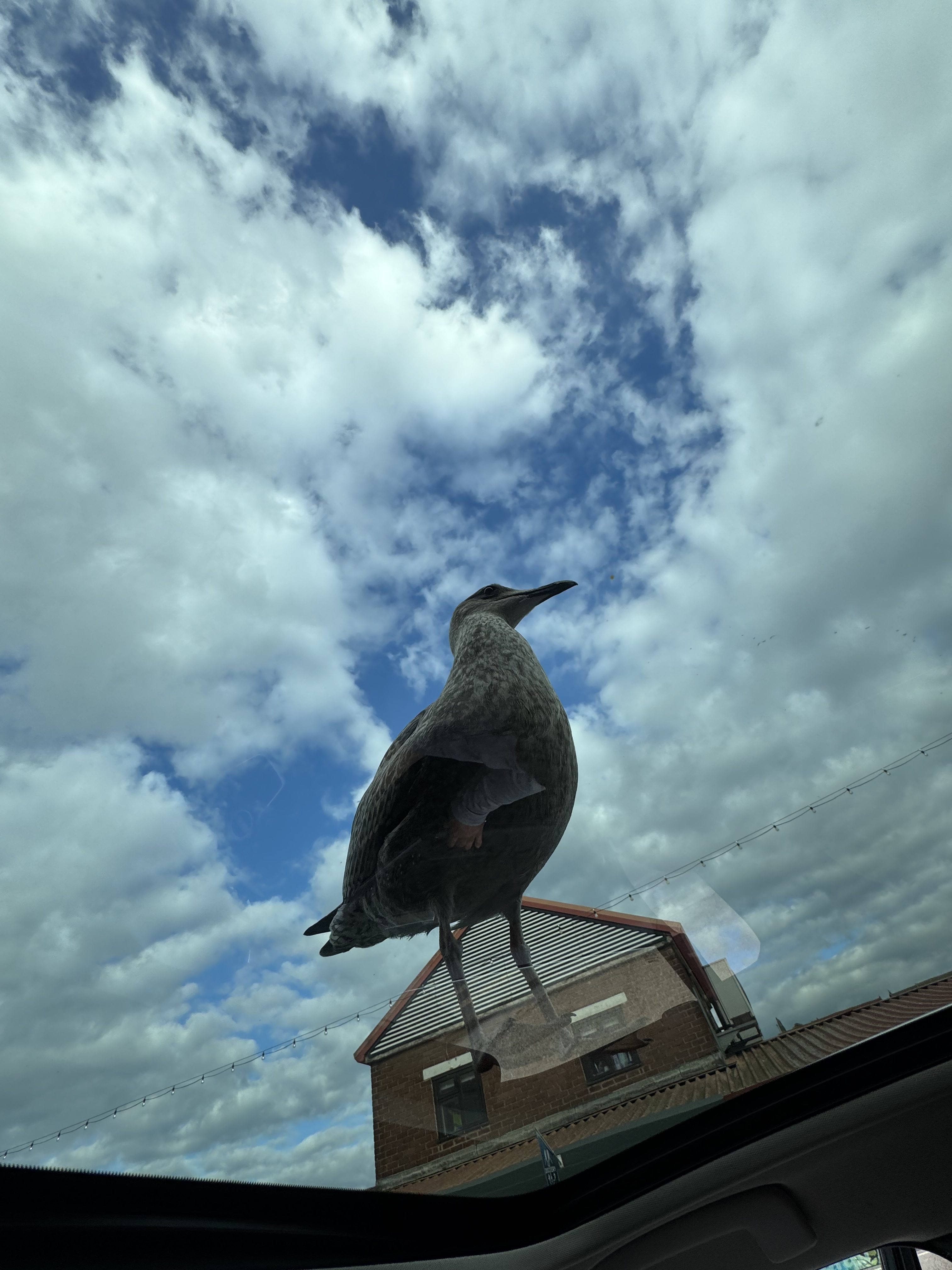
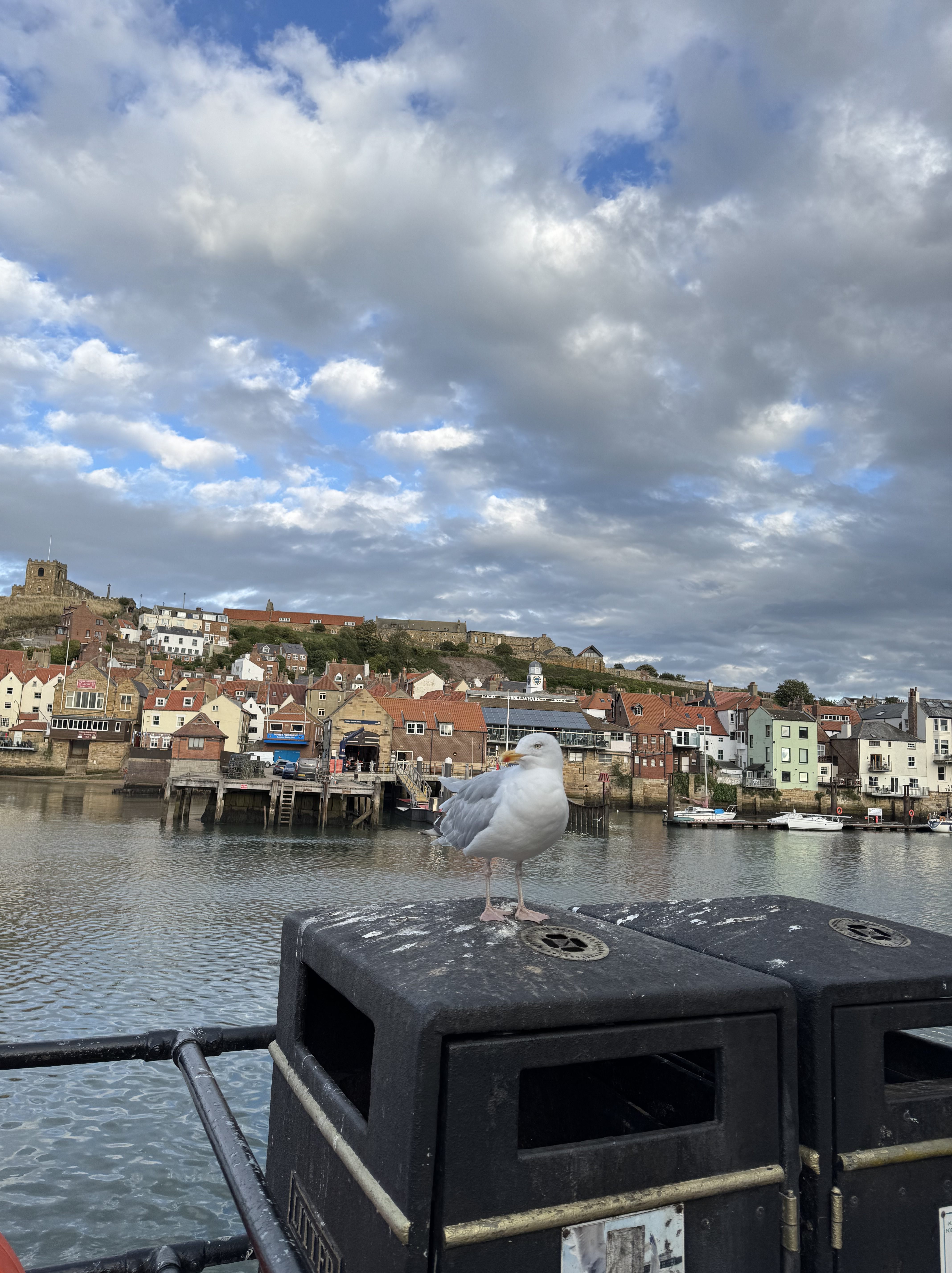
During one of our attempts, Rick left the car, with me in it. Seconds later there was a large “Thump!” on the roof that actually shook the car enough to set off the car alarm. Rick had the key so I could not turn it off. A seagull stared down at me through the glass roof as the alarm rang and we both waited for Rick’s return. He was a bold fellow – only flew away once the car was in motion.
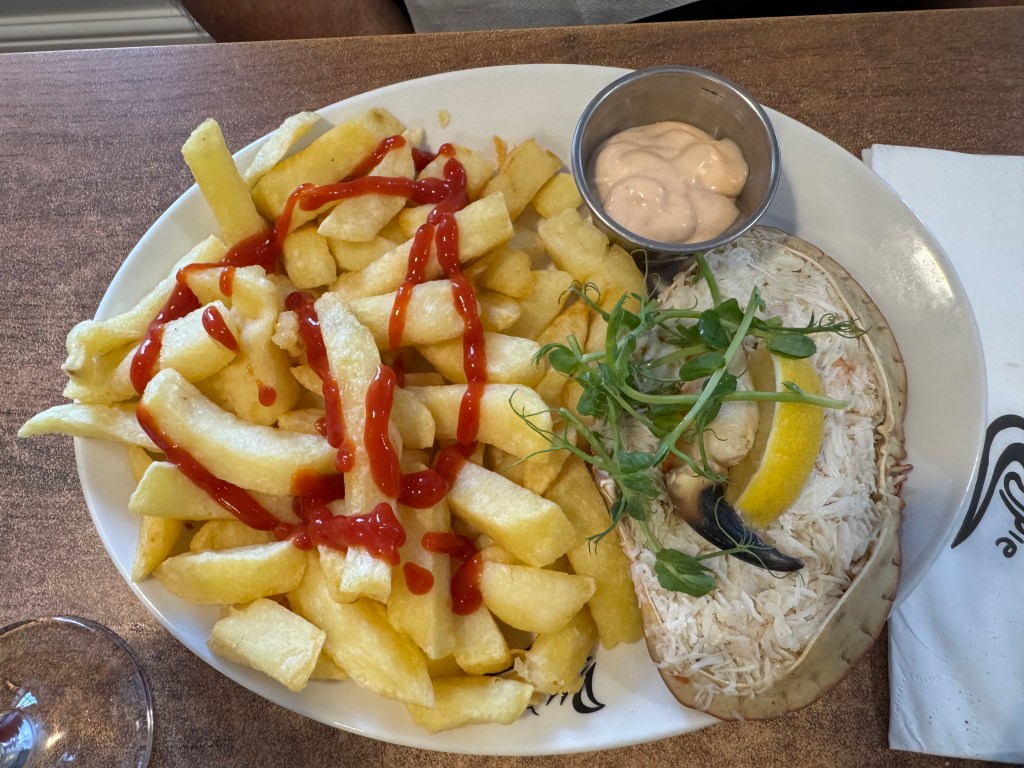
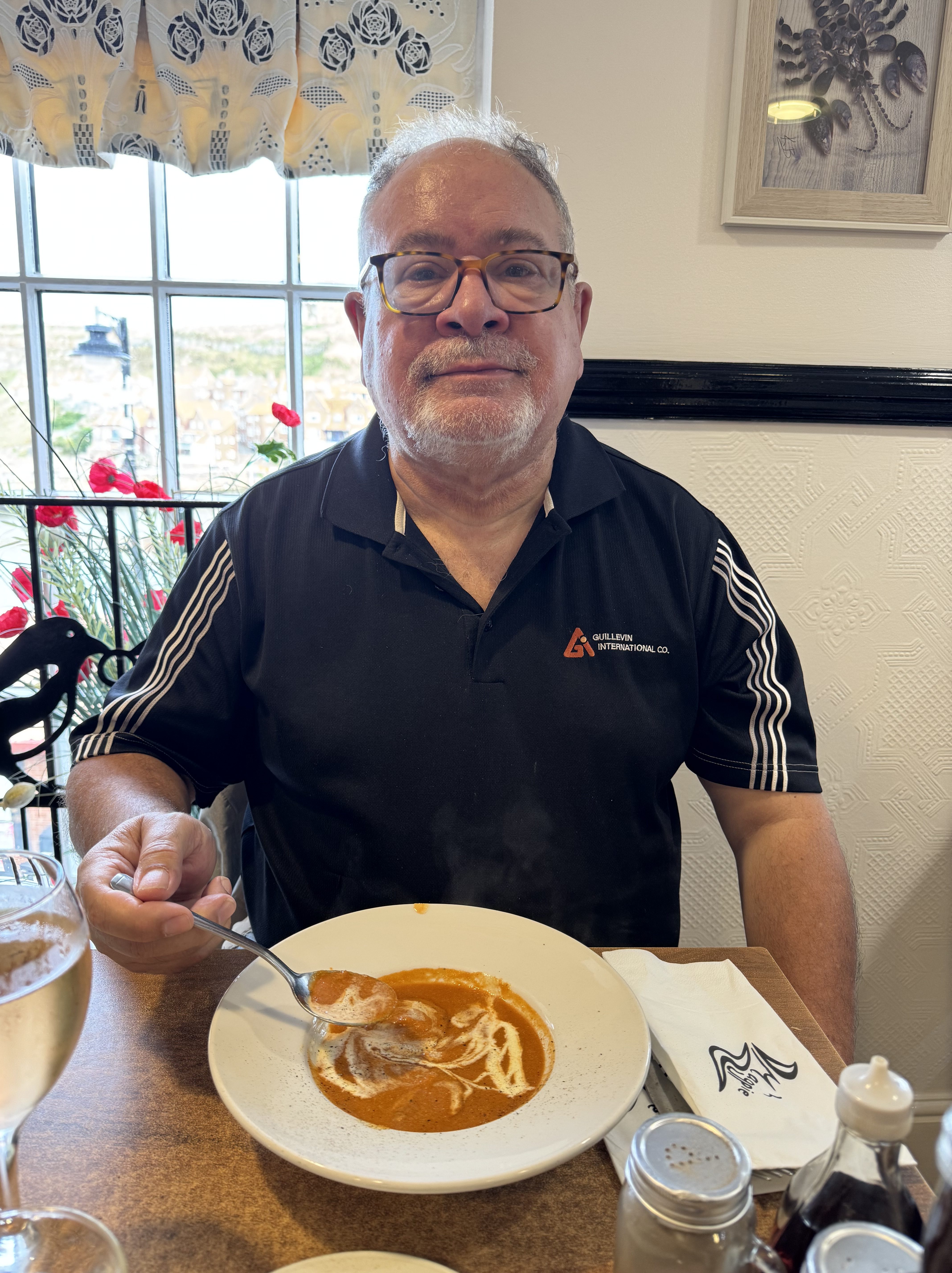
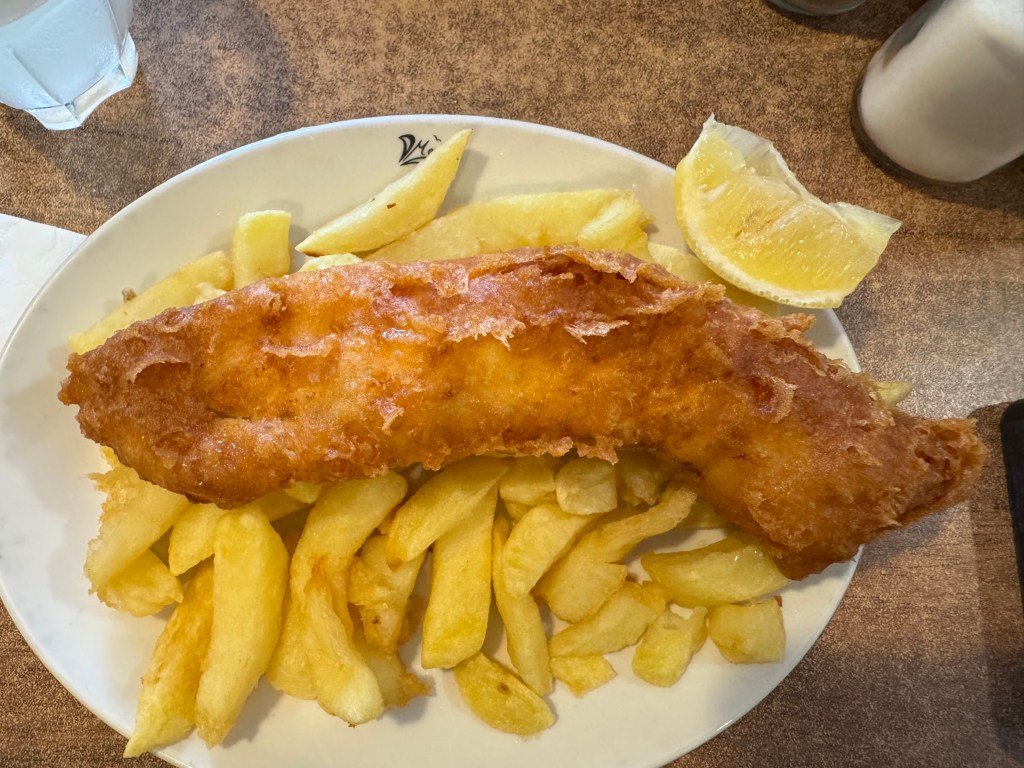
We eventually found parking way up the hillside above the town. Besides seeing the town itself, we were very keen to have fish and chips at the Magpie Café – it came highly recommended. The restaurant itself was very large, covering multiple floors with dozens of tables. Service was quick and friendly. I had the cod with chips. Love the malt vinegar – why don’t we have some at home? Rick had bisque made with Whidby crab and then the actual crab for dinner; both were reportedly delicious.
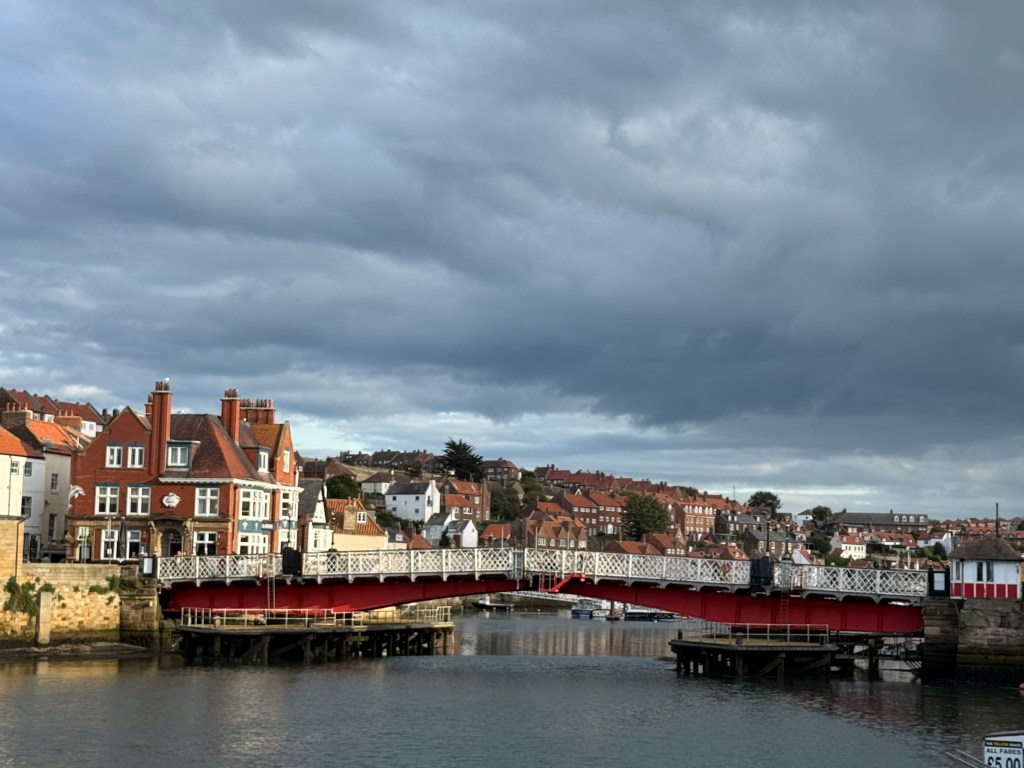
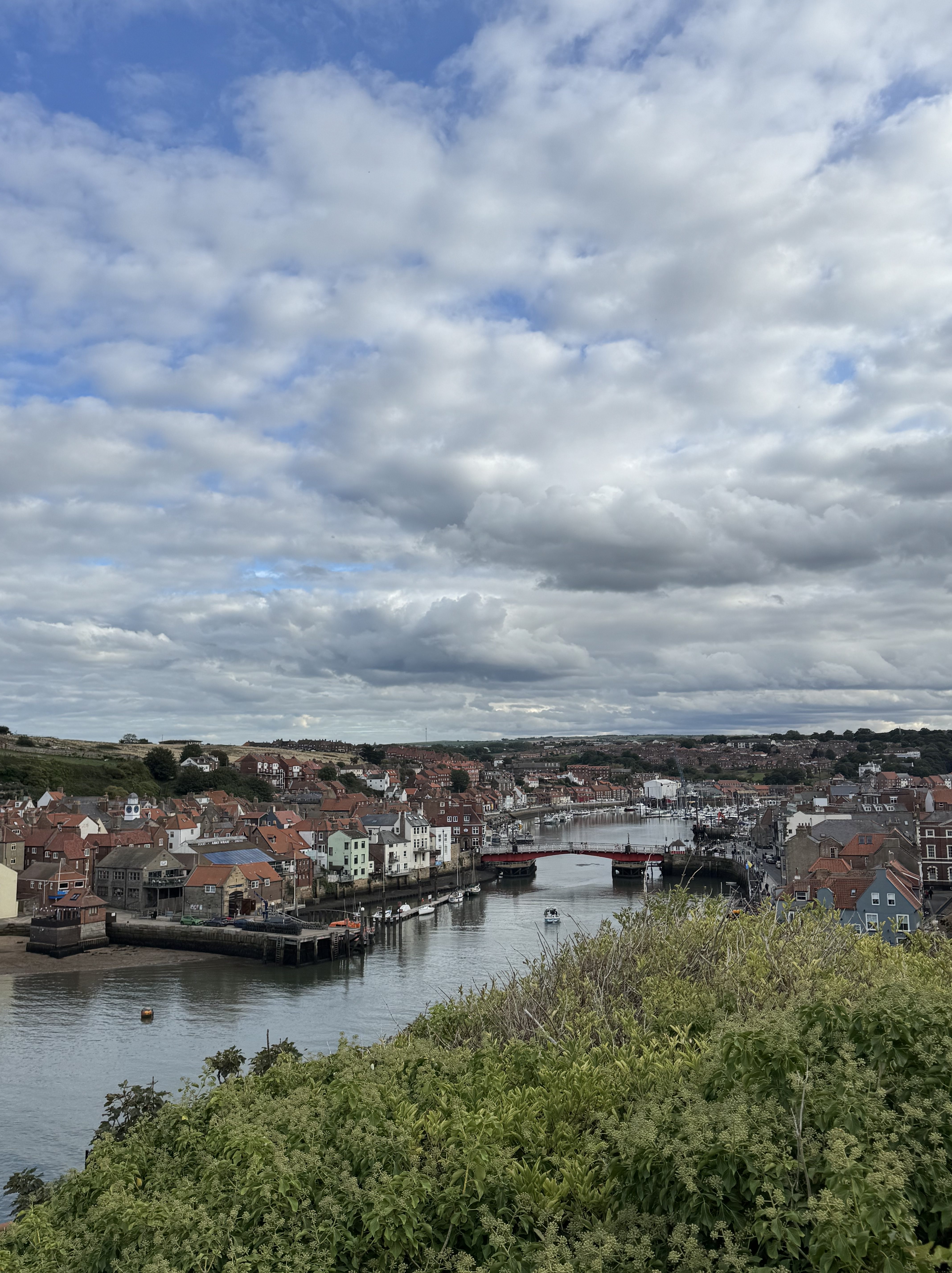
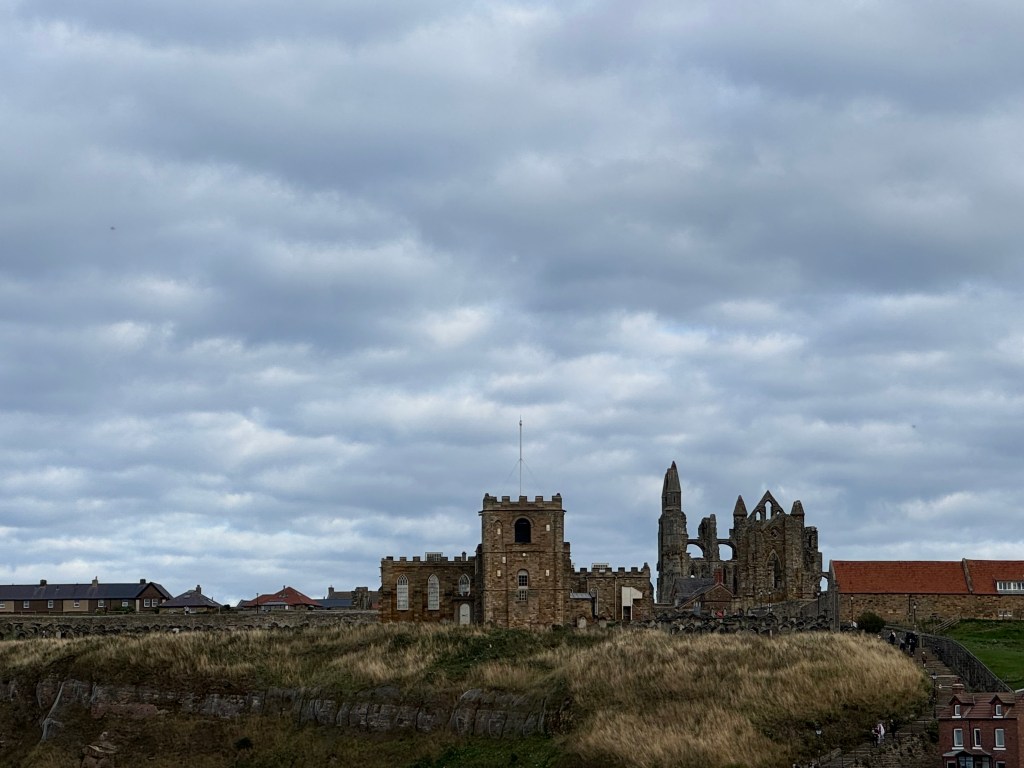
By the time we left the action in the town was already slowing. We hiked back up the hill to the car. Fortunately we were parked in the Leisure Centre parking lot and could go in to use the washrooms before our long drive home. They have a tidy little business going there – one British Pound per person so the approximate equivalent of two Canadian Dollars each for a quick trip to the loo.
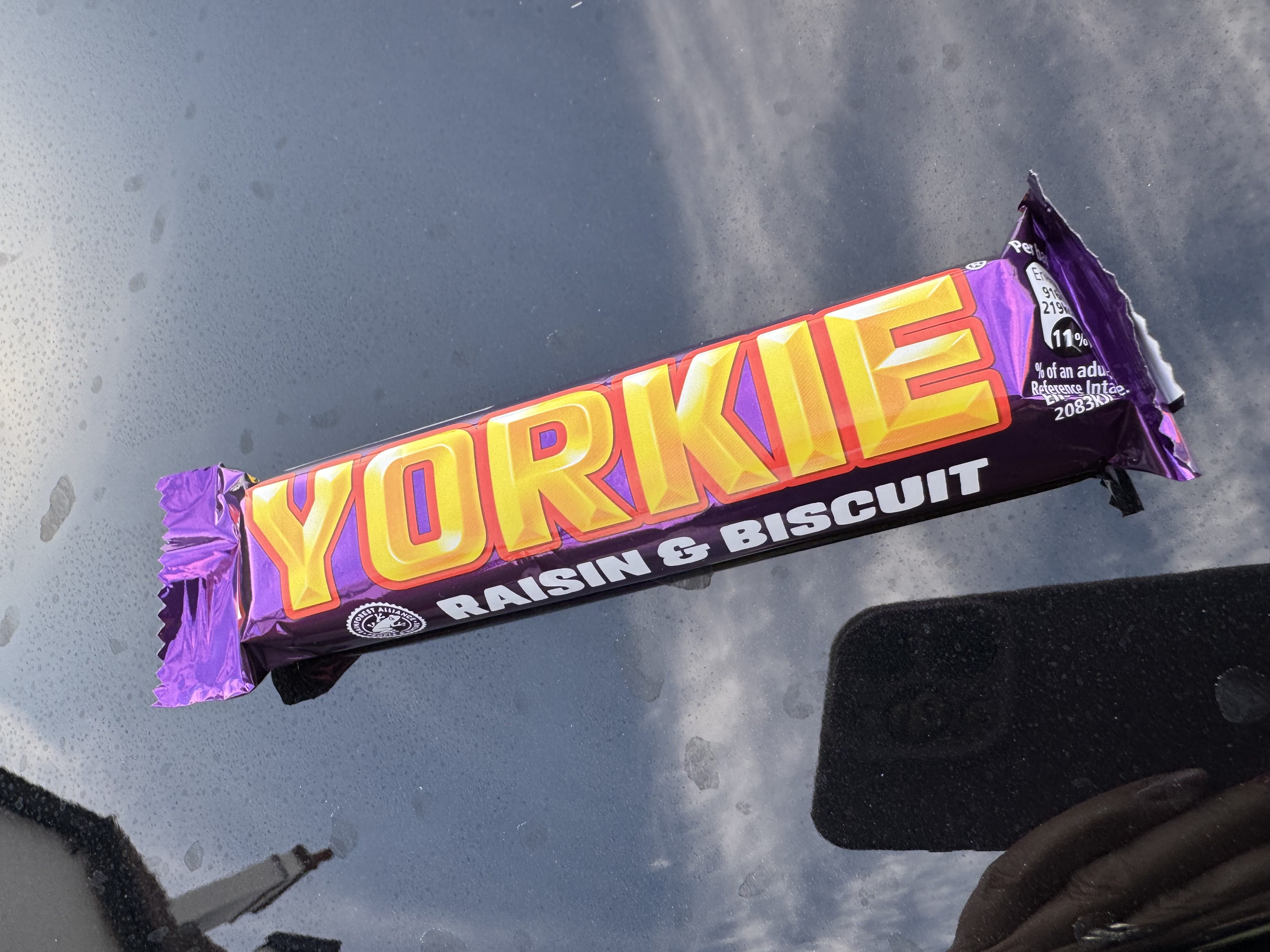
To the positive, we did discover a candy machine on the way out that had Yorkie bars! We bought one to snack on later. It was not what I had expected – chocolate, raisins and biscuit – but it was chunky and very good.
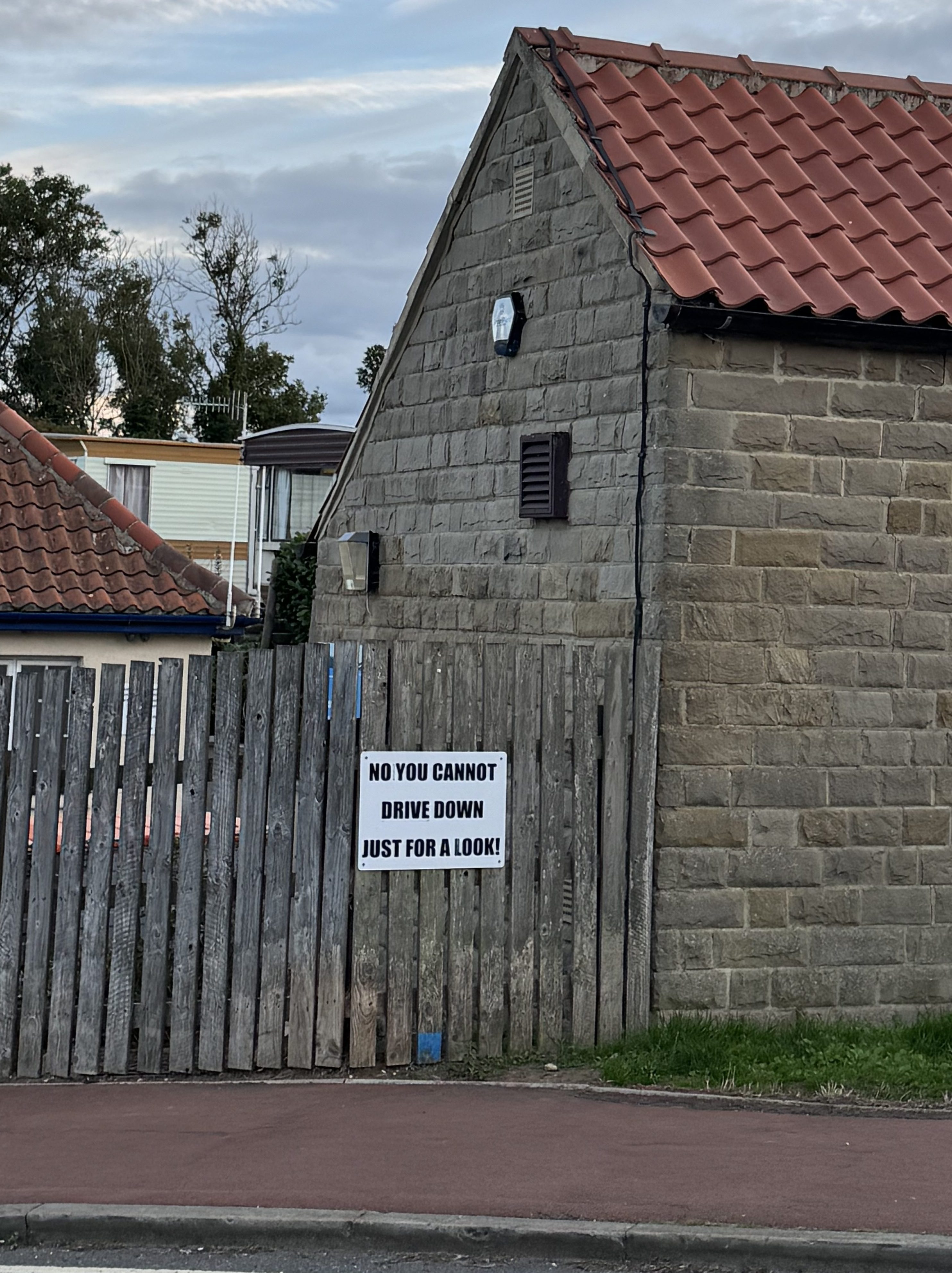
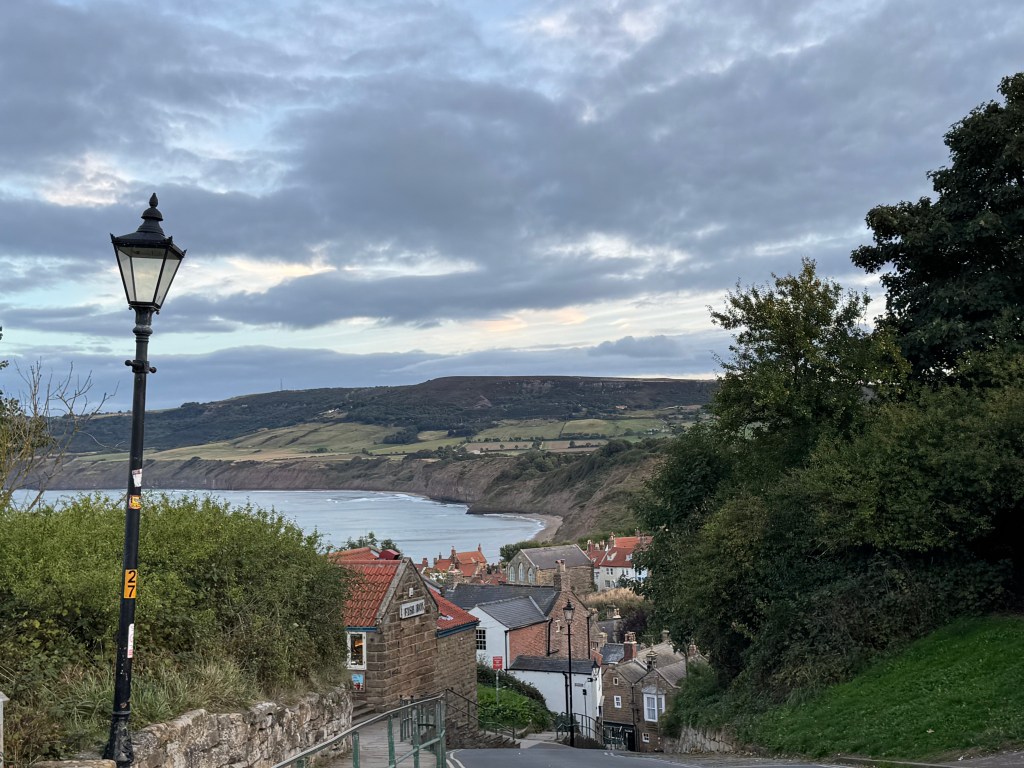
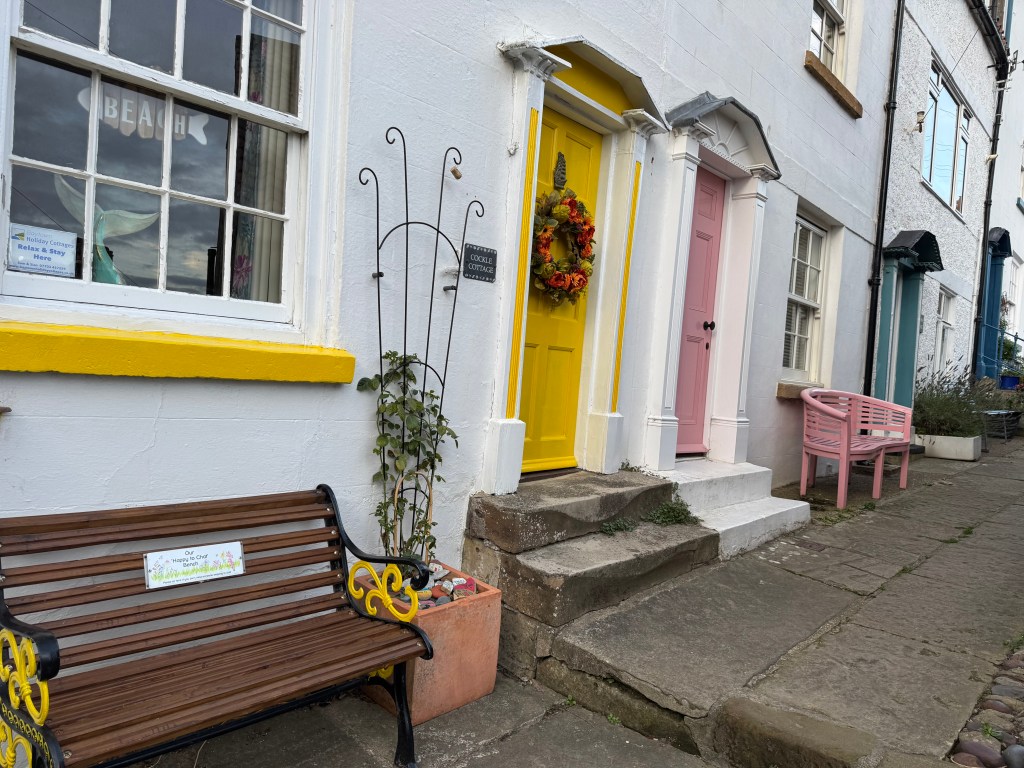
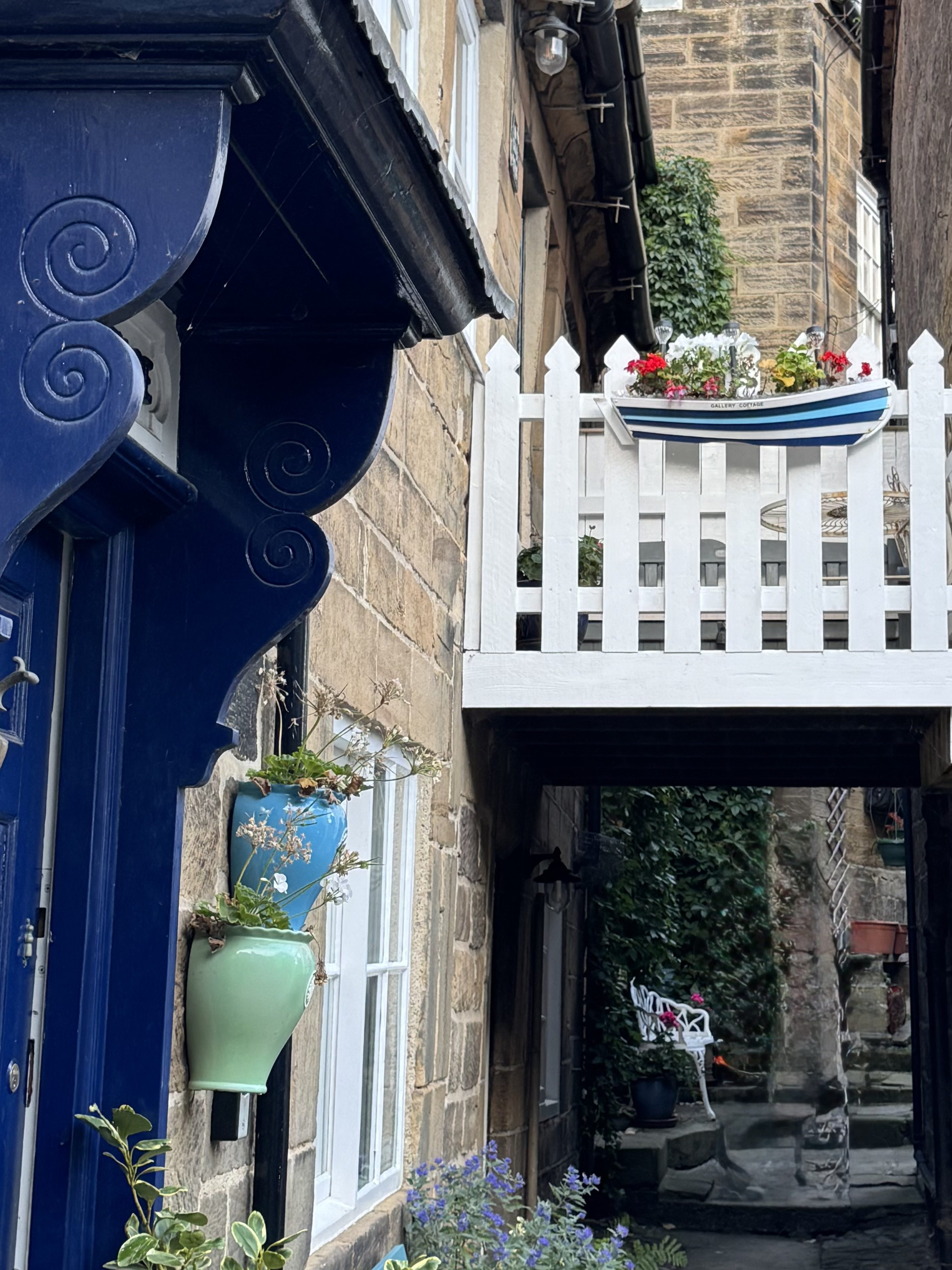
Ah yes, we had one last stop, Robin Hood’s Bay. It is a coastal smuggler’s village on the side of a very steep hill. Rick was tired so had a short nap in the car while I made my way down the tiny winding streets by foot. Only a crazy person would actually try to drive a car. I happily made my way through the narrow streets admiring the cottages known only by name – no street numbers. The walk back up was the actual challenge.
The beach itself was miniscule – perhaps big enough for 1-2 boats to come in side-by-side. In the 18th century it was a notorious smuggling hub for gin, tea and silk to pass through a network of subterranean cellars to the top of the hill.
One more small update – some of you may know that I have recently been identifying and collecting birds using the Merlin app. In my short time here I have added another 20+ birds. That is very cool!
Rick did an amazing job driving today. My last words are a thank you to him. “Thanks babe!”


Leave a Reply