Today was the day we were going to cross the Thames to the South Bank. This took us on a new walking path and over the Waterloo bridge. London was a star this morning, gifting us with some performant fog from which the city soon began to rise. (Sadly, I was at least as cold as yesterday.)
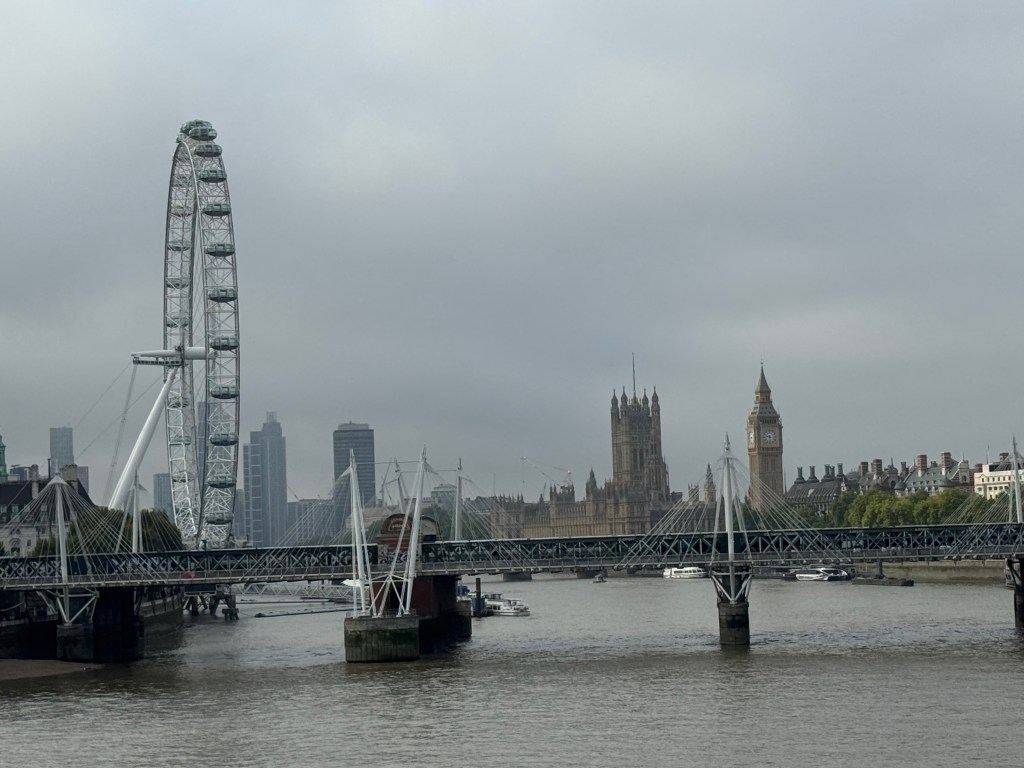
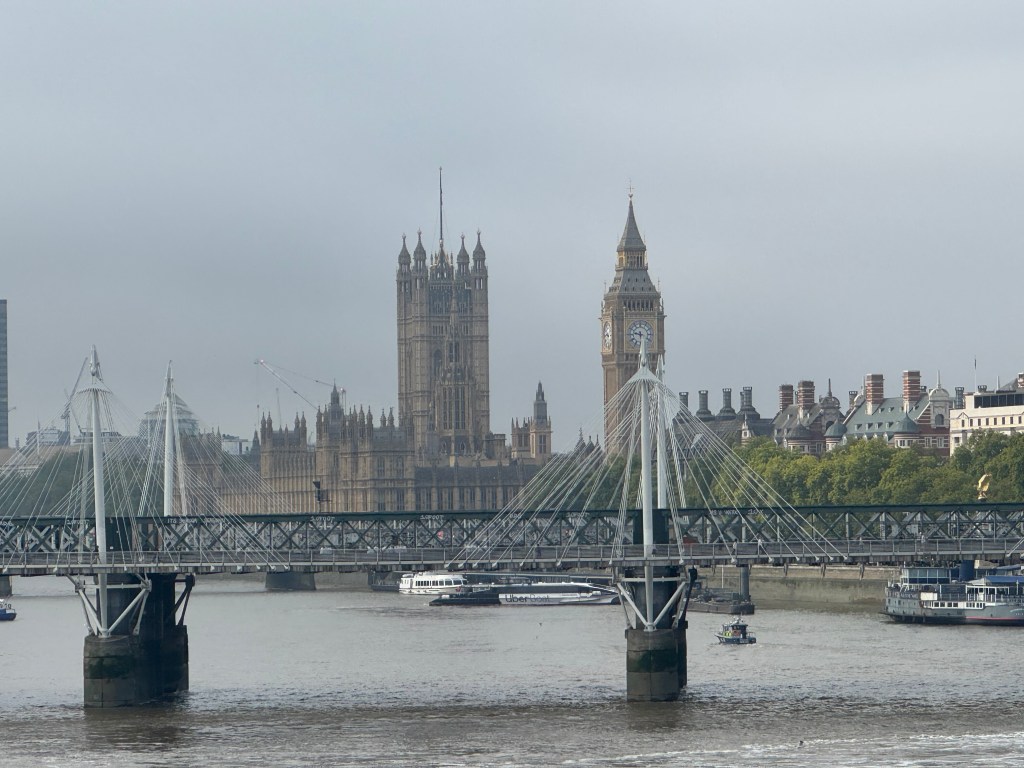
The walk was about 45 minutes. We arrived just in time for the opening of the doors of The Tate Modern. The Modern Art gallery is housed in the former Bankside Power Station, a massive brick building. The equipment has been removed and replaced with art.
Sir Giles Gilbert Scott designed the power station in the 1940s, a colossal steel and brick sculpture with a signature 99 metre central chimney. It was connected in to phase between 1947 and 1963 and begn generating power in 1952. The power station ceased to operate and was shutdown in 1981.
The massive, 5 story turbine hall that used to hold the generators now provides a location for large scale art installations. The architects add a two story glass roof extension to the main building to bring in more light. The adjacent Blavatnik building is a 10 story pyramid-like extension, originally used as a switch room. It is wrapped in perforated lattice, filtering natural light in the space.
Of the 70,000 pieces in the Tate’s collection, only about 20% are on display at any point in time. Artists include: Picasso, Warhol, Matisse, Dail, Turner, Hockney and more.
However, our reason for being there was not so much the core collection. We were there to see an exhibit featuring Frida Khalo called “The Making of an Icon”.
This exhibit included many of her works but also looked at her life. There were pieces by her much older husband, Diego Rivera. as well as a both the artists that influenced her, and the ones she ultimately influenced.
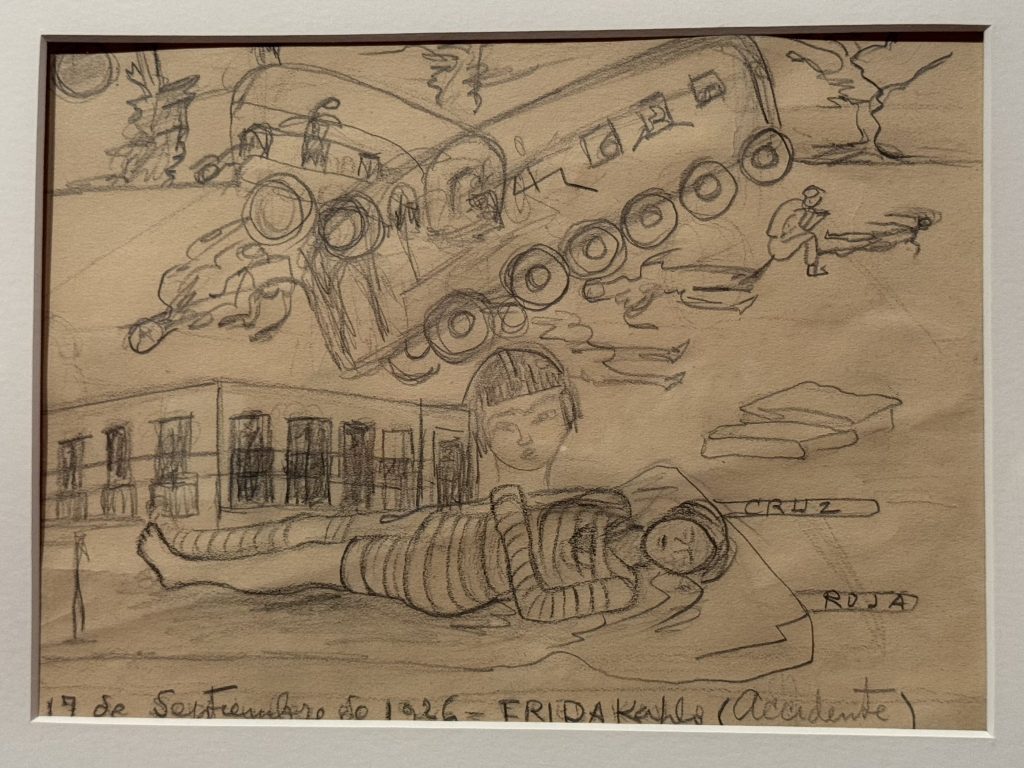
Frida Kahlo was born in Coyoacán, Mexico City in 1907. When she was six, she contracted polio leaving her right leg permanently thinner. Originally planning to become a doctor, her life was dramatically changed in September 1925 when an 18 year old Frida was stuck by a bus.
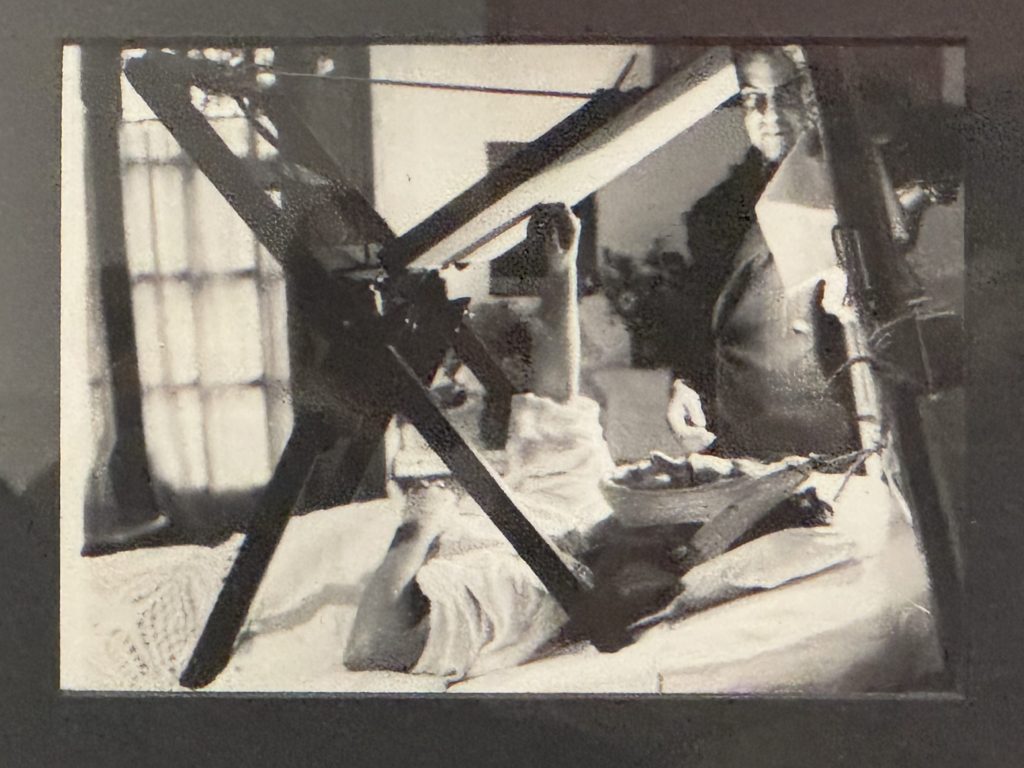
The accident caused multiple severe fractures to her spine, collarbone, ribs and pelvis. This left her in lifelong physical pain, even after dozens of corrective surgeries. She was confined to bed for many months during her initial recovery and began to paint, using a mirror and easel set up by her parents.
Kahlo married an already well-known Mexican muralist Diego Rivera when she was 22. Their relationship was volatile: passionate devotion, infidelity (on both sides), a brief divorce, then remarriage. They shared similar political beliefs, both joining the Mexican Communist Party and hosting political exiles such as Leon Trotsky.
Her artistic style drew heavily on Mexican and pre-Columbian themes. These represented Khalo’s suffering (physical and emotional) as much as her national identity. European surrealists endeavoured to claim her as part of their movement, though Khalo insisted “She did not paint dreams, but rather her own concrete reality.”
Hair and clothing choices were carefully made to serve two purposes: they were an artistic canvas, as well as a shield for her physical disabilities. Khalo adopted the Tehuana style of dress that originated in the matriarchal Zapotec culture. The long wide skirts hid her leg withered leg by polio, and later her prosthetic. (Her leg was amputated just a year before her death. due to its impaired circulation.) The loose, boxy huipil top covered the rigid medical corsets and plaster braces she was forced to wear for spinal support. She also wore the clothing of a independent, female-led indigenous society as a statement of her feminist power.
Khalo was famous for styling her long black hair in intricate braids piled on the top of her head. She would weave in ribbons, yarn and pieces of fabric as well as arrangements of flowers such as marigolds or bougainvillea. Making the key aspects of her appearance focused on her head and face, minimized her body.
After her divorce from Diego Rivera, Khalo chopped off all her hair, showing her grief and reclaiming her independence as is visible in one of her self-portraits.
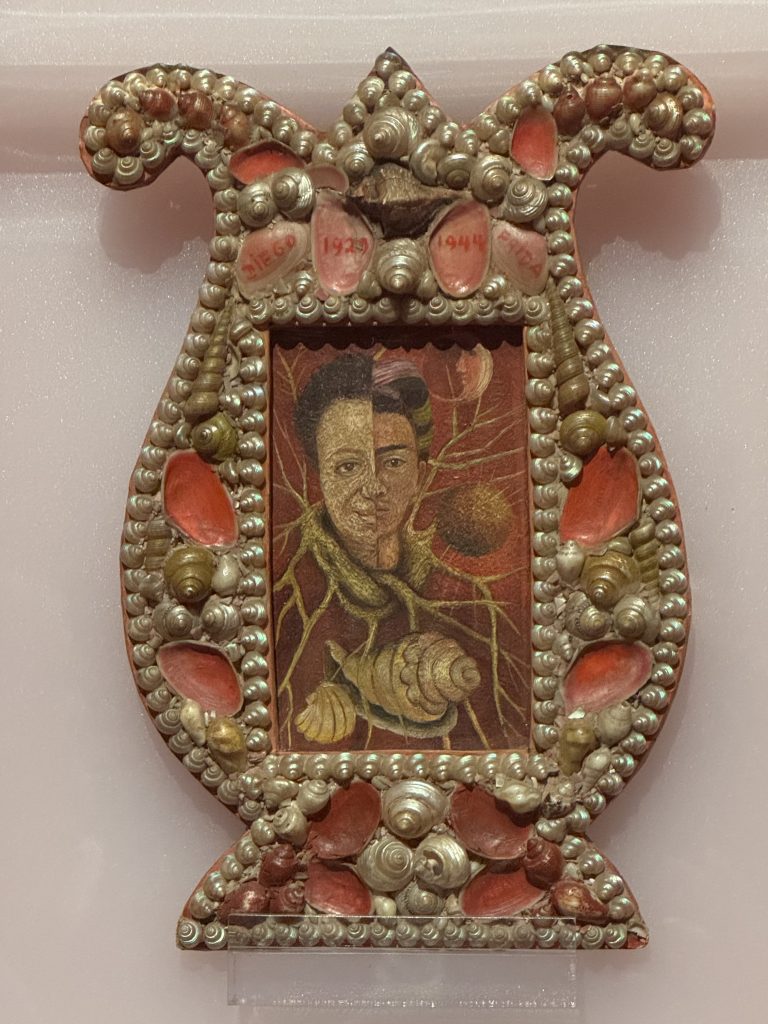
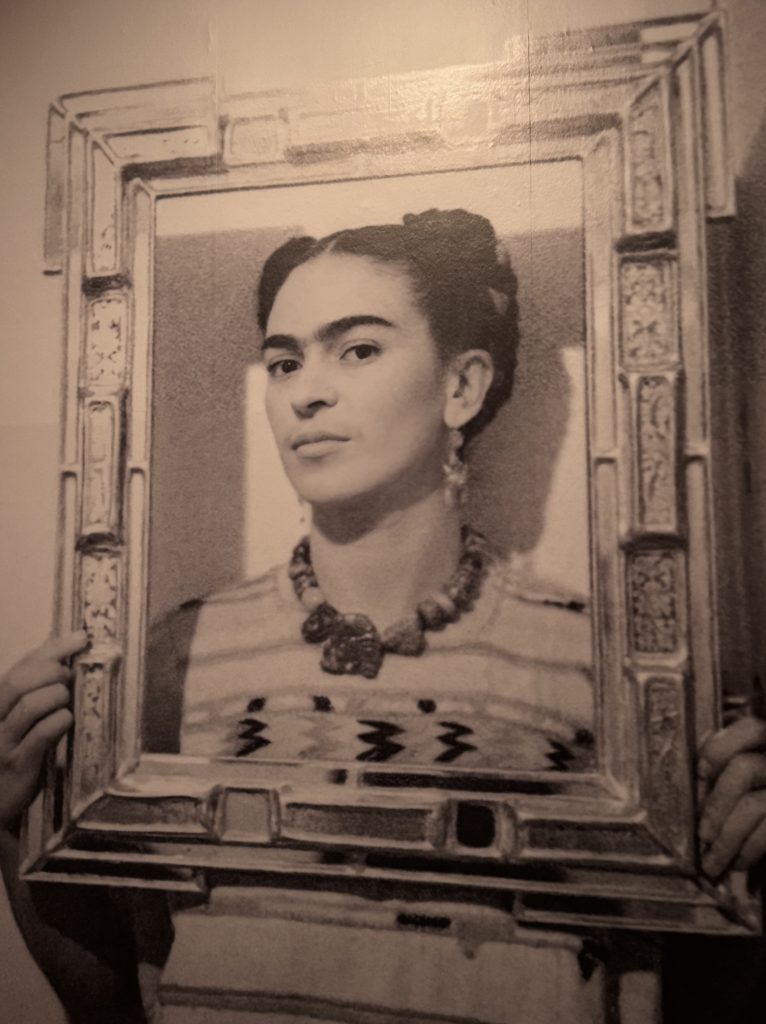
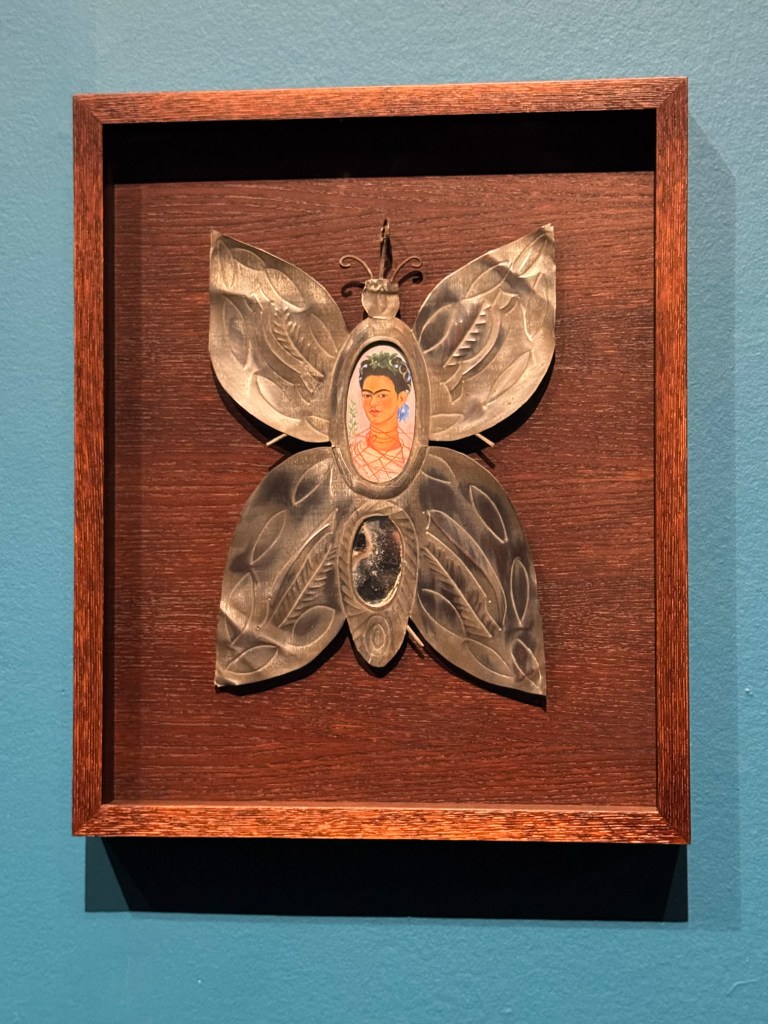
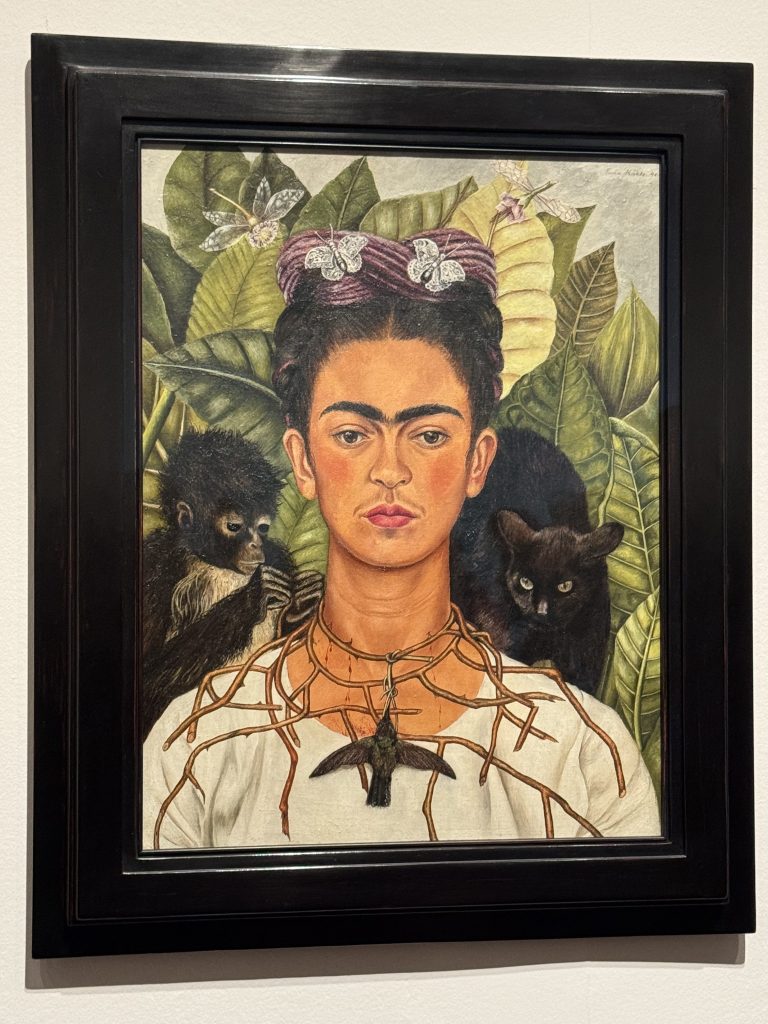
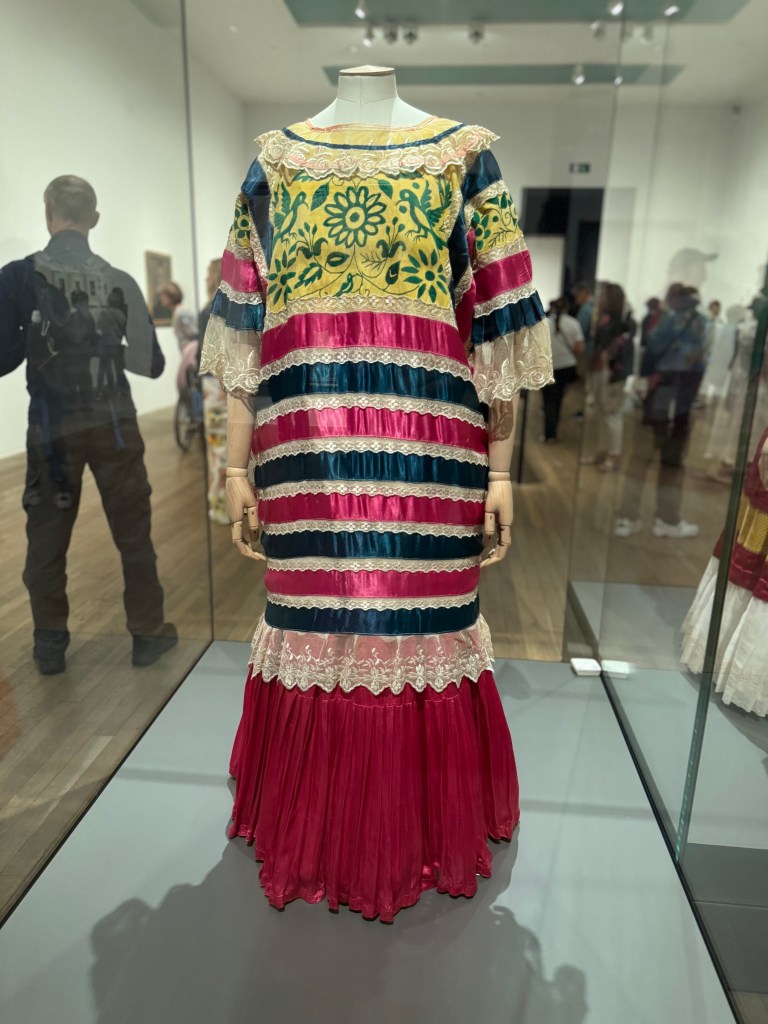
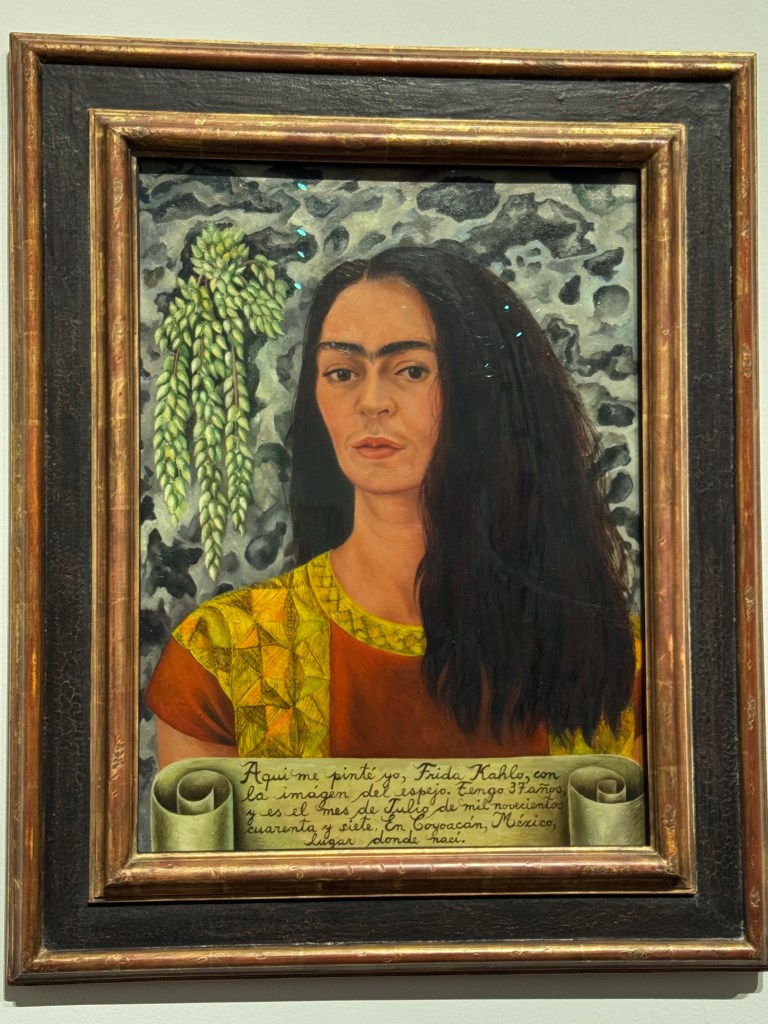
I loved seeing Frida Khalo’s work. I also appreciate the pieces created by the artists who knew her and were her friends – including a few works by her husband.
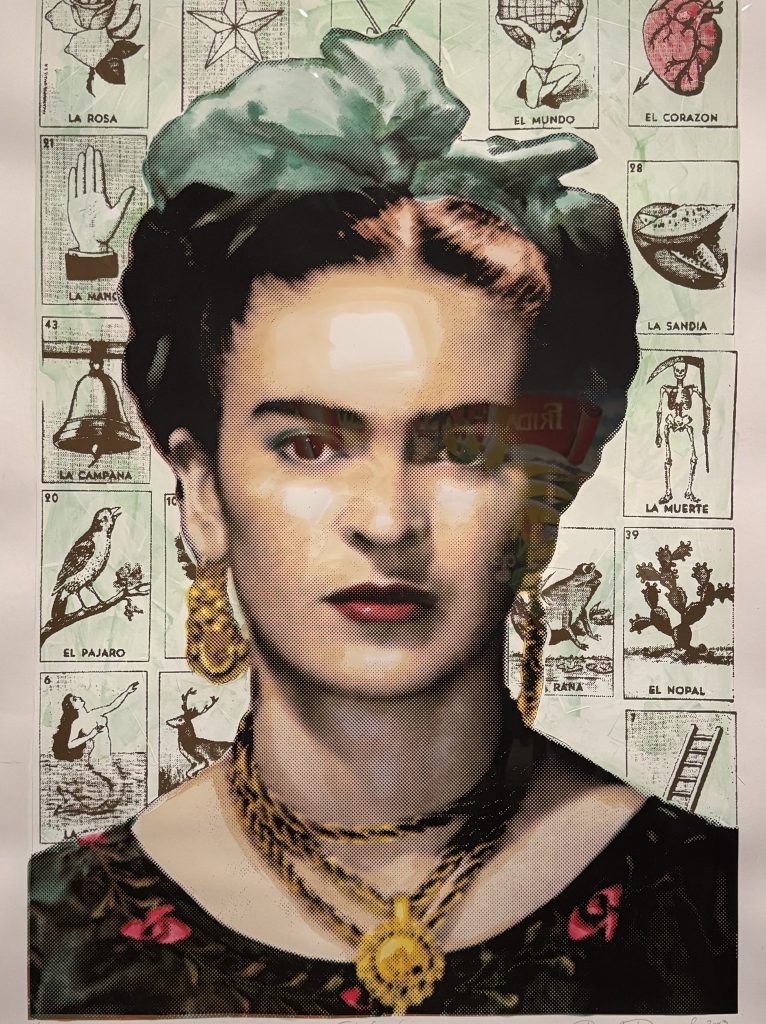
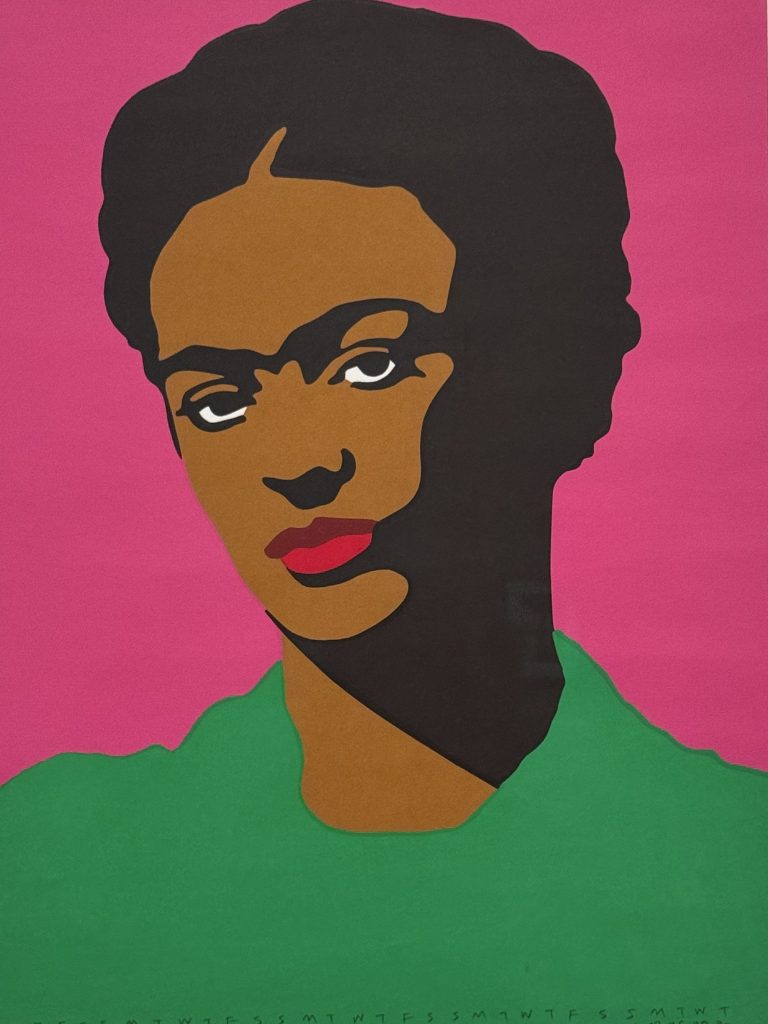
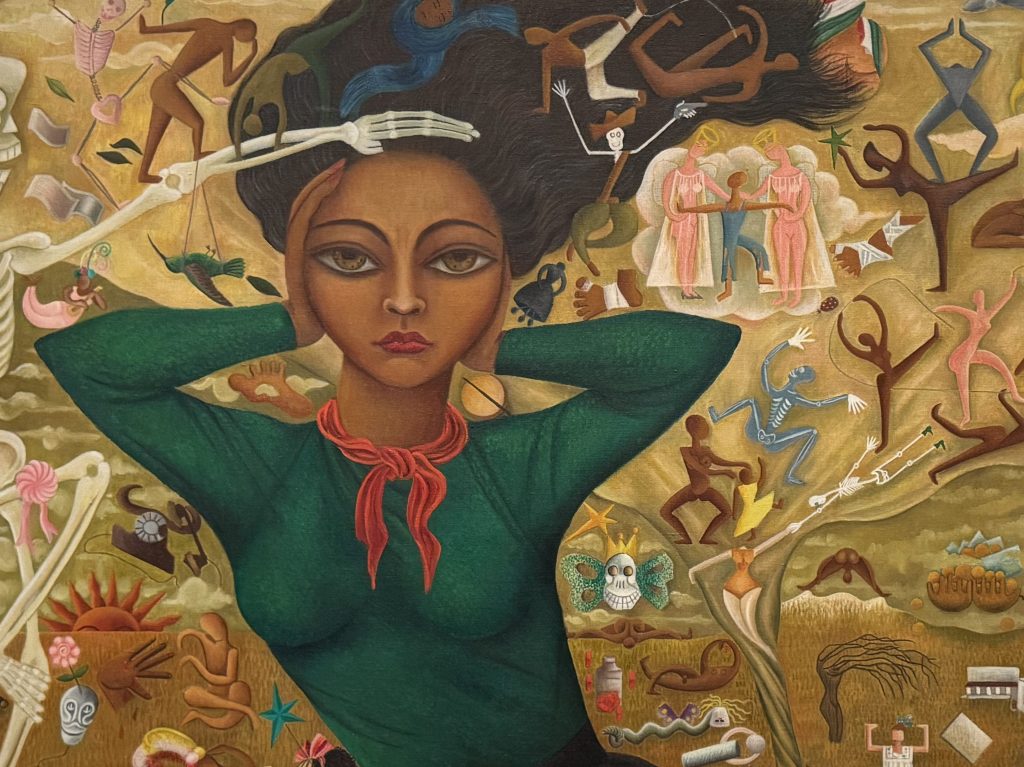
Although she had desperately wanted a child, Frida was unable to carry one due to the damage to her internal organs. She famously captured images of blood and childbirth in some of her works, partly as a way to process her trauma and grief and partly as symbolic references to birth and death. Most art critics during her lifetime did not know how to categorize these works, often describing them as grotesque.
Perspectives on this type of art have changed considerably since 1954, the year that Frida Khalo died, at the age of 47. At some point, towards the end of the exhibit, some of the companion pieces intended to value and honour her crossed a line. On one side there was a Frida Khalo Barbie, more lightly coloured and designed to the usual Barbie proportions, with no sign of disability. On the other, there were pieces kept in a closed off room with a trigger warning mounted on the wall – I glimpsed in and turned away.
Frida Khalo survived immense trauma and tragedy in her life. She did what she could to claim it, to process it and in some cases to share it with others, though I believe the latter to be an incidental result. I have less comfort about the motivation of those other pieces that seem less inspired by her work than meant for personal gain or profit.
We had spent so long at the exhibit that we made the hard decision to leave The Tate without seeing any of the permanent collection. Instead, we continued on to our next stop. Our afternoon was about to become quite compressed.
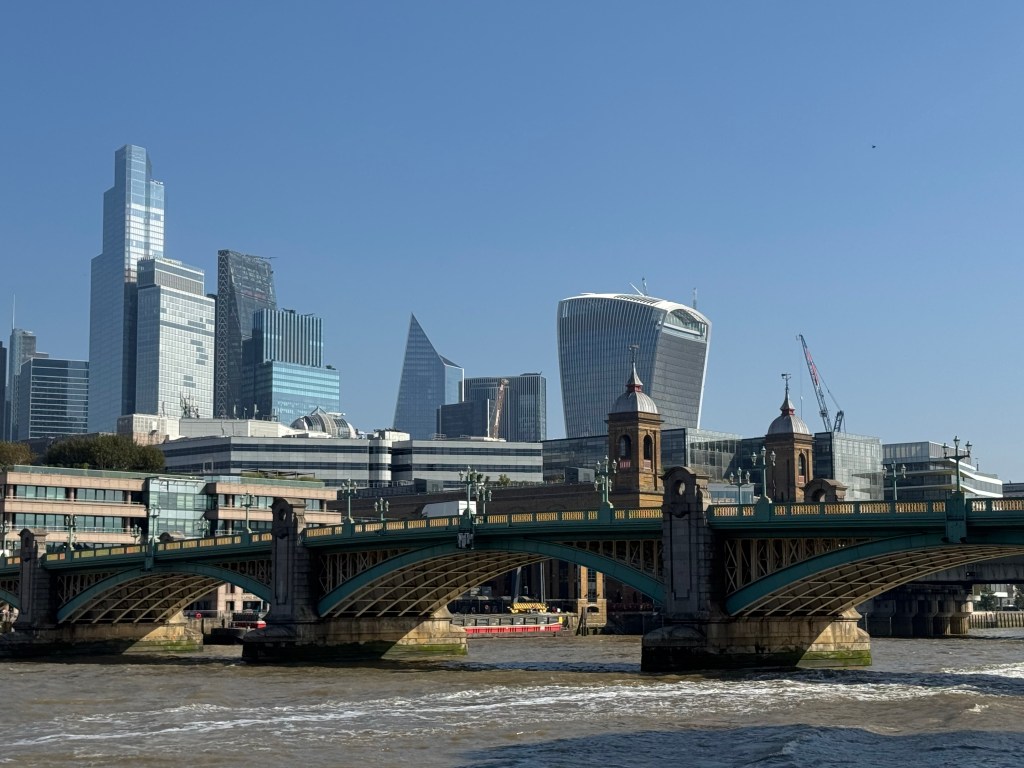
We continued our walk along the riverbank, crossing over at Southwark bridge. By then the sun was fully out and the views were surprising and interesting compared to the older, more famous aspects of London.
It was a relatively long walk to Leadenhall Market, where we hoped to find something for lunch before a visit to St. Paul’s Cathedral. Like many of London’s old and beautiful locations, Leadenhall served as a setting for Diagon Alley and The Leaky Cauldron. in the Harry Potter movies. There were a few shops, lots of restaurants, and a ton of tourists.
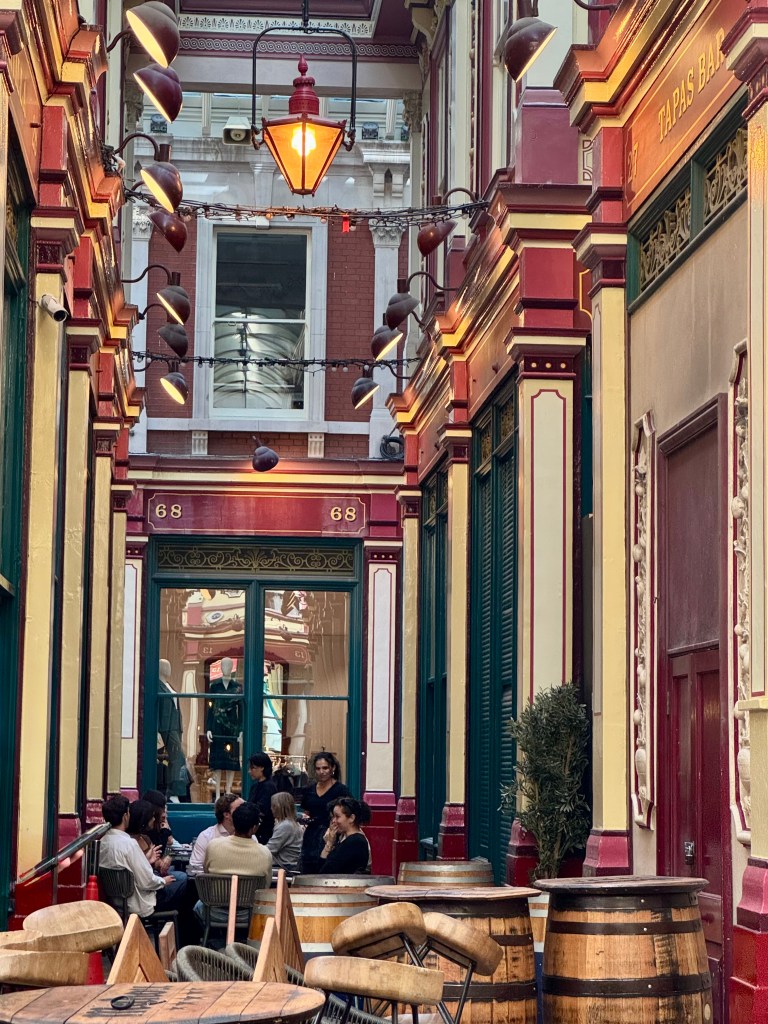
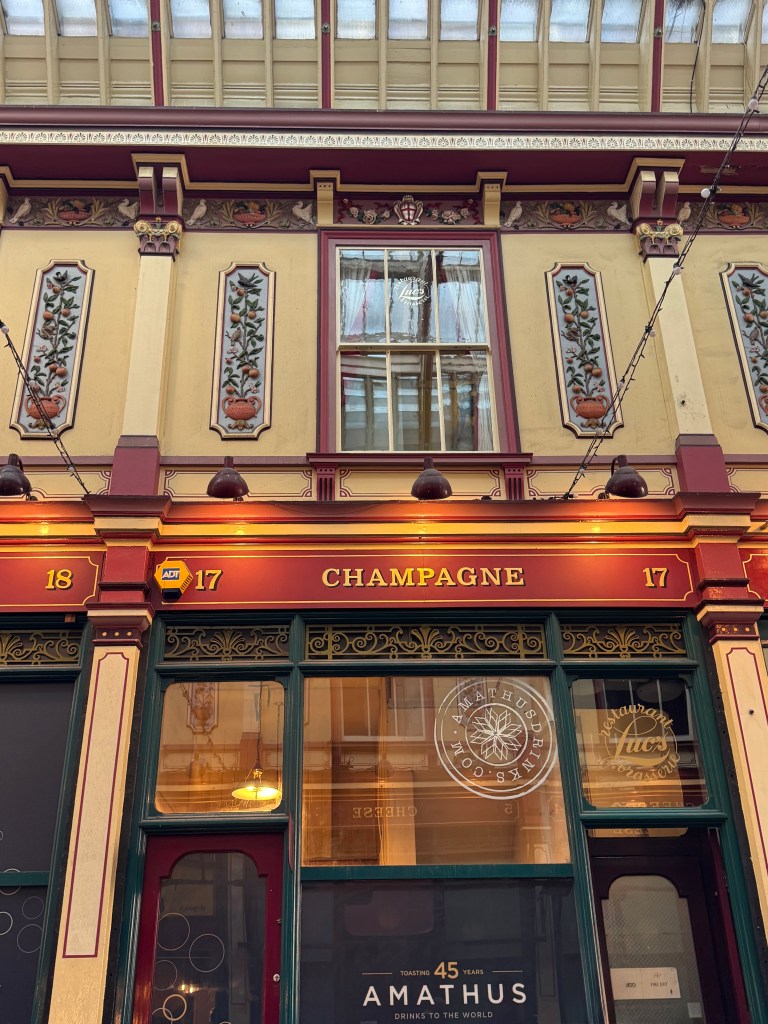
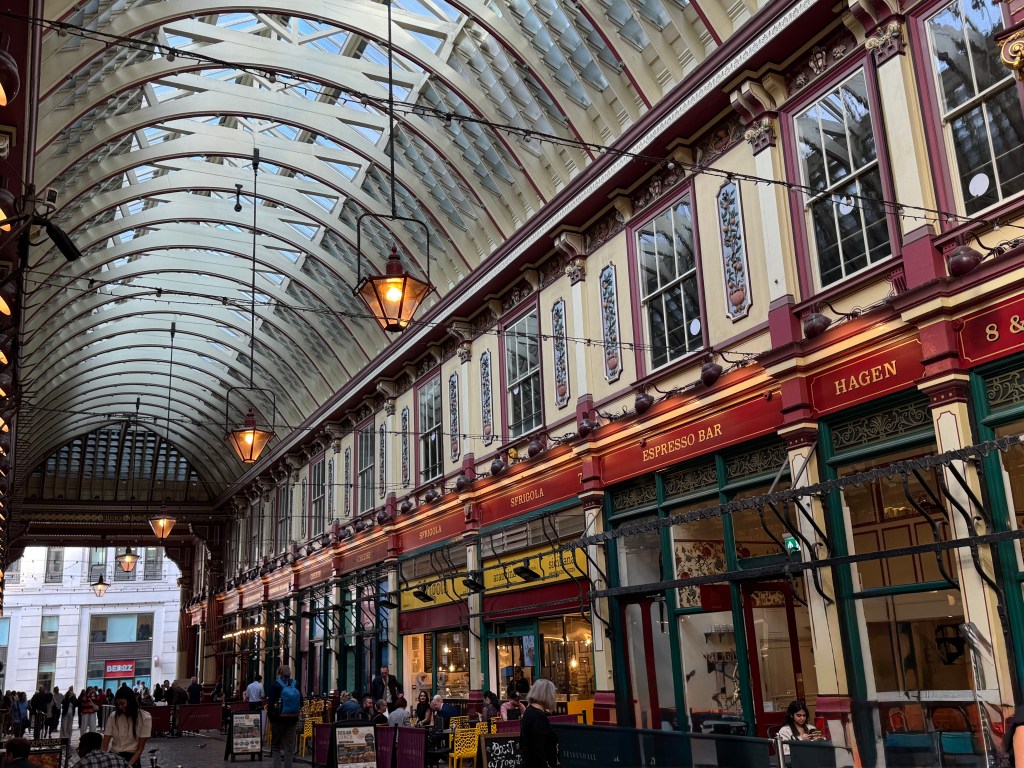
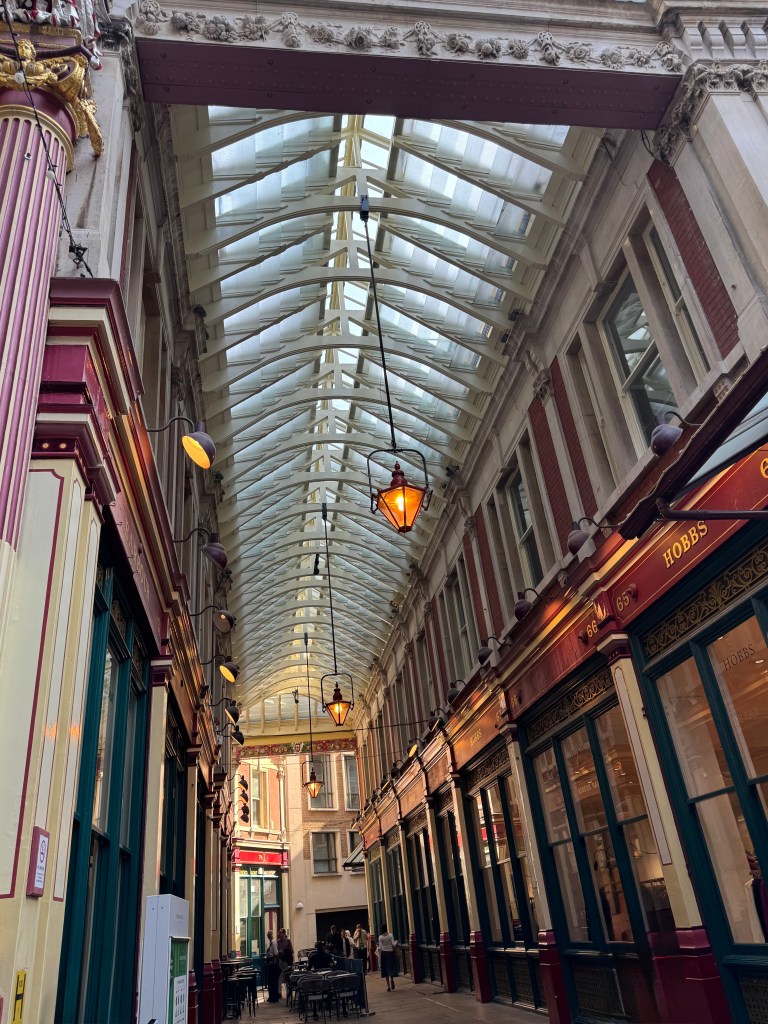

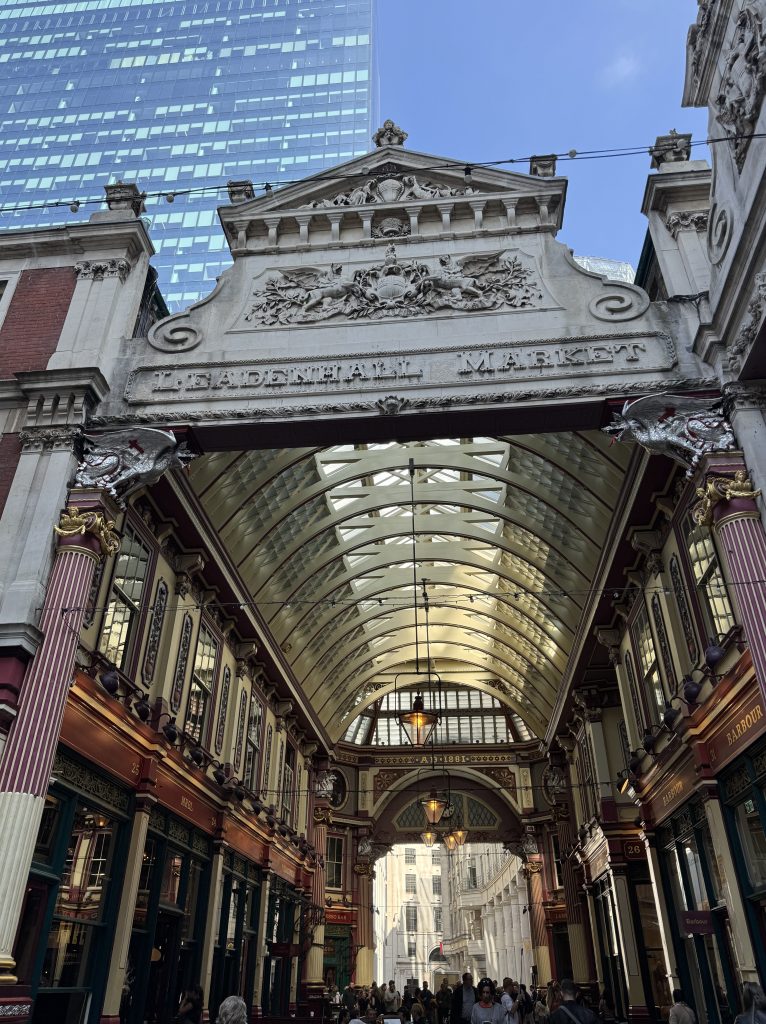
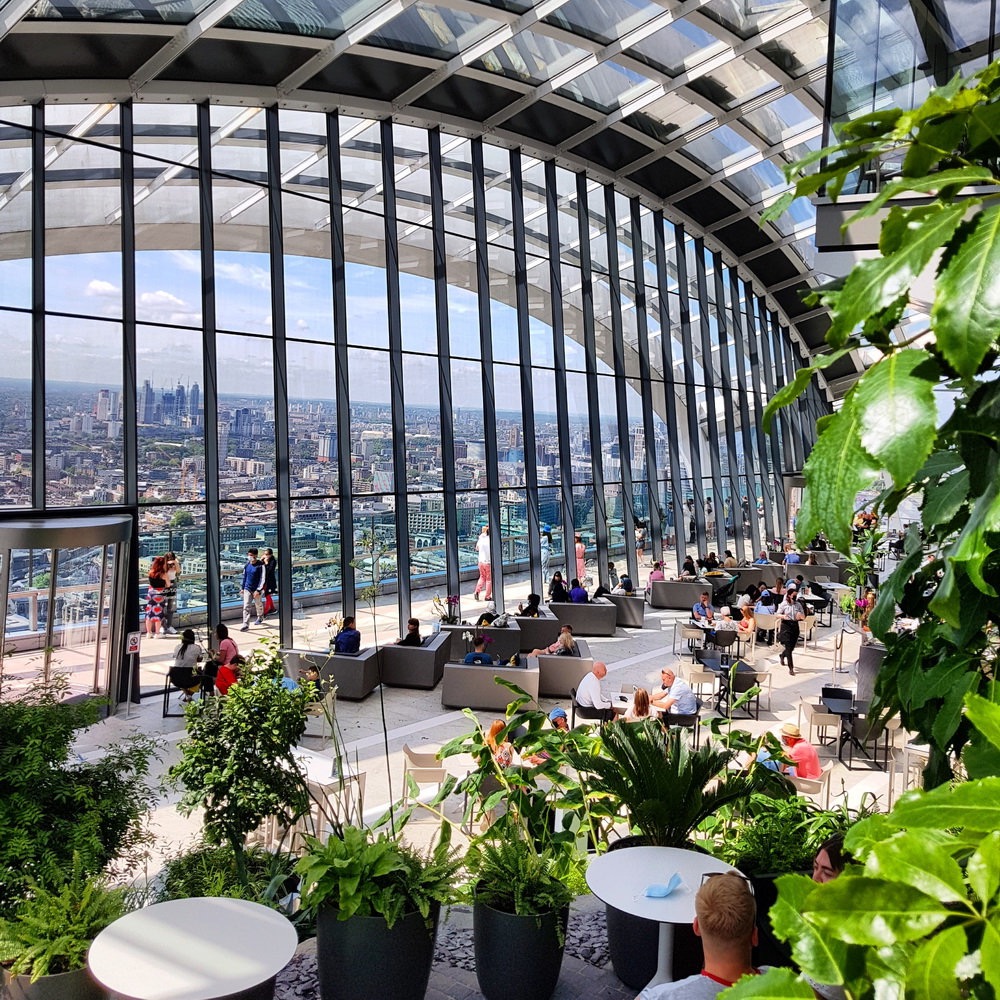
Over a shared hamburger and chips, we shifted our plans again, for perhaps the 3rd time that day. We would only be able to fit in St. Paul’s and a bit of shopping if we skipped Skygarden. I was disappointed but also feeling the need to be practical. Here is an image, borrowed from the internet, that allows you (and I) to see what we missed.
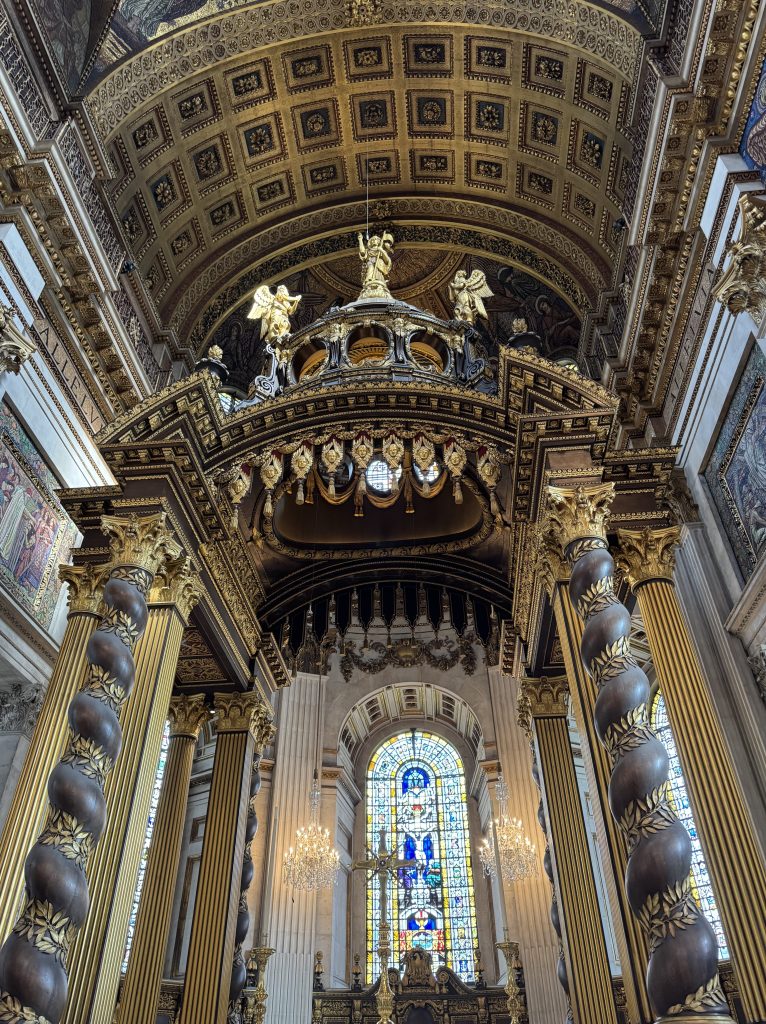
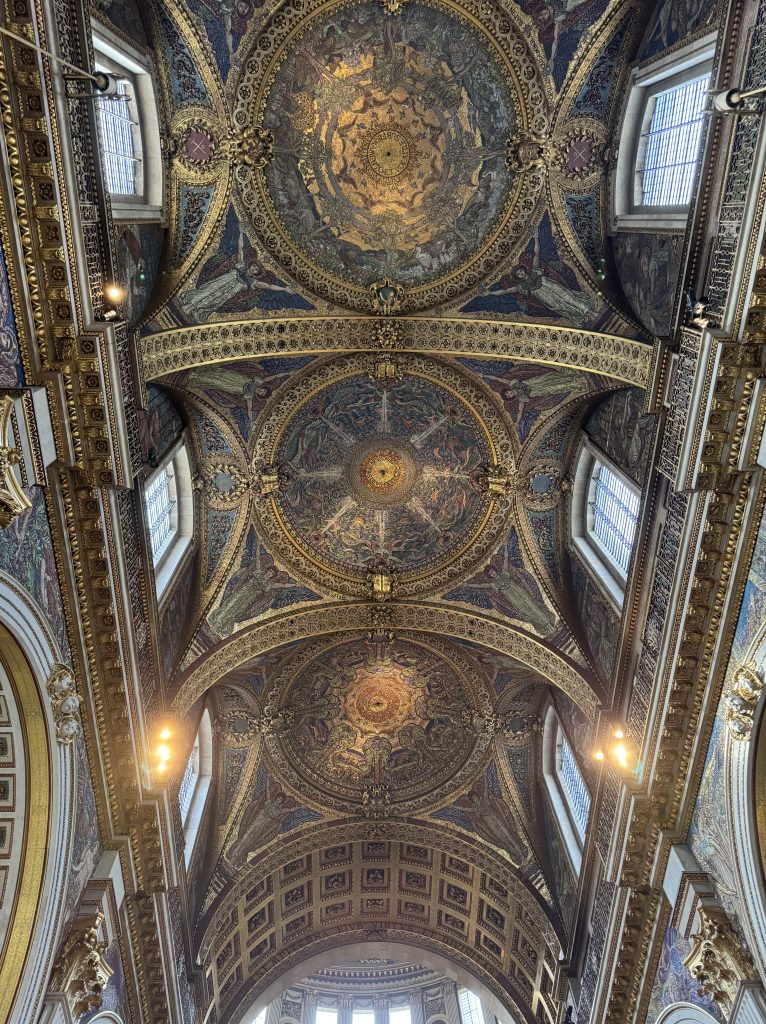
Next stop – St Paul’s. It was a lengthy walk to get there. Combined with some overwhelm due to the number of churches we had already seen on this trip, we might have have been a bit more laisse faire.about this visit We decided what we wanted to see, focusing on the core aspects of the cathedral and the crypts and were ultimately quite satisfied. with our choices.
St. Paul’s Cathedral was designed by Christopher Wren. Work began in 1675 and he spent half of his life overseeing its construction. The Baroque cathedral completed in 1710, replaced the original medieval one, destroyed in the Great Fire of London in 1666. st. Paul’s miraculously survived the heavy aerial bombardment of London during WWII.
The Cathedral is the seat of the Bishop of London and has served as the location for the funerals of Lord Nelson, the Duke of Wellington, and Sir Winston Churchill, as well as the wedding of Prince Charles and Lady Diana Spencer.
As is our custom, Rick and I both lit candles for our fathers and my mother.
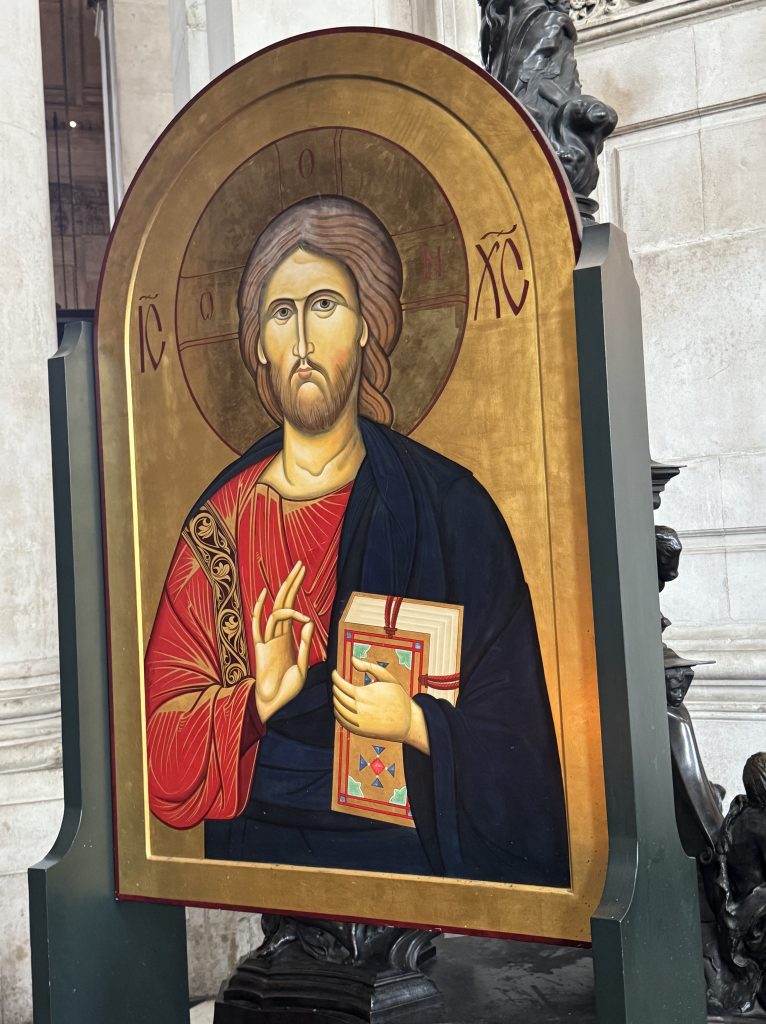
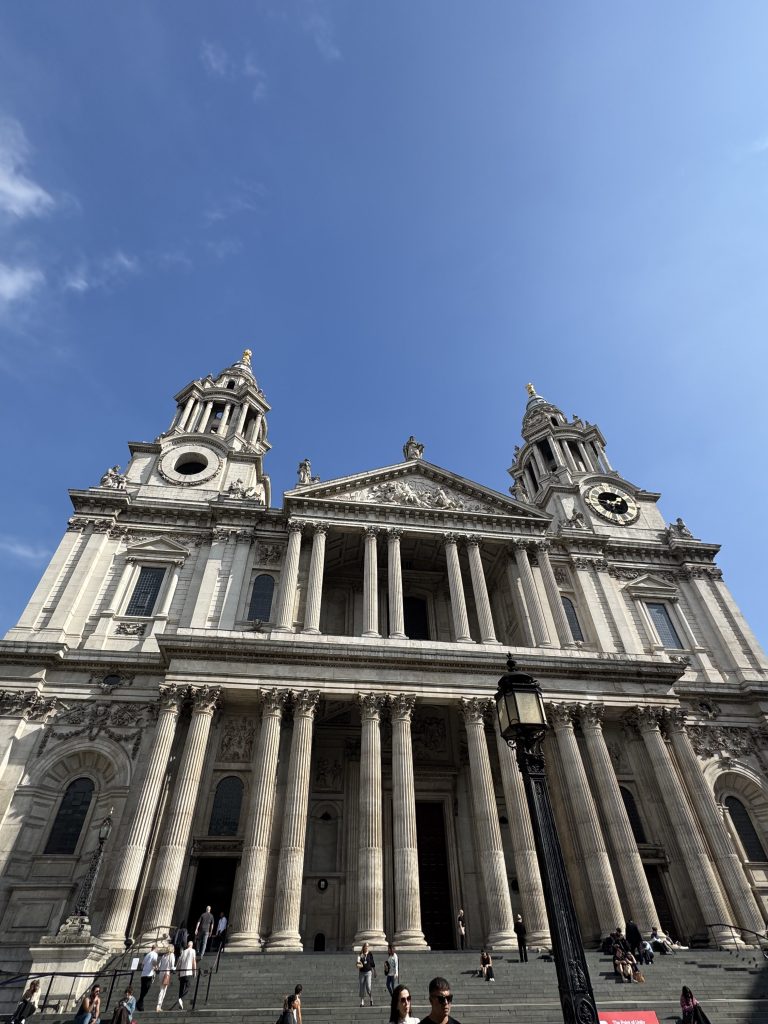
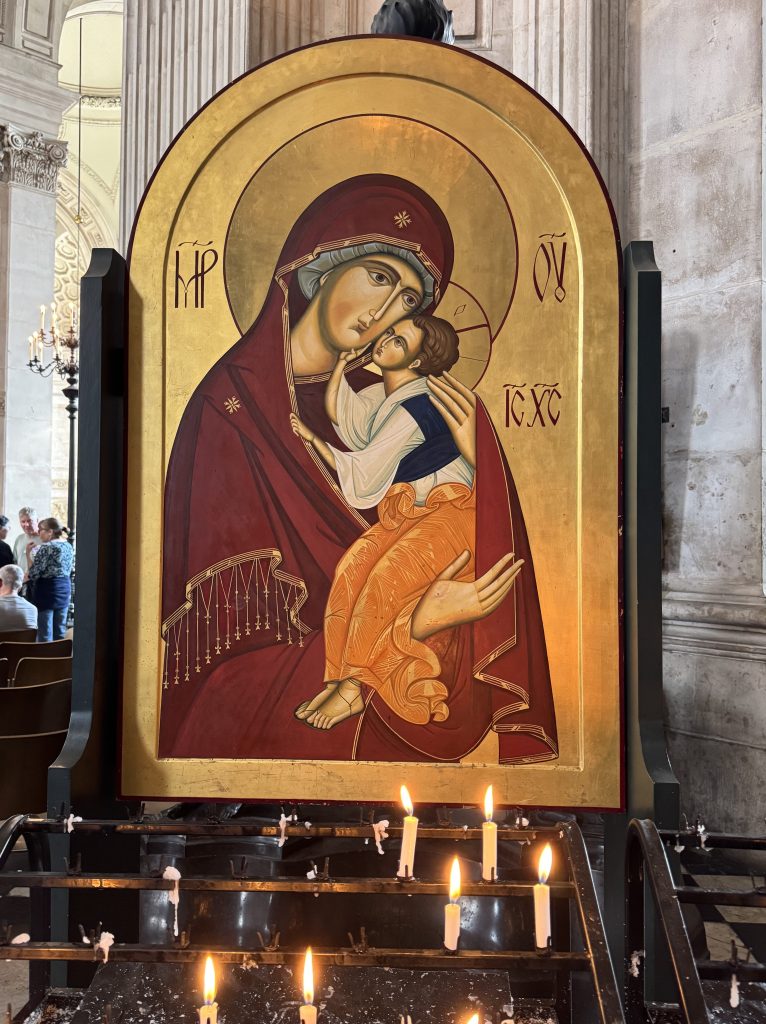
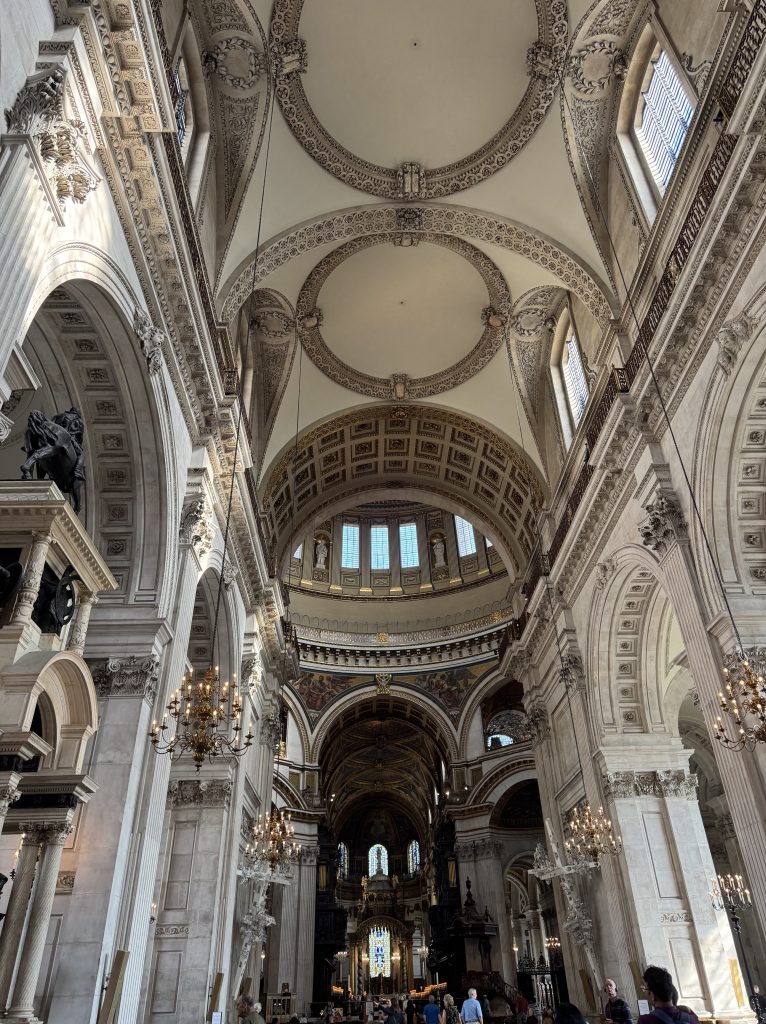
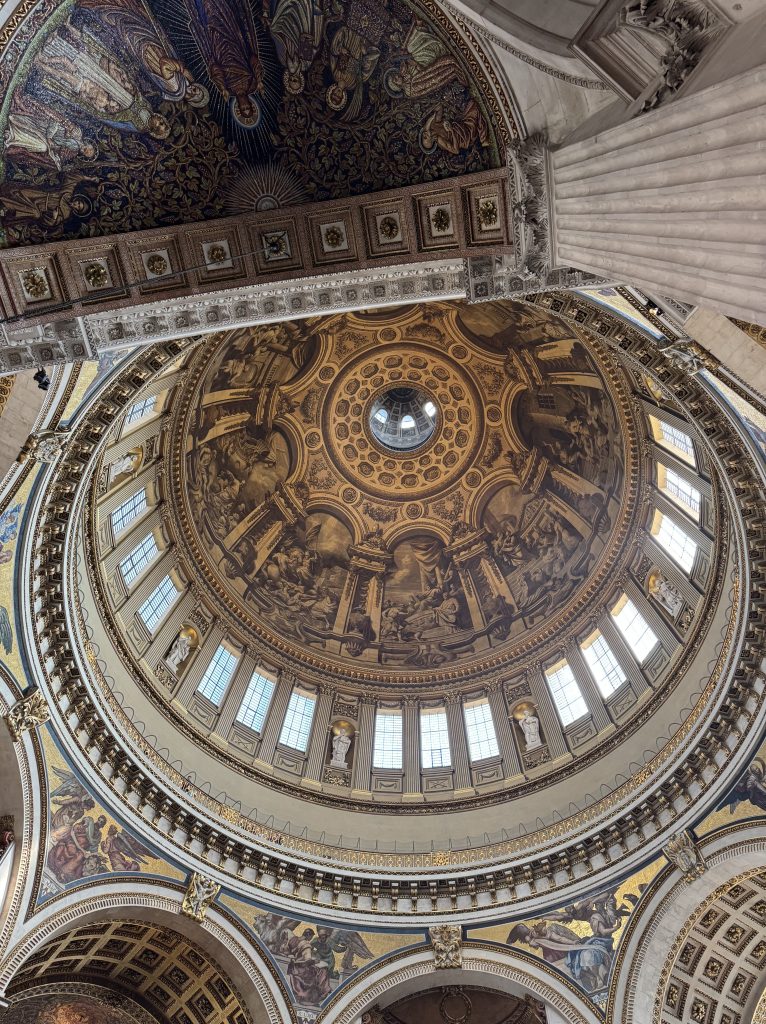
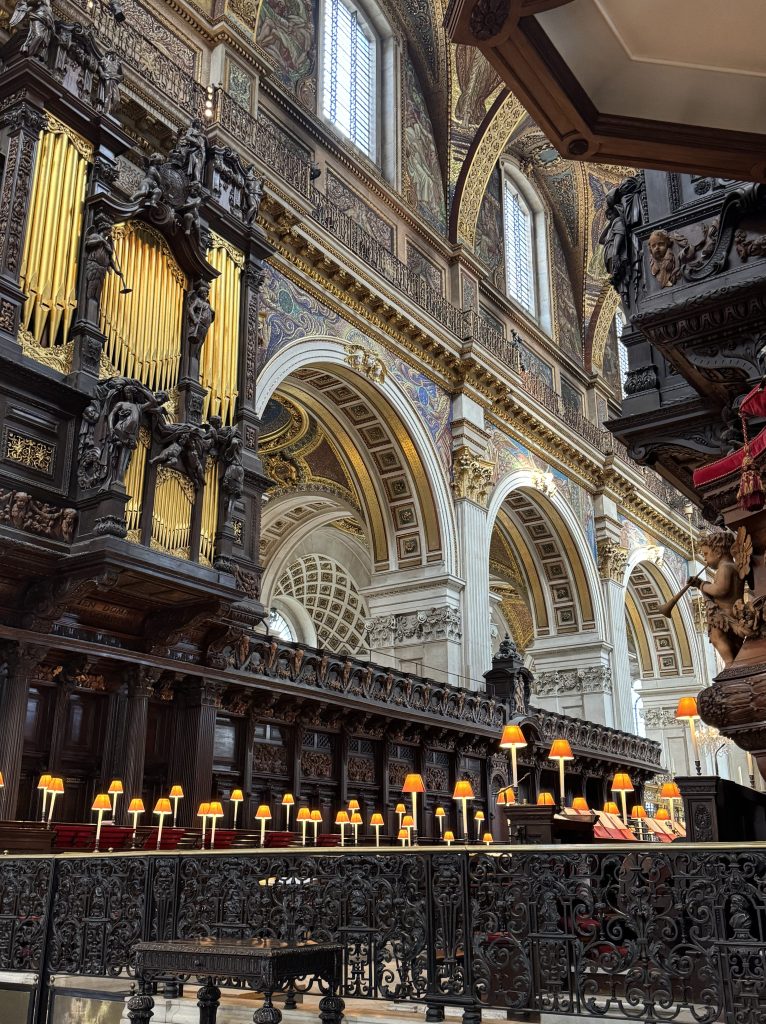
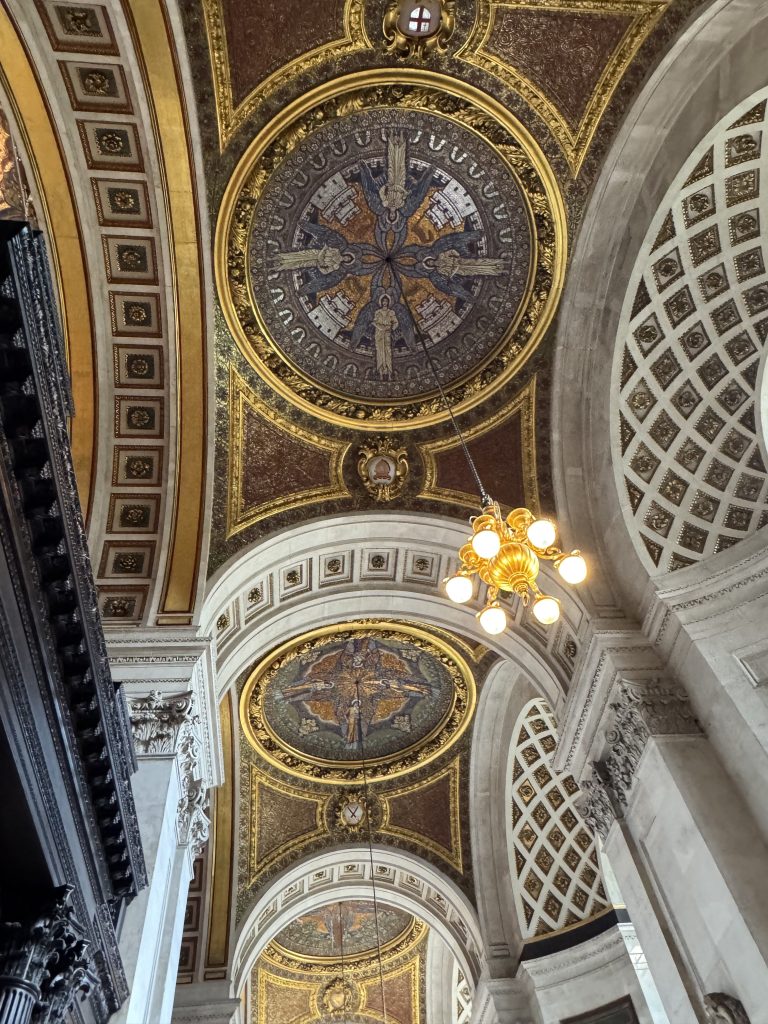
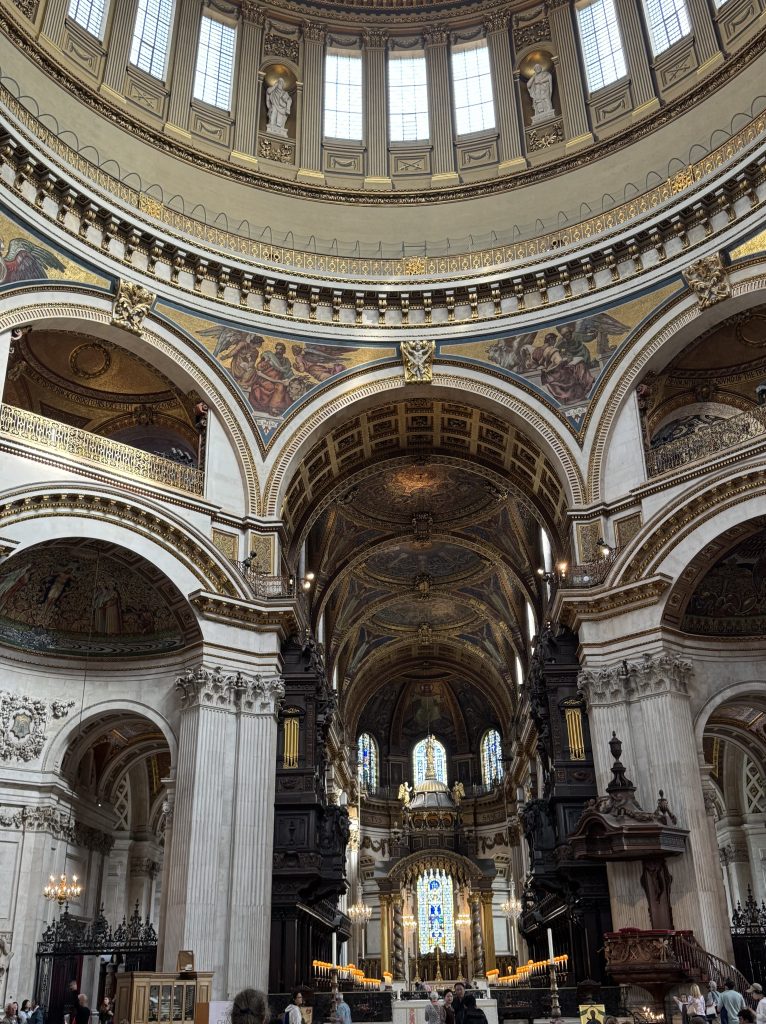
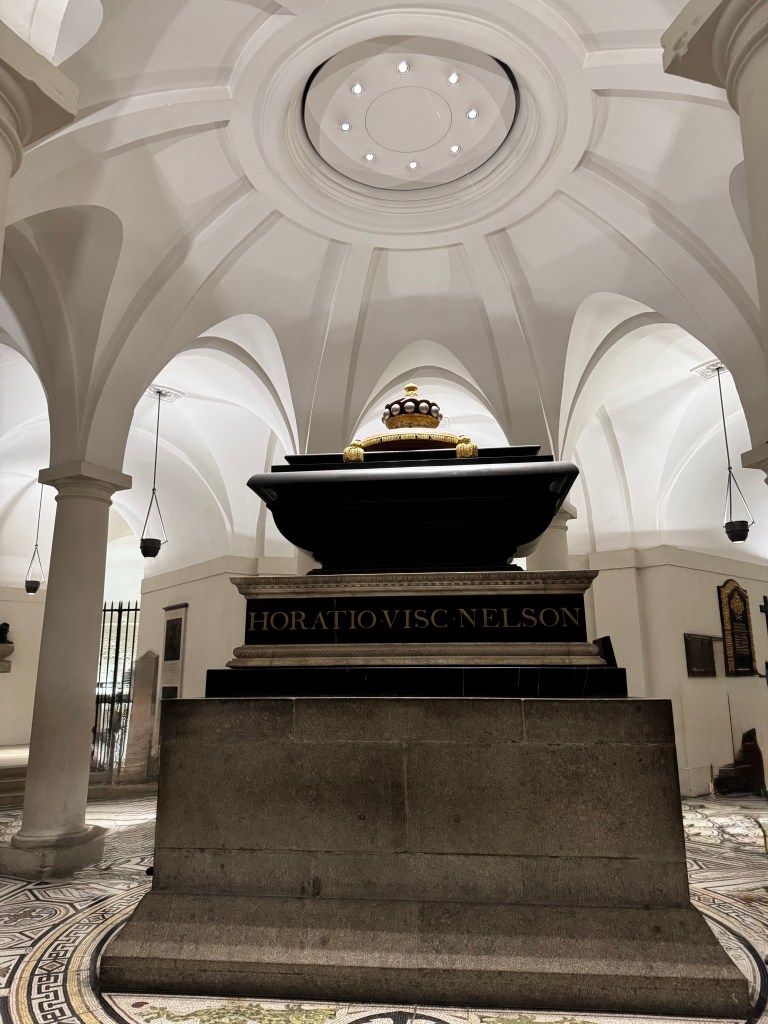
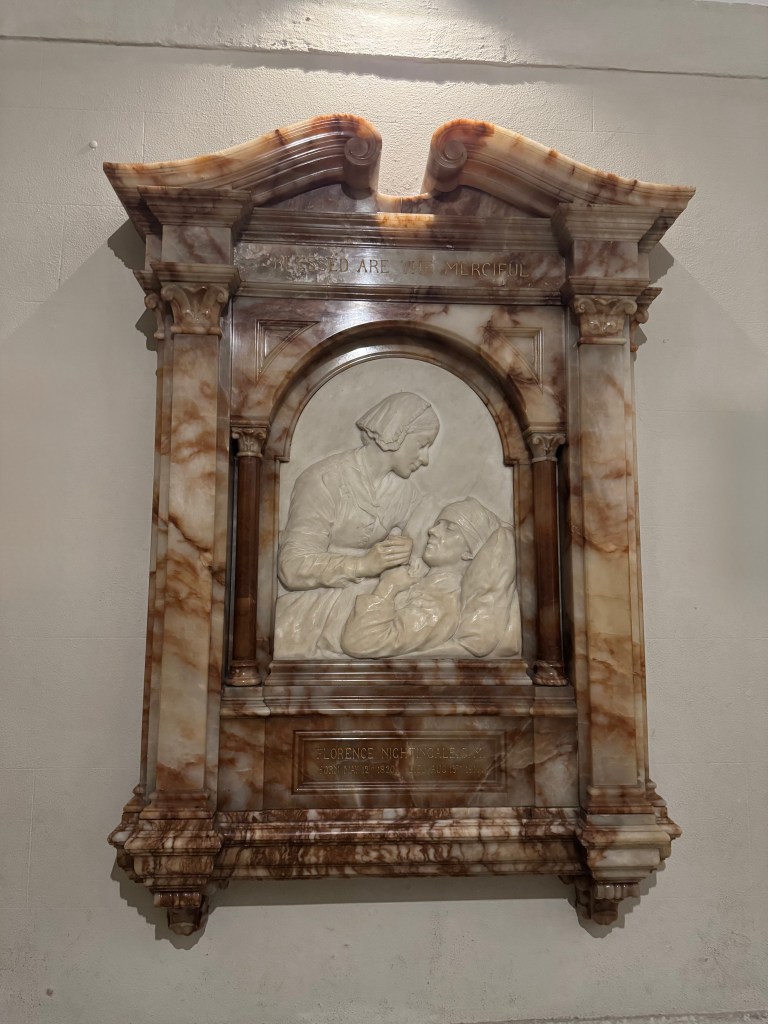
We were able to find a few crypts and memorials of note: Lord Nelson, Duke of Wellington, Florence Nightingale and of course, Christopher Wren himself buried beneath a very plain stone.
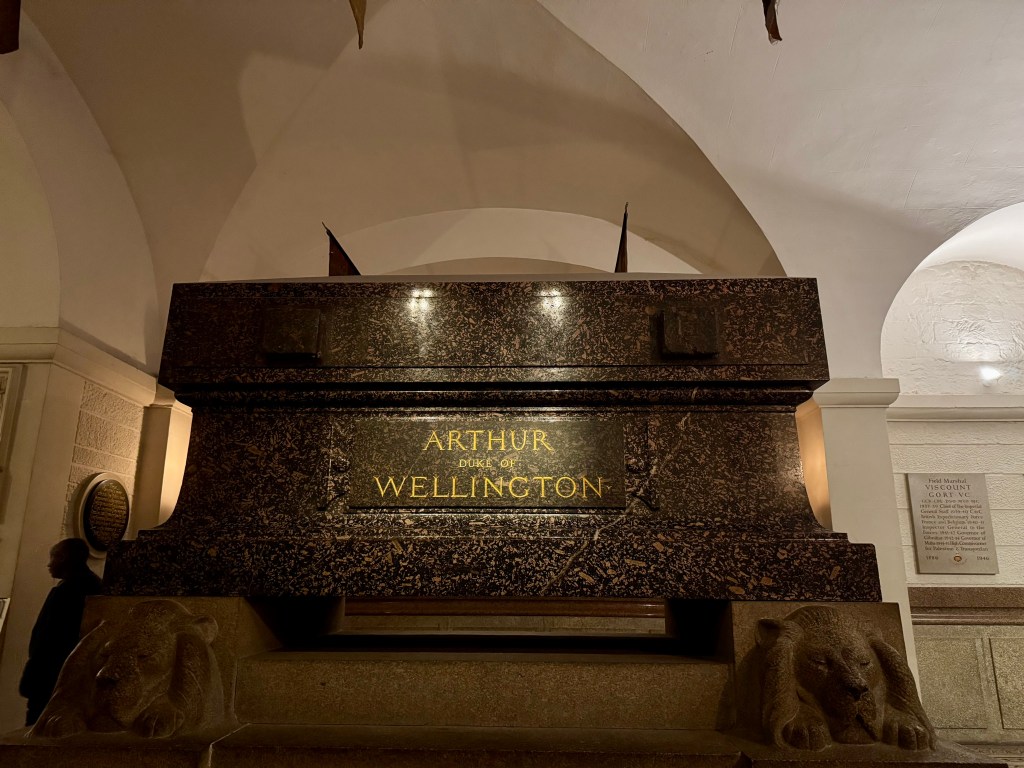
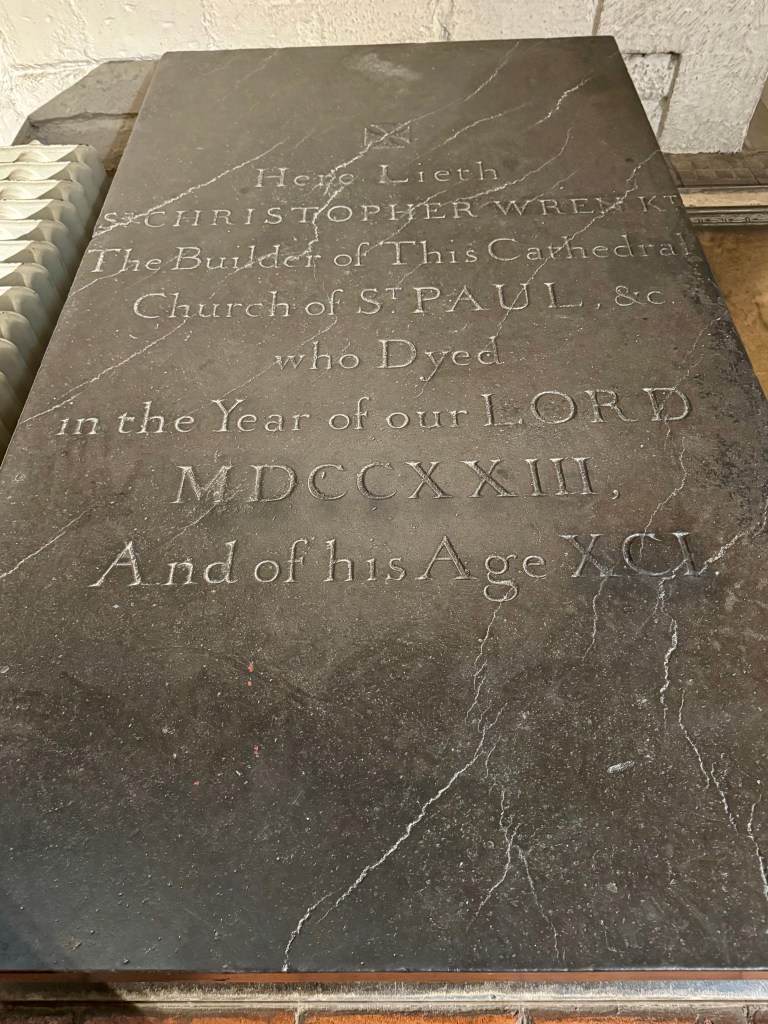
It was 3:00 and we had already logged well over 20,00 steps. With more walking ahead of us, we decided to take the Tube to Hamley’s (7 floors of toys) and Liberty (7 beautiful floors of very beautiful things).
Our stop in Hamley’s was a big success. I loved being greeted by dancing toys and the staff inside were very helpful while also demonstrating numerous toys for purchase. It was all a bit overwhelming. However, we did come away with small surprises for each of the grandchildren. As well as a photo of an entire doll section devoted to “Arias”.
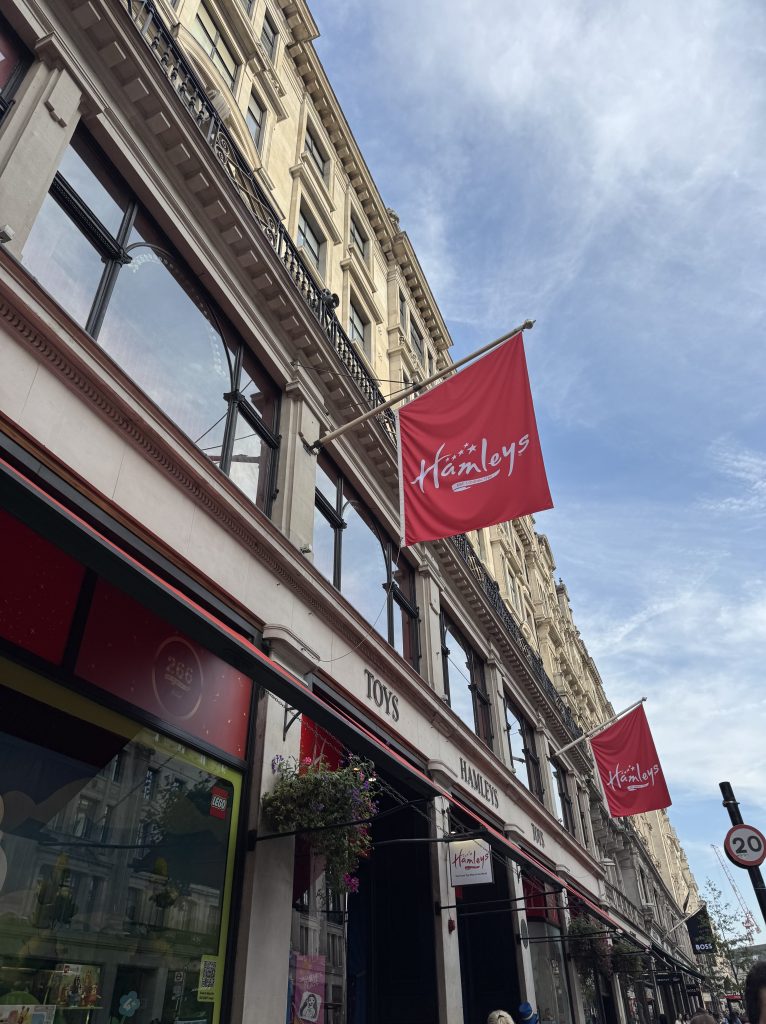
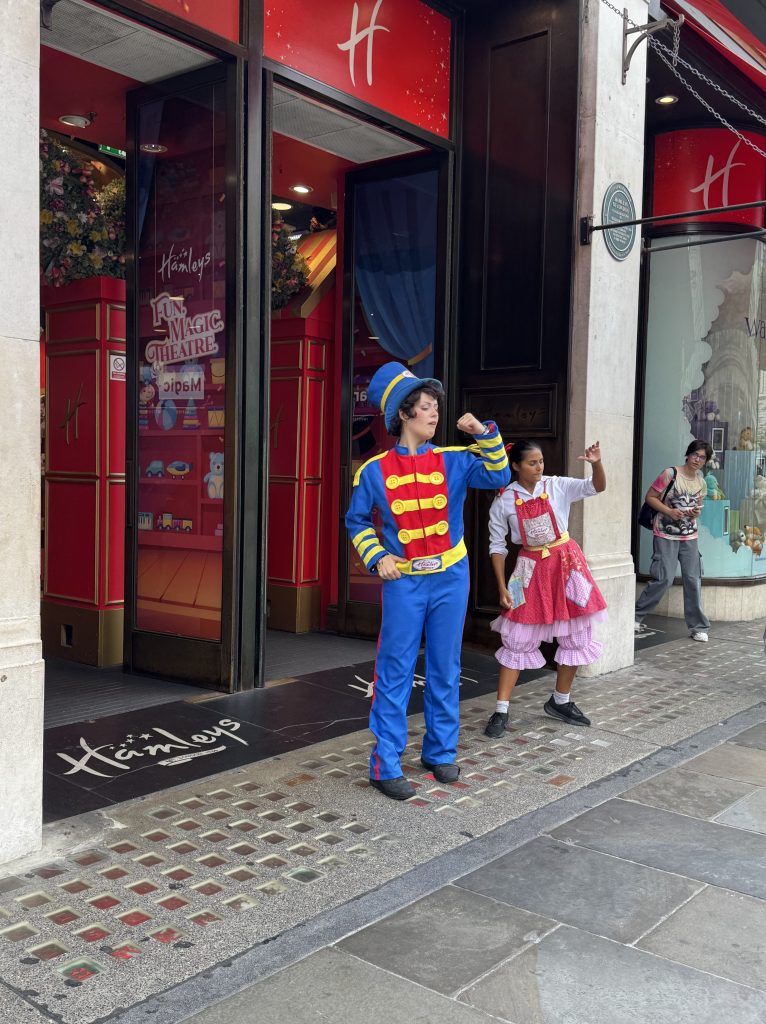

Rick was not terribly interested in Liberty, but I was dying to go there. It was becoming clear that I was not going to make it to a yarn shop on this trip. I had heard that Liberty’s haberdashery included some yarn. I was hopeful. Rick perched in a nearby pub with a Guinness and I went in alone.
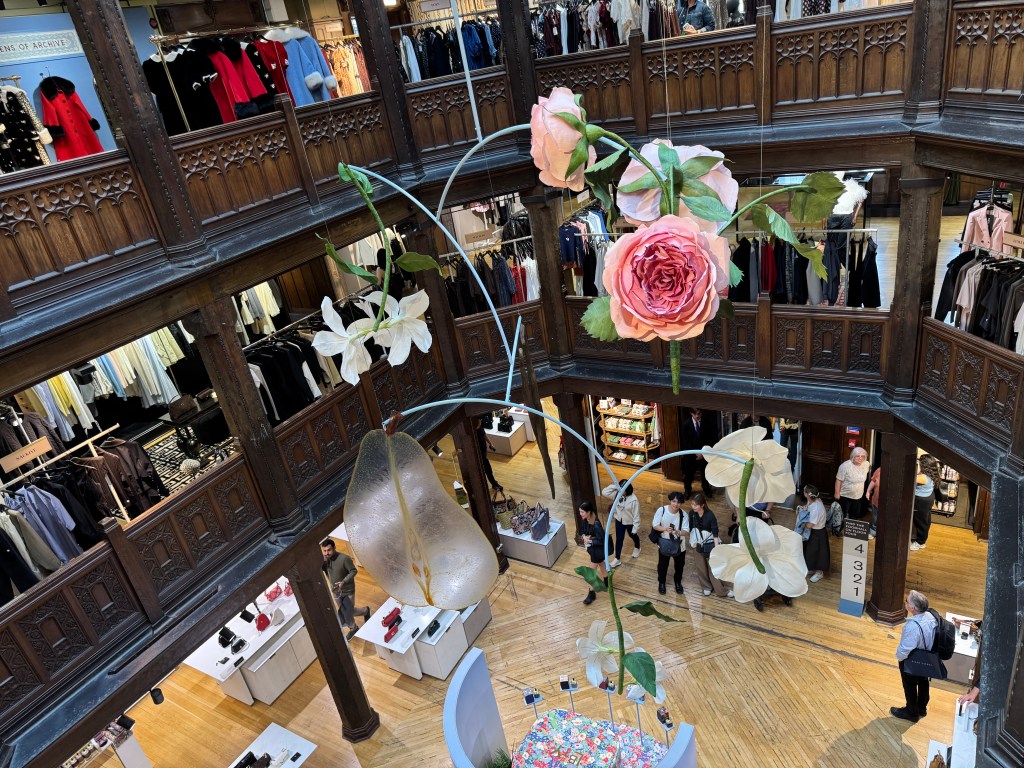
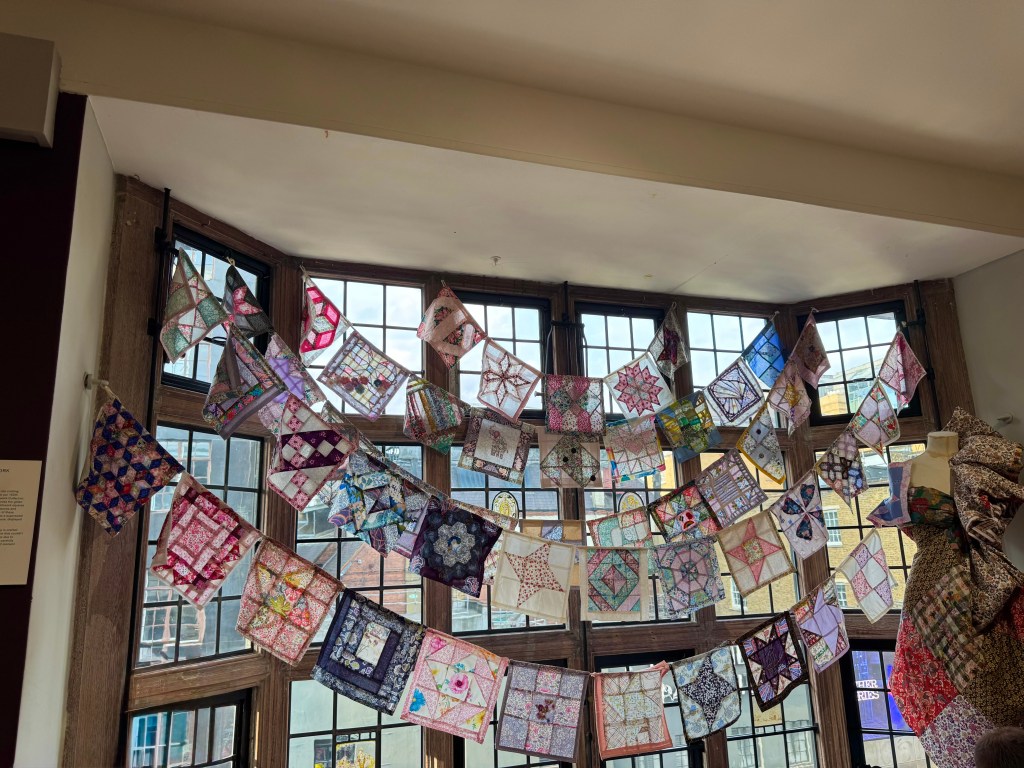
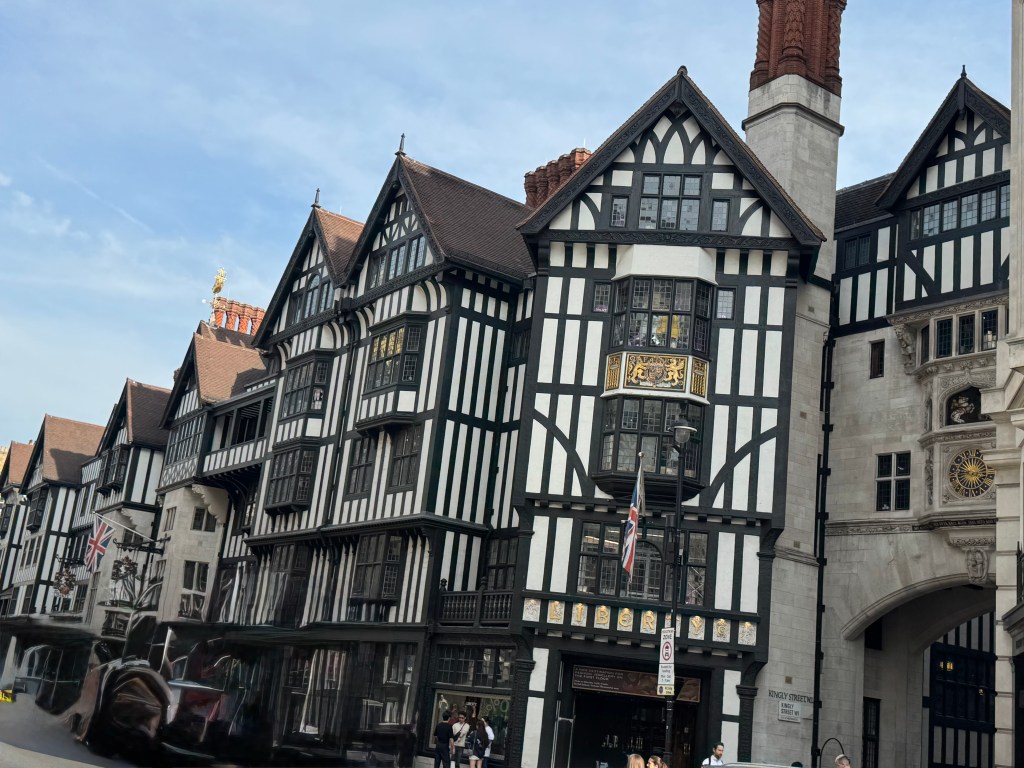
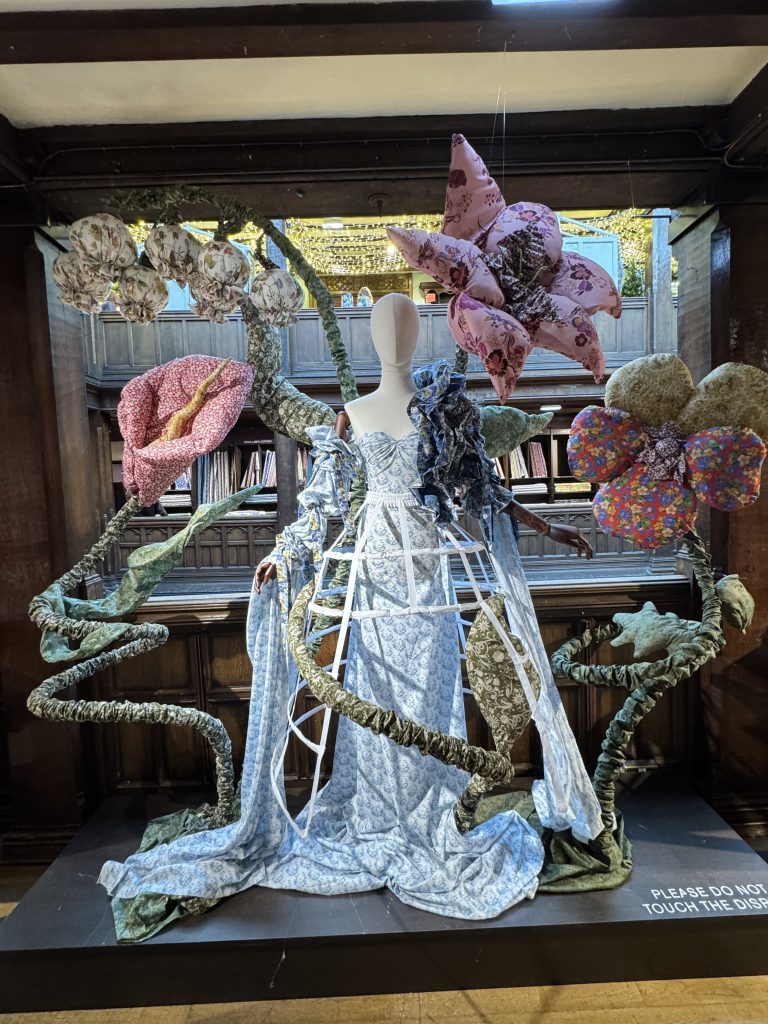
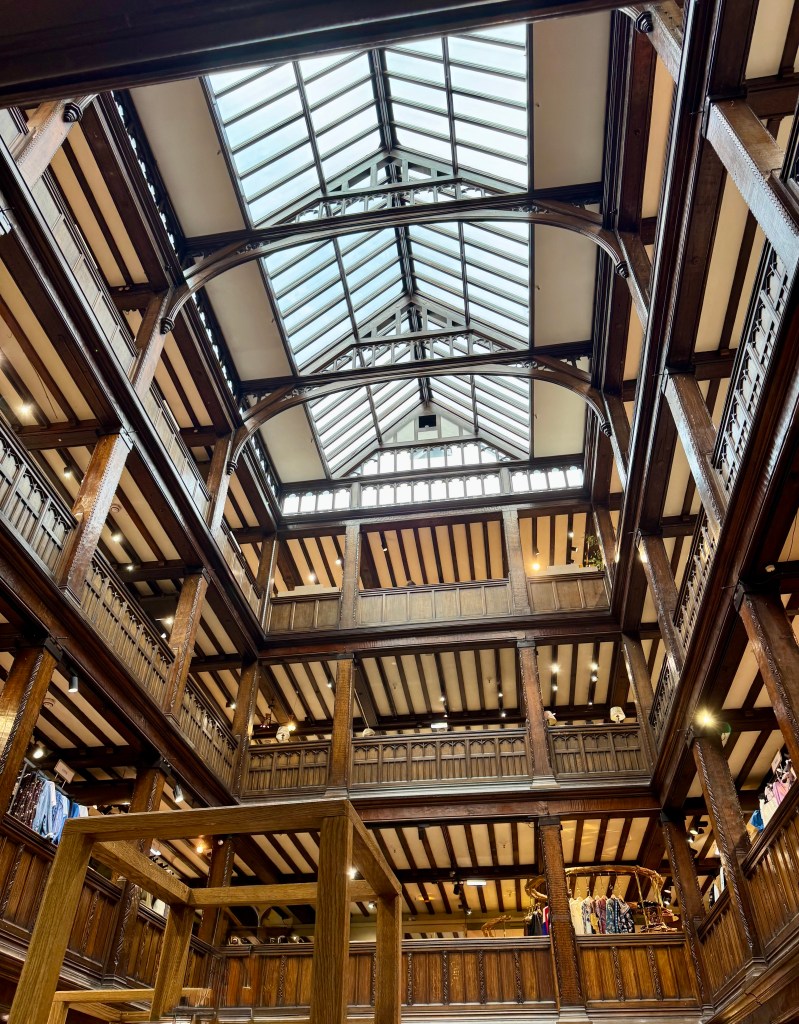
It cannot be overstated how beautiful Liberty is. The Tudor building was opened in 1924, though the brand was first introduced by the founder Arthur Lassenby Liberty in 1875. Liberty is a typical department store though I believe they are most famous for their beautiful floral fabrics that appear in their clothing and cross over into everything from notebooks, to athletic shoes. The fabric department is mindblowing and I spent a few minutes just trying to justify bringing home some fabric to make… something.
Alas, the yarn selection was abysmal. I did purchase a small gift, allowing me to walk away with one of the beautiful purple Liberty bags.
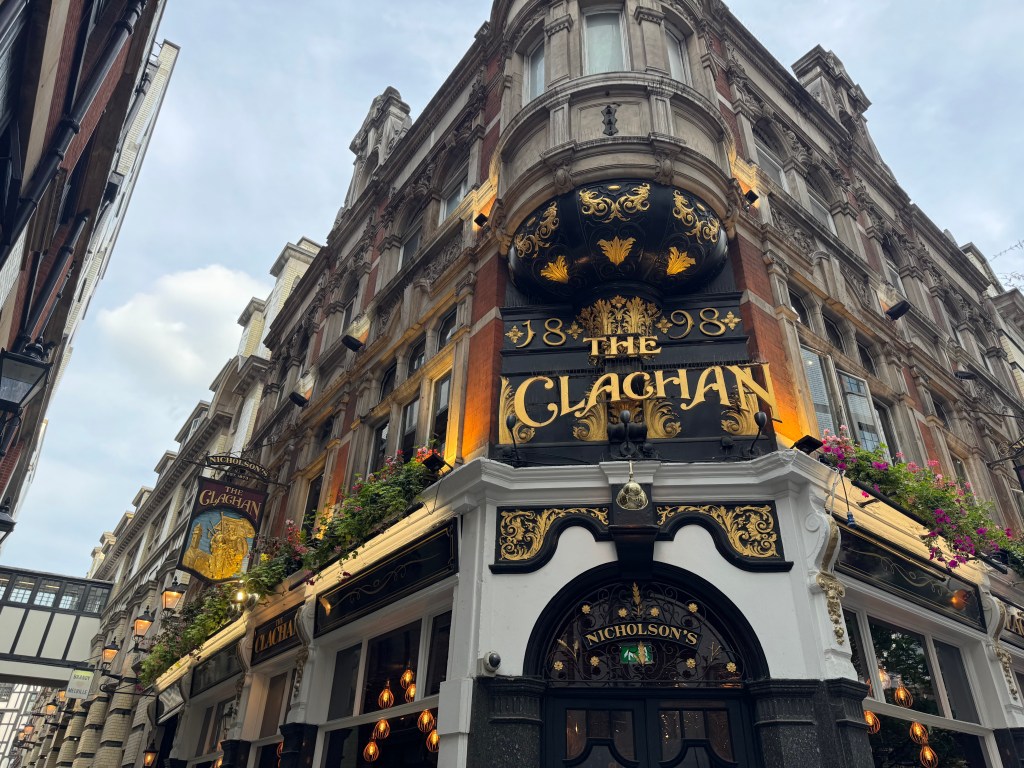
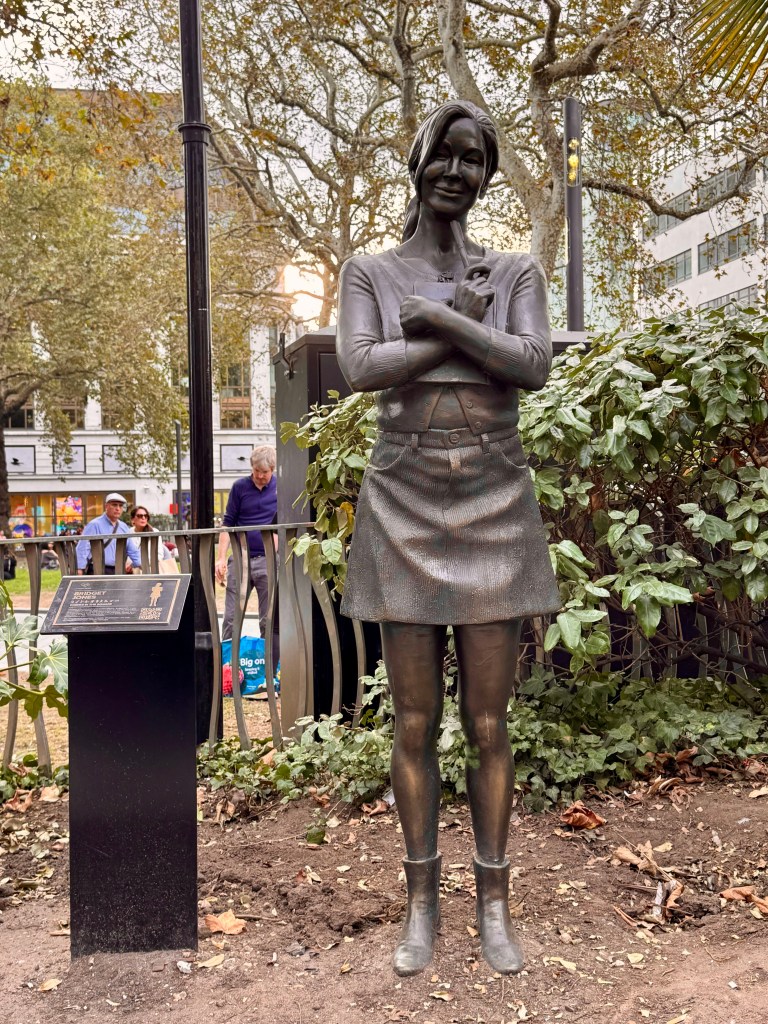
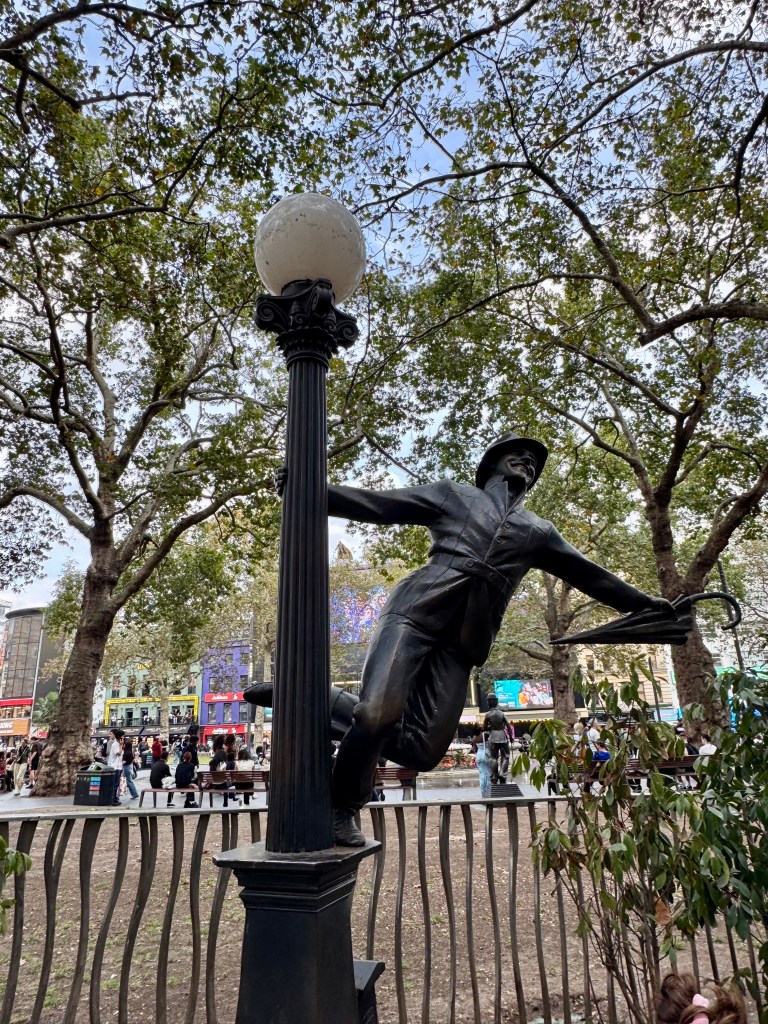
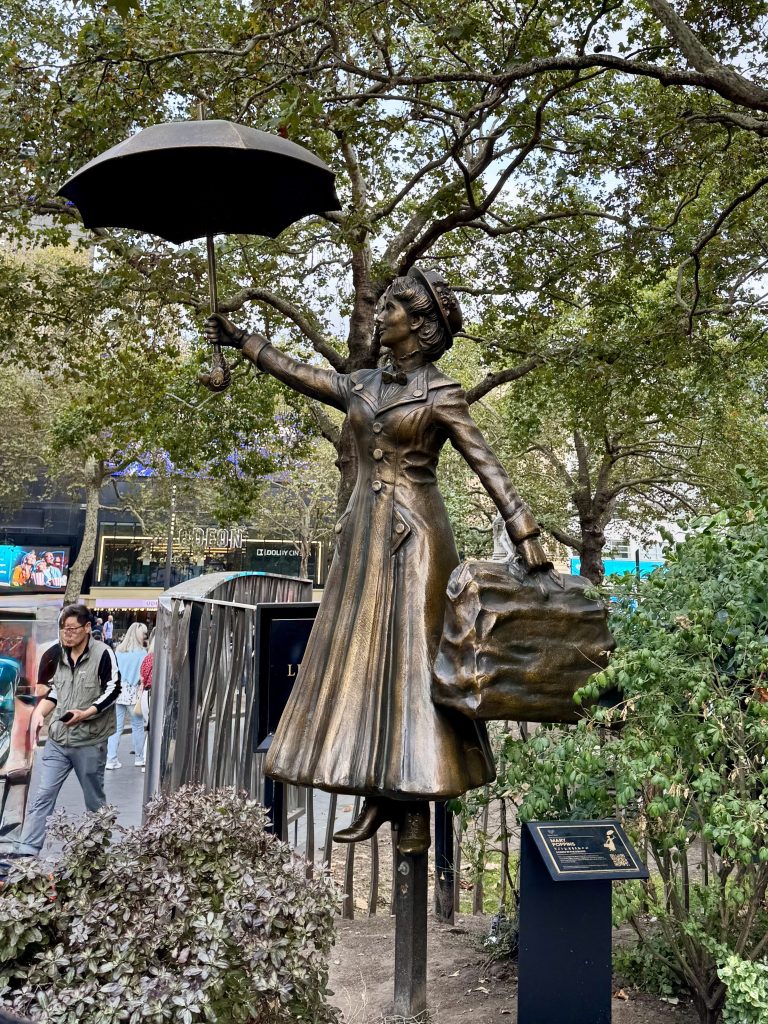
Still walking! We passed through Leicester square in the entertainment district. The park has a collection of famous people from famous movies. Here are a few you might recognize.
We grabbed a quick dinner at a small Italian place near our hotel. It was quite disappointing, and I will leave it at that.
(Am I the only noticing how this seems to be accelerating?)
We had a very, very brief break to change clothes for the theatre and were off again. Still walking.
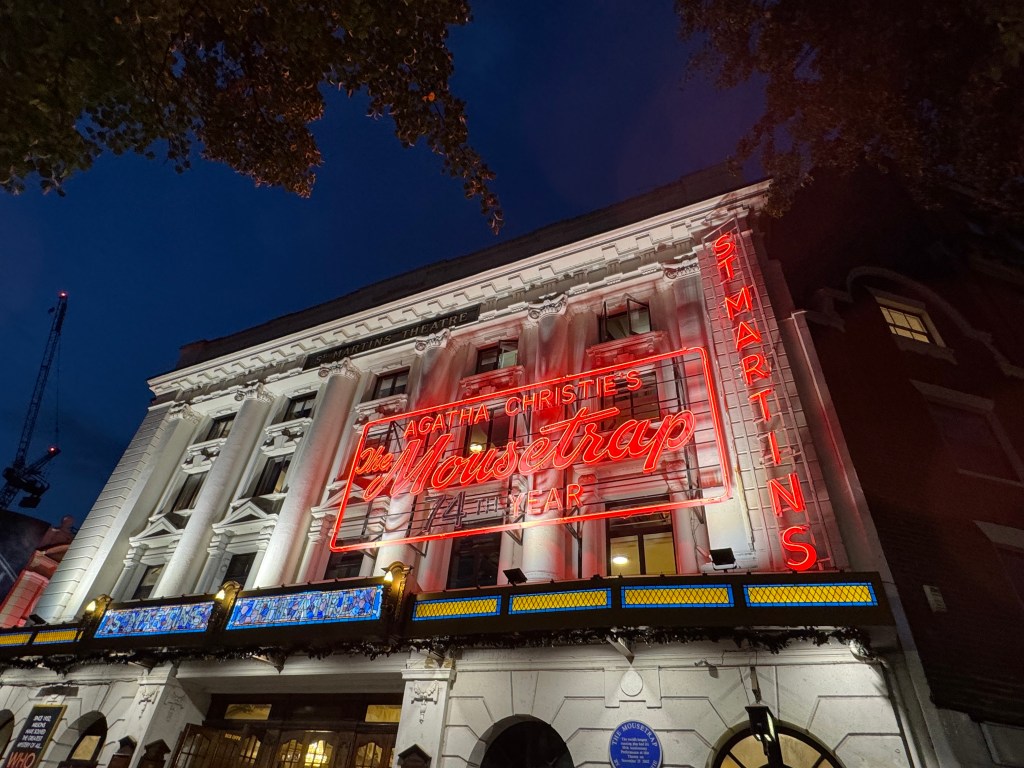
We had tickets to see Mousetrap in St. Martin’s theatre where it has been playing for 74 years! It premiered in 1952 and passed 30,000 performances in early 2025.
Agatha Christie wrote the original story in 1947 and it was set in that period, just after WWII. Christie was incredibly prolific, having written 80 crime novels and short story collections as well as 19 plays.
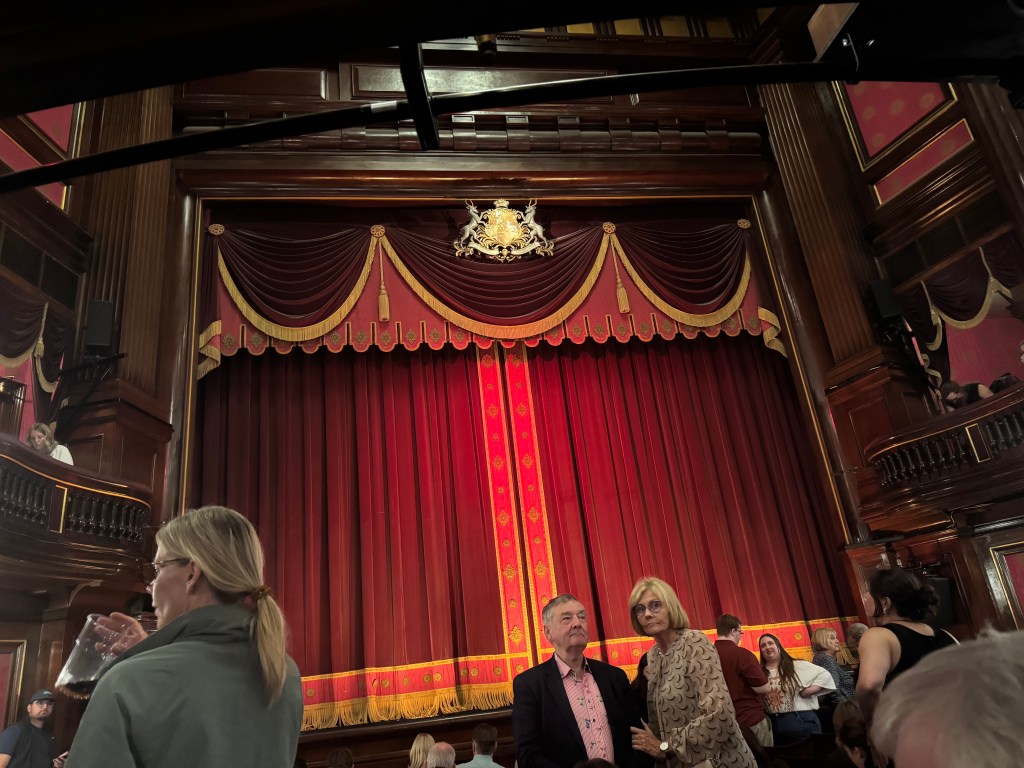
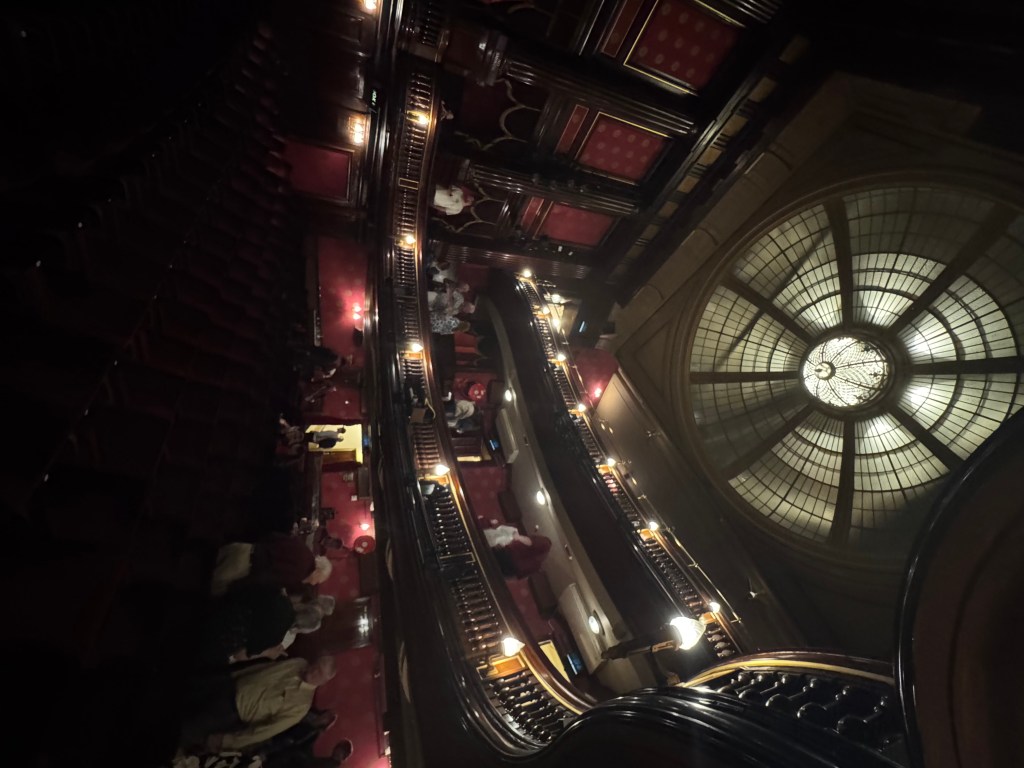
The theatre was petite but beautiful; my photos simply did not turn out in the dim light. We enjoyed the performance, in spite of the young man behind us that was in the habit of making loud guffaws of laughter at all the wrong moments and missing the actual jokes.
Being particularly clever and quick to rule out who was not the murderer, Rick and I both landed on the same character at intermission. It felt quite good to have gotten it right. Of course, we are sworn to secrecy so you will have to see it yourself.
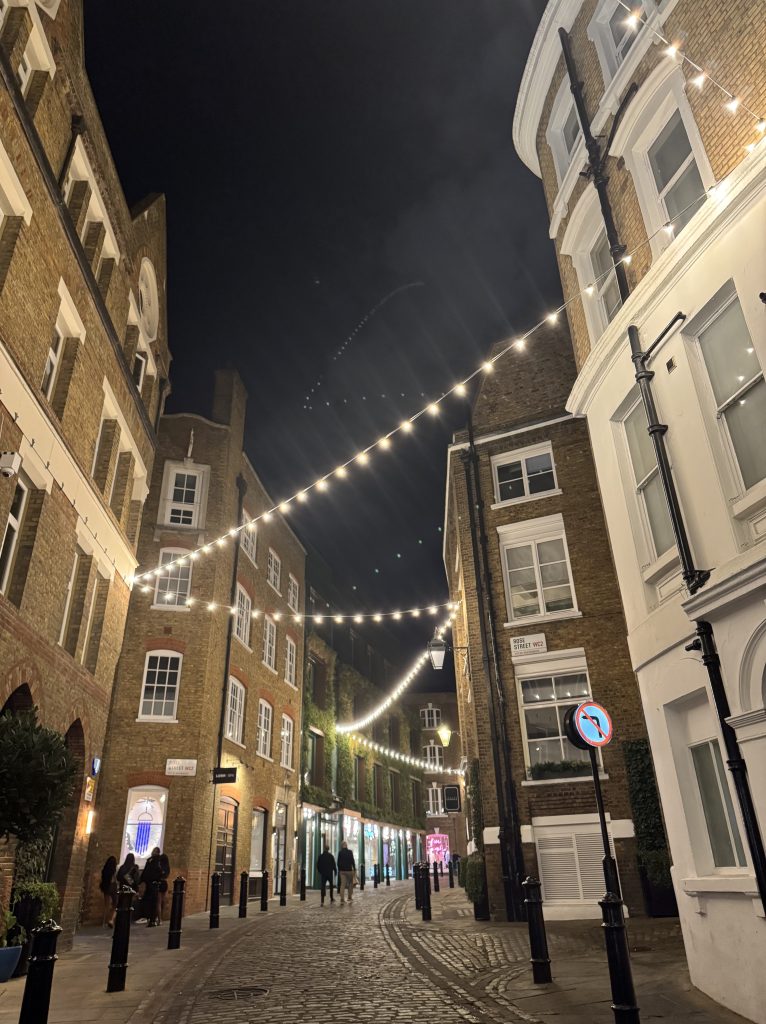
We walked back to our hotel slowly, choosing quiet side streets like “Floral Market” that we had not seen before. They were peaceful and beautifully lit. I spied a few shops I wanted to check back on the next day.
Even with our concession to using the Tube, I clocked about 28,000 steps. Time for a rest.


Leave a Reply